
They know the truth about God because he has made it obvious to them. For ever since the world was created, people have seen the earth and sky. Through everything God made, they can clearly see his invisible qualities—his eternal power and divine nature. So they have no excuse for not knowing God. [Romans 1:20 (NLT)]
 In researching yesterday’s devotion, I learned some interesting things about Blaise Pascal. Along with building the first digital calculator (c. 1642), he invented the syringe, created the hydraulic press, and, along with Pierre de Fermat, formulated the fundamental principles of probability theory.
It was when reading about Pascal’s Pensées, a compilation of notes and essays about Christian apologetics, that I saw mention of “Pascal’s Wager.” Curious as to what gambling and Christianity had in common, I read on. Perhaps it was Pascal’s interest in probabilities that led him to present the choice between belief and disbelief in God as a coin toss but, instead of betting on heads or tails, the bet is about God’s existence. After pointing out that making a wager is not optional, he asked how we’d bet. In mathematical terms, Pascal explains that, if God exists, and you bet that He does, you have infinite gain (eternal life) but, if you bet He doesn’t, you have infinite loss (loss of paradise and an eternity in hell). If, however, God doesn’t exist and you bet that He does, you lose nothing and, if you win, you gain nothing. Simply put, a winning bet on God pays off far better than a winning bet against Him and, if the bettor happens to be wrong, the one who’s bet against God has far more to lose than the one who’s bet on God.
If it should turn out that God doesn’t exist, Pascal says to the one who made a losing bet on Him: “Now, what harm will befall you in taking this side? You will be faithful, humble, grateful, generous, a sincere friend, truthful. Certainly you will not have those poisonous pleasures, glory and luxury; but will you not have others? I will tell you that you will thereby gain in this life, and that, at each step you take on this road, you will see so great certainty of gain, so much nothingness in what you risk, that you will at last recognise that you have wagered for something certain and infinite, for which you have given nothing.”
Summarizing, Pascal says: “According to the doctrine of chance, you ought to put yourself to the trouble of searching for the truth; for if you die without worshipping the True Cause, you are lost. ‘But,’ say you, ‘if He had wished me to worship Him, He would have left me signs of His will.’ He has done so; but you neglect them. Seek them, therefore; it is well worth it.”
Pascal’s wager does not prove the existence of God and wasn’t intended to do so; it simply tells us that belief in God is the best choice! There are, however, valid Christian criticisms of Pascal’s Wager. True faith doesn’t come from probability theory or a cost/benefit analysis; it comes from being born again. Pascal’s Wager seems to base belief in God on a risk and reward system that speaks of a heavenly reward without mentioning loving Jesus, obedience, or bearing fruit. His wager also fails to mention that there actually is a cost to following Jesus—one that is not always easy to pay. Whether we’re betting or choosing, the one thing about which we can’t argue is Pascal’s very first premise—the choice is not optional. We cannot sit this one out, the consequences are eternal, and the stakes are high.
Belief is a wise wager. Granted that faith cannot be proved, what harm will come to you if you gamble on its truth and it proves false? If you gain, you gain all; if you lose, you lose nothing. Wager, then, without hesitation, that He exists. [Blaise Pascal]
 Yet God has made everything beautiful for its own time. He has planted eternity in the human heart, but even so, people cannot see the whole scope of God’s work from beginning to end. [Ecclesiastes 3:11 (NLT)]
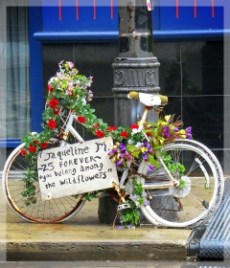 It’s often said that there are no atheists in foxholes. This maxim traces its beginnings back to 1914 and World War 1 when an English newspaper quoted a chaplain at a memorial service for a fallen soldier: “Tell the Territorials and soldiers at home that they must know God before they come to the front if they would face what lies before them. We have no atheists in the trenches. Men are not ashamed to say that, though they never prayed before, they pray now with all their hearts.” When we joined our northern church, it was during the Viet Nam War. I remember a young man in our new member class who’d drawn a low number in the draft lottery. Expecting to be in combat within the year, he confessed wanting to “get right” with God before that time came. Apparently, even the threat of a foxhole is enough to cause some people to rethink their relationship with the Almighty.
 After telling the Parable of the Two Sons, Jesus told one about the Evil Farmers. As parables go, it’s pretty easy to follow. The landowner (God) builds a vineyard (Israel), sets up a protective wall (the Law), and leases it to tenant farmers (religious leaders). When he sends his emissaries (faithful priests and prophets) to collect his rent, the farmers ignored, mistreated and even killed them. The landowner, thinking the farmers would respect his son (Jesus), sends him to the vineyard. Wanting the estate for themselves, the farmers murder him. When Jesus asked his listeners (who were the chief priest and elders) what the landowner would do to the famers when he returns to his land, they responded that he’d kill the tenants and lease the vineyard to new farmers who would honor him with his share of the crop.
 “It’s all about getting a second chance!” said the back of the man’s T-shirt. I then saw the dog paws printed on both sides of the message and realized his shirt was advertising a dog rescue organization. Nevertheless, the shirt’s words made me think of the parable Jesus told the Pharisees about two sons. The vineyard owner told his sons to go work in the vineyard. The first son rudely refused but the second son respectfully promised he’d do the work. As it turned out, the defiant son had a change of heart and went to work in the vineyard while the second seemingly dutiful son never did. Jesus then asked the Pharisees which of the two sons had done his father’s will. Of course, they had to say that the first son, in spite of his initial rebellion, was the obedient one.
 Although its customs and rituals have changed over time, Lent has been observed in some way by believers for centuries. In the early years of the church, the days leading up to Easter were a time of fasting and prayer in preparation for Easter baptisms and as penance for those who’d been excluded from communion. Irenaus of Lyons (c.130-200) wrote of such a season that lasted only a few days (or forty hours) and commemorated what was believed to be the duration of Christ’s time in the tomb. By the mid-third century, Bishop Dionysius spoke of a six-day fast practiced by the devout in Alexandria and, according to the Byzantine historian Socrates, the Roman Christians kept a pre-Easter fast of three weeks.
 Devotions of the Heart