
You are the light of the world—like a city on a hilltop that cannot be hidden. No one lights a lamp and then puts it under a basket. Instead, a lamp is placed on a stand, where it gives light to everyone in the house. In the same way, let your good deeds shine out for all to see, so that everyone will praise your heavenly Father. [Matthew 5:14-16 (NLT)]
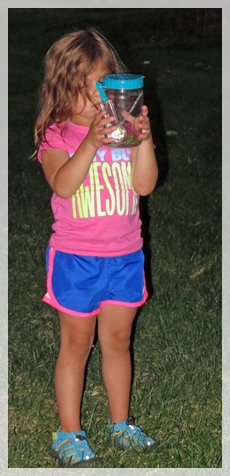 Warm summer nights at the lake mean campfires, s’mores and fireflies. As the darkness descends, bug jars appear and the children start chasing these fascinating insects. How odd that the same child who will shirk away from any insect during the day will give chase to and capture these flashing winged beetles at night. By the end of the evening, the children have collected a jarful of tiny flying stars (that will be released as soon as the little ones are tucked into bed).
Officially, they are Lampyridae—unofficially, they are the lightning bugs that bring magic to our yards and smiles to our faces. They have little light factories in their abdomens that take in oxygen and combine it with luciferin and other harder-to-spell chemicals to produce light with no heat. Actually, these bioluminescent creatures are just highly efficient flying light bulbs!
Unfortunately, many scientists believe Lampyridae are disappearing from the landscape because the grassy meadows and ponds that were their home are now parking lots and housing developments. The bugs’ biggest threat, however, comes not from urban sprawl or pesticides but from the lights that accompany civilization. Fireflies light up so they can communicate with one another and each of the 200 species has its own unique flash pattern. What we see on a summer’s night is actually a firefly’s version of a singles’ bar. As they flit around flashing their lights, they’re looking for a mate. The glow from parking lots, street lamps and car headlights can interrupt a firefly’s signals for several minutes meaning these tiny guys can’t find one another to do what fireflies must do to survive.
While watching my yard light up with these flying light factories, I think of how Jesus calls us to be the light of the world. Like fireflies, we are to shine in its darkness. Just as children are drawn to the firefly’s light, people should be drawn to ours. As Christians, we should sparkle and shine and be a welcome sight to all who encounter us. That glow of love should help others recognize us for what we are—followers of Christ. There’s no need to chase and capture us since we’ll joyfully share the source of our light with others. But, like the firefly, the world around us threatens our survival. While it’s light that endangers the firefly, it’s the world’s darkness that endangers ours. We must never let it keep us from shining brightly.
Heavenly Father, thank you for the blessings of summer nights and for the fireflies that remind us to shine our lights brightly in the darkness of this troubled world.
All the darkness in the world cannot extinguish the light of a single candle. [Francis of Assisi]

 “Be mindful to be a blessing…” After reading Paul’s words as translated in the Classic Amplified Bible, I thought of a comic I recently saw in the newspaper. (Oddly, I get lots of inspiration from the comics and I’m not sure what that says about my intellect.) Nevertheless, in “Nancy,” written by Guy Gilchrist, it’s Nancy who is reading the comics page. The speech balloon says, “Today’s Motivation: Let your presence be a gift to all you meet!” The next panel shows her walking down the street. Instead of her typical hair ribbon, she is wearing an enormous bow and a gift tag that says, “To you!”
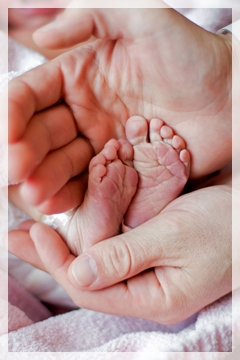 Writing about my granddaughter yesterday made me think about birth defects. In actuality, all of us have what could be called birth defects—it’s just that some are more obvious than others. While all of God’s children have defects, none are defective. I consider a young man at our Florida church. Cerebral palsy keeps him strapped into a wheel chair and his physical limitations are immense. There is, however, nothing defective about this bright young man. I ponder the enthusiastic grocery worker with Down’s syndrome. She may have an extra chromosome, but there is nothing defective about her. I think of a fellow at church who has no ears. He may be deaf but there is nothing defective about him, nor is there anything defective about a friend’s grand born with only a partial arm and hand or my grand, with her heart defects and learning issues. They are all marvelously made—different from others, but no less wonderful.
 Back in 1765, Dr. John Fawcett became the pastor of a small church in Wainsgate, England. Although his congregation of farmers and shepherds paid him a modest salary and donated wool and potatoes to them, the growing Fawcett family struggled to make ends meet. When a prestigious London church extended a call to him, Fawcett accepted and preached his farewell sermon. The family’s belongings were loaded on their wagon when parishioners gathered around him and begged him to stay. When his wife cried, “Oh John, John, I cannot bear this,” the pastor agreed. He ordered the wagon unloaded and remained at that parish for 54 years. Tradition has it that Fawcett wrote the words to “Blest be the Tie” in commemoration of that day.
 What makes us happy? Could it be a phone call from a good friend? Is it when we’ve made a profit in the stock market or received a large commission check? Are we pleased when our checkbook balances on the first attempt or when the accountant informs us that a large tax refund will be in the mail? Are we happy when someone sends us flowers or our child brings home a good report card? Does finding the ideal gift for our spouse’s birthday or receiving the perfect gift for ours give us happiness? Would we be happier if we could enjoy two weeks at a luxury resort or had a state-of-the-art home theatre or gourmet kitchen?
