
The virgin will conceive a child! She will give birth to a son and will call him Immanuel (which means ‘God is with us’). [Isaiah 7:14 (NLT)]
So the Word became human and made his home among us. He was full of unfailing love and faithfulness. And we have seen his glory, the glory of the Father’s one and only Son. [John 1:14 (NLT)]
It was the whole Trinity, which at the beginning of creation said, “Let us make man.” It was the whole Trinity again, which at the beginning of the Gospel seemed to say, “Let us save man.” [J.C. Ryle]

When reciting either the Apostle’s or Nicene Creeds, we express our belief in God, the Father Almighty, who created heaven and earth, and in His Son, Jesus Christ. When thinking of God as the Father and Jesus as His son, however, it’s easy to think of Jesus as sort of a God, Jr. As the son, He’s a smaller, younger, novice, or apprentice version of God the Father—sort of like the son who’s learning the business so He can take over when His father retires. Nothing could be further from the truth.
When we read the first chapter of Genesis, God refers to “us” and “our image,” so the plural nature of God didn’t just happen two thousand years ago in Bethlehem. The Apostle John tells us that Jesus (the Word) existed with God in the very beginning. Our triune God (the Father, Son, and Holy Spirit) exists beyond time—He always has been and always will be. Having no beginning, He will have no end. Although it was thousands of years between creation and Jesus’ birth, God the Son always existed. In the same way, the Holy Spirit wasn’t born on Pentecost; like the Father and the Son, He always has been!
That night in Bethlehem, Jesus didn’t come as an assistant God or as a lesser version of God the Father. Look at His names: Wonderful Counselor, Mighty God, Everlasting Father, Prince of Peace and Immanuel. Those are powerful names given to a baby boy but that baby boy was God Himself. He didn’t come as a god who looked like a man nor did He come as a man who looked like God. Both fully God and fully man, He was co-equal and co-eternal with God the Father and God the Holy Spirit—they were one in nature, power, action, and will. Rather than God, Jr., Jesus was wholly God—only He was in clothed in flesh and chose to live as a man.
Let us never forget that it was God who came to be born as a man that night in Bethlehem. It was God who was baptized by John and called “the Lamb of God.” It was God who preached the Sermon on the Mount, threw the money changers out of the temple, and called Himself “the bread of life” and the “good shepherd.” It was God who spoke with the woman at the well, healed the lepers, gave sight to the blind, and raised Lazarus from the dead. It was God who was tempted by Satan in the wilderness and it was God who lived a sinless life as a man in a sin-filled world. It was God who was betrayed by Judas, denied by Peter, sweat blood in Gethsemane, and condemned to die between two thieves. Mocked, whipped, and nailed to a cross, that was God who suffered and died a criminal’s death. And it was God who rose from the dead and ascended into heaven. It was God, in the form of a man called Jesus, who did it all just for us!
Our triune God is one in essence and yet three distinct persons. Understanding how each personage of the Trinity can be fully God while there is only one God is beyond my pay grade. Then again, I can’t understand things like quantum physics, the theory of relativity, string theory, or black holes. I can’t even fathom how I can be body, soul, and spirit in one person, so I shouldn’t be surprised at my limited understanding of the Trinity. As John Wesley aptly said, “Bring me a worm that can comprehend a man, and then I will show you a man that can comprehend the Triune God.”
I believe in one God, the Father Almighty, Maker of heaven and earth, and of all things visible and invisible. And in one Lord Jesus Christ, the only-begotten Son of God, begotten of the Father before all worlds; God of God, Light of Light, very God of very God; begotten, not made, being of one substance with the Father, by whom all things were made. [Nicene Creed]
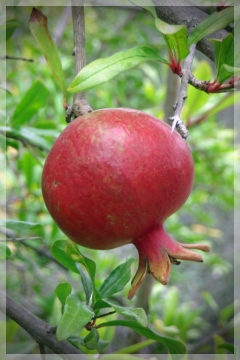 The culture of the 1st century was agrarian in nature so the analogies used by Jesus and the evangelists often were those of agriculture – seeds, soil, fruit, and vines. For example, when writing about the characteristics in the lives of those who follow Jesus, Paul spoke of the fruit of the Spirit. But, if Paul were writing to modern industrial society, he might have used a different metaphor. Instead of the fruit of the Holy Spirit, we might have the Spirit’s toolbox. Rather than fruit, we’d have God’s tools to help us to build His Kingdom. The saw in the box would be God’s peace that cuts worry and fear out of our lives. The sandpaper would be kindness as it smooths out life’s rough edges. Protective gear like safety goggles and steel-toed shoes would be the self-discipline that protects us from sin. Duct tape and WD-40 would be as essential as love, a flashlight would shine our joy, and we’d have clamps to hold us tight to the faith. God’s word would be our blueprint and, instead of being connected to a vine, the power tools would be plugged into the Holy Spirit’s power. Regardless of the metaphor, the Holy Spirit provides us with what we need to be more like Christ.
 And I will give you a new heart, and I will put a new spirit in you. I will take out your stony, stubborn heart and give you a tender, responsive heart. And I will put my Spirit in you so that you will follow my decrees and be careful to obey my regulations. [Ezekiel 36:26-27 (NLT)]
 Jesus said to him, “For sure, I tell you, unless a man is born again, he cannot see the holy nation of God.” Nicodemus said to Him, “How can a man be born when he is old? How can he get into his mother’s body and be born the second time?” [John 3:3-4 (NLV)]
 “A children’s story which is enjoyed only by children is a bad children’s story,” said C.S. Lewis. I agree and admit to enjoying the seven books comprising Lewis’ The Chronicles of Narnia both as a child and an adult. Even though the Narnia books take place in a make-believe world filled with talking animals, mythical creatures, and magic, there are Christian overtones to the entire series. For example, the first book calls up images from Genesis when Aslan, the Great Lion, sings Narnia into existence and evil is introduced to the land. In the second, Aslan willingly dies so that the sins of one boy are forgiven but comes alive again. In another book, Eustace, who had “greedy, dragonish thoughts” becomes a dragon. When Aslan strips away the boy’s scales and throws him into the water, the repentant boy is transformed and images of rebirth and baptism come to mind. Resembling the last book of the Bible, the final story in the series tells of a beast, a false prophet, Narnia’s fall, and a Narnian paradise (where sadness and weariness do not exist).
 Devotions of the Heart