
When the time came, Jesus sat down at table, and the apostles with him. ‘I have been so much looking forward to eating this Passover with you before I have to suffer,’ he said to them. [Luke 22:14-15 (NTE)]
 Christians call it the Lord’s Supper, the Lord’s Table, the Sacrament, Holy Communion, or the Eucharist; some denominations consider it a “sacrament” while others call it an “ordinance.” While they may not agree on what to call it, they do agree that, during that last supper with His disciples, Jesus instituted or ordained its practice when He shared bread and wine, said the elements were His body and blood, and instructed the disciples to repeat the ceremony in remembrance of Him.
That was a Passover dinner and, on any other Passover, Jesus may have held up the matzo symbolizing Israel’s suffering, slavery, and privation in Egypt and said, “This is the bread of affliction our fathers ate in Egypt.” The night he was betrayed, however, Jesus held up the bread and said, “This is my body, which is given for you. Do this in remembrance of me.” On any other Passover, Jesus might have raised the Passover cup and said, “Blessed are You, Lord our God, King of the Universe, who creates the fruit of the vine.” That night, however, He lifted the cup and said, “This cup is the new covenant between God and his people—an agreement confirmed with my blood. Do this in remembrance of me as often as you drink it.”
What Jesus didn’t do that night was give step-by-step instructions regarding this rite of remembrance and there is disagreement across the denominations about the exact meaning of the elements and the whos, whats, wheres, whens, and hows of doing communion. Whether we agree or disagree over the theological details, we all probably agree that we miss coming together at the Lord’s Table during this time of social distancing. Sheltering in place, however, shouldn’t keep us from partaking in the Eucharist; it just means that we have to do it differently.
As we struggle to worship in a world where we can’t gather as a church, let us remember that the church is not a building. Altars, altar rails, chalices, patens, and specific wafers weren’t mentioned by Jesus the night he was betrayed. He didn’t say that priests or ministers were required nor did he specify songs, prayers, or method of receiving the elements. Read the gospel accounts. Jesus was at a table eating the Passover meal dinner with His friends when, with just a few well-chosen words, He instituted the Eucharist as a way of remembering Him!
Palm Sunday, while watching the on-line service, our church had Holy Communion. Using whatever we had in our kitchens, people gathered in front of their computers, tablets, and smartphones, prayed over the elements, and partook of this holy and blessed sacrament in remembrance of Him. The bread we used ranged from Triscuits, Ritz crackers, and saltines to pita, sour dough rolls, or Wonder Bread. For wine, we used whatever we had; for some, that was wine or grape juice and, for others, it could have been lemonade or water. Our purpose was to remember Jesus and we remembered Him with what we had!
Tomorrow is Maundy Thursday, the day Christians throughout the world commemorate the Last Supper and the institution of Communion. Even without an official service, my husband and I will partake of this sacrament in much the same way the early church did: in the context of a meal with a little bread and wine. We will remember Jesus, not just for what He did on the cross, but for who He was and is: our friend, Savior, Lord, and King! Won’t you join us? No matter how far apart we may be from each another, the body of Christ is one in Spirit!
We offer and present unto thee, O Lord, our selves, our souls and bodies, to be a reasonable, holy, and living sacrifice unto thee; humbly beseeching thee that we, and all others who shall be partakers of this Holy Communion, may worthily receive the most precious Body and Blood of thy Son Jesus Christ, be filled with thy grace and heavenly benediction, and made one body with him, that he may dwell in us, and we in him. [The Book of Common Prayer (1979)]
 With palm branches waving, the people greeted Jesus as he entered Jerusalem. News of Jesus’ miracles, especially the resurrection of Lazarus, had spread through town. They shouted “Hosanna!” at the man they thought would overthrow the Romans, establish peace in the nation, and retake David’s throne. Expecting a political liberator rather than a spiritual savior, they wanted deliverance from the Romans rather than redemption from sin—a conquering king rather than a suffering servant. More concerned about the here and now than the forever after, they wanted power and might rather than love, peace, humility, forgiveness or eternal life. Jesus, however, didn’t come to change their circumstances; He came to change their lives and, when He didn’t give them what they wanted, they rejected Him.
 When the Apostle James tells us that God can’t be tempted by evil, we wonder how Jesus could be tempted to sin while in the wilderness. Christians agree that Jesus never sinned but some question whether He actually could. They hold the “impeccability” position: because Jesus was God, sin was impossible and He couldn’t have been tempted. Others hold the “peccability” position: because Jesus was a man, he could sin and was tempted. Still others, recognizing His dual nature, say that, as a man, Jesus could be tempted to sin but, as a divinity, He couldn’t.
 Traditionally, Lent has been a time for Christians of all denominations to refocus their hearts and minds on God through prayer, fasting and giving. As a way of fasting, many people deny themselves small indulgences, such as soda, candy, or their daily latte at Starbucks, but Lenten fasting isn’t limited to food. Other ways to observe this season include not making any purchases that aren’t absolutely necessary; donating or throwing away forty things during Lent’s forty days; giving up guilty pleasures like People magazine or binge-watching Netflix; refraining from complaint or gossip; not eating out or ordering in; saying three nice things to one’s spouse and children daily; reading the four gospels; doing a weekly service project; setting aside loose change for a charity; or forty days of letter writing, acts of kindness, or phone calls to special people. Some of those, like refraining from gossip or complaint, saying nice things to the family, and Scripture reading shouldn’t be limited to just these forty days!
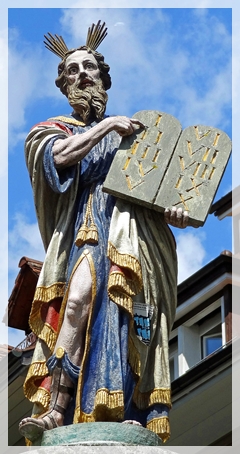 In Scripture, the number forty often appeared in the context of preparation, judgment, or testing. The rain poured down upon Noah for forty days and nights. After spending forty years in Egypt and another forty as a shepherd, Moses twice spent forty days with the Lord on Mt. Sinai. The Israelite scouts spent forty days exploring the land of Canaan and, because the people lost heart and rebelled at their report, they spent an extra forty years wandering the wilderness (one year for each day the men explored). Jonah warned Nineveh their destruction would take place in forty days, Ezekiel lay on his right side for forty days because of Judah’s sins and, before being slain by David, Goliath taunted Saul’s army for forty days.
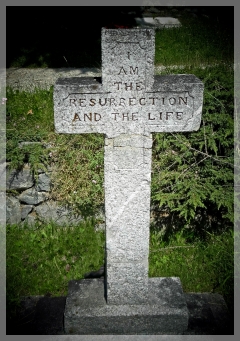 Today is Ash Wednesday and the beginning of the Lenten season. Marking the forty days Jesus spent fasting in the wilderness before beginning His ministry, Lent is a time many believers intentionally reflect on the life of Jesus: his ministry, sacrifice, death, and resurrection. For some Christians, today also starts a season of repentance, fasting, and self-examination.
