Dear brothers, honor the officers of your church who work hard among you and warn you against all that is wrong. Think highly of them and give them your wholehearted love because they are straining to help you. And remember, no quarreling among yourselves. [1 Thessalonians 5:12-13 (TLB)]
 October brings Columbus Day sales, pumpkins, corn mazes, Halloween candy, jack-o-lanterns, and the first Christmas items in the stores. On the second Sunday of the month, it also brings us Clergy Appreciation Day. Although we should let our pastors know how much we appreciate them all year long, we probably don’t. We’re more likely to complain about a sermon, the choice of songs, the temperature of the sanctuary, or the sound system than we are to compliment, encourage or thank our ministers. If we haven’t expressed gratitude to our clergy men and women, this coming Sunday is the time to do so.
This year has been especially difficult for our pastors. Their biggest challenge was maintaining unity while addressing their congregation’s concerns and complaints regarding opening. Since March, they’ve continually fielded questions as to when or how their church would open while knowing that half the congregation wouldn’t like the answer. Deciding to close the church was a whole lot easier than figuring out how and when to reopen! They’ve had to cope with the technology required for on-line services and think outside the box as they offered drive-by blessings, drive-in church, Zoom Bible study, or Skype counseling. Preaching to a camera from their living room or an empty church presented its own set of challenges as did offering virtual communion. The isolation of sheltering in place was heartbreaking for the people who regularly visited households, nursing homes, hospitals, and hospice rooms. They could no longer lay hands on the sick or embrace those who grieved. As they’ve ministered to people with financial, health, and family concerns, they’ve struggled with those same issues themselves.
Our pastors have a huge responsibility and we have huge (and often unrealistic) expectations of them. They work far more than a few hours on Sunday morning. Along with writing sermons and prayers, planning services, teaching Bible studies, counseling the troubled, visiting the sick, supervising a staff, marrying, burying, baptizing, and blessing, they manage to unite a disparate group of people into a church family and lead them on their faith journey. We may not always like what they say or do but their job is not to please us; it is to lead us. Consider Moses and the Israelites—if they’d had their way, the Israelites would have ended up back in Egypt as slaves. In spite of their grumbling and complaints, however, Moses led them where God wanted them to go—to the Promised Land. Without a doubt, shepherding a church today is no easier than leading a bunch of disgruntled Israelites through the desert.
Appreciating our pastors shouldn’t be limited to just to one day; we should show our appreciation all year long. While a thank you note is nice, perhaps a better way of communicating our gratitude is by providing support with our time, talents, and treasures; avoiding church politics; and offering encouragement rather than complaints. The best thing we can do for our pastors, however, is to pray for them every day.
Father, we thank you for our clergy—the people you have called to shepherd your church. Let your Holy Spirit fill them so that they shine your light, share your love, and shape your people.
If a church wants a better pastor, it only needs to pray for the one it has. [Anonymous]
Pastors need your grace, not your gripes. [Woodrow Kroll]
 Labor Day was my least favorite holiday when I was a girl (and not just because school started the next day)! For the Smith family, Labor Day meant work. We spent the entire day helping my father as he climbed up and down a ladder to exchange the screens (that had been mounted the previous Memorial Day) with the external storm windows. It was several years before I understood that Labor Day was not a special day dedicated to this yearly ritual of washing windows, lugging screens and windows to and from the garage, and otherwise spending my last day of summer vacation working. Energy efficiency and fuel bills were of no interest to me and, selfishly, it never occurred to me that my father probably didn’t enjoy the holiday ritual any more than did his children. I certainly never thought to thank him for working so hard to provide us with the house (and storm windows) that kept us safe and warm all winter long!
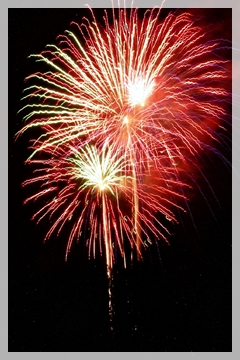 Tomorrow, as we commemorate our nation’s birthday, the celebration will be a little different. Beaches are closed and the brat fests, chicken roasts, band concerts, parades, fireworks, neighborhood picnics, rodeos, and ice cream socials typical of this national holiday have been cancelled. Friends and family won’t be joining us to light sparklers, have a water balloon fight or baseball game, catch fireflies, eat popsicles and watermelon, or enjoy s’mores around a campfire.
 My husband, son, and sixteen-year old grandson were talking after dinner and reminiscing about Grandpa J, my husband’s father. A man of faith and fun, love and laughter, honesty and honor, he truly was one-of-a-kind. Having died shortly after my grand’s birth, the boy only knows his great-grandpa through photos and some wonderful stories that just seem to get better with time. The conversation gradually turned to the family business, started by Grandpa J nearly sixty-five years ago in the family’s garage. Although my grand had heard some of the stories, others were new and he listened intently.
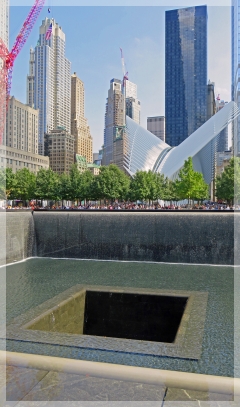 Last fall, when New York City was a bustling and untroubled city, our family gathered there to celebrate my son’s birthday. Only staying for a few days, we rushed to do the things tourists are expected to do in the “Big Apple.” When we walked onto the grounds of the 9/11 Memorial, however, the hubbub of the city disappeared and a hush descended. People’s silent tears fell on the bronze parapets inscribed with the names of the dead that edge the memorial as they reverently looked down at the twin waterfall pools disappearing into nothingness. According to their architect, Michael Arad, the pools represent “absence made visible.” Although the water flows continually into the voids, they never can be filled. Indeed, the loss of a loved one leaves a void that cannot be filled this side of eternity.