
Praise the Lord! I will thank the Lord with all my heart as I meet with his godly people. How amazing are the deeds of the Lord! All who delight in him should ponder them. Everything he does reveals his glory and majesty. His righteousness never fails. [Psalm 111:1-3 (NLT)]

As we gathered for worship that Saturday night, it was just ten days after Hurricane Ian devastated our part of Florida and the mood was somber at best. Many of the regulars were missing and, for every story of hope, there were two more of unspeakable pain and unbelievable loss. Nevertheless, the pastor announced the theme of our service was gratitude and we began our worship singing Now Thank We All Our God, a hymn more associated with Thanksgiving Day than natural disasters. Indeed, as we thanked God “with heart and hands and voices,” my husband and I were thankful; for us, Ian was little more than an inconvenience in our lives. Most people, however, were not so blessed and I wondered how thankful they were.
The gratitude theme continued in the day’s Scripture starting with Psalm 111 and the words, “Praise the Lord,” followed by the miraculous healing of Naaman, the master’s lavish grace and mercy seen in the Parable of the Vineyard Workers, and Jesus’ healing of ten lepers, a story familiar to most of us. Although ten lepers were healed, only one returned to thank Jesus. Naturally, we laud the example of the one who expressed his gratitude and find fault with the nine who didn’t. Nevertheless, as soon as the ten saw their clean skin, there’s no doubt they all were incredibly thankful. As lepers, they’d been pariahs from society and literally untouchable but Jesus gave them a new lease on life. Although only one returned to express his gratitude, can we honestly fault the other nine? The lepers were desperate to return to their families, friends, homes, and trades but that couldn’t happen until the priests declared them clean! Like children who want to play with their new toys before thanking the grandma who gave them their presents, they were so focused on reclaiming their lives that they lost sight of the One who restored them!
Are we that much different from those nine? Do we ever get so caught up in the here and now— hurrying hither and yon, coping with our challenges, pursuing our goals, attempting to make do with what seems like not enough, dealing with difficult situations and even more difficult people—that we fail to express gratitude to the Giver of All Gifts? Do we let life’s trials or tasks keep us from giving thanks?
I’m reminded of a story told by Ann Voskamp in her book, One Thousand Gifts. As a farmer’s wife and mother of six (now seven) children (all of them homeschooled), she clearly knows the chaos, turmoil, and busyness of everyday life that so often overwhelms us and takes our focus off God. One morning, she unknowingly stepped into a war zone between siblings and the boys she loves behaved in a distinctly unlovable way. A tossed piece of toast became the proverbial straw that broke this mother’s back and, as she slammed her hands on the table, the exasperated woman asked herself, “How do I see grace, give thanks, find joy in this sin-stinking place?”
Remembering how Jesus gave thanks that night in the upper room, she took a deep breath and, focusing on God, gave thanks out loud. She thanked the Lord for her boys, toast, the hope of forgiveness, and for being a God who wouldn’t leave any of them in their ugly mess. Like the one leper who returned to thank Jesus, she paused in the midst of all that was happening and offered thanks to the Giver of all things who was there with her in that kitchen.
Whether we’re dealing with a child’s temper tantrum, undergoing chemo, straining to make ends meet, burying a loved one, laboring in the kitchen to get the turkey on the table, tarping a leaky roof, or shoveling mud out of a flooded house, we must never be too busy, too intent on our task, too angry, too tired, too broken-hearted, too exhausted, or too focused on our circumstances to turn to God and express our gratitude for His blessings! The only way any of us can see grace, give thanks, or find joy in this “sin-stinking place” of hurricanes, war, rage, disease, and loss is with the eyes of gratitude. Even in the worst of circumstances, there always is something or someone for which to be grateful.
Nothing comes close to God’s gifts of unconditional love, forgiveness, salvation, and eternal life and there is no way we can thank Him enough for those gifts. Thanksgiving shouldn’t be limited to the fourth Thursday in November; regardless of the circumstances, every moment of each day should be one of gratitude and giving thanks!

 Although Jesus performed many miracles, when compared to the illusions performed by various well-known magicians, they aren’t all that impressive. Jesus emerged from the tomb on the third day but David Blaine buried himself alive in a plexiglass coffin under a 3-ton water-filled tank for seven days and nights! Calling Lazarus out of the tomb after several days was impressive but only his family and some mourners were there to see it. When David Blaine emerged from the 6-ton block of ice in which he’d been encased for over 63 hours, thousands in Times Square were there and even more watched it on television. Granted, Blaine fell short of his 72-hour goal but the man knows how to draw crowds! Couldn’t Jesus have done something similar?
 I grew up in a church with hymn boards in the front of the sanctuary that displayed the liturgical church date and the day’s hymns. I loved seeing “First Sunday in Advent” because that meant there were only three more Sundays until Christmas. While “Lent” meant six weeks of no candy, “Palm Sunday,” with its promise of Easter (and Easter baskets) in just a week was always welcome. For most of the year, however, that sign was uninspiring. The weeks after Easter were simply noted as the first through the seventh Sundays of Easter until the arrival of Pentecost 50 days after Easter.
 In one of those viral, supposedly true but probably not, inspirational stories, a wealthy man is said to bend over and pick up any and every coin he spots on the ground. When asked why he bothered to collect mere pennies, the man explained he didn’t pick up coins for their monetary value; he picked them up for the value of the message on them: “In God We Trust.” He believed the penny’s words to be God’s way of reminding him to trust the Lord rather than his wealth and considered every coin he found an opportunity to acknowledge his faith in prayer.
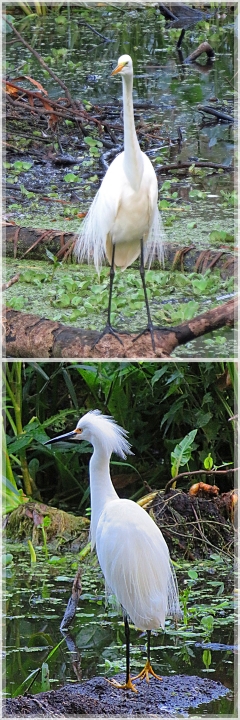 The wading birds of southwest Florida are absolutely beautiful, especially this time of year when they’re wearing their mating plumage. We’ve lived here eleven years and I still haven’t tired of their beauty as I encounter them daily in our ponds. 115 years ago, however, I would have been hard put to see any of these beautiful creatures anywhere. In the late 1800s, bird feathers became the fashion craze in women’s hats. Along with a plethora of plumes, some hats even featured an entire exotic bird! By 1900, more than five million birds were being killed every year and plume hunters had nearly wiped out the entire egret population. It wasn’t just the egrets with their white mating plumes—herons, roseate spoonbills, flamingoes, and peacocks were among the fifty North American species being killed for their plumage. No bird was safe.
 Devotions of the Heart