STEALING

You shall not steal. [Exodus 20:15 (ESV)]

Jesus once said that Satan was a thief. Satan does not steal money, for he knows that money has no eternal value. He steals only what has eternal value—primarily the souls of men. [Zac Poonen]  

Brown PelicanThe patient Cormorant had been diving and resurfacing empty-beaked for several minutes before finally emerging victorious with a large fish crosswise in its beak. The fish thrashed in the cormorant’s beak while the bird tried to re-position its meal so it could be swallowed head first. A Brown Pelican suddenly crashed into the water and, after a great deal of wing flapping and water splashing, it was clear the Cormorant was no match for the larger bird. While the Pelican threw back its head and swallowed the unlucky fish, the unfortunate cormorant swam away still hungry.

Apparently, food theft (kleptoparasitism) is common among birds and it’s not limited to stealing one another’s fish dinner. Some species harass other birds until they spit up swallowed food and several species conduct high-speed chases in the sky and grab food from other birds in midair. Bird theft isn’t even limited to food. Blue Jays and Black Crows frequently pilfer the nests of other birds for shiny things with which to adorn their own nests while Magpies and Eagles will steal building material as well. At first, it seems like the birds are exploiting the hard work of others but they’re just doing what birds do naturally. Living in a competitive world with limited resources, they’ve developed remarkable skills needed for survival.

Fortunately, we don’t have to steal fish or mice from another person’s mouth or snatch bits of foil, moss, or twigs from someone’s home to survive. Unlike the birds and other animals, God created us in His image. As such, He gave us a different set of rules for living. Nevertheless, the Pelican’s behavior caused me to consider the simple commandment not to steal—a prohibition important enough to be mentioned numerous times throughout the Bible. Is this commandment limited to things like not cheating on taxes, shop lifting, snatching purses, embezzling, and robbing banks or is there something more?

Essentially, most of us are honest; nevertheless, we steal—by using worktime to check social media or personal email, padding an expense account, getting paid under the table, taking more than our share, or cutting in line. We’re stealing when we do a slip-shod job and call it “good enough,” fail to return something borrowed or found, pay unfair wages, or take advantage of someone else’s hardship, kindness, or ignorance. We steal the truth whenever we tell a lie and steal God’s glory when we take credit for His blessings. We rationalize our little cheats and don’t think of them as stealing, but they are.

Worse, we can steal someone’s reputation when we gossip, we can steal their hope when we deny them an opportunity or encouragement, we can steal their joy with a few poorly chosen words, and we can steal their dignity when we treat them in a demeaning manner. When we snub, humiliate, abuse, deny, and ignore or when we’re over-bearing, selfish, rude, negative, and unforgiving, we’re stealing something far more valuable than money. We’re stealing things like self-respect, innocence, courage, delight, confidence, dreams, and opportunities. This sort of stealing is neither a misdemeanor nor a felony; nevertheless, it is a sin.

Owe no one anything, except to love each other, for the one who loves another has fulfilled the law. For the commandments, “You shall not commit adultery, You shall not murder, You shall not steal, You shall not covet,” and any other commandment, are summed up in this word: “You shall love your neighbor as yourself.” Love does no wrong to a neighbor; therefore love is the fulfilling of the law.  [Romans 13:8-10 (ESV)]

 Copyright ©2024 jsjdevotions. All rights reserved.

ADAPTING AND CONFORMING

If the world hates you, remember that it hated me first. The world would love you as one of its own if you belonged to it, but you are no longer part of the world. I chose you to come out of the world, so it hates you. Do you remember what I told you? “A slave is not greater than the master.” Since they persecuted me, naturally they will persecute you. And if they had listened to me, they would listen to you.” [John 15:18-20 (NLT)]

A century of dike-building, agricultural development, and population growth has destroyed much of Florida’s wetlands and threatened the survival of dozens of animals like Florida panthers, Snail Kites, and Wood Storks. The White Ibis, however, is an exception. Having adapted to the new urban landscape, large groups of ibis happily graze the lawns of subdivisions, parks, and golf courses. They’ve found it easier to poke at the soil for a predictable buffet of grubs, earthworms, and insects than to forage in the remaining wetlands for aquatic prey like small fish, frogs, and crayfish. Once wary of humans, these urbanized ibis pay little or no attention to people as they follow one another across our lawns.

While conforming to a world of diminishing wetlands may be beneficial to the ibis, the Bible makes it clear that Christ’s followers are not to conform to the world around us. As the salt of the earth, we are to bring a distinctive taste, look, and smell to the world rather than take on the flavor of the world in which we live. Nevertheless, like the ibis, Christ’s church appears to be acclimating and adjusting to the world surrounding it.

In an effort to fill the pews and keep the coffers filled, we’re seeing His church adapting and conforming to today’s culture. Social media, politics, fashion, popular music, celebrities, advertisements, movies, television, politics, and politicians seem to be infiltrating and influencing our attitudes, worship, instruction, and doctrine. We’re beginning to shape values, use words, understand events, and determine right and wrong through the eyes of the world rather than the Bible. Jesus, however, was anything but popular, politically correct, or entertaining and His Church was never meant to be cool, trendy, fashionable, or fun to an unbelieving world; it is meant to be like Christ!

Just as the Israelites were not to succumb to the influence of the pagan nations around them, we are to remain apart and distinct from the corrupting influences of the world around us. While sinners should be welcome in the church, sin should not. Nevertheless, afraid of offending anyone—we creatively reinterpret or ignore Scripture, turn a blind eye to sin, or refuse to speak of sin at all. Are we seeking the world’s approval or God’s?

If we go back to the beginning of the Church, it’s estimated there were only about 1,000 Christ followers in the Roman Empire. By AD 100, however, there were about 7,500. By AD 150, there were 40,000 believers and, by 350, 34 million people (more than half the Roman Empire) followed Christ! Although the early church grew by about 40% each decade, the numbers are going in the opposite direction today. According to the Pew Research Center,  90% of Americans identified as Christian just 50 years ago but, in 2023, that number was only 64%! While adapting to the world around them may be working for the ibis, it doesn’t seem to be working for today’s church. In actuality, the church the looks and acts like the world around it, is not Christ’s church.

The early church didn’t grow because it lived as Rome did—it grew because it lived as Jesus did. The early believers had an uncompromising faith that transformed the pagan world around them. Let us do the same!

Don’t copy the behavior and customs of this world, but let God transform you into a new person by changing the way you think. Then you will learn to know God’s will for you, which is good and pleasing and perfect. [Romans 12:2 (NLT)]

Copyright ©2024 jsjdevotions. All rights reserved.

ENLARGING

Hear me when I call, O God of my righteousness: thou hast enlarged me when I was in distress; have mercy upon me, and hear my prayer. [Psalm 4:1 (KJV)]

Mornings, I read a short devotional from Streams in the Desert, a devotional by L.B. Cowman. Compiled between 1918 and 1924 and first published in 1925, it consists of portions of inspirational sermons, tracts, church bulletins, hymns, devotions, and poetry Mrs. Cowman collected through the years. Each day’s reading begins with a portion of Scripture and a recent devotion began with Psalm 4:1: “Thou hast enlarged me when I was in distress.”  Because the devotional uses the King James Translation and I usually read the NLT, I didn’t recognize this verse; nevertheless, I had a good idea what it meant.
My morning’s prayer had begun much like David’s—with a plea for God to hear my prayer. It then went something like, “O Lord, please not again! I can’t go through this another time. How much more can I take?” Apparently, based on the day’s verse, God heard me, but I wasn’t so sure I liked His answer. It sounded a lot like, “This is a growth opportunity and you can take all that is given to you!” I certainly wasn’t pleased with the devotion’s explanation that the psalmist was “declaring that the sorrows of life have themselves been the source of life’s enlargement.”

Curious about the verse, I turned to my NLT Bible and found a vastly different translation: “Free me from my troubles.” While I’d rather be freed from my troubles than be enlarged by them, Scripture’s purpose isn’t to accommodate our preferences; it is for our edification, enlightenment, and growth. Confused by the different tenses and dissimilar translations, I turned to a lexicon to determine the meaning of this verse in its original Hebrew.

The psalmist used the word rachab  which clearly meant to enlarge, grow wide or large, broaden, or make room for. Throughout Scripture it was used in the sense of extending or enlarging one’s understanding, heart, steps, territory, borders, and mouth. Rather than escaping from troubles, this verse is about growing large enough to handle them! Moreover, while my NLT uses the present tense, most word-for-word translations use the past. Preserving the tense and word usage found in the original Hebrew writings, Young’s Literal Translation reads, “In adversity Thou gavest enlargement to me; Favour me, and hear my prayer.”

Psalms 3 and 4 are believed to have been written by David during his son Absalom’s rebellion. If so, David was about 61 years old and God had given him a great deal of trials and enlarging in the more than 45 years since being anointed by Samuel. This psalm is David’s vote of confidence in God’s future grace because of God’s past grace. The troubled king knew that the God who enlarged, expanded, and strengthened him in the past could do so again. He asked God that, hearing his prayer, He would repeat His mercy.

God has the power to divinely deliver us from our trials. More often than not, however, He doesn’t because there is purpose in those trials. The good news is that, while God may not free us from the challenges, He never will abandon us in them! Because of God’s past grace in the trials of yesterday, like the psalmist, we can count on God’s future grace in the trials of today and tomorrow. Indeed, my past troubles have enlarged me. They matured my faith, strengthened me, grew my understanding of God’s will, multiplied my prayers, intensified my trust, expanded my capacity to endure, and developed the ability to find joy in all circumstances. No matter what I face, when I remember God’s past mercies, like David, I can lie down in peace, confident that God will keep me secure in His loving arms!

Let God enlarge you when you are going through distress. He can do it. You can’t do it, and others can’t do it for you…. Life’s trials are not easy. But in God’s will, each has a purpose. Often He uses them to enlarge you. [Warren Wiersbe]

Many people say, “Who will show us better times?” Let your face smile on us, Lord. You have given me greater joy than those who have abundant harvests of grain and new wine. In peace I will lie down and sleep, for you alone, O Lord, will keep me safe. [Psalm 4:6-8 (NLT)]

Copyright ©2024 jsjdevotions. All rights reserved.

OH COME, IMMANUEL (2) – THE SILENT YEARS

The Spirit of the Sovereign Lord is upon me, for the Lord has anointed me to bring good news to the poor. He has sent me to comfort the brokenhearted and to proclaim that captives will be released and prisoners will be freed. He has sent me to tell those who mourn that the time of the Lord’s favor has come, and with it, the day of God’s anger against their enemies. [Isaiah 61:1-2 (NLT)]

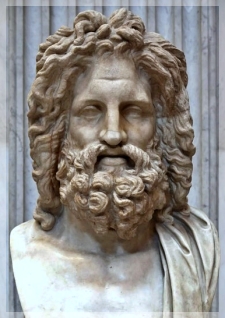
Greek god Zeus

While the Bible is silent about the centuries separating the Hebrew Scriptures from the New Testament, history is not. During those hundreds of years, Judah suffered. Although they were allowed to worship Jehovah under Persian rule, the pagan nation ruled them, required their political obedience, and demanded exorbitant taxes to support its king, court, armies, and self-serving foreign governors. When Persia weakened and fell to Alexander the Great in 331 BC, Judah simply traded one set of foreign rulers for another.

When Alexander died, the Greek Empire was divided among his generals. Ptolemy the 1st and his descendants ended up controlling the Jews. Under Ptolemaic rule, as long they maintained order and paid their taxes, Judeans were free to worship and Judaism thrived. Nevertheless, Judah was an occupied country and, for twenty years, the people were caught in a violent cross-fire between the Ptolemies and their rivals, the Syrian Seleucids. When the Seleucids defeated the Ptolemies, the Jews ended up with rulers who mercilessly persecuted them. The Temple was robbed, Jerusalem’s walls destroyed, Scripture burned, sacrifices to Jehovah banned, circumcision outlawed, Jews were forced to eat pork, and observing the Sabbath and feast days was prohibited. Statues of Greek gods and idols were placed in every town and those who refused to worship them were put to death.

The Jews must have wondered what became of God’s covenant with David as well as the one He made with Abraham promising that Israel would be a great nation, that He’d bless Abraham’s descendants and curse his enemies, and that Canaan would belong to his descendants. God even confirmed that same promise to Isaac and Jacob. But now, Israel’s promised homeland belonged to Greece and they were ruled and persecuted by their enemies. If anything, Abraham’s descendants were the ones cursed. Was Jehovah a liar?

When the Seleucid ruler, Antiochus Epiphanes, rededicated the Temple to Zeus and sacrificed a pig on the altar, Judah finally rebelled and a guerilla army was formed. Three years after the Temple’s desecration, the Syrians were defeated and the Temple recaptured and rededicated. Tonight is the first night of Hannukah which celebrates the eight-day miracle following that event. Even though the Temple was reclaimed, Judah remained a Syrian province and fighting continued between Syrian and Jewish forces for twenty more years.

Eventually, the constant fighting between the various Greek city-states weakened the Greek Empire and Judah’s independence was realized in 142 BC. Simon Maccabee became head of state and the Hasmonean dynasty was established. For the first time since the fall of Jerusalem in 586, a Jew sat on the throne but the prophecies hadn’t been fulfilled. He wasn’t from the tribe of Judah and David’s lineage, his realm didn’t extend from sea to sea, and peace did not reign. The Hasmoneans’ time in power was troubled by corruption, political infighting, terrorism, and violent clashes between the Pharisees and Sadducees. The nation became divided and weak.

After the Roman general Pompey defeated the Greeks, he had no trouble extending control over the divided nation of Judah and, in 63 BC, Rome conquered Jerusalem. Once again God’s chosen people were subservient to a foreign power. When the New Testament opens, rather than a descendant of David’s, it was Herod the Great, a descendant of Esau, who sat on the throne!

The people of Judah wondered when Jehovah would fulfill His promises. Would the time of His favor ever come? When would His anointed king avenge His people?

It is I, the Lord, announcing your salvation! It is I, the Lord, who has the power to save! … For the time has come for me to avenge my people, to ransom them from their oppressors. [Isaiah 63:1,4 (NLT)]

Copyright ©2023 jsjdevotions. All rights reserved.

UNCLEAN – Mark 5 (Part 2)

“But this is the new covenant I will make with the people of Israel after those days,” says the Lord. “I will put my instructions deep within them, and I will write them on their hearts. I will be their God, and they will be my people.” [Jeremiah 31:33-34 (NLT)]

little blue heronThe book of Leviticus outlined several things that could make someone ceremonially or ritually unclean. These things included bodily discharges, touching a corpse, and skin infections, as well as contact with any unclean person or thing. By Jesus’ day, even entering a Gentile’s home made someone unclean. Anything and anyone an unclean person touched became unclean and, anyone who touched them or what they touched also became unclean.

People deemed unclean were barred from participating in worship, offering sacrifices, and having access to the Temple. Because ritual impurity was contagious, anyone unclean had to remain separated from the community. Purification ceremonies were required before returning to a state of ritual cleanness and they varied with the severity of the uncleanness. Because uncleanness could come from normal bodily functions or factors beyond their control, even devout Jews became unclean at some time. Nevertheless, people didn’t deliberately put themselves in situations that would make them unclean. Jesus was the exception to the rule!

Along with their miraculous restoration, the three people Jesus healed in Mark 5 have something else in common—their ritual uncleanness. Living among the dead in the burial caves made the demoniac unclean. Since pigs fed on the hillside near him, he also was unclean because of contact with them. Considering the demoniac’s wild behavior, he probably was soiled by his or the pigs’ feces or urine which also made him ritually unclean (as well as filthy). Jesus, however, didn’t see an unclean Gentile demoniac; he saw a child of God who desperately needed to be freed from Satan’s control!

While Jesus was on the way to Jairus’ home to heal the man’s daughter, He was approached by a woman who had been hemorrhaging for twelve years. Because her bodily discharge made her ritually unclean, she was a pariah who shouldn’t have been out in public. Just by touching Jesus’ robe, she would have passed her uncleanness to Him but, rather than rebuke the woman for her action, He called her “Daughter,” commended her faith, and healed her.

While Jesus was speaking to the bleeding woman, messengers arrived to tell Jairus his daughter was dead. Undeterred, Jesus continued to the man’s home and went into the room where the dead girl lay. Even though He could raise the dead with just a word (as He did with Lazarus), Jesus deliberately held the child’s hand before telling her to get up.  Although having direct contact with a corpse made Him ritually unclean, the moment He took her hand, she transformed from an unclean dead body into a living child.

Those weren’t the only times Jesus put His concern for people before ritual purity. He offered to go to the Roman centurion’s home to heal the man’s servant even though entering a Gentile’s home would make him ceremonially unclean. When Jesus returned to the Gerasenes, he had no qualms about laying hands on a Gentile deaf man. Perhaps the most shocking of Jesus’ actions is found in Mark 1 when a leper kneeling before Him asked to be made clean. In an amazing display of compassion, Jesus deliberately reached out and touched the man to heal him. Rather than being made unclean by the leper, the leper was made clean by Jesus’ touch!

Ritual impurity made people unfit to be in the presence of God. Although many of the things Jesus did would have made a normal Israelite impure, we never read of Him undergoing any sort of purification ritual. Jesus, however, wasn’t an ordinary Israelite. He didn’t need to be purified to enter into the presence of God; He was God! Rather than becoming polluted by touching the unclean, Jesus transformed their impurity to purity because His holiness was contagious! In the New Covenant, people’s purity no longer depends on external regulations; it now depends on the cleansing power of Jesus Christ. His purity is greater than our impurity! Thank you, Lord.

So then, my brothers and sisters, we have boldness to go into the sanctuary through the blood of Jesus. He has inaugurated a brand new, living path through the curtain (that is, his earthly body). We have a high priest who is over God’s house. Let us therefore come to worship, with a true heart, in complete assurance of faith, with our hearts sprinkled clean from an evil conscience and our bodies washed with pure water. [Hebrews 10:19-22 (NTE)]

Copyright ©2023 jsjdevotions. All rights reserved.


DIFFICULT STORIES (Judges 11 – Part 2)

And Jephthah made a vow to the Lord. He said, “If you give me victory over the Ammonites, I will give to the Lord whatever comes out of my house to meet me when I return in triumph. I will sacrifice it as a burnt offering.” [Judges 11:30-31 (NLT)]

black-crowned night heronSkeptics love to ask how God could allow Jephthah to offer up his daughter as a burnt sacrifice. First, let’s note that it never says God approved of his sacrifice. In fact, Scripture makes it clear that such a sacrifice was abhorrent to the Lord. In His wisdom and mercy, God even provided a way out if someone made a rash or unrealistic vow. Leviticus 27 explains that such a vow could be purchased back with a 20% penalty and describes how valuations were to be determined. Although Jephthah displayed knowledge of Israel’s history when negotiating with the Ammonites, he showed his ignorance of God and God’s law with his rash vow. Moreover, there is no reason to think his daughter was sacrificed in the Tabernacle. It’s more likely that such a horrific event would have been part of a pagan ceremony.

Unlike Deborah, Gideon, and Samson, Jephthah was not a God-appointed judge or leader. Having been chased away by his brothers, he was living in the land of Tob with a “band of worthless rebels.” [11:3] Jephthah only came to the aid of Gilead because they promised he’d become ruler if victorious. That God used this “great warrior” to accomplish His purpose does not mean Jephthah was a godly man.

What Jephthah meant by his vow seems clear; he used ‘olah which meant “whole burnt offering.” In the 250 times ‘olah occurs in Scripture, it always refers to an actual sacrifice burnt on an altar. Nevertheless, because the text doesn’t explicitly state how he implemented his vow, there is some ambiguity regarding his daughter’s fate. As an alternative to being incinerated, some commentators hold that she was dedicated to God and lived in seclusion for the remainder of her life. Until the 12th century, however, both non-rabbinic sources and the Jewish sages of the Midrash took this tragic story literally—Jephthah immolated his daughter! Their commentaries cast blame upon Jephthah, the high priest, and the people who allowed such depravity.

Nevertheless, finding this story of human sacrifice intolerable, some rabbis tried to find a more acceptable alternative in the 1100s. Rabbi Abraham Ibn Ezra and others reinterpreted the text to mean that Jephthah’s vow really was that whatever appeared, if appropriate for sacrifice, would die but, if it wasn’t appropriate, would be consecrated for holiness. They contended that Jephthah built a house for his daughter outside the city where, isolated from the world, she devoted the rest of her life to God. Perhaps the reasoning behind their explanation can be found in the time period—an era when a tremendous number of monasteries and convents were being established throughout Europe. The rabbis may have been influenced by the Christian monastic ideals of chastity, poverty, and obedience. While a nice alternative, the concept of perpetual virginity, celibacy, and asceticism never appeared in the Hebrew Bible or Jewish texts. Priests and Nazarites could be married, Jeremiah was the only prophet not to marry, and there was no tradition of Jewish women secluding themselves and becoming the equivalent of nuns. The first commandment in Scripture was to be fruitful and multiply [Genesis 1:28] and a Hebrew woman’s highest achievement was a large family. Nevertheless, this interpretation has been adopted by many Christian commentators. Granted, Jephthah’s daughter condemned to a life of perpetual seclusion and virginity makes for a less repulsive ending to her tale but we should beware of creatively interpreting Biblical accounts to make them easier to stomach!

Although the Bible is without error, that doesn’t mean it is without difficulties. There is no acceptable alternative to the girl’s sacrifice just as there are no acceptable alternatives to stories like Lot offering up his daughters to be gang-raped [Genesis 19], the revenge taken on Shechem after Dinah’s rape [Genesis 34], or the massacre of 85 innocent priests and their families [1 Samuel 22]. The Bible’s record of an event doesn’t mean it’s endorsed and we never should assume that God approved of all that it reports. Just as God didn’t approve of David’s sins of rape, adultery, and murder, He didn’t approve of Jephthah’s sacrifice. Scripture records the real-life errors and sins of flawed human beings—people like us. It tells us what happened without necessarily telling us what should have happened or providing a moral to the story. The Old Testament’s great heroes of faith were not without faults and transgressions; neither are we! Let us learn from their mistakes.

These things happened as a warning to us, so that we would not crave evil things as they did, or worship idols as some of them did. … These things happened to them as examples for us. They were written down to warn us who live at the end of the age. If you think you are standing strong, be careful not to fall. [1 Corinthians 10:6-7a,11-12 (NLT)]

Copyright ©2023 jsjdevotions. All rights reserved.