
His son said to him, “Father, I have sinned against both heaven and you, and I am no longer worthy of being called your son.” [Luke 15:21 (NLT)]
 Hamartia is the word most frequently used in the New Testament for sin. Originally an archery term that meant missing the target when hunting with a bow, hamartia came to mean missing or falling short of a goal, purpose or standard. In Scripture, it conveys the idea of missing God’s perfect standard of what is righteous.
Because my father frequently went bow hunting, he set up an archery range in our garage. A round straw target was surrounded by hay bales along the back wall. Covered with a colored paper target paper showing ten concentric rings of five colors, the bull’s eye was at the target’s center. When we were old enough, my father taught my brother and me how to use a bow. Only seven, I was lucky if my arrow landed in the target’s outer rings and I often missed the target entirely. Whether we’re talking of arrows or sin, it’s not always easy to hit the target. But what of those arrows that missed the mark? While mine went into the hay bales, what if those arrows were sins? What would they hit?
I pondered this question while reading the Parable of the Prodigal (or Lost) Son, a beautiful illustration of God’s grace. In this story, we tend to focus on the pardoning love of the father when he welcomes his lost son home. Since both sons in the story clearly missed the mark with their actions, let’s look at it from a different viewpoint and consider where their arrows of sin landed. Having had a prodigal child myself, I know exactly where they came to rest—deep in their father’s heart. His sons’ actions caused the father untold grief. Thinking back to that target in our garage—what if, instead of hay bales holding the target, it had been my father? Every arrow I shot that missed the target would have pierced him instead! What if, instead of arrows it had been sins and, instead of my father, it had been God?
Sin is far more than not living up to a certain divine standard. It is as much a slap in God’s face as were the younger son’s demand of his inheritance while his father was still alive and the older son’s insolence and rudeness in his refusal to attend the celebration. Sin is a personal affront to God and it grieves Him as much as it must have grieved the father in Jesus’ parable.
Sin isn’t a violation of an impersonal standard—it is a personal offense against our Father in Heaven. Our sins hurt more than ourselves and others—they hurt God because we’ve sinned against Him! Our God is a loving God of relationship, not estrangement, but every time we sin, like the sons in Jesus’ parable, we grieve Him with our rejection. The fact that our loving Father forgives us doesn’t make our sins any less painful to Him. Let us weigh carefully our actions and remember that, when an arrow we shoot misses the target, it hits something else. Don’t let it be God!
This day, my God, I hate sin not because it damns me, but because it has done Thee wrong. To have grieved my God is the worst grief to me. [Charles Spurgeon]
 Christianity seems to be full of paradoxes. We’re saved by faith and not by works but we can’t have faith without works. As for grace and obedience—it’s God’s grace not our obedience that saves us. But, what initially sounds like a free pass isn’t because the saved are expected to have grace-fueled obedience! It’s easy to get confused when we read only isolated verses in Scripture. Rather than inconsistent or even contradictory concepts, however, faith, works, grace and obedience are complementary and interrelated. Perhaps some of the confusion comes from our language rather than our doctrine.
 Rather than introduce himself as an apostle, Paul often identified himself as a slave of Christ Jesus. In the New Testament, the Greek word doúlos is often translated as servant or bondservant but it clearly meant slave. Of course, with our 21st century mindset, we find the word “slave” abhorrent, especially when applied to us! The word’s use by Jesus and the epistle writers, however, was never an endorsement of involuntary servitude or thinking of people as chattel. Used as a metaphor, doúlos was an honorable word that applied to believers who, as devoted followers of Jesus, willingly lived under His authority.
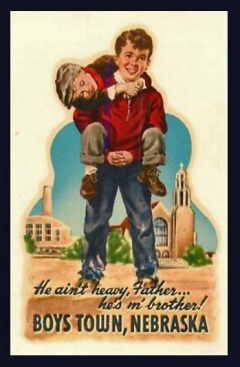 After saying we must carry each other’s burdens, the Apostle Paul seems to reverse himself three sentences later when he tells us we each must carry our own loads. It’s confusing; if we’re all supposed to carry our own loads, then nobody should need help carrying their burdens!
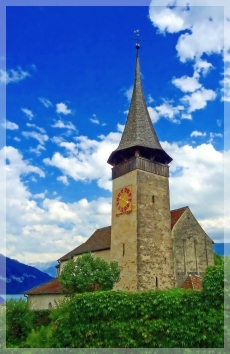 The cornerstone metaphor continues into the New Testament with both Paul and Peter referring to Jesus as the cornerstone of our faith. Nowadays, cornerstones are structurally unneeded and a growing number of commercial buildings no longer have them. Symbolic rather than functional, many serve as time capsules holding material relevant to the building and the year it was built. Because commercial buildings so frequently change hands, even the custom of inscribing the building’s name on a cornerstone is disappearing. The latest practice is a freestanding cornerstone/time capsule resting on a pedestal placed in a prominent part of the building. That way, a new stone can replace the old one every time the building’s owner changes.
 In the Old Testament, “cornerstone” as a metaphor for the Messiah is found in Psalms, Isaiah, and Zechariah. In Zechariah 10, the prophet describes Israel’s need for purification because of their idolatry, fortune-tellers, and false prophets. Holding the nation’s leaders responsible for these transgressions, Zechariah says the people are like lost sheep without a shepherd. Proclaiming the arrival of the ”Lord of Heaven’s Armies” who will look after the flock, the prophet says he’ll come from Judah and describes him as a cornerstone, tent peg, and battle bow.
 Devotions of the Heart