DON’T KILL THE MESSENGER

These people are stubborn rebels who refuse to pay attention to the Lord’s instructions. They tell the seers, “Stop seeing visions!” They tell the prophets, “Don’t tell us what is right. Tell us nice things. Tell us lies. Forget all this gloom. Get off your narrow path. Stop telling us about your ‘Holy One of Israel.’” [Isaiah 30 9b-11 (NLT)]

fireweedBeing a prophet was a calling from the Lord and probably an unwelcome one at that. Amos, a businessman from Tekoa in Judah, was minding his own business when God called on him. He probably would have preferred tending his sheep and cultivating his fig trees to pronouncing judgment upon the Israel, Judah, and other nations. Nevertheless, this layman accepted God’s call and denounced the nations’ sins with brutal frankness. It was at the height of Israel’s prosperity that he prophesied their end by singing a funeral song for the northern kingdom. Needless to say, the words of a Judean pronouncing judgment upon Israel were not welcomed. Even though Amaziah ordered him back to Judah, Amos continued to give God’s message to the people.

It never seemed to go well for God’s prophets. Having infuriated the priests by going to the Temple to rebuke the people for their idolatry and falseness, Jeremiah was banned from the Temple even though he was the son of a priest. Seeing him as a traitor and conspirator, the priests plotted his death and Jeremiah was arrested, beaten, imprisoned, and thrown into a cistern to die. Although he was rescued from the cistern, he later was forcibly taken by rebels to Egypt and church tradition holds that he was stoned to death there.

It didn’t go any better for the rest of God’s prophets. Blaming Elisha for his troubles, the king of Aram wanted him beheaded and Elijah spent much of his time fleeing from the wrath of Jezebel and Ahab. Micaiah was tossed into prison for predicting Israel’s defeat and Ahab’s death, Daniel was thrown into a lion’s den, John the Baptist was beheaded and, according to rabbinical tradition, King Manasseh executed Isaiah by having him sawn in half! If the prophets weren’t losing their lives, they were running for them!

These prophets were unpopular because they fearlessly told the truth instead of what the people wanted to hear. They revealed the people’s sins and warned of their consequences. Sent to confront rather than comfort, their messages often were unwelcome and ignored. What those who persecuted them failed to realize is that, while they may have silenced the men’s voices temporarily, the truth of their messages didn’t disappear!

Let’s face it—reproach, sacrifice, and repentance are never popular messages. Not everything we read in the Bible or hear from the pulpit is going to be comforting and cheerful; it does, however, need to be heard. Not everything the Holy Spirit tells us is going to be approving, but it will be edifying. Not everything God instructs us to do will be easy, but it will be worthwhile. Not everything said by our brothers and sisters in Christ will be appreciated, but it will be honest. God gives warnings so we won’t have to suffer his wrath. Rather than ignoring, persecuting, or killing God’s messengers, we’re better off listening to them and heeding their words.

This is the reply of the Holy One of Israel: “Because you despise what I tell you and trust instead in oppression and lies, calamity will come upon you suddenly—like a bulging wall that bursts and falls. In an instant it will collapse and come crashing down. [Isaiah 30:12-13 (NLT)]

Copyright ©2022 jsjdevotions. All rights reserved.

ONLY THE BEST

When it was time for the harvest, Cain presented some of his crops as a gift to the Lord. Abel also brought a gift—the best portions of the firstborn lambs from his flock. The Lord accepted Abel and his gift, but he did not accept Cain and his gift. [Genesis 4:3-5a (NLT)]

My guests never get the first piece of pie or lasagna because it always turns into a broken, sticky mess with half of it remaining in the pan. They also don’t get the over-baked cookies, the frayed towels, chipped china, or last night’s left-overs. Since I would never serve a guest anything but the best I have to offer, why is it so tempting to give God less than our best?
While Abel offered his first and best, Cain didn’t and we’ve continued much the same way today. We often complain when we’re asked to serve and begrudge the time spent serving. We give God our money after we’ve purchased everything we want and our prayers only when we can find the time or want something. We read His word when there’s nothing better to do, worship Sunday morning if we wake up in time or the golf game is cancelled, and volunteer only at our convenience. It’s our outdated cans that we bring to the food pantry and our stained and torn clothing that we donate to the resale shop.

When Cain and Abel brought their gifts to the Lord, Cain, a farmer, gave from his crops and Abel, a shepherd, gave from his flock. Literally translated, Cain “bringeth from the fruit of the ground a present to Jehovah” and Abel brought “from the female firstlings of his flock, even from their fat ones.” While God was pleased with Abel’s offering, He wasn’t with Cain’s. Some commentators explain God’s displeasure by saying He wanted an animal (blood) sacrifice rather than the bloodless sacrifice from the soil. Scripture, however, doesn’t say that it had to be a blood sacrifice. The Hebrew word used was minchah which clearly meant gift, tribute, or offering and the later law of Moses tells us that both animal and plant offerings were acceptable. The brothers’ offerings were appropriate for their occupations.

God’s problem wasn’t that one gift was fauna and the other flora; he was displeased with one giver’s heart! Showing his love for God, Abel didn’t give just any animal from his flock; he gave the “firstlings.” The Hebrew word used was bakar, meaning the first and best animals. While there is a similar Hebrew word, bakkurah, (translated as “firstfruits”) for the first and best of a grain or fruit offering, that word was not used for Cain’s gift. While the subtle difference is easily missed by 21st century readers, it would have been abundantly clear to the Israelites. While Abel gave the best, Cain just gave some. We don’t know if his offering was blemished, bruised, or just the leftovers from his harvest, but we do know it wasn’t the first and best!

God didn’t confront Cain because he failed to offer meat; he confronted him because Cain’s heart wasn’t in the right place. Rather than an act of worship, his gift was offered begrudgingly rather than willingly, out of a sense of duty than one of love.

We know from the story of the widow’s two coins that it’s not the kind or size of the offering that matters—it’s the heart attitude of the giver that’s important. Man sees only the gift but God sees the heart of the giver. Hallmark’s “When You Care Enough to Send the Very Best” is one of the most recognized slogans of all time. God gave us His best in Jesus; can we give Him anything less in return? Do we care enough to give Him our very best?

We offer with joy and thanksgiving what you have first given us—our selves, our time, and our possessions, signs of your gracious love. Receive them for the sake of him who offered himself for us, Jesus Christ our Lord. Amen. [Lutheran Book of Worship]

Honor the Lord with your wealth and with the best part of everything you produce. [Proverbs 3:9 (NLT)]

As you harvest your crops, bring the very best of the first harvest to the house of the Lord your God. [Exodus 34:26 (NLT)]

Copyright ©2021 jsjdevotions. All rights reserved.

ARE YOU READY?

But you, O Bethlehem Ephrathah, are only a small village among all the people of Judah. Yet a ruler of Israel, whose origins are in the distant past, will come from you on my behalf. [Micah 5:2 (NLT)]

All right then, the Lord himself will give you the sign. Look! The virgin will conceive a child! She will give birth to a son and will call him Immanuel (which means “God is with us”). [Isaiah 7:14 (NLT)]

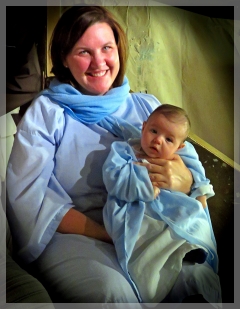
One December evening several years ago, we walked the streets of Bethlehem. Instead of travelling to the Holy Land, however, we traveled back in time at a local church. Our journey began with a stroll through the Christmas story. We walked past Gabriel meeting with Mary, an angel visiting the sleeping Joseph, the shepherds and sheep, Joseph and a very pregnant Mary in a stable, and met the Magi with their camels and gifts. We then went inside the parish hall to the bustling city of Bethlehem. As required by the emperor, we stopped to register for the census and pay our taxes before moving through the crowded marketplace to the shops of the wine merchant, carpenter, leather worker, and oil and spice dealers. After pausing to watch mud bricks being made and fabric being dyed, a young boy took us on a tour through his 1st century Jewish home.

As congested as the area was, we nearly missed our last stop—Joseph, Mary, and their newborn son. Of course, we had an advantage over the people of Bethlehem because we knew the significance of that baby born so many years ago—He was the promised Messiah! Knowing the significance of His birth, we looked for Him.

Although the Hebrew Bible (Old Testament) was written over a period of 1000 years and completed several hundred years before the 1st century, it contained over 300 prophecies of the coming Messiah. The Israelites had centuries to prepare for their savior and all those prophecies to alert them. But, when God Himself took on human flesh over 2,000 years ago, they were too busy in the streets of Bethlehem to notice His arrival. Other than a few shepherds, no one else observed anything special that night. More than a month later, it only was Anna and Simeon who recognized the infant Messiah at Mary’s purification ceremony in Jerusalem. It was almost two years later when some foreign wise men (who’d been following an astronomical phenomenon) brought gifts and worshipped the long-awaited child. With all those prophecies, why weren’t the people of Judah ready and waiting?

Once we walked out the back door of the parish hall, we returned to the 21st century with its Christmas carols, chocolate chip cookies, hot cocoa, and a machine pumping out artificial snow to squeals of delight from the Florida children. Let us never forget, however, that the story isn’t over. There are still many unfulfilled prophecies in the Bible regarding Christ’s second coming. The people of Bethlehem weren’t ready for His first arrival; will we be ready for His second one?

Be dressed for service and keep your lamps burning, as though you were waiting for your master to return from the wedding feast. Then you will be ready to open the door and let him in the moment he arrives and knocks. The servants who are ready and waiting for his return will be rewarded. I tell you the truth, he himself will seat them, put on an apron, and serve them as they sit and eat! He may come in the middle of the night or just before dawn. But whenever he comes, he will reward the servants who are ready. [Luke 12:35-38 (NLT)]

So you, too, must keep watch! For you do not know the day or hour of my return. [Matthew 25:13 (NLT)]

Copyright ©2021 jsjdevotions. All rights reserved.

GOING TRASH-FREE

A wise person is hungry for knowledge, while the fool feeds on trash. [Proverbs 15:14 (NLT)]

eastern tiger swallowtail butterflyEvery breakfast, lunch and dinner, a recent house guest consumed between five and fifteen supplements like flaxseed and fish oils, magnesium, vitamin D, calcium, turmeric, ginger, cinnamon, and resveratrol (among others). Annually, people like our guest spend around $35 billion on supplements, vitamins, minerals, botanicals, and other substances to enhance their health. It doesn’t stop there; every year, five million diet books are published, at least 17 million cookbooks are purchased, and $33 billion is spent on weight loss products. Add to that all of the magazines, food channels, websites, blogs, and podcasts dedicated to nutrition, recipes, and weight loss and you have a nation of people who seem obsessed with what goes into their bodies.

Recently, a several hours delay at the airport led me into one of the terminal’s newsstands. After browsing the magazine rack for something to read during the long wait, it occurred to me that our nation appears to be more concerned about what we feed our bodies than the material with which we nourish our minds. I’m no prude but just looking at the topics listed on the covers of many magazines caused me to blush and the exposed bodies on the covers should have made the models blush! Although the Bible is pretty clear about not gossiping, many of those magazines and tabloids were nothing but gossip about the private lives of various celebrities. Rather than being so concerned with the calories or fat grams we put in our bodies, we might want to give some consideration to what we put in our minds. Instead of going fat-free, we could try going trash-free!

If we go on a trash-free diet, however, we should give serious thought to the other things we consume. We have television programs with housewives unlike any I’ve ever met, bachelors and bachelorettes trying out one another the way King Xerxes did with Esther, and hook-ups instead of relationships. While I wouldn’t want to return to the 50s when Elvis’ gyrations meant he was televised only from the waist up, it seems that we’ve gone too far the other way as near naked entertainers twerk while singing disgusting lyrics like “Sex in the air, I don’t care … Sticks and stones may break my bones but chains and whips excite me.” As Christ followers, we should give serious thought to all that we consume, not just in print, but also on our phones, radios, iPods, computers, television, and movie screens.

The words and images we take in affect our spiritual well-being as much as food affects our physical health. If we want high-quality ideas and words to come out of us, we need first-rate ideas and words to enter into us. Are we looking at and listening to the media with the eyes and ears of Jesus or just mindlessly snacking on the equivalent of the empty calories found in junk food?

As for supplements—in actuality, the efficacy of many of my friend’s supplements is questionable; all they really do is create expensive urine. Supplementing our lives with daily Scripture, prayer, Bible study, Christian fellowship, and church, however, is guaranteed to make us better, stronger, and happier than any pill could!

Today, let’s spend more time thinking about our spiritual food than our daily bread.

Why spend your money on food that does not give you strength? Why pay for food that does you no good? Listen to me, and you will eat what is good. You will enjoy the finest food. Come to me with your ears wide open. Listen, and you will find life. [Isaiah 55:2-3a (NLT)]

And now, dear brothers and sisters, one final thing. Fix your thoughts on what is true, and honorable, and right, and pure, and lovely, and admirable. Think about things that are excellent and worthy of praise. [Philippians 4:8 (NLT)]

Copyright ©2021 jsjdevotions. All rights reserved.

HISTORIES

gardeniaThis is what the Lord says: “Because you have obeyed me and have not withheld even your son, your only son, I swear by my own name that I will certainly bless you. I will multiply your descendants beyond number, like the stars in the sky and the sand on the seashore. Your descendants will conquer the cities of their enemies. And through your descendants all the nations of the earth will be blessed—all because you have obeyed me. [Genesis 22:16-18 (NLT)]

When reading the Bible in canonical order (the order the books are placed in the Bible), the two books of Chronicles seem to be a repeat of the books of Samuel and Kings. When reading the Bible in historical order, with the text arranged in the order in which the events occurred, it becomes evident that their authors didn’t relate identical events the same way. After finishing the last chapter of 2 Chronicles (in which Cyrus allowed the Judeans to go home) in my chronological Bible, I went on to portions of Ezra, Haggai, Zechariah, and Daniel. Following Daniel 6, however, I found myself at 1 Chronicles, chapters 1 through 9 consisting of nine chapters of Israelite genealogy beginning with Adam and continuing on with at least 900 more names. Wondering at its placement and the differences between Kings and Chronicles, I did a little digging.

The books of Kings and Chronicles were written at different times, for different audiences, and for different reasons. Because Kings ends with the release Judah’s King Johoiachin from prison during the reign of Babylon’s Evil-Merodach (562-560 BC), scholars think it was written during the early years of the exile and completed around 560 BC. Chronicles, however, ends more than thirty years later at the conclusion of Judah’s exile. Because several generations of Zerubbabel’s descendants are in its genealogy, scholars think it was written around 450 to 430 BC and possibly as late as 400 BC. Kings seems to have been written for Judah’s exiles in captivity while Chronicles was written for the exiles who returned to their homeland—many of whom, like Zerubbabel, were born in captivity.

Kings presents a distinctly negative view of both the northern and southern kingdoms’ kings. All nineteen of Israel’s kings and twelve of Judah’s twenty kings are portrayed as bad. Moreover, any faults of Judah’s eight good kings (such as their failure to destroy the pagan shrines and David’s adultery with Bathsheba) are mentioned. Written for the exiles, King records the failures of both kingdoms’ earthly kings, their blatant disregard for the law, their rejection of God’s prophets, and their idolatry. Its negative narrative clearly explains why the Jews ended up in captivity with their homeland in ruins. It provided an answer to the exiles’ question of, “How did we get here?”

As for those nine chapters of genealogy in the Chronicles—they answered the returning exiles’ question of, “How is this history relevant to me?” It connected the people, most of whom had never lived in Judah or worshipped at the Temple, with God’s divine plan—a plan that began with Adam and continued through His covenant promises made to Abraham, Isaac, Jacob, and David.

Since the returning exiles’ families originally came from Judah, the Chronicler concentrated on the southern kingdom and mentioned the northern one only if relevant to Judah’s story. While he didn’t exactly rewrite history, the Chronicler accentuated the positive and eliminated some of the negative by not mentioning things like the seven years of warfare between Saul’s death and David becoming king of “all Israel” or Absalom’s rebellion. Its genealogy and more positive take on Judah’s history provided this new generation with a more optimistic and hopeful outlook as they rebuilt their nation and looked forward to the coming Messiah.

The scepter will not depart from Judah, nor the ruler’s staff from his descendants, until the coming of the one to whom it belongs, the one whom all nations will honor. [Genesis 49:10 (NLT]

Copyright ©2021 jsjdevotions. All rights reserved.

WITHIN OUR LIMITS

The apostles returned to Jesus from their ministry tour and told him all they had done and taught. Then Jesus said, “Let’s go off by ourselves to a quiet place and rest awhile.” [Mark 6:30-31a (NLT)]

Whenever we were with my mother-in-law, she would say, “Come, sit down, and rest for a bit.” Since I usually was busy preparing a meal or doing some task for her, I’d say, “Not now, Grandma, maybe later!” Now that she’s gone, I wish I’d spent a few more minutes sitting and resting with her. I thought of her this morning when reading Jesus’ words urging the disciples to find a quiet place to rest awhile.

Having just returned from their first mission trip of preaching, healing the sick, and casting out demons, the disciples were tired and hungry. In an attempt to get away from the crowd gathered around them, Jesus and the men left by boat to find an out-of-the-way place where they could rest and talk. We know the rest of the story—the people followed on foot and were waiting for Jesus when He came ashore. Seeing the throng as “sheep without a shepherd,” Jesus had compassion and taught them throughout the day. When evening came, He ended up feeding over 5,000 with five loaves and two fish. The miraculous feeding of this multitude overshadows the way the story began—with Jesus’ suggestion that they find “a quiet place and rest awhile.” Nevertheless, it’s as important as the rest of the story.

My physical issues the last several months made it clear that not taking regular breaks from the computer and failing to get a decent night’s sleep take a toll on our bodies. I’ve also come to understand that it’s not just our bodies that suffer when life gets out of balance. Retreat and rest are as important spiritually as they are physically; that’s why, as busy as Jesus was, He often withdrew to the wilderness for prayer.

According to the Talmud, Jews are supposed to pray three times a day and Scripture tells us that both David and Daniel did so. Muslims also take daily spiritual retreats in their obligatory five-times-a-day prayer ritual called salah. The Arabic word salah literally means “connection” and this practice is intended to link the one who prays with the creator. Other than Paul telling us to never cease praying, we Christians don’t have a similar “requirement.” If we did, I suspect some of us would try to lump together the five prayers into one or two so we wouldn’t have to interrupt our day (which would defeat its purpose). Muslims, however, have specific times (dawn, noon, afternoon, sunset, and evening) specified so that believers continue to maintain their connection with God throughout the day. Perhaps we should consider adopting their practice in some way.

In her book about discerning God’s will, author Ruth Haley Barton said, “Disciplines of rest and retreat teach us to live within our limits.” She pointed out that when we fail to do so, we compromise the quality of our relationships both with God and the people around us. My mother-in-law knew how to live within her limits. Granted, as a centenarian, she had fairly narrow limits and did a lot of resting, but she had a point! We need to find a balance between work and retreat, activity and rest, doing and being, in all areas of life.

Even though we know better, when it comes to spiritual matters, many of us emulate Martha by being busy doing for the Lord rather than model her sister Mary, who retreated from her activities to be with the Lord! When God instituted the work-free Sabbath, the Israelites had to trust God’s provision enough for tomorrow to retreat and rest on the Sabbath. Observing the Sabbath kept them from idolizing work. When we won’t stop working to be with the Lord, we’ve created a false idol. When we pause for Him, as did the Israelites on the Sabbath, we begin living within our limits by conceding that God is God and we are not! Only He can do it all.

Living within our limits doesn’t mean we have to go off on vacation or spend a week in a monastery and it shouldn’t be confined to just one day a week. Living within our limits could begin with our own Christian version of selah by taking regular mini-retreats from our daily activities to connect with God through prayer. Scripture tells us that Jesus frequently withdrew from the world to pray; let us not be afraid to do the same.

But Jesus often withdrew to the wilderness for prayer. [Luke 5:16 (NLT)]

Copyright ©2021 jsjdevotions. All rights reserved.