
One day the Pharisees asked Jesus, “When will the Kingdom of God come?” Jesus replied, “The Kingdom of God can’t be detected by visible signs. You won’t be able to say, ‘Here it is!’ or ‘It’s over there!’ For the Kingdom of God is already among you.” Luke 17:20-21
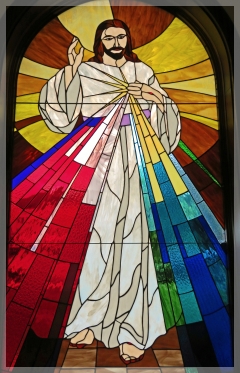 Depending on your Bible translation, the Kingdom of God is mentioned at least 68 times in the New Testament. Rather than “Kingdom of God,” Matthew usually used “Kingdom of Heaven.” All four gospels, however, are speaking of the same place. Matthew was a Jew and primarily writing for a Jewish audience. While we tend to interpret the third commandment about not misusing the Lord’s name to mean not using it irreverently, Jews have a much stricter interpretation. Believing God’s name too sacred to say aloud, by the 1st century, His name wasn’t even written or spoken in anything but prayer. Even today, many observant Jews substitute “G-d” rather than write the full name.
Because Jesus continually preached the Kingdom of God (or Heaven), the Pharisees asked Him when it would come. Like the rest of Judah, they were thinking of a materialistic kingdom—one with boundaries and a Jewish ruler—so they missed what was happening in front of them. Looking for a political rather than a spiritual fix, they couldn’t understand that the Kingdom had arrived and God was busy restoring it.
Jesus’ answer to the Pharisees sounds like He’s saying the Kingdom is present and yet He also told His disciples to pray for its coming. Rather than an involved theological explanation to explain a kingdom that was both here and pending, Jesus compared the Kingdom of God to a mustard seed that was planted in a field but hadn’t matured into its future glory. The Kingdom was “already” because believers were taking part in building it but it also was “not yet” because it wouldn’t reach its full expression until the future. To further explain the Kingdom, Jesus used a number of metaphors: a farmer scattering seed, yeast in dough, a fishing net, a merchant in search of fine pearls, treasure in a field, a king settling his accounts, a landowner hiring workers for his vineyard, a king’s wedding feast for his son, ten bridesmaids meeting the bridegroom, and a landowner with tenant farmers. Even then, His own disciples were still thinking of an earthly kingdom when they asked the resurrected Jesus, “has the time come for you to free Israel and restore our kingdom?” [Acts 1:6]
The Kingdom of God is not about going to heaven when we die; it’s about bringing God’s kingdom to earth. We pray, “May your Kingdom come soon. May your will be done on earth, as it is in heaven.” [Matthew 6:10] God is king of everything and everyone and, when He reigns in our hearts and minds, His Kingdom is already here. At the same time, His Kingdom is not yet here until its full realization when paradise is re-created in the New Jerusalem.
The Messiah has accomplished the work of redemption, the Spirit has been poured out, yet evil has not been eradicated, the general resurrection is still future, and the final state of God’s kingdom has not been established. In other words, the new era has begun–has been inaugurated–but it has not yet replaced the old era. [Dr. Peter Cockrell]
 In the Old Testament, “cornerstone” as a metaphor for the Messiah is found in Psalms, Isaiah, and Zechariah. In Zechariah 10, the prophet describes Israel’s need for purification because of their idolatry, fortune-tellers, and false prophets. Holding the nation’s leaders responsible for these transgressions, Zechariah says the people are like lost sheep without a shepherd. Proclaiming the arrival of the ”Lord of Heaven’s Armies” who will look after the flock, the prophet says he’ll come from Judah and describes him as a cornerstone, tent peg, and battle bow.
 The anchor, the Christian symbol of hope, is the most prevalent of all the Christian symbols found in the Roman catacombs. In fact, all of the symbols, paintings, mosaics, and reliefs found in the miles of labyrinth-like narrow tunnels and thousands of graves in the catacombs reflect hope in some way. Instead of the dark funereal images you might expect in an underground cemetery, the white walls of the Christian catacombs feature living things like flowers and birds along with Bible stories expressing hope in God’s plan of salvation. Prominent themes from the Old Testament include Daniel emerging untouched from the lions’ den and Shadrach, Meshach, and Abednego exiting unharmed from the fiery furnace. Frequently depicted are the stories of Noah, who escaped from the flood, and Jonah who was delivered from the sea monster. Continuing the theme of deliverance are many images of the good shepherd so frequently mentioned in Psalms. New Testament stories usually showed Jesus raising the dead (with over fifty representations of Lazarus), healing people, and feeding the multitude. The art of the catacombs is all about man’s hope in God’s deliverance, provision, and plan of salvation.
 Yesterday I wrote about the Song at the Sea or Song of Moses found in Exodus 15. There is another psalm known as the Song of Moses. Found in Deuteronomy 32, it was sung forty years after that first one, when the Israelites were again preparing to enter Canaan. With Moses’ death imminent, God had appointed Joshua as the nation’s new leader. Knowing that the people would turn their back on Him once in Canaan, the Lord met with Moses and dictated the words to this song. God’s words were ones of warning and Moses was to teach this song to the Israelites as a reminder of the consequences of disobedience.
 Following the Israelites’ successful passage through the Red Sea and the destruction of Pharaoh’s army, we find Moses and the people singing a song of deliverance and praise in Exodus 15. This beautiful and powerful psalm vividly describes the warrior God Yahweh hurling Pharaoh’s chariots and army into the sea. This is Moses’ song but he doesn’t figure in the account at all. A paean to the supremacy and unrivaled power of Jehovah, all of the glory is given to God.
 Devotions of the Heart