ASK, SEEK, KNOCK

Ask and it will be given to you; seek and you will find; knock and the door will be opened to you. [Matthew 7:7 (NIV)]

Ask, seek, and knock—three easy instructions. Ask. Ask as if we mean it, as if we truly care about the answer. Ask as if we believe we’re being heard. Ask with the hunger of a beggar begging bread. Ask with the fervor of someone sinking in quicksand pleading for help. Ask with the thirst of a dying man in the desert requesting water. Ask as if our very lives depend on the answer. Ask.

Seek. Seek as if we were searching for something of value—not a cursory look as if we’d lost a button or dropped a paper clip. Seek as we would for a lost wedding ring, wallet, or child. Seek as we would for an exit from a burning building. Seek by adding efforts to our prayers; after all, we can’t ask God for a harvest without first planting the seeds. Seek as if we care, as if our very lives depended on finding it. Seek.

Knock. Knock as if we truly wanted to enter. Knock with confidence—not shyly as if we don’t know whose door we’re at or timidly as if we’re not sure we’re welcome. Knock and keep knocking as if we desperately need the door to be answered, as if our very lives depended on it. Knock.

We have a promise—God’s promise—and we must ask, seek, and knock as if we believe that promise! Where there is a praying heart, He promises we’ll find a listening God—a God who loves us as a father loves a child. Like a good parent, however, no matter how fervently we ask, how diligently we seek nor how hard we knock, He won’t give us stones or snakes or anything bad for us. While there will be no money for drugs when we need rehab, no car when a bicycle will do, no escape from facing consequences, and even no healing when God’s presence in our pain is enough, there will be mercy, peace, grace, patience, wisdom, strength against sin, and understanding. Rather than sell, loan or rent us His gifts, He gives them to us because He loves us! Trust His promise to generously give good things to those who ask, seek, and knock.

For everyone who asks receives; the one who seeks finds; and to the one who knocks, the door will be opened. Which of you, if your son asks for bread, will give him a stone? Or if he asks for a fish, will give him a snake? If you, then, though you are evil, know how to give good gifts to your children, how much more will your Father in heaven give good gifts to those who ask him! [Matthew 7:8-11 (NIV)]

Copyright ©2020 jsjdevotions. All rights reserved.

HISTORIES

gardeniaThis is what the Lord says: “Because you have obeyed me and have not withheld even your son, your only son, I swear by my own name that I will certainly bless you. I will multiply your descendants beyond number, like the stars in the sky and the sand on the seashore. Your descendants will conquer the cities of their enemies. And through your descendants all the nations of the earth will be blessed—all because you have obeyed me. [Genesis 22:16-18 (NLT)]

When reading the Bible in canonical order (the order the books are placed in the Bible), the two books of Chronicles seem to be a repeat of the books of Samuel and Kings. When reading the Bible in historical order, with the text arranged in the order in which the events occurred, it becomes evident that their authors didn’t relate identical events the same way. After finishing the last chapter of 2 Chronicles (in which Cyrus allowed the Judeans to go home) in my chronological Bible, I went on to portions of Ezra, Haggai, Zechariah, and Daniel. Following Daniel 6, however, I found myself at 1 Chronicles, chapters 1 through 9 consisting of nine chapters of Israelite genealogy beginning with Adam and continuing on with at least 900 more names. Wondering at its placement and the differences between Kings and Chronicles, I did a little digging.

The books of Kings and Chronicles were written at different times, for different audiences, and for different reasons. Because Kings ends with the release Judah’s King Johoiachin from prison during the reign of Babylon’s Evil-Merodach (562-560 BC), scholars think it was written during the early years of the exile and completed around 560 BC. Chronicles, however, ends more than thirty years later at the conclusion of Judah’s exile. Because several generations of Zerubbabel’s descendants are in its genealogy, scholars think it was written around 450 to 430 BC and possibly as late as 400 BC. Kings seems to have been written for Judah’s exiles in captivity while Chronicles was written for the exiles who returned to their homeland—many of whom, like Zerubbabel, were born in captivity.

Kings presents a distinctly negative view of both the northern and southern kingdoms’ kings. All nineteen of Israel’s kings and twelve of Judah’s twenty kings are portrayed as bad. Moreover, any faults of Judah’s eight good kings (such as their failure to destroy the pagan shrines and David’s adultery with Bathsheba) are mentioned. Written for the exiles, King records the failures of both kingdoms’ earthly kings, their blatant disregard for the law, their rejection of God’s prophets, and their idolatry. Its negative narrative clearly explains why the Jews ended up in captivity with their homeland in ruins. It provided an answer to the exiles’ question of, “How did we get here?”

As for those nine chapters of genealogy in the Chronicles—they answered the returning exiles’ question of, “How is this history relevant to me?” It connected the people, most of whom had never lived in Judah or worshipped at the Temple, with God’s divine plan—a plan that began with Adam and continued through His covenant promises made to Abraham, Isaac, Jacob, and David.

Since the returning exiles’ families originally came from Judah, the Chronicler concentrated on the southern kingdom and mentioned the northern one only if relevant to Judah’s story. While he didn’t exactly rewrite history, the Chronicler accentuated the positive and eliminated some of the negative by not mentioning things like the seven years of warfare between Saul’s death and David becoming king of “all Israel” or Absalom’s rebellion. Its genealogy and more positive take on Judah’s history provided this new generation with a more optimistic and hopeful outlook as they rebuilt their nation and looked forward to the coming Messiah.

The scepter will not depart from Judah, nor the ruler’s staff from his descendants, until the coming of the one to whom it belongs, the one whom all nations will honor. [Genesis 49:10 (NLT]

Copyright ©2021 jsjdevotions. All rights reserved.

THE UNFORGIVABLE SIN

So I tell you, every sin and blasphemy can be forgiven—except blasphemy against the Holy Spirit, which will never be forgiven. Anyone who speaks against the Son of Man can be forgiven, but anyone who speaks against the Holy Spirit will never be forgiven, either in this world or in the world to come. [Matthew 12:31-32 (NLT)]

blue jayWhen speaking to the Pharisees, Jesus delivers what could be called the ultimate good news/bad news scenario. The good news is that, no matter how evil, vicious or long-lasting the sin, any sin (even blasphemy) is forgivable. The good news, however, comes with a “but” when Jesus says blasphemy against the Spirit will never be forgiven.
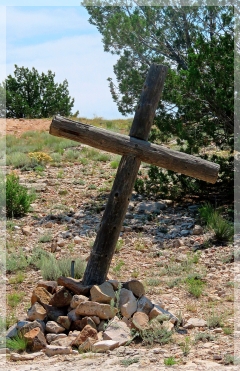
Reading Jesus’ words—words said by the One whose blood was shed so our sins would be forgiven—is perplexing. If Jesus could forgive the many unnamed sins of those he healed, the soldiers who gambled for his clothing at the foot of the cross, and Peter’s three denials, what sin is so great that even His blood would not cover it? What exactly is blasphemy against the Spirit and how does it differ from speaking against the “Son of Man” (who we know to be Jesus)?

This good news/bad news scenario was delivered right after Jesus made it clear that there was no neutral ground when it came to Him—either people were with Jesus on God’s side or without Him on Satan’s side. He was directly speaking to Pharisees—people clearly not on Jesus’s side! They hated Him, were plotting His death, and just had denied proof of Christ’s divinity by attributing His healing miracles to Satan. Theirs wasn’t an act so horrendous that Jesus could not forgive them. Rather, their sin was one of attitude. What was unforgivable was their continual rejection of Jesus and their deliberate choice of Satan over Him.

As shocking as it seems, Jesus even says that blasphemy against Him can be forgiven. The Apostle Paul, for example, freely admitted to blaspheming the name of Christ while persecuting Christians. Yet, he experienced God’s mercy and forgiveness because he did so in ignorance and unbelief. If, however, after encountering the living Jesus on the road to Damascus, being supernaturally blinded, meeting Ananias, and having the scales fall from his eyes so that he knew the truth, Paul had never repented and come to believe in Christ, like the Pharisees, he would have committed the unforgivable sin. It would have become unpardonable blasphemy against the Spirit only if, after seeing the Truth incarnate, Paul continued to disparage, attack, and reject Jesus. Fortunately for us, after seeing the truth, Paul did repent and his “blasphemy” was forgiven.

Even scholars and theologians disagree on the exact meaning of this difficult text and I am neither scholar nor theologian. Nevertheless, the unpardonable sin appears to be what those Pharisees exhibited: a deliberate. obstinate, resolute, and tenacious resistance to the Spirit’s pursuit and voice. Even the demons recognized Jesus as the Son of God but the religious leaders, people who knew the prophecies and witnessed His miracles first-hand, blatantly refused to acknowledge Him. They didn’t even bother to dispute the miracles; they chose instead to dispute the source of Jesus’ power by attributing the works of God to Satan. That was unforgivable.

Some theologians think this warning applies only to those people of the 1st century who, like the Pharisees, actually witnessed the irrefutable proof that Jesus was empowered by the Holy Spirit and then denied the overwhelming evidence of His divinity. Only God knows for sure. The important thing for us to understand is that, like the unbelieving Pharisees, people freely choose how they will spend eternity and, like Paul, no matter how shameful the sin, when we sincerely seek God’s forgiveness through Christ, we can be certain that He will forgive us.

Even though I used to blaspheme the name of Christ. In my insolence, I persecuted his people. But God had mercy on me because I did it in ignorance and unbelief. Oh, how generous and gracious our Lord was! He filled me with the faith and love that come from Christ Jesus. This is a trustworthy saying, and everyone should accept it: “Christ Jesus came into the world to save sinners”—and I am the worst of them all. But God had mercy on me so that Christ Jesus could use me as a prime example of his great patience with even the worst sinners. Then others will realize that they, too, can believe in him and receive eternal life. [1 Timothy 1:13-16 (NLT)]

Copyright ©2021 jsjdevotions. All rights reserved.

WHAT HAPPENS NEXT? 

Then the leading priests decided to kill Lazarus, too, for it was because of him that many of the people had deserted them and believed in Jesus. [John 12:10-11 (NLT)]

Golondrinas - NMWhile Scripture tells us about Martha and Mary, the first mention of their brother is when his sisters sent a message to Jesus that Lazarus had taken sick. By the time Jesus returned to Bethany, Lazarus had been dead four days and placed in a tomb. After Jesus called for him to come out, the once dead man, still wrapped in his graveclothes, emerged. The next we know of Lazarus is that he was present when Martha served a dinner in Jesus’ honor. Because the testimony of those who’d witnessed his miraculous resurrection had spread like wildfire, people gathered there to see the living Lazarus and Jesus, the man who brought a dead man back to life with just a few words.

After that dinner, Lazarus vanishes from the gospels as quickly as he appeared. If we were filming Jesus’ life, the role of Lazarus would be a bit-part without any lines. Nevertheless, this nondescript man played a pivotal role in the gospel story. With the exception of Jesus’ resurrection and ascension, Lazarus’ return to life is the most amazing miracle of the gospels. So, what happened to the man?

The raising of Lazarus sealed Jesus’ fate and, since Lazarus’ existence threatened the Jewish establishment, it may have sealed his, too. Along with their plot to kill Jesus, the priests plotted to kill HIM, as well. They wanted Lazarus dead because he was a living witness to Jesus’ power. While it is believed that Lazarus fled to avoid capture, we know that Jesus did not.

Did Lazarus’ miraculous escape from death change him? How could it not? Yet, I think of Justin, a young man for whom our church was praying. The picture of health, he collapsed due to a ruptured aorta and was “dead” for more than 15 minutes. The doctors warned his family that Justin’s survival was improbable and, if he were to survive, he would suffer severe brain damage. To everyone’s astonishment, however, Justin was walking, lucid, and speaking clearly less than ten days later; his only complaint was the soreness in his chest. His amazing recovery is nothing short of a miracle. Justin, however, does not believe in God or miracles. With no logical medical explanation for his survival, I wonder if that will change. Will his miraculous recovery and second chance at life cause Justin to reconsider his atheistic stand? Only God knows.

As for Lazarus, the rest of his story is mere speculation. While he may have remained in Bethany, church tradition holds that he moved to Cyprus, eventually became the bishop of Kition, and died a natural death in 63 AD. Yet other church historians believe Lazarus and his sisters moved to Gaul where he became the bishop of Marseilles and was beheaded by the Emperor Domitian. The only thing we know for sure about Lazarus is that he died a second time and that, some day in the future, Jesus will raise him from the dead once again. As for Justin, we know that he, too, will die a second time. Whether or not he will defeat death a second time is entirely up to him!

Just as everyone dies because we all belong to Adam, everyone who belongs to Christ will be given new life. [1 Corinthians 15:22 (NLT)]

Copyright ©2021 jsjdevotions. All rights reserved.

BUYING A FIELD

See how the siege ramps have been built against the city walls! Through war, famine, and disease, the city will be handed over to the Babylonians, who will conquer it. Everything has happened just as you said.  And yet O Sovereign LORD, you have told me to buy the field—paying good money for it before these witnesses—even though the city will soon be handed over to the Babylonians. Then this message came to Jeremiah from the Lord: “I am the Lord, the God of all the peoples of the world. Is anything too hard for me? [Jeremiah 32:24-27 (NLT)]

grand tetons - jackson holeUnder siege for nearly a year, Jerusalem was surrounded by the Babylonians, and Judah’s future looked grim. Whether it was poverty or the desire to get rid of property that soon would be worthless once Babylon invaded, Hanamel decided to sell his land in Anathoth, about three miles from Jerusalem. Under Israelite law, property was supposed to stay within a family and so Hanamel offered it to his cousin, the prophet Jeremiah.

Since Anathoth already was under Babylonian control, Hanamel’s real estate deal would be like being offered property in Kabul, Afghanistan. While real estate often is considered a good investment, purchasing property in an active war zone or occupied territory is not. Nevertheless, even though Jeremiah was imprisoned in the palace courtyard and the nation’s defeat was inevitable, God instructed him to become the property’s redeemer by purchasing his cousin’s land.

Having prophesied the fall of Judah, the destruction of Jerusalem, Zedekiah’s imprisonment, and the Jews’ captivity, Jeremiah knew how worthless the land was. Although he lawfully could refuse to purchase it, the prophet paid his cousin 17 shekels (about 18-months’ wages) for the land which, considering the circumstances, seems a sizeable sum for land he’d never live to enjoy. Assuring his scribe Baruch that the worthless land again would have value, he told him to take the deeds, place them in a clay jar (the ancient version of a safety deposit box), and preserve them in a safe place, The prophet then passed along God’s hopeful words to all those who witnessed the transaction in the courtyard: “Someday people will again own property here in this land and will buy and sell houses and vineyards and fields.”

Along with his prophecies of Jerusalem’s ruin, Judah’s defeat, and the people’s captivity, Jeremiah had prophesied God’s eventual restoration of the people to their land. He didn’t buy the land because Judah wouldn’t be conquered; he purchased it because it would! The prophet was putting his money where his mouth was. His purchase of a worthless piece of acreage was an act of faith. It was a sign of hope for the future by the man who’d prophesied doom and gloom—a powerful demonstration of his belief in God’s promise that the land would again have value and belong to the Jews.

If we want to see the fulfillment of God’s promises to us, like Jeremiah, we must be obedient to God’s commands, no matter how difficult, confusing, or absurd they seem to be. In the face of obstacles, hardship, or overwhelming odds, we must demonstrate our faith and hope in God because faith and obedience go hand in hand. If we say we believe His promises, we must act as if we truly do! May we always remember that nothing is too hard for the Lord!

I will certainly bring my people back again from all the countries where I will scatter them in my fury. I will bring them back to this very city and let them live in peace and safety. They will be my people, and I will be their God. And I will give them one heart and one purpose: to worship me forever, for their own good and for the good of all their descendants. And I will make an everlasting covenant with them: I will never stop doing good for them. I will put a desire in their hearts to worship me, and they will never leave me. I will find joy doing good for them and will faithfully and wholeheartedly replant them in this land. [Jeremiah 32:37-41 (NLT)]

Copyright ©2021 jsjdevotions. All rights reserved.

OR ELSE

My child, do not reject the Lord’s discipline, and don’t get angry when he corrects you. The Lord corrects those he loves, just as parents correct the child they delight in. [Proverbs 3:11-12 (NCV)]

little blue heron“Baby Blues,” a comic strip by Rick Kirkman and Jerry Scott, portrays the MacPherson family and the frustration, craziness, and humor that come with parenthood. Perhaps because I had a boy like him, my favorite character is the middle child, Hammie. Without a doubt, the inventive boy is a handful but he’s delightful in his own special way. When Zoe, his older sister, comments that he’s stopped making his usual annoying noise, he explains: “Mom used the three magic words.” When Zoe asks, “Please and thank you?” he clarifies, “Stop or else!”

Like the MacPhersons, the three magic words at our house were “please” and “thank you.” However, like Hammie’s mother, there were times I gave my children the option of obedience or facing the consequences with the other three: “Stop, or else!” Of course, the “or else” is an empty caution unless there’s an understanding of what “or else” entails.

The Old Testament is filled with God’s warnings of “or else” to the Israelites; sadly, it’s also a chronicle of their repeated failure to listen and obey Him. Time and time again, they disregarded God’s law, rejected His prophets, fought among themselves, worshipped other gods, and participated in pagan practices. They couldn’t say they weren’t warned by all the judges, kings, and prophets God sent to them so they shouldn’t have been surprised by the famines, floods, droughts, wars, exile, and oppression that resulted from their disobedience. Those afflictions, however, didn’t mean God had been unfaithful to His people. On the contrary, He was completely faithful to his words of warning. By withholding His blessings, the people got exactly what God said they would.

The book of Judges is a series of “Stop or else!” stories. Time and time again, after their disobedience, the Israelites faced the consequences of oppression by people like the Philistines and Ammonites. They eventually repented, called to God for help, and were granted relief. Although a period of peace followed, they were slow learners and the cycle would repeat: obedience gave way to disobedience and they again faced God’s “or else.” Nevertheless, just like Hammie’s patient and loving mother in the comic strip, God never gave up on His people.

Like a good parent, God gives fair warning and provides his people with plenty of opportunities to change their ways. Jesus warned us about sin, Satan, hypocrisy, pride, selfishness, materialism, greed, and false teachings. He clearly told us there are consequences to sinful behavior: the wages of sin is death, there will be a day of judgment, the unrighteous won’t enter the Kingdom, unbelief brings death but belief brings life, and the day of His return will come without warning. Scripture tells us how it will end—we can’t say we haven’t been warned!

It is the wonder of the grace of God that he has given such warnings. If we do not listen and turn from our evil ways, and so suffer awful judgment, then it is not the grace and love of God that is lacking, but the fault of our unrepentant hearts which refuse to heed the revelation of God, and spurn his love. [Georgina W. Everingham]

Our fathers on earth disciplined us for a short time in the way they thought was best. But God disciplines us to help us, so we can become holy as he is. We do not enjoy being disciplined. It is painful at the time, but later, after we have learned from it, we have peace, because we start living in the right way. … So be careful and do not refuse to listen when God speaks. Others refused to listen to him when he warned them on earth, and they did not escape. So it will be worse for us if we refuse to listen to God who warns us from heaven. [Hebrews 12:10-11, 25 (NCV)]

Copyright ©2021 jsjdevotions. All rights reserved.