
Most blessed among women is Jael, the wife of Heber the Kenite. May she be blessed above all women who live in tents. [Judges 5:24 (NLT)]
 Yesterday, I made reference to the story of Jael. Her story takes place about 200 years after the Israelites entered Canaan in the time of the Judges—a time when “all the people did whatever seemed right in their own eyes.” [17:6] Because of Israel’s disobedience, the Lord allowed King Jabin of Hazor to subjugate the people of Israel. Sisera led Jabin’s army and, with their 900 iron chariots, the Canaanites had oppressed the Israelites for twenty years. Deborah, a prophetess, was judge at the time.
When the people cried to the Lord for help, Deborah called for Barak. Promising victory, she gave him God’s command to lead Israelite warriors to Mount Tabor where God would lure Sisera and his men into a trap. When Barak insisted that Deborah join him in the battle, she warned him that the Lord’s victory over Sisera would be at the hand of a woman. At this point in the story, we assume Deborah’s prophecy is about herself.
Seeing Barak leading his men down Mount Tabor, Sisera’s troops proceeded down to the Kishon River to meet them in battle. When God sent a sudden storm, the river’s banks overflowed, flooded the valley, and Sisera’s chariots were useless in the mud. Panicked, the Canaanite troops abandoned their chariots and fled. Barak’s troops gave chase and defeated them.
Sisera, however, escaped and found his way to the Kenite camp. The Kenites were nomads, descendants of Moses’ brother-in-law Hobab, and had a long history with the Israelites. The word “kenite” is related to an Aramaic word meaning “smith” and the Kenites are believed to have been blacksmiths. As nomads, their very survival depended on staying out of other people’s disputes but, as smiths, they probably had dealings with Sisera regarding his iron chariots and Heber’s family was on good terms with King Jabin. Thinking he’d found sanctuary in the Kenite camp, Sisera ran to Jael’s tent. She invited the exhausted man inside, covered him with a rug, and gave him milk to drink. Knowing no one would look for him there since men were never allowed inside a woman’s tent, Sisera was sure he’d found safe haven. Asking Jael to keep a lookout, the exhausted man slept. Jael then took a tent peg and drove it through the sleeping man’s temples into the ground. When Barak arrived in search of his foe, Jael showed him the dead man. As Deborah predicted, Sisera died at the hand of a woman but it was Jael’s name that was sung in Deborah and Barak’s victory song.
Jael breached etiquette and usurped her husband’s authority by offering hospitality to a man (something only another man could do). She further dishonored Heber by betraying his alliance with King Jabin. Finally, she violated the ancient Near East principle of hospitality that guaranteed the safety of one’s guests. Like Rahab, she makes an unlikely heroine but, unlike the Jericho prostitute, she never makes mention of the Lord.
Was Jael a heroine who faithfully followed Israel’s God or simply an unscrupulous double-crosser who supported whatever side claimed victory? Seeing Sisera alone and fleeing for his life, Jael knew his troops had been defeated. After greeting him with a smile and a warm welcome, did she simply take the opportunity to curry favor with the Israelite victors? Or, because of her clan’s close ties with the Israelites, had she come to believe in the Israelite’s God? Knowing how ruthless Jabin and Sisera were, did she bravely refuse to remain neutral in the face of their evil? With Sisera’s death, King Jabin soon fell and Israel had peace for forty years. Deborah and Barak called Jael “blessed among women.” What do you think? Whatever her motives were—whether to serve Israel or herself—God used her to achieve His purpose.
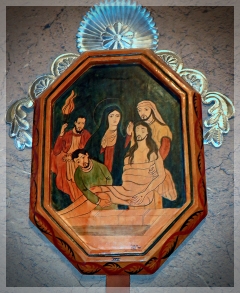 Several years ago, my mother-in-law was despondent when my brother-in-law’s deteriorating health necessitated hospice care. Parkinson’s disease had taken a terrible toll on him and a mother’s heart breaks when she sees her child’s life disintegrating before him. Yet, that’s what happened to Mary.
 In Jesus’ Parable of the Wedding Dinner, after the initial guests refused to come, the king’s servants invited everyone they could find. Since it was a royal wedding, you’d expect the new guests to be dignitaries but everyone was to be called—regardless of social standing, race, nationality, wealth, or even moral character.
 In explaining the nature of the Kingdom of Heaven, Jesus told a parable about a king who prepared a wedding feast for his son. Weddings are notable events but this was a royal wedding of great significance! Perhaps the most famous royal wedding was that of Princess Diana and Prince Charles in 1981. Broadcast all over the world, the wedding was viewed by 750 million people and 3,500 people attended the royal nuptials. In spite of the honor it was to receive an invitation from the Queen, not everyone who got one attended the festivities. The Presidents of the Republic of Ireland and Greece along with King Juan Carlos and Queen Sofia of Spain spurned the invitation for political reasons.
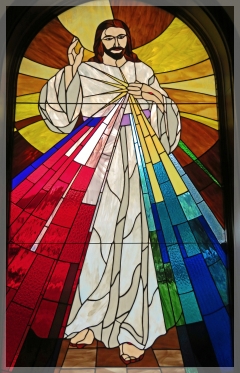 Depending on your Bible translation, the Kingdom of God is mentioned at least 68 times in the New Testament. Rather than “Kingdom of God,” Matthew usually used “Kingdom of Heaven.” All four gospels, however, are speaking of the same place. Matthew was a Jew and primarily writing for a Jewish audience. While we tend to interpret the third commandment about not misusing the Lord’s name to mean not using it irreverently, Jews have a much stricter interpretation. Believing God’s name too sacred to say aloud, by the 1st century, His name wasn’t even written or spoken in anything but prayer. Even today, many observant Jews substitute “G-d” rather than write the full name.
 We are people of physical signs and symbols and rituals help us connect with events. As a little girl, I loved Palm Sunday and not just because it meant my Lenten fasting would soon end and jelly beans would be in my Easter basket the following week. I loved the way our liturgical church observed it. The hymns of the day were filled with hosannas (a welcome relief from the more somber hymns of the Lenten season). Typically, the opening hymn was “All Glory, Laud, and Honor” and we children would follow the choir into the church while waving our palm branches. Even as a small child, I knew this day commemorated Jesus’ triumphal entry into Jerusalem.
 Devotions of the Heart