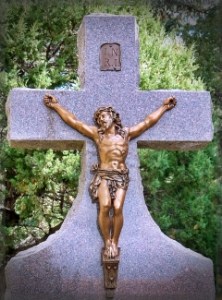
THE DEBT  (Matthew 18:23-35 — Part 1)

Therefore the kingdom of heaven may be compared to a king who wished to settle accounts with his servants. When he began to settle, one was brought to him who owed him ten thousand talents. [Matthew 18:23-24 (ESV)]

Jesus told several parables about the Kingdom of Heaven and, in Matthew 18, He compared it to a king who wanted to bring his accounts up to date with the servants who owed him money. The parable is pretty straight-forward; the king symbolizes God, the servant each one of us, and the debt our sins. One servant owed the king ten thousand talents but was unable to pay. There were serious consequences for not paying debts so the king ordered that the servant’s home and possessions be sold off and that the man and his family be sold into slavery until the debt was paid.

Jesus often used hyperbole to make his point but, unfamiliar with the talent or tálanton, 21st century readers may miss it, even when the debt is translated as several or even ten million dollars. Weighing about 75 pounds, the talent had the value of 6,000 drachmas or denarii, the Greek and Roman coins used in 1st century Judah. Generally speaking, one denarius was a laborer’s wage for a day. According to Forbes and the Bureau of Labor Statistics, the average hourly wage is about $28 and, figuring an eight-hour day, a denarius would be worth about $224 today. Since 6,000 denarii equaled one talent, a talent would be worth about $1,344,000 (6,000 days of work) in 2024. The servant, however, owed 10,000 talents and  his debt would require 60 million days of work. In today’s dollars, that is more than $13.44 billion. To put his 10,000-talent debt into 1st century perspective, the yearly tax revenue collected by Herod the Great was only about 800 talents!

Moreover, because “ten-thousand” was the largest number used in Jesus’ day, it also meant “beyond measure.” The servant’s debt was so enormous that it was incalculable. Although he promised to make payment, Jesus’ listeners knew the promise was absurd—repayment of such an astronomical amount was impossible!

Jesus deliberately chose such an outrageous number because there is absolutely no way any of us could ever work hard enough or give the Lord enough to repay Him for his never-ending mercies. This illustration makes it clear that, “The wages of sin is death,” because the enormous debt of sin never can be re-paid! Fortunately, the parable doesn’t stop there.

Asking for patience, the man begged for mercy and the king, filled with compassion, released his servant and forgave the debt entirely. The servant did nothing to deserve forgiveness; in fact, he may have incurred that debt through his mismanagement or embezzlement of the king’s funds. Nevertheless, as undeserved as it was, the debt was forgiven because of the king’s grace and mercy. While the wages of sin is death, “the free gift of God is eternal life in Christ Jesus our Lord.” [Romans 6:23]

When the king forgave the debt, however, the debt wasn’t paid; justice had not been served. The king remained 10,000 talents the poorer for it! When God canceled the payment due for our sins, however, justice was served because someone else paid our debt—Jesus! We are no more deserving of God’s forgiveness than was the king’s servant but, out of God’s merciful grace, our sin debt was paid in full by God’s only Son!

When the parable continues, it takes a dark turn but, for now, consider the first part of the story and the size of the servant’s debt—a debt so massive that it was incalculable—but was forgiven. Those, my friend, are our sins—countless sins forgiven by the grace of God!  Thank you, Jesus!

In him we have redemption through his blood, the forgiveness of our trespasses, according to the riches of his grace. [Ephesians 1:7 (ESV)]

And you, who were dead in your trespasses and the uncircumcision of your flesh, God made alive together with him, having forgiven us all our trespasses, by canceling the record of debt that stood against us with its legal demands. This he set aside, nailing it to the cross. [Colossians 2:13-14 (ESV)]

Copyright ©2024 jsjdevotions. All rights reserved.

INCARNATION DAY

And the Word became flesh and dwelt among us, and we have seen his glory, glory as of the only Son from the Father, full of grace and truth. [John 1:14 (ESV)]

The Almighty appeared on earth as a helpless human baby, needing to be fed and changed and taught to talk like any other child. The more you think about it, the more staggering it gets. Nothing in fiction is so fantastic as this truth of the Incarnation. [J.I. Packer]

During the children’s Christmas program at our northern church, the tots would sing “Happy Birthday, Jesus!” by the manger and then return to their room to enjoy birthday cake. Like them, most people would say that Christmas commemorates the birthday of Jesus but that’s not quite correct. Jesus doesn’t really have a birthday! He was God and, as God, He always was, always is, and forever will be. Although Mary gave birth, “incarnation” is the more accurate term for what began in Nazareth nine months earlier and culminated in Bethlehem. Coming from the Latin incarnare, meaning to make flesh,” the word “incarnation” embodies the meaning of John 1:14: “the Word became flesh and dwelt among us.” Put simply, when Jesus came into the world, God the Son took on a human body and a human life like ours. The One who was there before the stars were hung in the sky, the One who was spirit and without physical body, came to earth clothed in human flesh.

When Jesus became incarnate, His nature changed but His position didn’t. He still was fully God and we see His “Godness” in His actions and words. He fulfilled over 350 Messianic prophecies—something no mere mortal could do. He was born of a virgin, had the authority to forgive, knew the future, stilled storms, healed miraculously, brought the dead back to life, and knew what was in people’s hearts. Jesus walked on water, cast out demons, and demons recognized Him. He accepted people’s worship (which would have been blasphemous were He not God) and He resurrected from the dead! Jesus claimed He fulfilled prophecies and existed before Abraham and said, “I am in the Father and the Father is in me.” [John 14:11] Indeed, Jesus was Immanuel—God with us!

Although Jesus was fully divine, at the same time, He also was fully human. He may have been conceived miraculously, but He developed in a woman’s womb like any other human baby. When Jesus entered the world through a birth canal, He took His first breath into his human lungs and cried like a baby. He grew into manhood the same way every other boy does—with skinned knees and bruises. Looking like any other Galilean of His day, Scripture tells us that Jesus ate, walked, spoke, read, listened, learned, and even paid His taxes. He wore clothing, went to the Temple, prayed, perspired, and bled. He grew thirsty and drank, grew tired and slept, was vulnerable to physical harm, experienced temptation, and could both touch and be touched. He experienced betrayal and abandonment and expressed human emotions like anger, joy, curiosity, sorrow, and disappointment. Even though He was fully God, Jesus chose to suffer as a man and die a mortal man’s physical death.

When Jesus became incarnate, He willingly gave up the majesty, glory, and divine attributes of God (apart from the direction of God the Father) to take on the limitations and pains of human life. He laid aside his “Godness” to live as a man with all the pain, discomfort, weakness, bodily functions, and limitations that accompany our bodies! Even though He wasn’t “born,” He was human in every way but one. Unlike every person since Adam and Eve, in spite of being tempted, Jesus managed to live a sinless life. He lived the life we should live (but can’t) and died the death we all deserve (but won’t receive). That’s what Christmas is all about!

Let us all celebrate the glorious day “the word became flesh” all year long!

The true light, which gives light to everyone, was coming into the world. He was in the world, and the world was made through him, yet the world did not know him. He came to his own, and his own people did not receive him. But to all who did receive him, who believed in his name, he gave the right to become children of God, who were born, not of blood nor of the will of the flesh nor of the will of man, but of God. [John 1:9-13 (ESV)]

Copyright ©2023 jsjdevotions. All rights reserved.

UNCLEAN – Mark 5 (Part 2)

“But this is the new covenant I will make with the people of Israel after those days,” says the Lord. “I will put my instructions deep within them, and I will write them on their hearts. I will be their God, and they will be my people.” [Jeremiah 31:33-34 (NLT)]

little blue heronThe book of Leviticus outlined several things that could make someone ceremonially or ritually unclean. These things included bodily discharges, touching a corpse, and skin infections, as well as contact with any unclean person or thing. By Jesus’ day, even entering a Gentile’s home made someone unclean. Anything and anyone an unclean person touched became unclean and, anyone who touched them or what they touched also became unclean.

People deemed unclean were barred from participating in worship, offering sacrifices, and having access to the Temple. Because ritual impurity was contagious, anyone unclean had to remain separated from the community. Purification ceremonies were required before returning to a state of ritual cleanness and they varied with the severity of the uncleanness. Because uncleanness could come from normal bodily functions or factors beyond their control, even devout Jews became unclean at some time. Nevertheless, people didn’t deliberately put themselves in situations that would make them unclean. Jesus was the exception to the rule!

Along with their miraculous restoration, the three people Jesus healed in Mark 5 have something else in common—their ritual uncleanness. Living among the dead in the burial caves made the demoniac unclean. Since pigs fed on the hillside near him, he also was unclean because of contact with them. Considering the demoniac’s wild behavior, he probably was soiled by his or the pigs’ feces or urine which also made him ritually unclean (as well as filthy). Jesus, however, didn’t see an unclean Gentile demoniac; he saw a child of God who desperately needed to be freed from Satan’s control!

While Jesus was on the way to Jairus’ home to heal the man’s daughter, He was approached by a woman who had been hemorrhaging for twelve years. Because her bodily discharge made her ritually unclean, she was a pariah who shouldn’t have been out in public. Just by touching Jesus’ robe, she would have passed her uncleanness to Him but, rather than rebuke the woman for her action, He called her “Daughter,” commended her faith, and healed her.

While Jesus was speaking to the bleeding woman, messengers arrived to tell Jairus his daughter was dead. Undeterred, Jesus continued to the man’s home and went into the room where the dead girl lay. Even though He could raise the dead with just a word (as He did with Lazarus), Jesus deliberately held the child’s hand before telling her to get up.  Although having direct contact with a corpse made Him ritually unclean, the moment He took her hand, she transformed from an unclean dead body into a living child.

Those weren’t the only times Jesus put His concern for people before ritual purity. He offered to go to the Roman centurion’s home to heal the man’s servant even though entering a Gentile’s home would make him ceremonially unclean. When Jesus returned to the Gerasenes, he had no qualms about laying hands on a Gentile deaf man. Perhaps the most shocking of Jesus’ actions is found in Mark 1 when a leper kneeling before Him asked to be made clean. In an amazing display of compassion, Jesus deliberately reached out and touched the man to heal him. Rather than being made unclean by the leper, the leper was made clean by Jesus’ touch!

Ritual impurity made people unfit to be in the presence of God. Although many of the things Jesus did would have made a normal Israelite impure, we never read of Him undergoing any sort of purification ritual. Jesus, however, wasn’t an ordinary Israelite. He didn’t need to be purified to enter into the presence of God; He was God! Rather than becoming polluted by touching the unclean, Jesus transformed their impurity to purity because His holiness was contagious! In the New Covenant, people’s purity no longer depends on external regulations; it now depends on the cleansing power of Jesus Christ. His purity is greater than our impurity! Thank you, Lord.

So then, my brothers and sisters, we have boldness to go into the sanctuary through the blood of Jesus. He has inaugurated a brand new, living path through the curtain (that is, his earthly body). We have a high priest who is over God’s house. Let us therefore come to worship, with a true heart, in complete assurance of faith, with our hearts sprinkled clean from an evil conscience and our bodies washed with pure water. [Hebrews 10:19-22 (NTE)]

Copyright ©2023 jsjdevotions. All rights reserved.


HEALING – Mark 5 (Part 1)

A woman in the crowd had suffered for twelve years with constant bleeding. … She had heard about Jesus, so she came up behind him through the crowd and touched his robe.  For she thought to herself, “If I can just touch his robe, I will be healed.” [Mark 5:25,27-28 (NLT)]

monarch butterflyIn Mark 5, we find three stories of miraculous healings: the demoniac living among the graves in the Gerasenes, the woman who bled for twelve years, and the daughter of Jairus who was brought back to life. These are beautiful stories, but what about all the other people in 2,000 years for whom there has been no healing? Like the woman with the blood disorder, my friend has suffered for more than twelve years, tried every remedy, and gotten no relief. This man of deep faith prays for healing as do all his family and friends. His faith is as strong as that of the nameless woman and yet he’s had no relief.

As the local synagogue’s leader, it’s likely Jairus was one of those in the synagogue who criticized Jesus for healing a man on the Sabbath. He even might have been with the Pharisees when they accused Jesus of being possessed by Satan. He and his daughter certainly weren’t more deserving than a neighbor’s grandson. Along with the child’s parents and countless others, they knelt before Jesus and begged for the boy’s healing. Nevertheless, in spite of their prayers and five-and-a-half years of treatment, healing never came. We didn’t ask God to raise him from the dead; we just wanted Eddie to live more than his brief eight years!

The bleeding woman and Jairus sought out the Lord but Jesus crossed the Sea of Galilee and calmed a storm to reach the Gentile demoniac. My uncle was a good man of deep Christian faith but he descended into the hell of psychosis from which he couldn’t escape and, instead of living among the graves, he lived in a state psychiatric hospital. He desperately sought Jesus but, in spite of countless prayers for release from his demons, release only came when he died. Why was the pagan demoniac healed and not my uncle?

If all we needed for healing was sincere faith and fervent prayers, good Christians would never get sick or die—but, they do. Billy Graham suffered from Parkinson’s disease for 25 years and Martin Luther had 24 years of ill-health. Luther’s pain was so crippling that he frequently prayed for death’s relief. Based on existing records, forensic scientists believe Francis of Assisi suffered from malaria, tuberculosis, peptic ulcer, gastric cancer, brucellosis, blindness from trachoma, and leprosy until his death at 44. Among other ailments, John Calvin suffered from kidney stones, painful gout, heartburn and indigestion, chronic facial pain, roundworms, migraines, and chronic insomnia until his death at 55 (probably from tuberculosis). If anyone had a direct line to God’s ear, it would be men like these and the Apostle Paul. Without a doubt, they all prayed for relief but God chose not to remove their many thorns.

Although Jesus taught us that God will respond to our faithful prayers, He never taught us that faith automatically brings about healing. While there are many instances in Scripture where Jesus links faith and healing, there are many others where the healing seems almost random. When we look at His many miraculous healings, there’s no formula to them. In fact, Jesus’ healing seems unrelated to people’s faith. The man healed by the pool at Bethesda didn’t even know Jesus’ name. The only constant is Jesus rather than faith or prayer!

God can and does heal. Whether or not He does so is His sovereign choice and our physical healing may not be God’s top priority! Of the many sick and suffering people crowded around the pool in Bethesda, Jesus healed just one man. The reasons why God restores health to some and not to others is beyond our understanding. Healing is neither evidence of our faith nor proof of God’s love for us and we can’t allow bitterness or anger to fill our hearts when it doesn’t occur. Even for the most faithful, miraculous healings are the exception not the rule! Someday, all sickness and death will be gone but, until then, we must have faith and trust in God.

He has chosen not to heal me, but to hold me. The more intense the pain, the closer His embrace. [Joni Eareckson Tada]

I was given a thorn in my flesh, a messenger from Satan to torment me and keep me from becoming proud. Three different times I begged the Lord to take it away. Each time he said, “My grace is all you need. My power works best in weakness.” So now I am glad to boast about my weaknesses, so that the power of Christ can work through me. [2 Corinthians 12:7-9 (NLT)]

Copyright ©2023 jsjdevotions. All rights reserved.

MAKING EXCUSES

If we claim we have no sin, we are only fooling ourselves and not living in the truth. But if we confess our sins to him, he is faithful and just to forgive us our sins and to cleanse us from all wickedness. If we claim we have not sinned, we are calling God a liar and showing that his word has no place in our hearts. [1 John 1:8-10 (NLT)]

canna - bandana of the evergladesWhen the woman joined our group at the table in the school gym, she said, “I got a late start so I was speeding to get here. If a cop stopped me, I was going to tell him I was doing the Lord’s work and, since God will forgive me, he should too.” She insisted that speeding for a godly purpose was a justifiable offense and, since God offers forgiveness, so should the police. Granted, we were doing God’s work by packing meals for the needy but, as the Blues brothers learned when they saved the orphanage, a mission from God is not a “Get Out of Jail Free” card.

Short of rushing someone to the hospital in a life-or-death situation, I’m not sure there is a valid excuse for speeding. While the bags we filled with rice, beans, and seasoning could be considered life-saving, some fifty of us packed food for over three hours so her tardiness had negligible impact on our work. If the woman’s speeding had caused an accident or injury, would she still consider her “mission from God” a valid excuse?

Having pointed my finger at this woman, two were pointed at me and I plead “guilty” as charged. None of us like consequences and so, like her, we all make excuses. In fact, a 2020 poll found that the average American makes six excuses a day! If not to traffic cops, we make them to our teachers, bosses, classmates, co-workers, neighbors, parents, children, spouse, and even to ourselves! We claim we ran out of time, forgot, were too tired, or having a bad day. Instead of blaming the dog for eating our homework, we blame the heavy traffic, the computer that crashed, or the bad weather.

Worse, even though I’ve never had to excuse my driving to the police, I’ve offered a variety of excuses to God for greater offenses! I don’t think I’m alone on this. Rather than a contrite confession, we probably offer a litany of excuses justifying our various transgressions. Like the child who cries, “He started it!” we hold others accountable, claim inexperience or naivete, defend our motives, or blame extenuating circumstances. If a rose by any other name is a rose, I suspect a sin is a sin regardless of how skillfully we try to justify or defend it!

God doesn’t need to be told what we’ve done—He already knows that. He doesn’t want excuses because there is no excuse for sin. He wants us to repent of our sins and turn to Him! The Greek word translated as repent is metanoeó  which is more than regretting one’s sin. Its literal meaning is to think differently afterwards. Eerdmans Bible Dictionary defines repentance as “a complete change of orientation involving a judgment upon the past and a deliberate redirection for the future.”

That change of direction can’t happen if we rationalize our sins by blaming others or validate them with excuses. Until we honestly recognize and admit our sins, we’re not likely to repent of them. We can’t turn away from what we’re unwilling to acknowledge doing! Unacknowledged is unrepented!

Although being on a “mission from God” is not an excuse for sin or law-breaking, part of the woman’s theology is correct—God will forgive her! She was, however, totally wrong about why. God doesn’t forgive us because of our good works or great excuses. It is only by God’s grace and our faith in Jesus that we are forgiven. It is when we truthfully look at our sins, contemplate how pitiful and unworthy we are, and offer our failures in their naked ugliness without excuse that we can understand how loving, compassionate, generous, and forgiving our God really is. It is only then that we truly appreciate the gift of God’s forgiveness Jesus gave us on the cross.

True repentance is no light matter. It is a thorough change of heart about sin, a change showing itself in godly sorrow and humiliation – in heartfelt confession before the throne of grace – in a complete breaking off from sinful habits, and an abiding hatred of all sin. Such repentance is the inseparable companion of saving faith in Christ. [J.C. Ryle]

I have come to call not those who think they are righteous, but those who know they are sinners and need to repent. [Luke 5:32 (NLT)]

Prove by the way you live that you have repented of your sins and turned to God. [Matthew 3:8 (NLT)]

Copyright ©2023 jsjdevotions. All rights reserved.

JEPHTHAH’S VOW (Judges 11 – Part 1)

Don’t trap yourself by making a rash promise to God and only later counting the cost. [Proverbs 20:25 (NLT)]

oleanderOne of the most disturbing stories in the Bible is found in Judges 11. Before leading the army into battle with the Ammonites, Jephthah made a rash vow to the Lord—if given victory, he’d make a burnt sacrifice of the first thing to come out of his house to meet him upon his return. God granted Israel victory but, when Jephthah returned home, it was his daughter who came out to greet him. When the anguished Jephthah told her of his vow, the girl willingly accepted her fate. She only asked for one thing—to go into the hills with her friends to mourn that she’d never marry or know the joy of motherhood. When she returned, “her father kept the vow he had made and she died a virgin.”

Vows before a battle were not unusual, but Jephthah’s wasn’t typical. First, his motive was selfish. A victory meant personal power for this man. Having been denied his rightful inheritance and banished from the land, Jephthah only agreed to lead the army after the elders promised that he’d rule over Gilead if victorious. Although Jephthah’s reckless vow specified a burnt offering, it didn’t specify what it would be. In their Midrash commentaries, the rabbis asked what he would have done had it been an unclean animal like a camel, ass, or dog. Moreover, although his house included rooms for the animals, livestock usually didn’t greet people coming back from war, people did! Either the impulsive man didn’t consider the possibility it could be a person or that didn’t bother him.

Although a vow could be a sign of surrender to God in faith, Jephthah’s was abhorrent to the Lord. Rather than surrendering his fate to God, Jephthah was making a bargain with Him. Like Jephthah, do we ever bargain with God? Promising that if He does His part then we’ll do ours isn’t submission to Him—it’s manipulation and God can’t be manipulated. Moreover, there’s nothing we could offer God that could obligate Him to us in any way. By putting a price tag on His grace, we’ve insulted him by cheapening that grace. This appalling story reminds us that there are tragic consequences when religion is reduced to deal-making with God.

Offerings were supposed to be made joyfully but Jephthah’s vow meant he was willing to suffer if the Lord gave him victory. Although God firmly rejected human sacrifice in both Leviticus and Deuteronomy, Jephthah had a pagan’s understanding of Jehovah and was willing to do anything to guarantee Israel’s victory. During this time, when “all the people did whatever seemed right in their own eyes,” the Israelites were worshipping more than the Lord. They also were serving the pagan gods of the Canaanites. Human sacrifices to those gods were routine and Jephthah’s rash vow indicates his willingness to make a human sacrifice to become Gilead’s ruler.

Starting in Judges first chapter, when the people fail to drive the Canaanites from the land, the book describes Israel’s failures. By the second chapter, they’re already serving Baal and Ashtoreth. Although Deborah was the best of the bunch, the character of the judges deteriorates bit by bit until their story ends with rape, murder, and civil war! The entire book suggests that, rather than rejecting the idolatry and practices of the pagan people surrounding them, Israel adopted them. The story of Jephthah’s sacrifice of his daughter is meant to be horrible and shocking because it is the quintessential example of what happens if we do what’s right in our own eyes. When we do whatever seems right in our own eyes, we soon end up doing what is evil in the eyes of God—with nothing but tragic consequences!

In those days Israel had no king; All the people did whatever was right in their own eyes. [Judges 17:6 (NLT)]

Copyright ©2023 jsjdevotions. All rights reserved.