
Rejoice in our confident hope. Be patient in trouble, and keep on praying. [Romans 12:12 (NLT)]
Let all that I am wait quietly before God, for my hope is in him. He alone is my rock and my salvation, my fortress where I will not be shaken. [Psalm 62:5-6 (NLT)]
 A family of mockingbirds has moved into a nearby bush and they frequently serenade us from their vast repertoire of songs. Hearing their exuberant and joyful warbles is a perfect antidote to the sameness of life during this pandemic. While being charmed by their avian concerts, I thought of Emily Dickenson’s poem “‘Hope’ is a thing with feathers.”
What exactly is hope? In the world’s view, hope is like wishful thinking: an “I don’t know what will happen tomorrow, but I hope it will be something good!” attitude. We hope for a cure, a job, a raise, or a phone call without knowing if we’ll receive them. Worldly hope can fail us—the cure isn’t found, the job falls through, the raise doesn’t materialize, or the phone doesn’t ring. We live in a fallen world where we will be disappointed and our hopes often are dashed.
Biblical hope, however, never disappoints because it is based on God’s promises; it is confident that something will come to pass because God has promised it! We may hope our circumstances will improve while knowing they might not but that uncertainty about our circumstances or how God will answer our prayers doesn’t mean we don’t have hope. Ours is a living hope; while it looks to the future, it is grounded in the present. We put our trust in God because His promises became a reality in Jesus. We don’t have to dream of a better life tomorrow because Jesus had given us a better life today. Our Christian hope is a confident expectation that God will work “for the good of those who love God and are called according to his purpose for them.” [Romans 8:28] It tells us that eventually God will deliver us and that our salvation is secure.
Although raised in a Christian family, Emily Dickenson never made a public profession of faith in Jesus, explaining, “I feel that the world holds a predominant place in my affections. I do not feel that I could give up all for Christ, were I called to die.” She was, perhaps, more honest than many of us. Nevertheless, several of her poems reveal her Christian roots. I think she understood a Christian’s hope in her metaphor of hope as a bird. Just as a bird perches on a branch, hope rests in our soul. Like a bird, Christian hope sings its pleasing song endlessly and, undeterred by hardship, hope’s song sounds sweetest in a storm. The bird’s song can be heard from the coldest land to the strangest sea and Christian hope can be found from the bleakest of conditions to the most inexplicable of situations. Even in the harshest circumstances, the bird never asked anything of Dickenson and our hope, the hope offered by Christ, asks nothing of us. We can’t earn it or buy it; it is there for the asking if only we believe!
For many right now, this is a time of darkness and fear and it seems like hope has taken flight. It hasn’t! God doesn’t change—He’s still there—the promises He made yesterday hold true today. God promises to be with us—both on the hilltop and in the valleys. Promising provision, His grace is sufficient for us. Promising to empower us, He tells us that, when we are weak, He is strong. As I listen to the mockingbirds’ songs, it seems as if they know God’s eyes are upon them and that He will take care of them. [Matthew 6:26,10:29] They remind me to live with hope perched in my soul.
“Hope” is the thing with feathers –
That perches in the soul –
And sings the tune without the words –
And never stops – at all –
And sweetest – in the Gale – is heard –
And sore must be the storm –
That could abash the little Bird
That kept so many warm –
I’ve heard it in the chillest land –
And on the strangest Sea –
Yet – never – in Extremity,
It asked a crumb – of me.
[Emily Dickenson]
 With just 31,164 verses in the entire Bible, a Canadian schoolteacher named Everett R. Storms questioned claims that it held around 30,000 promises. During his 27th reading of the Bible in 1956, the inquisitive Mr. Storms compiled a list of all Scripture’s promises. Given that the books of prophecy are filled with promises (Isaiah, Jeremiah, and Ezekiel have over 1,000 each) and the psalms are steeped in promises, no wonder it took 18 months to complete this massive task! When finished, Storms had recorded 8,810 promises: 7,487 of which were made by God to man and 290 by man to God. Other promises were made by one man to another, by God the Father to God the Son, by angels to people, by man to an angel, by an evil spirit, and by Satan (all nine of which were lies).
 When we retired, we joked that our pill boxes were the only way we knew the day of the week. Now that we’re sheltering in place, that is more true than funny. For young and old alike, the days are blending one into the other with the only difference between yesterday and today being the news (which just seems to gets worse).
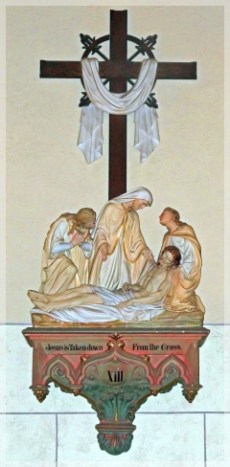 Easter will be a little different this year. Instead of getting up early for the sunrise service, we’ll have all day to go to online church and, rather than new Easter attire, we can attend church in sweats or jammies and our proverbial Easter bonnet can be a baseball cap. The kids won’t have brunch with the Easter Bunny, no family or friends will come for dinner, and, instead of hunting for Easter eggs, we’ll search for hand sanitizer or face masks on the Internet. Fortunately, we don’t need new clothes, eggs, brunch, jelly beans, Peeps, parades, Easter lilies, chocolate bunnies, beautiful hymns, or even a church service for Easter. All we really need is the Resurrection!
 You’ve probably heard people pray for a hedge of protection around friends or family members. Is it an impenetrable bubble that keeps tragedy and trouble at bay or a substance that acts like kryptonite against Satan and protects us from his temptations and deceit?
 With palm branches waving, the people greeted Jesus as he entered Jerusalem. News of Jesus’ miracles, especially the resurrection of Lazarus, had spread through town. They shouted “Hosanna!” at the man they thought would overthrow the Romans, establish peace in the nation, and retake David’s throne. Expecting a political liberator rather than a spiritual savior, they wanted deliverance from the Romans rather than redemption from sin—a conquering king rather than a suffering servant. More concerned about the here and now than the forever after, they wanted power and might rather than love, peace, humility, forgiveness or eternal life. Jesus, however, didn’t come to change their circumstances; He came to change their lives and, when He didn’t give them what they wanted, they rejected Him.
