A LENTEN SOJOURN

And he was in the wilderness forty days, being tempted by Satan. And he was with the wild animals, and the angels were ministering to him. [Mark 1:13 (ESV)]

broom groundselAs I pondered my goals for this year’s Lenten practice, I remembered Alica Britt Chole’s suggestion to “consider Lent as less of a project and more of a sojourn.” While we often encounter the word ”sojourn” in Scripture, it’s not a word typically used today. Although the basic meaning of gûr, the Hebrew word translated at sojourn, is to “live, settle, dwell,” gûr usually included the sense of it being a temporary or transient stay. Typically, a sojourner was someone living outside their clan or a noncitizen in a strange place. Because of famine, Israel sojourned in Egypt for 430 years and, because of their disobedience, they sojourned forty years in the desert before entering the Promised Land. It is Jesus’ 40-day sojourn in the wilderness before entering His public ministry that is remembered in Lent.

The usual question prior to Ash Wednesday is, “What are you giving up for Lent?” and the question following Easter is, “How did you do?” If someone else doesn’t ask it, we ask it of ourselves. Were we successful in refraining from sweets, social media, criticism, shopping, or whatever we gave up? Did we meet our goal of reading the four gospels or memorizing 40 Bible verses? Was our commitment to a daily random act of kindness kept? With its clear start and end dates, Lent easily can turn into an assigned forty-day project. It’s tempting to look at our Lenten practice as we might a New Year’s resolution—we set an objective, create a plan, track our progress, and evaluate our success or failure. God, however, is a relationship, not an obligation or duty! With their thinking that salvation lay in strict observance of the oral and written Law, the Pharisees turned God into a job; we mustn’t make the same mistake with Lent.

If, however, we view Lent as a sojourn rather than an assignment, it becomes an experience instead of a chore. Rather than an objective that must be completed successfully on the 40th day, Lent becomes a temporary journey in the wilderness with God. Rather than 40 days of trying to meet goals, it becomes a blessed season of retreat—a time to hear God’s voice in the silence of the wilderness—a time to feel His presence in the stunning colors of the desert sunset, the stark contrast between sun and shadow, the enormous saguaros cactus with its upturned arms, and the wildflowers determined to grow in this parched and barren land. Without a timeline, we can pause to taste the nopales and fruit of the prickly pear and look for road runners and Gila monsters. Unhindered by city lights, we see God’s majesty in the spectacular view of the stars. Granted, we probably won’t be retreating to the desert but, when we think of Lent as a sojourn with God in the wilderness, it can become a close encounter with Him rather than a job for Him!

Describing Lent as a journey of “bright sadness,” Orthodox Reverend Alexander Schmemann says, “The purpose of Lent is not to force on us a few formal obligations, but to ‘soften’ our heart so that it may open itself to the realities of the spirit, to experience the hidden ‘thirst and hunger’ for communion with God.” Through fasting, prayer, study, and reflection, may we grow closer to God as we sojourn through the wilderness of this Lenten season into the joy of the Resurrection!

He has told you, O man, what is good; and what does the Lord require of you but to do justice, and to love kindness, and to walk humbly with your God? [Micah 6:8 (ESV)]

Copyright ©2025 jsjdevotions. All rights reserved.

OBSERVING LENT

‘We have fasted before you!’ they say. ‘Why aren’t you impressed? We have been very hard on ourselves, and you don’t even notice it!’ “I will tell you why!” I respond. “It’s because you are fasting to please yourselves. Even while you fast, you keep oppressing your workers. What good is fasting when you keep on fighting and quarreling? This kind of fasting will never get you anywhere with me. You humble yourselves by going through the motions of penance, bowing your heads like reeds bending in the wind. You dress in burlap and cover yourselves with ashes. Is this what you call fasting? Do you really think this will please the Lord?” [Isaiah 58:3-5 (NLT)]

grey catbirdEvery evening, a man went to the local pub and ordered three beers. When asked why three, he explained that he ordered the two extra beers in honor of his two dear brothers who lived far away. One evening, when the man ordered only two beers, the bartender assumed the worst and extended sympathy for the loss of a brother. Correcting the bartender, the man said his brothers were both fit as fiddles and the beers were for them. “It’s me that’s not drinking tonight,” he explained. “You see, I’ve given up beer for Lent!”

Yesterday was Ash Wednesday, the first day of Lent, a period of forty days (not counting Sundays) that commemorate Jesus’ forty days of fasting and temptation in the desert. Originally, Lent was a time of fasting, penitence, and reflection in preparation for an Easter baptism. Today, many people continue to observe this tradition with some sort of fast or spiritual discipline before Easter. While they tend to “give up” something in the way of food, entertainment, or pleasure, the most common fasts usually have to do with desserts, alcohol, chocolate, social media, television, or coffee from Starbucks or Dunkin’. Since Lent’s observation isn’t founded in Scripture, the choice to observe this season in some way is a personal one.

What we must never do is err in thinking that God will love us more for our Lenten sacrifice or that giving up something like gum, candy, beer, eating out, or YouTube has any bearing on our salvation. Jesus took care of our salvation on the cross and God’s love could never be greater than it is right now. No amount of sacrifice can earn God’s free gift of grace.

If we do choose to give up something for Lent, we make a mistake if we focus only on our sacrifice. After all, fasting from carbs or alcohol without prayer and Scripture are nothing more than a diet or “dry January.” Rather than focusing on ourselves, Lent is a time to focus on Christ and the sacrifice He made to give us the gift of salvation.

Although Jesus fasted, He never commanded us to do so. His words on fasting tend to focus on people’s hypocrisy when fasting—they often fasted to impress people with their holiness rather than grow closer to God. Self-sacrifice is not to be done ostentatiously but humbly, quietly, and privately. Regardless of how we choose to observe Lent, unlike the man at the bar, it should be done sincerely. God sees into our hearts and knows when we’re repentant and genuinely seeking Him or just going through the motions!

The purpose of Lent is not to force on us a few formal obligations, but to ‘soften’ our heart so it may open itself to the realities of the spirit, to experience the hidden ‘thirst and hunger’ for communion with God. [Alexander Schmemann]

“No, this is the kind of fasting I want: Free those who are wrongly imprisoned; lighten the burden of those who work for you. Let the oppressed go free, and remove the chains that bind people. Share your food with the hungry, and give shelter to the homeless. Give clothes to those who need them, and do not hide from relatives who need your help.” [Isaiah 58:6-7 (NLT)]

Copyright ©2025 jsjdevotions. All rights reserved.

WHAT DO WE BRING TO THE TABLE?

I encourage you to offer your bodies as living sacrifices, dedicated to God and pleasing to him. This kind of worship is appropriate for you. Don’t become like the people of this world. Instead, change the way you think. Then you will always be able to determine what God really wants—what is good, pleasing, and perfect. … God in his kindness gave each of us different gifts. [Romans 12:1b-2,6a (GW)]

FarmWhen told that the gifts the Holy Spirit gives us are unique for our specific ministries, we get nervous. We already have a career, didn’t sign up for seminary, and aren’t interested in being ministers. While being a minister/pastor/priest is a vocation, the ministry is the work of every Christian. No matter what our professions, we are all called to minister and that doesn’t necessarily mean pastoring a church. It means serving God and His people in Jesus’ name, which is where those spiritual gifts come in. God is not about to send us off empty-handed.

In job interviews, applicants often are asked, “What do you bring to the table?” With God, however, it’s a little different. When we come to him, He doesn’t care about our resume, how much or little we know, or how many assets we bring to Him. When we come to His table, we receive our own personal coach in the way of the Holy Spirit who provides us with at least one spiritual asset personally designed for us.

In Matthew 9, Jesus spoke of the harvest being plentiful but the laborers being few. I wonder—is it the labor pool that is lacking or is it the willingness of the laborers to do His work that is missing? As Christians, we’re filled with the Holy Spirit and yet we often seem void of His promised gifts. Is it that we don’t recognize our gifts or are we simply unwilling to use them? Last week, while receiving Communion with others in the congregation, I wondered what gifts we each brought to God’s holy table and how many of those unused gifts we were taking back home with us.

I suspect that there are enough laborers but we’re just waiting for the ideal job, the perfect opportunity, or the ideal situation to arise. My brother remained unemployed for years because of that attitude; although there were plenty of opportunities, none were the precise one he desired! There should be no unemployment line in God’s Kingdom! We forget that God’s strength is made perfect in our weakness. Not only does He equip us but He also offers on-the-job training!

I’ve taken assorted Spiritual Gift inventories and, while they can be helpful, I doubt their necessity. All we have to do is look at the harvesting needs around us and show up for work. We’ll soon figure out if driving the combine, baling the hay, swinging the scythe, hand-picking the berries, cleaning the tools, transferring the grain to the silo, managing the logistics, marketing the wheat, bringing water to the thirsty, or feeding the workers is the job for which we’ve been designed. The important thing is to show up for the harvest; in God’s Kingdom, there should be no shortage of laborers! Let’s get to work!

When he saw the crowds, he felt sorry for them. They were troubled and helpless like sheep without a shepherd. Then he said to his disciples, “The harvest is large, but the workers are few. So ask the Lord who gives this harvest to send workers to harvest his crops.” [Matthew 9:36-38 (GW)]

Copyright ©2025 jsjdevotions. All rights reserved.

IN PRAISE OF HIS WORD

I will meditate on your precepts and fix my eyes on your ways. I will delight in your statutes; I will not forget your word. … The law of your mouth is better to me than thousands of gold and silver pieces. … How sweet are your words to my taste, sweeter than honey to my mouth! [Psalm 119: 15-16, 72, 103 (ESV)]

The more you read the Bible; and the more you meditate on it, the more you will be astonished with it. [Charles Spurgeon]

BiblesPsalm 119, the longest of the psalms, is a song in praise of the Word of God. Since we don’t read this psalm in its original Hebrew, we fail to appreciate its intricate construction. Each of its twenty-two sections begin with a letter of the Hebrew alphabet in sequence. Each of the eight verses in those twenty-two sections begin with the letter that introduced it. For example, the first word of the first section begins with alef, as do the next seven verses. In the second section, every line begins with beth. The psalm continues that way up to the 22nd (and last) section where every line begins with the final letter of the Hebrew alphabet, tav.

Using a variety of synonyms (such as words, ways, precepts, testimonies, commandments, path, and law), the psalmist mentions God’s word no less than 183 times! Believed to have been written by David, Jeremiah, Daniel or Ezra, the psalm’s author refers to himself as God’s servant and claims to praise God seven times a day. Whoever it was, penning a 176-line song about delighting in God’s word as an acrostic was a true labor of love.

I thought of this psalm when reading author Ann Voskamp’s description of the joy with which a nomadic tribe in Northern Kenya reacted when Bibles arrived in their village. Packed in cardboard boxes, God’s Word arrived on the back of a camel and was greeted by more than a thousand Rendille tribespeople along with dozens of their distant neighbors. After waiting 30 years for this day, the Rendille finally had Scripture’s words written in their own language. Having written praise songs specifically for the celebration, the women sang, “We give thanks to the Lord. The Word of God is like a pillar in our life. We give thanks to the Lord for this day for it is the first time we have the Bible in our own language.” Voskamp described how several women even slept with their Bibles under their pillows, “because it was treasured. They had nothing more valuable or priceless in their entire lives than God’s Word.”  For these followers of Christ, their newly translated Bibles were better than “thousands of gold and silver pieces.”

Unlike the Rendille people, we’ve had God’s word in our own language since William Tyndale’s translation of the New Testament in 1525; ten years later, the entire Bible was available in English. As the best-selling book of all time, Lifeway reports that about 85% of American homes have a Bible and the average household owns between four and five! While I suspect those Rendille tribespeople regularly read their Bibles, the Barna Group found that only about 35% of Americans ever read any of it and 36% of Americans never read at all! Yet, last year, the American Bible Society found that 71% of Americans are curious about the Bible and/or Jesus. There seems to be a disconnect here! If we’ve got questions about cooking, investing, bitcoins, or a medical condition, we research those topics. But, when we’re curious about the Bible or Jesus, those four plus Bibles in our homes remain unopened!

Both the psalmist and Rendille tribespeople celebrated God’s beautiful gift of Scripture. Finding it as “sweet as honey” and better than gold, they treasured this lamp to their feet and light for their path. After witnessing the Rendille’s enthusiastic response to the Bibles’ arrival along with their gratitude and joy in the Word, Voskamp asked herself, “How many Bibles do I have that are on my shelf collecting dust? Do I treasure God’s Word like this?”

Hers is a valid question and one we all should ask ourselves. Do we cherish and appreciate God’s word as did the author of Psalm 119? Do we receive God’s love letter to His people with the enthusiasm of the Rendille people? We should! After all, other than Jesus, it is the best gift God gave to man! Scripture’s words belong in our hearts rather than collecting dust in our bookcases!

I venture to say that the bulk of Christians spend more time in reading the newspaper than they do reading the Word of God. [Charles Spurgeon]

Oh how I love your law! It is my meditation all the day. Your commandment makes me wiser than my enemies, for it is ever with me. … Your word is a lamp to my feet and a light to my path. … Therefore, I love your commandments above gold, above fine gold. [Psalm 119:97-98, 105, 127 (ESV)]

Copyright ©2025 jsjdevotions. All rights reserved.

EUCHARISTEO

And he took a cup, and when he had given thanks he gave it to them, saying, “Drink of it, all of you for this is my blood of the covenant, which is poured out for many for the forgiveness of sins.” [Matthew 26:27-28 (ESV)]

The celebration of the Lord’s Supper/Holy Communion/the Eucharist has been central to Christian worship since the early church. While Protestants think of the Eucharist as the sacrament commemorating the Last Supper with bread and wine, for Roman Catholics and some Orthodox, “Eucharist” specifically refers to the consecrated elements, especially the bread. How ever you define it, the word “eucharist” originally had nothing to do with this beautiful sacrament.
Meaning to be thankful, the Greek eucharisteó comes from  meaning “grateful” and charizesthai meaning “to offer graciously”. Charizesthai  comes from charis, meaning “grace” (a gift that cannot be repaid) from chario meaning “to rejoice”. From its etymology, eucharisteó isn’t the kind of thanks we’d say to a friend who saved us a seat at the movie or to someone for opening the door for us. Encompassing the ideas of thanksgiving, grace in receiving a gift that cannot be repaid, and rejoicing or joy, eucharisteó is the kind of thanks that is specifically directed toward God! This is the word the Apostle Paul used whenever he said he thanked God. We find Jesus giving thanks (eucharisteó) before feeding the 5,000 and again before taking the wine at the last supper.

The first sacramental Eucharist took place during a Passover meal (seder) celebrating Israel’s deliverance from bondage to Egypt. The question “Why is this night different from all other nights?” would have been asked early in the seder and would have been answered by a retelling of Israel’s exodus from Egypt. When Jesus took the bread and passed it to the disciples, they didn’t know that the bread symbolizing Israel’s suffering in Egypt would come to represent the Lord’s suffering on Calvary. When Jesus filled the cup and passed it to the disciples, they didn’t know that the wine symbolizing Israel’s redemption from slavery in Egypt would come to represent the blood Jesus shed to purchase mankind’s redemption from sin.

While the disciples didn’t understand what lay ahead for Jesus that night, let’s not forget that Jesus certainly did! He knew that His body, having been defeated by thorns, whip, nails, and cross, would be broken in less than a day. Nevertheless, knowing full well the torment he would suffer and the blood He’d shed, Jesus graciously offered Himself for us and gave thanks—and not just any old thanks. He gave eucharisteó—the sacrificial lamb gave thanks to God with joy!

Like the exodus, the story of Jesus is one of redemption. Israel was in bondage to Pharaoh—mankind in bondage to sin and death. Israel was saved by the blood of a lamb; we are saved by the blood of the Lamb of God. Moses led the people to the Promised Land; Jesus leads us into the Kingdom of God. When we partake of the bread and wine during Holy Communion, let us pause and ask, “What makes this meal different from any other?” Do we recognize God’s grace and give thanks (eucharisteó) with joy?

So the community of the cross is a community of celebration, a eucharistic community, ceaselessly offering to God through Christ the sacrifice of our praise and thanksgiving. The Christian life is an unending festival. And the festival we keep, now that our Passover Lamb has been sacrificed for us, is a joyful celebration of his sacrifice, together with a spiritual feasting upon it. [John Stott]

Therefore, as you received Christ Jesus the Lord, so walk in him, rooted and built up in him and established in the faith, just as you were taught, abounding in thanksgiving. [Colossians 2:6-7 (ESV)]

Copyright ©2025 jsjdevotions. All rights reserved.

THE FIG TREE (Part 1)

He noticed a fig tree in full leaf a little way off, so he went over to see if he could find any figs. But there were only leaves because it was too early in the season for fruit. Then Jesus said to the tree, “May no one ever eat your fruit again!” And the disciples heard him say it. …  The next morning as they passed by the fig tree he had cursed, the disciples noticed it had withered from the roots up. Peter remembered what Jesus had said to the tree on the previous day and exclaimed, “Look, Rabbi! The fig tree you cursed has withered and died!” [Mark 11:13-14, 20-21 (NLT)]

Mark tells of a time when a hungry Jesus cursed a fig tree and caused it to wither and die simply because it had no figs. As the only destructive miracle done by the Lord, His action is difficult to understand, especially since we’re told “it was too early in the season for fruit.” The same power that brought Lazarus back to life and turned water into wine easily could have given the tree ripe figs, so why did Jesus kill the fruitless tree?

Jesus never acted haphazardly and what seems at first to be a pointless act of power becomes a living parable when we put it in context. Taking place during Jesus’ last week of earthly life, Jesus and the disciples were walking from Bethany up to Jerusalem. After cursing the tree (11:13-14), Jesus went into Jerusalem and cleansed the temple of money-changers and merchants (11:15-17). That evening, while the chief priests and scribes plotted Jesus’ death, He and the disciples returned to Bethany (11:18-19). It is the next morning that the withered tree is discovered (11:20-21). The timing of these events was no accident.

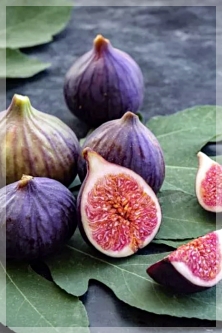
Not living in 1st century Judea, we find our figs at the grocery and know nothing about their cultivation. Because both wild and cultivated fig trees were plentiful in Palestine, Jesus and the disciples knew that a fig tree produces edible small fig knobs before its leaves ever appear. Called taqsh, these knobs are the precursors of figs and often were eaten by travelers and the poor. Even though it wasn’t the season for mature fruit, any fig tree “in full leaf” would have displayed a crop of taqsh. The absence of taqsh meant the tree never would never produce fruit. Jesus wouldn’t have cursed an immature tree or one without leaves and He didn’t curse the tree simply because it had no figs. He cursed that leaf-filled tree because it was guilty of false advertising! While its leaves promised knob-like figlets (taqsh) there were none.

Both the cleansing of the temple and the cursing of the unfruitful fig tree have to do with judgment. Throughout the Hebrew Scriptures, the fig tree is symbolic of Israel and the tree’s condition often represented the people’s spiritual fruitfulness, peace, prosperity, and well-being. The fig tree died in judgment but flourished when Israel was righteous and holy.

With its rituals and sacrifices, Israel looked fruitful but, like the fig tree, it lacked fruit—the fruit of righteousness that God demanded. His house of prayer and worship had been turned into a marketplace filled with thieves while Israel’s empty worship was a fruitless sham. With their sacrifices, tzitzit and tefillin, public prayers, adherence to the oral Law, and concern about spiritual cleanliness, they had the trappings of religion but, like the leafy fig, they were all show without substance. Both Jesus’ cursing of the fig tree and His cleansing of the Temple signify God’s impending judgment for religious hypocrisy. Moreover, the dead tree even points to the Temple’s destruction in 70 AD (predicted by Jesus in Matthew 23:38 and 24:2).

The message found in the destruction of this fig tree is not limited to the 1st century Israel; it is meant for us all. The cursing of that tree tells us that God expects His people to bear fruit. It is a warning that fruitlessness leads to judgment. Like that fruitless tree, could we be more show than substance—all leaves but no fruit?

A good tree produces good fruit, and a bad tree produces bad fruit. A good tree can’t produce bad fruit, and a bad tree can’t produce good fruit. So every tree that does not produce good fruit is chopped down and thrown into the fire. [Matthew 7:17-19 (NLT)]

Yes, I am the vine; you are the branches. Those who remain in me, and I in them, will produce much fruit. For apart from me you can do nothing. Anyone who does not remain in me is thrown away like a useless branch and withers. Such branches are gathered into a pile to be burned. [John 15:5-6 (NLT)]

Copyright ©2025 jsjdevotions. All rights reserved.