ARE WE READY? – Advent 2022

Listen! It’s the voice of someone shouting, “Clear the way through the wilderness for the Lord! Make a straight highway through the wasteland for our God! Fill in the valleys, and level the mountains and hills. Straighten the curves, and smooth out the rough places. Then the glory of the Lord will be revealed, and all people will see it together. The Lord has spoken!” [Isaiah 40:3 (NLT)]


Yesterday was the third Sunday in Advent – the church season of preparation leading up to Christmas. Back in the 4th century, Advent was a 40-day season spent in penance, prayer and fasting in preparation for the baptism of new Christians on Epiphany (January 6). On that day, the church celebrated the gifts of the Magi, Jesus’ baptism in the Jordan, and His first miracle at Cana. By the 6th century, Advent was tied to the promised second coming of Jesus but, by the Middle Ages, Advent was tied to the celebration of Jesus’ first arrival and Christmas. Today, Advent is a time the Christian church commemorates Christ’s first coming while anticipating His second. It’s a time to prepare our hearts and minds both for Christmas, when Jesus came as a suffering servant and arrived in a manger, and for Christ’s return, when He will come as the conquering King who makes all things right.

Indeed, most of us use the four weeks of Advent as a time of preparation, but for what? Rather than readying our hearts for Christ, we’ve probably been busy making lists and checking them twice, searching for the best deals on line, decorating our homes and yards, trimming the tree, going to or hosting parties, making travel arrangements, baking holiday treats, planning menus, wrapping packages, addressing Christmas cards, and standing in line at Fed Ex or the post office, all of which have little to do with that first Christmas when God came into our chaotic world and even less to do with anticipating His glorious return.

Last night, after lighting the candles of hope and peace on our Advent wreath, my husband and I lit its third candle—the shepherd’s candle of joy. Admittedly, even though we’re having a relatively quiet Christmas, I felt more stress than hope, peace, or joy. I had allowed the preparations for this holiday keep me from focusing on Jesus!

Pause for a moment and remember how 2,000 years ago, the people of Judah longed for the promised Messiah. Recall how God recognized mankind’s need for a savior and answered their prayer that night in Bethlehem. That helpless baby in the manger, the infant who needed to be fed and burped and changed, was God incarnate!

As Christians in the 21st century, we long for Messiah’s return and, someday, God will make good on that promise, as well. As we remember Christ’s first coming, let us look forward to His return—a time when peace and justice will prevail and there will be no “death or sorrow or crying or pain.” We must never allow our holiday preparations keep us from preparing our hearts for the promises of hope, peace, joy and love that Jesus brings to our lives.

With only 13 days remaining until the 25th, we probably wonder if we’re ready for Christmas. Let’s get our priorities straight and make sure we’re ready for Christ!

The immense step from the Babe at Bethlehem to the living, reigning triumphant Lord Jesus, returning to earth for His own people – that is the glorious truth proclaimed throughout Scripture. As the bells ring out the joys of Christmas, may we also be alert for the final trumpet that will announce His return, when we shall always be with Him. [Alan Redpath]

He will wipe every tear from their eyes, and there will be no more death or sorrow or crying or pain. All these things are gone forever. [Revelation 21:4 (NLT)]

In that day the wolf and the lamb will live together; the leopard will lie down with the baby goat. The calf and the yearling will be safe with the lion, and a little child will lead them all. [Isaiah 11:6 (NLT)]

Copyright ©2022 jsjdevotions. All rights reserved.

TITHING OUR TIME

You must each decide in your heart how much to give. And don’t give reluctantly or in response to pressure. For God loves a person who gives cheerfully. [2 Corinthians 9:7 (NLT)]

white peacock butterflyWhile many people faithfully tithe by giving ten percent of their income to God’s work, I read an article in which the author not only tithes her money but also her time. With 168 hours in a week, she dedicates a total of 16.8 hours a week to serving God. These tithed hours are spent in things like Bible study, prayer, mentoring, visiting the house-bound, bringing food to the needy, or sending encouraging notes.

While measuring out time for God may work for the author, I’m not so sure it would work for everyone. Would we have to tithe 2.4 hours each day or could we pick and choose when to use our week’s hours? Would we be talking gross or net hours? If net, once we’d taken out the eight hours for sleep every night, only 112 hours would be tithable and only 11.2 hours a week would belong to God. Would people need to keep a time-card and clock in and out every time they said a prayer? I wonder if Sunday evenings there might a frantic effort to find a way to fulfill the remaining unused time. Would we call an elderly neighbor to chat while counting minutes until we could disconnect?

Some people might split hairs about what actually determines giving time to the Lord. If we’re bringing the trash bin back to the house anyway, does bringing up the neighbor’s bin count? If we take canned goods to the food pantry, do we get credit for the entire time spent at the grocery store purchasing them? If we talk about church when meeting a friend for lunch count or must it be someone we don’t especially like or to whom we witness? Does the time spent driving to and from our volunteer job at the resale shop count? If we’re taking someone to church or Bible study, can we count the entire drive time or just the extra time it took to pick them up? Do we get extra credit for watching monster children in the church nursery? Once those sixteen plus hours are used, could we then turn a deaf ear to people’s needs or skip praying? If we gave more than 16.8 hours in one week, could the extra time carry over to the following one? Once we’re done with our hours, can we turn a deaf ear or a blind eye to the needs surrounding us until the following week?

The Pharisees got so caught up in the minutia and letter of the Law that they missed its purpose and, like them, with all that nitpicking, it would be easy to get more concerned with tallying time than sharing God’s love. Instead of it being a privilege to give back to God, strictly tithing time could turn worship, prayer, study, and service into a chore. God loves a cheerful giver but this doesn’t sound very cheerful to me.

Admittedly, tithing time originally seemed like a good idea, especially since I spend more than 16.8 hours a week writing these devotions. I’d easily fulfill my weekly obligation at my computer so nothing more would have to be done for or with God! The Holy Spirit then gave me a kick in the behind and said, “You’re never done serving the Lord; I want all 168 hours of your week!” May we always remember that, other than our love, there’s nothing we can give Him that isn’t already His!

Do all the good you can, By all the means you can, In all the ways you can, In all the places you can, At all the times you can, To all the people you can, As long as ever you can. [Attributed to John Wesley]

So let’s not get tired of doing what is good. At just the right time we will reap a harvest of blessing if we don’t give up. Therefore, whenever we have the opportunity, we should do good to everyone—especially to those in the family of faith. [Galatians 6:9-10 (NLT)]

Copyright ©2022 jsjdevotions. All rights reserved.

WOMEN IN THE CHURCH

And I ask you, my true partner, to help these two women, for they worked hard with me in telling others the Good News. They worked along with Clement and the rest of my co-workers, whose names are written in the Book of Life. [Philippians 4:3 (NLT)]

pale purple coneflower
From the beginning of His ministry, women were among the earliest followers of Jesus. Mary Magdalene, Joanna, and Susanna accompanied and financially supported Him and Martha and Mary offered their hospitality in Bethany. Women were witnesses to His death, burial, and the empty tomb and Mary Magdalene was the first to view the resurrected Christ! Because women get little mention in the New Testament, however, we tend to overlook the role they played in the early church.

Yesterday, when I wrote about the feud between Euodia and Syntyche, I didn’t mention Paul’s commendation of these same two women for diligently working beside Paul, Clement, and others in spreading the gospel. That Paul was troubled enough by their disagreement to ask a ministry colleague to intervene implies these women had influence in the Philippian church. What role did they and other women play in the early church?

Although Philippi was a Roman colony, Euodia and Syntyche are Greek names. It’s a possibility that, like Lydia (a Greek merchant of purple cloth), they were merchants originally from Greece. The two may have been some of the women who met with Lydia at the riverbank for prayer. [Acts 16] Although Lydia merits just a few sentences in Scripture, the Philippian church began with her baptism and the baptisms of the rest of her household! That Lydia was the only Philippian named by Luke indicates she played an important role in the early church. Paul, Silas, Timothy, and Luke stayed at her home while in Philippi.

Along with Lydia, a number of other women served as leaders of the house churches that sprang up in the cities throughout the Roman Empire: among them were Priscilla, Chloe, Apphia, Nympha, Mary (the mother of John Mark), and possibly the woman John addressed as “the chosen lady” in his second epistle. While it is speculation, Euodia and Syntyche, like Lydia, may have led house churches. We know that Priscilla and her husband Aquila travelled with Paul to Ephesus and founded the church there. Both men and women could serve as deacons and Phoebe was a deacon in the church in Cenchrea. In Acts, we learn that Philip’s four daughters were prophetesses.

Paul even entrusted his epistles to be delivered by women and it was Phoebe who carried his letter to the Romans. In Romans 16, Paul specifically greeted Mary “who has worked so hard for your benefit” and a woman name Junia who, along with Andronicus, had been imprisoned for the faith. Among the 29 people he mentioned in this chapter, nine were women. Many of those mentioned, like Priscilla, traveled as missionaries with their husbands or brothers. Whenever Paul referred to someone as a fellow co-worker, he used the same word, synergos, for both women and men!

There is extra-Biblical support of the important role women played in the early church, as well. In the 2nd century, Clement of Alexandria wrote that women accompanied the apostles on their missionary journeys as colleagues. Acting as equals, not subordinates, Clement said they served as “fellow ministers in dealing with housewives…that the Lord’s teaching penetrated also the women’s quarters without any scandal being aroused.” When writing about the “crime” of Christianity, Pliny the Younger mentioned torturing two slave women he called ministrae (or deacons) in the Christian community.

Understanding the important role played by women in the early church, it’s easier to understand Paul’s deep concern about the rift between Euodia and Syntyche. Moreover, it tells me that both the early church and Paul (who has unfairly been accused of misogyny by some) truly lived by the words found in Galatians that, in Christ’s family, previous distinctions like nationality, race, status, and sex no longer exist. In Christ’s body, we truly are one!

For you are all children of God through faith in Christ Jesus. And all who have been united with Christ in baptism have put on Christ, like putting on new clothes. There is no longer Jew or Gentile, slave or free, male and female. For you are all one in Christ Jesus. And now that you belong to Christ, you are the true children of Abraham. You are his heirs, and God’s promise to Abraham belongs to you. [Galatians 3:26-29 (NLT)]

Copyright ©2022 jsjdevotions. All rights reserved.

SHOUT WITH JOY

Shout with joy to the Lord, all the earth! Worship the Lord with gladness. Come before him, singing with joy. Acknowledge that the Lord is God! He made us, and we are his. We are his people, the sheep of his pasture. [Psalm 100:1-3 (NLT)]

water lily
For those who wondered—I weathered Hurricane Ian with nothing more than minor inconveniences and some yard work. Sadly, most of Southwest Florida was not so fortunate. Frankly, it’s even worse here than the photos you’ve seen and the stories you’ve heard. The death toll is rising, rivers still are flooding, more damage is being revealed, the loss is astounding, people’s lives are shattered, nerves are frayed, and medical staff, first responders, repair crews, and volunteers are exhausted. Sunday morning, in spite of the day’s sunshine, things looked dark.

Even though my church meets outside at a beachfront park, like many other churches, we lost our place of worship. Park facilities were destroyed, the beach was decimated, and the area is closed because of hazardous conditions. In a return to Covid days, our Sunday service was online.

Early Sunday morning, however, I read Psalm 100. Perhaps because there is nothing somber or vengeful in this psalm, it is one of my favorites. Chanted by Jews on their way to the Temple thousands of years ago, this call to know and worship God is a perfect psalm for Sunday mornings. After reading its words to shout with joy, worship with gladness, and come into God’s presence, I felt a desperate need to worship with others. Wanting to make a loud and joyful noise to the Lord, we skipped the online service and came into His presence at a nearby church.

As the organist began with J.S. Bach’s Jesu, Joy of Man’s Desiring, I knew we made the right decision. When the trumpet joined the organ in this beautiful composition, tears of joy filled my eyes even though my heart cried for the hundreds of thousands affected by this horrific storm. Bach’s familiar melody reminded me that we have a God who loved us so much that He gave us His only son to die for us so that we could be saved—not from hurricanes, ruined homes, and flood waters, but from sin and death.

His Name is Wonderful was the first hymn we sang and, with its words, “His Name is Wonderful; His Name is Counselor; His Name The Mighty God, Jesus my Lord,” we accepted Psalm 100’s call to worship with gladness. Our joyful noise continued as we acknowledged the goodness of our God with the familiar words of How Great Thou Art: ”Then sings my soul, my Savior God, to thee: How great thou art! How great thou art!” We offered thanksgiving as we shared His body and blood during Communion. We acknowledged His magnificence, unfailing love, and faithfulness when we closed the service with the hymn Majesty singing, “So exalt, lift up on high, the name of Jesus. Magnify, come glorify Christ Jesus the King. Majesty, worship His majesty. Jesus who died, now glorified, King of all kings!” My heart was lighter and the day much brighter after entering His gates with thanksgiving!

Curious about the inspiring music that opened the service, I learned that the composition we know as Jesu, Joy of Man’s Desiring is a chorale in a much larger work called Herz und Mund und Tat und Leben (Heart and Mouth and Deed and Life). Bach took the text for this song from two stanzas of a hymn by Martin Janus called Jesu, meiner Seelen Wonne (Jesus, My Soul’s Bliss). It was only when Dame Myra Hess transcribed this portion of the cantata for solo piano in 1926, that we came to know this beautiful melody as Jesu, Joy of Man’s Desiring. You might find a hymn by the same name in your church’s hymnal. It’s words, however, were written by Robert Bridges who, rather than translating the original nineteen-stanza hymn, wrote a much shorter version.

I’m closing today with a translation of the two stanzas Bach chose to include in his awe-inspiring music. Indeed, even if we’re sick or sad, homeless or heart-broken, despairing or discouraged, frustrated or frightened, drained or disheartened, bewildered or broken—even then, we are blessed because we have Jesus! No matter the circumstances, may we always enter His gates with thanksgiving and His court with praise!

Blest am I, that I have Jesus! O how tightly I cling to Him,
So that He delights my heart when I am sick and sad.
I have Jesus, who loves me and gives Himself to me as my own;
Ah, therefore I will not let go of Jesus, even if my heart is breaking.

Jesus shall remain my joy, my heart’s comfort and sap;
Jesus shall fend off all sorrow. He is the strength of my life,
The delight and sun of my eyes, the treasure and wonder of my soul;
Therefore I will not let Jesus go out of my heart and sight.
[Martin Janus (1661)]

Enter his gates with thanksgiving; go into his courts with praise. Give thanks to him and praise his name. For the Lord is good. His unfailing love continues forever, and his faithfulness continues to each generation. [Psalm 100:4-5 (NLT)]

Copyright ©2022 jsjdevotions. All rights reserved.

COUNTING THE COST

Whoever does not bear his own cross and come after me, cannot be my disciple. For which of you, desiring to build a tower, does not first sit down and count the cost, whether he has enough to complete it? [Luke 14:27-28 (RSV)]

orchard swallowtail butterflyHaving witnessed the condemned walk to their tortuous deaths while carrying their crosses, the people of Judea knew exactly what it meant to carry a cross. The cross meant humiliation, indescribable pain, grief, anguish, and death! When Jesus spoke of cross bearing and cautioned His followers to count the cost of discipleship, it was clear He wasn’t offering a ticket to Easy Street. While He was offering a ticket to eternal life, it came with a price: the giving up of self and all that might come to mean—be it loss of status, relationships, family, possessions, or even life. Rather than an abstract ideal, discipleship was a hard reality that included denial of self and promised to be a challenge.
Some of us, when looking at the cost, would prefer a watered-down gospel. We want to be Christians without Jesus having any effect on our lives. We want the blessings of a new life without giving up the pleasures of the old. We’re happy to bear His name, celebrate both His birth and resurrection, and wear a cross, but we’re not that anxious to bear one! Wanting to guarantee our final destination, we want salvation without the sacrifice. Unwilling to surrender to God’s will, we figure a few good deeds can make up for our lack of faith and obedience. We want what Dietrich Bonhoeffer calls “cheap grace.”

Cheap grace is the preaching of forgiveness without requiring repentance, baptism without church discipline, Communion without confession, absolution without personal confession. Cheap grace is grace without discipleship, grace without the cross, grace without Jesus Christ, living and incarnate. [Dietrich Bonhoeffer]

While free, God’s grace is not cheap. Jesus was the gift of God’s grace by which all of mankind could be saved, but it cost God His only son. Accepting Jesus’ name means far more than taking a spot in a church pew. God’s grace expects us to follow Jesus wherever He leads us and to do whatever He asks. We can’t just listen to a preacher; we must practice what Jesus preached! God’s grace expects us to love the unlovable, forgive the unforgiveable, reach the unreachable, and do what often seems impossible. God’s grace demands that we grow smaller while He grows greater—that we take up our cross and lose our lives in complete commitment to Him. For many, that loss is figurative but, for some like Bonhoeffer and most of the disciples, that loss of life was literal!

Costly grace…is costly because it condemns sin, and grace because it justifies the sinner. Above all, it is costly because it cost God the life of his Son: “ye were bought at a price,” and what has cost God much cannot be cheap for us. Above all, it is grace because God did not reckon his Son too dear a price to pay for our life, but delivered him up for us. Costly grace is the Incarnation of God. [Dietrich Bonhoeffer]

Jesus knew the price He’d pay when He threw the money changers out of the temple, healed on the Sabbath, and confronted the Pharisees; nevertheless, He did His Father’s will. Over 2,000 years later, He still calls us to take up our crosses and follow Him. Even though a Roman cross doesn’t await us as it did Jesus, Peter, and Andrew, taking up the cross for us today means that we willingly bear the cost of Christian discipleship as we sacrifice ourselves, our time, and talents in serving God and others. That cross doesn’t necessarily mean life will be easier, but it definitely will be better!

And he who does not take his cross and follow me is not worthy of me. He who finds his life will lose it, and he who loses his life for my sake will find it. [Matthew 10:38-39 (RSV)]

For the grace of God has appeared for the salvation of all men, training us to renounce irreligion and worldly passions, and to live sober, upright, and godly lives in this world. [Titus 2:11-12 (RSV)]

Copyright ©2022 jsjdevotions. All rights reserved.

JUST ASKING

Jesus replied, “I tell you the truth, you want to be with me because I fed you, not because you understood the miraculous signs. But don’t be so concerned about perishable things like food. Spend your energy seeking the eternal life that the Son of Man can give you.” [John 6:26-27 (NLT)]

Although people flocked to Jesus, many came for His miracles and what He could do for them rather than for His message. After all, He gave sight to the blind, calmed storms, gave excellent fishing instructions, cured the paralyzed, freed people from demons, healed the sick, raised the dead, turned water into wine, made money appear in the mouth of a fish, and fed thousands with next to nothing. After Jesus fed the multitude, the people recalled the Messianic prophecy of Deuteronomy 18:18 that God would raise up a prophet like Moses and they wanted to make Him king. They didn’t understand that the kingdom of the Messiah would be a spiritual, not a political, one. Rather than seeing Jesus’ miracles as God’s stamp of approval on Him and coming to Jesus out of faith, they came to Him looking for more. As if feeding lunch to over 5,000 hadn’t been enough, they wanted an even greater miracle on a par with the manna Moses provided for the Israelites. Even though Jesus fed 5,000 men for a day, Moses fed millions for decades!

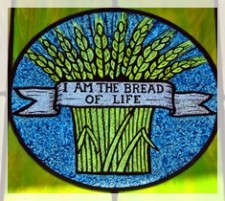
Jesus, however, corrected them. The manna wasn’t from Moses—it was from God. Moreover, that manna only lasted one day—the true bread from heaven, the bread Jesus offered, would last for eternity. Jesus wasn’t there to sustain life with something perishable but to give life with something everlasting!

Seeing Jesus as a miracle worker and a political king, the crowd followed Him. How do we see Him and why do we come to Him? Do we come for spiritual reasons or worldly ones? We may not expect Jesus to provide the food and drink for our next party but are we seeking Him for other things we think we can get from Him? By joining a church, are we seeking friends, contacts, or status? Do we have a personal agenda like politics, business relationships, or help from the parish? Are we motivated to seek Jesus in pursuit of wealth, success, comfort, emotional experience, or a miraculous fix of a problem?

Do we look to Jesus for our advancement or to advance His kingdom? Do we want to be glorified for what we do or glorify Him with what we do? Do we want to feel loved and or do we want to love Him and His children? Are we seeking an emotional high rather than spiritual growth? Do we seek power, influence, or recognition rather than a life of service and humility? Do we want His joy without our obedience or His forgiveness without our repentance?

Like the woman at the well, do we want His water so we don’t have to walk to the well and fill our jugs? Like the people who followed Jesus to Capernaum, do we want Him to miraculously satisfy our daily physical needs? Are we little better than Judas and following Him for the pieces of silver preached in the prosperity gospel? Are we looking for material possessions and wealth or spiritual gifts and the Fruit of the Spirit? Do we seek Him for what He can do for us or for who He is? Do we look to Jesus to take whatever is in His hand or do we come to offer Him what is in ours? Just asking…

True Christianity is to manifest genuinely Christ-like behavior by dependence on the working of the Spirit of God within, motivated by a love for the glory and honor of God. [Ray C. Stedman]

I tell you the truth, anyone who believes has eternal life. Yes, I am the bread of life! Your ancestors ate manna in the wilderness, but they all died. Anyone who eats the bread from heaven, however, will never die. I am the living bread that came down from heaven. Anyone who eats this bread will live forever; and this bread, which I will offer so the world may live, is my flesh. [John 6:47-51 (NLT)]

Copyright ©2022 jsjdevotions. All rights reserved