CYPRESS KNEES

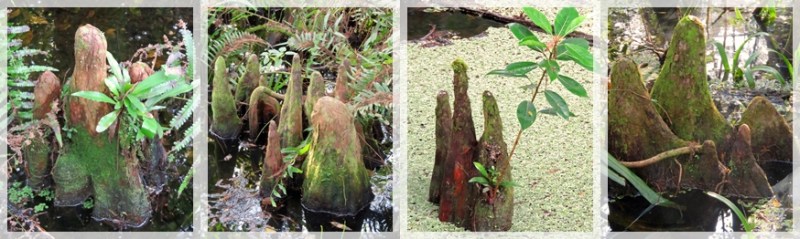
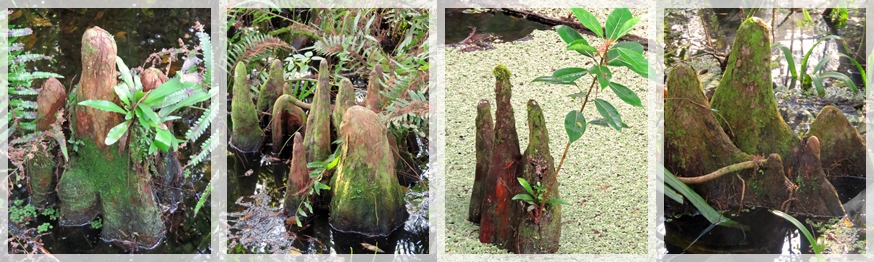
cypress knees - Corkscrew Swamp
The seeds on the rocky soil represent those who hear the message and receive it with joy. But since they don’t have deep roots, they believe for a while, then they fall away when they face temptation. [Luke 8:13 (NLT)]
But since they don’t have deep roots, they don’t last long. They fall away as soon as they have problems or are persecuted for believing God’s word. [Matthew 13:21 (NLT)]

The summer storms caused a few of the palms trees by our ponds to fall over. The landscapers had to pull them back up and erect wooden supports around them to keep the trees upright. They’d been planted too shallow and, without a deep stable base, it didn’t take much water or wind for the palms to go down. I couldn’t help but compare them with the bald cypress trees found in the nearby swamps. While the fallen palms in our neighborhood are barely out of their teens, some of Corkscrew Swamp’s enormous bald cypress trees are over 500 years old. Our palms had trouble with a few summer storms but those cypress trees have survived centuries of hurricanes! Granted, like a lot of old folks, the years have taken their toll and they look a little worse for wear. Hurricane winds may have blown away branches and pruned off tree tops, but they remain proudly standing in the swamp.

Perhaps the biggest reason these trees (cousins of the Redwoods) have survived so well is their unusual root structure. They have an extensive system of horizontal roots and woody conical bulges called “knees” that grow up from those roots. No matter how deep the water in the swamp, cypress knees protrude out of it in a fascinating variety of shapes and sizes. While there are a variety of hypotheses about these quirky swamp sculptures, it is commonly accepted that their unique root system is what gives these trees the extra stability needed to grow over 120 feet tall while standing in several feet of water and still survive centuries of storms and hurricanes. Their knees serve another, totally unrelated purpose in the swamp, as well. They serve as “nurseries” by providing a surface for smaller plants to take root and reach toward the sky.

The point is simple – we need a strong root system if we are going to survive the storms of life. With a firm faith foundation, while life may leave us a bit battered and bruised, like the bald cypress, we can remain upright and survive both temptation and troubles. Instead of knobby wooden knees, we have the word of God, prayer, our church family, and the Holy Spirit to keep us strong. With a foundation like that, doubt is replaced by belief, deceit by truth, worry by hope, and fear by trust. Moreover, just as the cypress knees nurture the ferns of the swamp, our faith examples can help inspire the faith of new believers. Remember, if we don’t stand firm in our faith, we won’t stand at all.

Let your roots grow down into him, and let your lives be built on him. Then your faith will grow strong in the truth you were taught, and you will overflow with thankfulness. [Colossians 2:7 (NLT)]

Wickedness never brings stability, but the godly have deep roots. [Proverbs 12:3 (NLT)]
 

SEEING THE SUNRISE

Don’t be afraid, for I am with you. Don’t be discouraged, for I am your God. I will strengthen you and help you. I will hold you up with my victorious right hand. [Isaiah 41:10 (NLT)]

And I am convinced that nothing can ever separate us from God’s love. Neither death nor life, neither angels nor demons, neither our fears for today nor our worries about tomorrow—not even the powers of hell can separate us from God’s love. [Romans 8:38 (NLT)]

morning dawn Since it was hot and rain had been promised later in the day, I went out walking in the wee small hours of the morning. The few street lights and full moon illuminated my way as God and I had our morning chat. My mind, however, wandered from comforting prayer to worrisome thoughts. We just had our annual physicals and, as often happens with people our age, something suspicious was found. Another test was done, the results are in and a specialist needs to be seen. In all likelihood, it is just a minor health issue, but my mind kept wandering into the area of “what if?” and the various dark scenarios that went along with the question.

Having just completed a couple of devotions on worry and fear for future postings, my own words convicted me of lack of faith. In spite of my well-meaning sincere writing, I allowed worry and fear to creep into my thoughts that morning. There are many ways the enemy tempts us—and it often has nothing to do with the obvious sins of greed, pride, lust, or envy. He subtly sneaks into our thoughts when we’re more concerned about tomorrow than trusting God to get us through today. Living in the land of “what if?” makes us vulnerable to his attacks of doubt, fear and worry.

Whether a minor medical issue (which it quite likely is) or a major medical problem, worry and fear won’t change it. I can’t alter the past nor can I influence the future diagnosis. I remembered that when God brought his people to the Red Sea, He provided them with a way to get across it; He will continue to do so for us today. If He doesn’t part the waters, He’ll provide a boat, give us the material for a bridge, or teach us to swim. Moreover, what we fear could be the sea just as easily can be a shallow puddle through which we can easily walk.

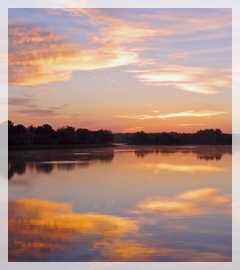
I looked up at the full moon as it was dipping to the west; at the same time, the morning light from the east began to paint the sky pink. For a brief moment, I could see both yesterday’s moon and tomorrow’s rising sun. While I can’t change yesterday and have no control over tomorrow, I do have control over my thoughts of this day. Seeing last night depart in the west and a new morning rise from the east, I chose to trust and have faith for today.

Worry and reasoning are two of Satan’s most successful tools. He’ll get us started with one negative thought and then sit back and watch us finish ourselves off. [Joyce Meyer]

You will keep in perfect peace all who trust in you, all whose thoughts are fixed on you! [Isaiah 26:3 (NLT)]

TUMBLEWEEDS

Russian thistle (tumbleweed)-Kodachrome Basin State Park,UT 009-cropwebThe Lord says: Cursed is the man who puts his trust in mortal man and turns his heart away from God. He is like a stunted shrub in the desert, with no hope for the future; he lives on the salt-encrusted plains in the barren wilderness; good times pass him by forever. But blessed is the man who trusts in the Lord and has made the Lord his hope and confidence. He is like a tree planted along a riverbank, with its roots reaching deep into the water—a tree not bothered by the heat nor worried by long months of drought. Its leaves stay green, and it goes right on producing all its luscious fruit. [Jeremiah 17:5-8 (TLB)]

The stunted shrub about which Jeremiah speaks is much like the tumbleweed. If you haven’t seen it in real life, you’ve probably seen it blowing across the desert in movies. The tumbleweed is actually the Russian thistle, a common western weed, and has a pretty little flower. Once mature and dry, however, the entire plant separates from the root; shaped like a ball, it looks like the dead shrub’s skeleton. In the western states, you can see tumbleweeds as small as soccer balls or as large as a Smart Car in ditches or tumbling along the desolate landscape.

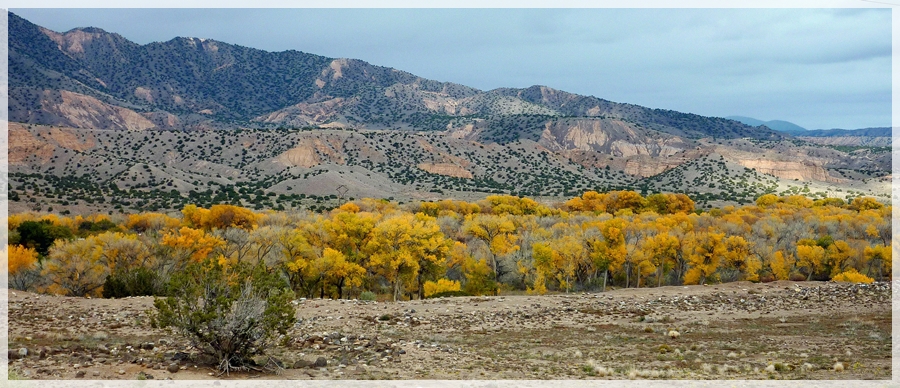
On the other hand, cottonwoods are hardy trees. Much like the ones mentioned in Jeremiah, they put their roots down near rivers, lakes, and irrigation ditches throughout the southwest. Large trees, they have been known to grow up to eighty feet tall with trunks over five feet wide. Because they grow on the water’s edge, they typically survive prairie fires and can live over one hundred years. The hardy Rio Grande cottonwood even flourishes in New Mexico’s White Sands National Monument, an environment too harsh for most plants. In an area of scorching heat, scant rainfall, relentless winds, poor soil and blowing sand, the cottonwood survives because its roots are planted firmly down into the life-giving water hidden beneath the sand.

Do we want to live as a tumbleweed, dry and rootless in a barren land, with no hope for the future? That is what it will be like if we put our trust in our own strength or that of other people. Or do we want to be like the cottonwood, with deep roots, able to withstand fire, heat, wind and drought? If we put our trust in the Lord, we will never be alone and we’ll be able to survive, perhaps even thrive, in the most stressful of situations.

They shall neither hunger nor thirst; the searing sun and scorching desert winds will not reach them anymore. For the Lord in his mercy will lead them beside the cool waters. [Isaiah 49:10 (TLB)]

And now just as you trusted Christ to save you, trust him, too, for each day’s problems; live in vital union with him. Let your roots grow down into him and draw up nourishment from him. See that you go on growing in the Lord, and become strong and vigorous in the truth you were taught. Let your lives overflow with joy and thanksgiving for all he has done. [Colossians 2:6-7 (TLB)]
cottonwoods (NM) -cropaweb

ROAD REPAIRS

God’s business is putting things right; he loves getting the lines straight, setting us straight. Once we’re standing tall, we can look him straight in the eye. [Psalm 11:7 (MSG)] 

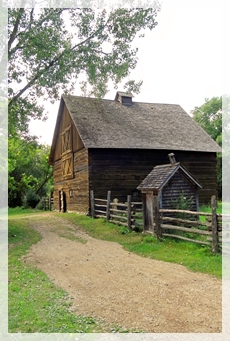
old world wisconsin-129webIllinois really has only two seasons: winter and road construction. The intersection by my northern home was under construction for nearly three years. In an effort to make a five-way intersection into a four-way, one road was closed entirely and another was straightened, roads were widened, and turn lanes and new lights added. During this time, there was no easy way to get anywhere from my house. I had to go east before going west, north before going south, and allow an extra twenty minutes to get where I used to get in five. No one enjoyed the slow traffic, detours, closed lanes, delays, missing driveways, and closed roads. Unfortunately, they all were necessary to straighten out a road in a dangerous intersection. The work is finally done and I was pleased at how smoothly traffic flows in the new configuration. Of course, as a result of this improvement, I’ve had to make some changes in my life since the road I used to take home is closed; fortunately, a new one was opened. Unfortunately, since this is Illinois, there is more construction on the same road, just a few miles further north so more delays are likely for the next few years.

Like IDOT and roads in need of repair, sometimes God has to straighten us out. Chances are we won’t like it any more than we like road construction. We won’t be able to continue doing things the same old way but, on the plus side, He’ll offer us a new way and better way. Like the intersection by my house, our lives will be vastly improved once God has set us straight. And, just as the state never seems to stop with the road work, God is never quite finished with us. There’s always something to straighten, smooth out or repair. It’s best if we just let Him do the work.

What a God! His road stretches straight and smooth. Every God-direction is road-tested. Everyone who runs toward him makes it. [Psalm 18:30 (MSG)]

A tribute to God when he comes, When he comes to set the earth right. He’ll straighten out the whole world, He’ll put the world right, and everyone in it. [Psalm 98:9 (MSG)]

TREKKING POLES – LESSONS FROM THE TRAIL (3)

But he said to me, “My grace is sufficient for you, for my power is made perfect in weakness.” Therefore I will boast all the more gladly of my weaknesses, so that the power of Christ may rest upon me. [2 Corinthians 12:9 (ESV)]

Trust in the Lord with all your heart and do not lean on your own understanding. In all your ways acknowledge him, and he will make straight your paths. [Proverbs 3:5-6 (ESV)]

chipmunk- SSCO9368awebI always had a false sense of pride about not using trekking poles when hiking. They were for novices or ersatz hikers—not a seasoned hiker like me. After reading about hiking the Appalachian Trail, however, it occurred to me that I could be mistaken. With my arthritic knees, perhaps I could use a little assistance.

After a few hikes in the Rockies, I am now a proponent of trekking poles. Where, I wondered, are the aching muscles, stiff joints, and sore feet I expected after several strenuous hikes? The poles, however, greatly reduced the impact on my legs, knees, ankles and feet. Why was I able to walk as quickly and steadily? The poles helped propel me forward and maintain a rhythm. Why hadn’t I struggled more on the steeps? The poles increased my traction and helped me maintain my balance. Why hadn’t I been more frightened on the most challenging sections? I felt more secure with the poles’ assistance. Why no scratches from the brambles? The poles helped me push away nuisances like thorny branches. I suppose I could have used them as defense weapons if attacked, but the squirrels and chipmunks posed no threat and the dogs I met were all friendly.

It took a bit of humility to admit that I might need some help when hiking and now I wonder why it took me so long to realize what seasoned hikers have known for so long. Sometimes our relationship with God is that way, as well. We struggle on, exhausting ourselves, defenseless, getting discouraged, struggling, frightened, and even hurt, before admitting, “Lord, I can’t do it alone!” When we finally admit our weakness, He will ease our fears, keep us steady, and provide us with the skill, strength, confidence and protection needed to complete our walk.

So we can confidently say, “The Lord is my helper; I will not fear; what can man do to me?” [Hebrews 13:6 (ESV)]

For God have us a spirit not of fear but of power and love and self-control. [2 Timothy 1:7 (ESV)]

The Lord is my light and my salvation; whom shall I fear? The Lord is the stronghold of my life; of whom shall I be afraid? [Psalm 27:1 (ESV)]

THE INDIRECT WAY – LESSONS FROM THE TRAIL (2)

When Pharaoh let the people go, God did not lead them on the road through the Philistine country, though that was shorter. For God said, “If they face war, they might change their minds and return to Egypt.” So God led the people around by the desert road toward the Red Sea. [Exodus 13:17-18a (NIV)]

Paul and his companions traveled throughout the region of Phrygia and Galatia, having been kept by the Holy Spirit from preaching the word in the province of Asia. When they came to the border of Mysia, they tried to enter Bithynia, but the Spirit of Jesus would not allow them to. … After Paul had seen the vision, we got ready at once to leave for Macedonia, concluding that God had called us to preach the gospel to them. [Acts 16:6-7,10 (NIV)]

9-3-15_9280web
While hiking up the ski mountain, we discovered that what takes only nine minutes on the gondola takes several hours. A 2,200 vertical rise became a more than five mile hike. When looking at the trail map, it is easy to see why—rather than walking straight up the face and following the path of the gondola, the trail traverses back and forth across the mountain. Geometry taught us that the shortest distance between two points is a straight line yet, sometimes, the most direct way is not always the best way. In actuality, going straight up the face of the mountain is near impossible except for the fittest, most adventurous, and possibly craziest of hikers. Being none of those, we followed the meandering trail. There were moments of discouragement as we crossed back and forth across the face of the mountain, catching a brief glimpse of our destination in the distance, before passing again into the woods and continuing our slow ascent.

Is that what it felt like for the Israelites who spent forty years on a trip that should have taken only a matter of days? The forty years, of course, were tacked on for disobedience, but their initial route, given them by God, wasn’t the shortest one either. The shorter route from Goshen to Canaan, a four or five day’s journey, would have led them through Philistine country and was heavily guarded by a string of Egyptian fortresses. God wisely knew that His people, their spirits broken by years of slavery, were not yet ready for war. Their inexperience and possible cowardice would make them shrink from conflict and want to return to Egypt. Knowing this, God sent them the long way around to the Red Sea, an eleven days’ journey. Then, just as they’d gotten to the edge of the wilderness, instead of going forward, God re-directed them back to make camp by the sea. It probably made no sense to the people but it did to God. Pharaoh, thinking them lost and discouraged, would be lulled into a false sense of confidence. He would pursue them, giving God the opportunity at the Red Sea to prove to the Egyptians (and Israelites) exactly with whom they were dealing: the one true God.

God knows our abilities, our weaknesses and fears. By giving us lesser trials, He prepares us for greater ones, just as he did for the Israelites. Sometimes, the less direct route is necessary for us to gain knowledge and experience and learn to trust, obey and appreciate God and His blessings. Other times, God takes us the less direct route because He has a greater task for us elsewhere. When Paul wanted to go into the provinces of Asia, for example, he was directed instead to Macedonia where he brought the gospel message to Europe. He eventually got back to Asia but one look at his missionary journeys shows us that the Apostle never took the most direct route; instead, he followed God’s plan. Admittedly, when our journey takes longer than expected, it is frustrating to think we’ll never reach our objective. We must remember that God is guiding us to the destination that He has chosen by the path that He wants us to take. It may not be the shortest or easiest trail; it will, however, be the best.

There is a long way which is short and a short way which is long. [Babylonian Talmud, Eruvin 53b]

I know, O Lord, that a man’s life is not his own; it is not for man to direct his steps. [Jeremiah 10:23 (NIV)]