
Jesus came and told his disciples, “I have been given all authority in heaven and on earth. Therefore, go and make disciples of all the nations, baptizing them in the name of the Father and the Son and the Holy Spirit. Teach these new disciples to obey all the commands I have given you. And be sure of this: I am with you always, even to the end of the age.” [Matthew 28:18-20 (NLT)]
 Since 1890, a common teaching method in a surgical residency is to “see one, do one, teach one.” The med student learns the basics by watching an experienced physician do a procedure and then puts his knowledge into practice by doing the procedure himself. He hasn’t mastered the procedure, however, until he’s taught someone else to do it; it is only when we can teach something that we truly understand it.
While Jesus doesn’t call us all to be physicians, he does call us all to be disciples and discipleship follows much the same “see, do, and teach” philosophy of med school. Almost anyone, if they studied hard and observed enough of them, could learn how a coronary heart bypass is done, but that wouldn’t make them cardiovascular surgeons any more than just knowing about Jesus makes someone a disciple of Christ. The first disciples did more than just watch Jesus perform miracles and listen to His parables and, if we’re to be Christ’s disciples, we need to do more than just learn about our Lord.
For the budding heart surgeon, just knowing how a heart bypass is done isn’t enough; he actually has to do one. He actually has to do it by making an incision, opening the chest, touching the heart, and grafting blood vessels from other parts of the body to reroute the blood around the clogged arteries. For Christians, the equivalent of doing one is living like Jesus—applying the Lord’s teachings to our lives and becoming like Him. We put into practice all that we’ve learned about love, forgiveness, redemption and salvation. While few of us would be able to take that second step in medicine and perform bypass surgery, we can take that second step in our faith and put into practice what we’ve been taught by Jesus.
Just seeing and doing, however, aren’t enough if we really want to comprehend something or master a skill. It’s when we try to help someone else understand a concept or technique that we learn in greater depth. In the third step, the training physician teaches someone else how to do the procedure. Because this new student sees things from another viewpoint and asks different questions, the teacher has to think harder and dig deeper to answer and explain his reasoning. It is when the new surgeon can clearly explain and demonstrate which arteries have the best results when grafted and how to remove and reattach them, that he has become a competent surgeon. It’s successfully taking that third step of teaching that eventually turns a med student into a skilled physician.
In Christianity, we often hold back when it comes to that third step: teaching, talking about, and demonstrating how our faith in Jesus works. The command to be disciples was given to us so the gospel message could spread far and wide but, perhaps, in His wisdom, God also knew that it is in sharing our faith that it becomes deeper and stronger. The faith of those early disciples intensified as they spread the gospel message and their knowledge expanded as they taught. When reading Acts and the Epistles, we see how the men who abandoned Jesus in the garden became mature disciples as they shared the gospel, clarified points, answered questions, and explained their belief. Most of us have no hope of ever becoming a surgeon and we’re probably not going to become theologians or even Sunday school teachers. Nevertheless, we have an opportunity to teach about Jesus whenever we open our mouths. Our faith will grow stronger and deeper not just by seeing Jesus in Scripture and doing as would He, but by sharing the gospel message with others.
To teach is to learn twice. [Joseph Joubert]
 The skink is a reptile that looks as if it can’t decide whether it’s a lizard or a snake. As one scampered away down the boardwalk, it looked more lizard-like than usual because it was missing the pointed end of his long tail. Like many lizards, if a predator manages to catch a skink by the tail, the tail will break off. Since the detached tail continues to wiggle, the predator gets distracted which allows the lizard to escape. Even though a raccoon, snake, or hawk had appropriated its tail, that skink escaped to see another day. Although skinks don’t have much with which to defend themselves, with their detachable tails (caudal autonomy), God provided them with an effective mode of escaping trouble!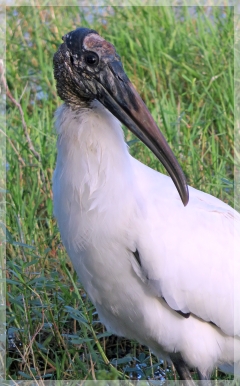


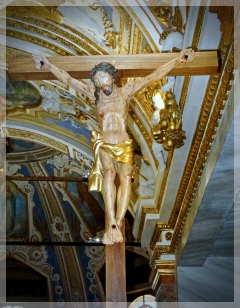 In any cathedral or art museum, we’ll find many pictures of Jesus and even rather graphic depictions of Him on the cross. None of them, however, tell us anything about His appearance because they were created long after His time. Still, in a world where we seem to memorialize everything with pictures, you’d think one of Jesus’ followers would have sketched Him while blessing the children, giving the Sermon on the Mount, or feeding the multitude! 1st century rabbis in Judah, however, vehemently objected to the depiction of human figures because the second commandment prohibited making a “graven image.” With its Jewish roots, this prohibition carried into the early church and inhibited early Christian art.
 Devotions of the Heart