
 When all the people in the synagogue heard these things, they became very angry. They got up, forced Jesus out of town, and took him to the edge of the cliff on which the town was built. They planned to throw him off the edge, but Jesus walked through the crowd and went on his way. [Luke 4:28-30 (NCV)]
For love to be real, for it to grow deep inside, it must not give in to fear. It is not afraid to give, to risk, to chance, even if it hurts. Love believes. It is faith moving forward. Fear holds us back. It makes us stop or turn and run. [Chris Fabry]
While writing yesterday’s devotion about selfishness being the opposite of love, I found several authors who suggested that fear is the opposite of love. This gave me pause; can something be the opposite of more than one thing?
From day one, when Mary and Joseph fled with Him to Egypt, Jesus had plenty of reasons to be fearful and yet fear never prevented Him from speaking, healing, pointing out hypocrisy and evil, or going to the cross. He didn’t give in to fear when, after speaking of God’s grace to Gentiles, the people of His own hometown tried to force him off a cliff. Angry mobs, religious leaders, and Rome never intimidated Jesus or kept Him from challenging the corrupt political and religious system of His day. He knew a warrant was issued for His arrest and that the cross awaited Him in Jerusalem but fear didn’t stop Jesus from boldly riding into the city while being hailed as a king. He knew Judas would betray Him and yet the Lord shared His last meal with him. Jesus didn’t plead for mercy or justice at his trial and His last words weren’t ones of fear or selfishness; they were words of loving forgiveness. Nothing Jesus said or did speaks of fear but everything He said and did speaks of love.
Afraid of commitment, rejection, manipulation, the opinions of others, insufficiency, injury, ineptitude, failure, or that there won’t be enough left over for us, we don’t love. Afraid of being vulnerable, we protect ourselves by not getting involved, not going all-out, not sharing, and not caring. So, like the priest and Levite in the Good Samaritan parable, we walk away, keep to ourselves and our interests, pretend we don’t notice, or make excuses.
Fear happens when we look at ourselves rather than trust in God. Perhaps fear and selfishness are two sides of the same coin. When we’re fearful, we become selfish and, when we’re selfish, it’s likely we’re afraid of something or someone. Love, however, is the antidote to both afflictions. God is love and where God’s love is, there is neither selfishness nor fear.
The call of Jesus is a call to take heart, to have courage, to stand tall in the name of love. The daily invitation that the risen Christ extends to us is to be a people who refuse, in love, to step to the tune of fear. [Bishop Robert O’Neill]
 While every thesaurus says that hate is the opposite of love, I’m not so sure. Authors like Wilhelm Stekel, John Le Carré, Rollo May, Elie Wiesel, and George Bernard Shaw have said that indifference (or apathy) is the opposite of love. Disagreeing, Reverend Billy Graham said the opposite of love is selfishness.
 In a Dennis the Menace comic strip (drawn by Marcus Hamilton), Dennis is sitting next to his father at church. As their offering envelope is dropped in the plate, he asks his father, “Can we get a refund if the sermon isn’t that good?” For Dennis and many church-goers, a good sermon is one that is pleasant and entertaining. Unlike movies and concerts, however, sermons aren’t meant to be entertainment. The Christian church is neither the “church of what’s happening now” nor the church of “anything goes.” While many messages can make us feel good, feeling good is not the purpose of the Good News.
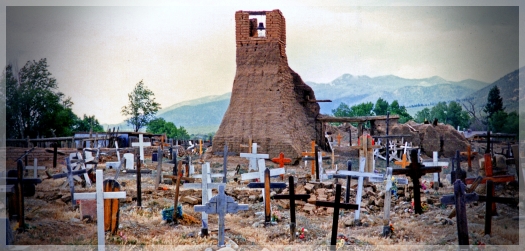 Then he said to me, “Speak a prophetic message to these bones and say, ‘Dry bones, listen to the word of the Lord! This is what the Sovereign Lord says: Look! I am going to put breath into you and make you live again! I will put flesh and muscles on you and cover you with skin. I will put breath into you, and you will come to life. Then you will know that I am the Lord.’” [Ezekiel 37:4-6 (NLT)]
 Although Elisha once worked his land with a plow and oxen, after he accepted Elijah’s cloak, he burnt his plow and oxen, left home, and joined Elijah as an itinerant prophet who depended on others for food and shelter. We know that every time Elisha passed through Shunem, he was fed and sheltered by a family there and Scripture tells us that pious Israelites commonly brought gifts to the prophets they consulted. So why wouldn’t Elisha accept any of Naaman’s generous gifts?
