YOUR KINGDOM COME

This, then, is how you should pray: “Our Father in heaven, hallowed be your name, your kingdom come, your will be done, on earth as it is in heaven.” [Matthew 6:9-10 (NIV)]

Remember that the same Christ who tells us to say, “Give us this day our daily bread,” had first given us this petition, “Hallowed be Thy name; Thy kingdom come; Thy will be done in earth as it is in heaven.” Let not your prayers be all concerning your own sins, your own wants, your own imperfections, your own trials, but let them climb the starry ladder, and get up to Christ Himself, and then, as you draw nigh to the blood-sprinkled mercy-seat, offer this prayer continually, “Lord, extend the kingdom of Thy dear Son.” [Charles Spurgeon]

sunflowerIt wasn’t until I read Charles Spurgeon’s paraphrase of “Your kingdom come,” as “Lord, extend the kingdom of Thy dear Son,” that I truly gave serious thought to what it means to pray, “Your (or “Thy”) kingdom come.” Although we say it every time we say the Lord’s Prayer, what exactly do those three words mean? After all, that was God Himself giving His disciples a guideline to prayer and there certainly couldn’t be a better teacher! Since there are over seventy references to the Kingdom of God in the New Testament and this petition immediately follows praising God’s name in Jesus’ prayer, the coming of God’s Kingdom clearly was important to Him.

Jesus’ life, death, and resurrection opened the doors to God’s Kingdom. Yet, it is only when Jesus comes again at the end of the age that God’s Kingdom will reign with power and authority. While this petition is for the fulfillment of the Kingdom with Christ’s return, it is much more than that. As we pray for the coming of Jesus in the future, these three words also are a petition for the expansion of God’s Kingdom in the present. They are a prayer that the gospel message will be preached to and accepted by all so that the whole world will be made Christ’s Kingdom and filled with His glory. We’re asking God to reveal Himself in such a way that His kingdom is visible here on earth and that He will open the hearts of those we encounter and to whom we witness.

Praying that God’s Kingdom will come is also an acknowledgement that He is our sovereign king and the ruler of our lives. Even though the Kingdom will not be complete until the second coming of Christ, we can experience it today. This leads into  the next petition of “Your will be done,” in which we ask Him to enable us to do what is pleasing to Him. May we be genuine, faithful, obedient, and capable servants of His Kingdom!

Although my lips frequently speak the words, ”Your Kingdom come,” until considering Spurgeon’s words, I barely understood their magnitude. In my personal prayers, I have neglected praying for the coming of God’s Kingdom—the day when Jesus will return and all things will be restored. Although I remember to pray for pastors, missions, and missionaries, the expansion of God’s Kingdom here and now and the role I should play in that expansion has never been on the top of my prayer list either.

If the coming of His Kingdom is God’s priority, perhaps it should be ours as well. Moreover, we should prove the truth of our prayers by putting our words into Kingdom-promoting action. Let us be like the Apostle Paul who, “proclaimed the kingdom of God and taught about the Lord Jesus Christ—with all boldness and without hindrance!” [Acts 28:31]

We therefore pray that God would exert his power, both by the Word and by the Spirit, that the whole world may willingly submit to him. [John Calvin]

Once, on being asked by the Pharisees when the kingdom of God would come, Jesus replied, “The coming of the kingdom of God is not something that can be observed,  nor will people say, ‘Here it is,’ or ‘There it is,’ because the kingdom of God is in your midst.” [Luke 17:20-21 (NIV)]

Copyright ©2021 jsjdevotions. All rights reserved.

FELIX

Sending for Paul, they listened as he told them about faith in Christ Jesus. As he reasoned with them about righteousness and self-control and the coming day of judgment, Felix became frightened. “Go away for now,” he replied. “When it is more convenient, I’ll call for you again.” [Acts 24:24b-25 (NLT)]

flame vineFelix was the governor of Judea from 52 to 58/59 AD. A Greek who became a freedman under the reign of Emperor Claudius, he’s described as a cruel, immoral, and corrupt governor by ancient historians Josephus and Tacitus. Tacitus called him “a master of cruelty and lust who exercised the powers of a king in the spirit of a slave.” As Judea’s governor (or Procurator), his job included procuring funds for Rome which Felix accomplished mercilessly while lining his pockets as well. That it took 470 soldiers to safely escort the Apostle Paul from Jerusalem to Caesarea indicates the lawlessness of his time.
In Acts 24, we meet Felix as he conducts an inquiry into the Jews’ charges against Paul. After hearing the accusations of the Roman advocate Tertullus, Paul launched a strong defense against the false allegations. Perhaps uncomfortable with Paul’s reference to the righteous and unrighteous, Felix adjourned the case until the arrival of Lysias, the garrison commander who saved Paul’s life in Jerusalem.

A few days later, Paul again appeared before Felix. Joining the governor was Drusilla, his third wife and the granddaughter of Herod the Great. She’d left her husband, King Aziz of Emesa, for Felix and, like her uncle Herod Antipas (the one who beheaded John the Baptist), her marriage was illegal since she was neither divorced nor widowed. I imagine the shameless couple didn’t take kindly to the Apostle’s words as he spoke of righteousness, self-control, and the coming day of judgment. Frightened by Paul’s message, Felix sent him away, saying he’d call for him again when it was more convenient.

Although the governor frequently called for Paul to talk with him over the next two years, Felix never decided Paul’s guilt or innocence. Scripture tells us the corrupt man was looking for a bribe, but surely it didn’t take Felix two years to realize a payoff was not forthcoming. I suspect the governor was drawn to Paul’s message but, unwilling to repent, he couldn’t commit to the Way. The corrupt and powerful man was caught between two incompatible worlds—if he chose Christ, he would end up relinquishing his position, influence, ill-gotten wealth, and even his wife. Unwilling to do so, Felix thought himself a freedman, when, in fact, he was in bondage to his sinful way of life. Eventually recalled to Rome, Felix never decided about Paul or Jesus simply because it was inconvenient. Let us not make the same mistake!

The two sworn enemies of the soul are “Yesterday” and “Tomorrow.” Yesterday slays its thousands. Past sins plunge many into darkness and despair. … Tomorrow slays its tens of thousands. Vows, promises, resolutions are never fulfilled. “Some other time,” many say, when urged to repent and believe. They fail to realize that now is the acceptable time. [Herbert Lockyer]

Don’t you realize that you become the slave of whatever you choose to obey? You can be a slave to sin, which leads to death, or you can choose to obey God, which leads to righteous living. Thank God! Once you were slaves of sin, but now you wholeheartedly obey this teaching we have given you. Now you are free from your slavery to sin, and you have become slaves to righteous living. [Romans 6:16-18 (NLT)]

Copyright ©2021 jsjdevotions. All rights reserved.

BUYING A FIELD

See how the siege ramps have been built against the city walls! Through war, famine, and disease, the city will be handed over to the Babylonians, who will conquer it. Everything has happened just as you said.  And yet O Sovereign LORD, you have told me to buy the field—paying good money for it before these witnesses—even though the city will soon be handed over to the Babylonians. Then this message came to Jeremiah from the Lord: “I am the Lord, the God of all the peoples of the world. Is anything too hard for me? [Jeremiah 32:24-27 (NLT)]

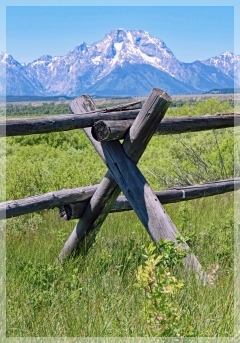
grand tetons - jackson holeUnder siege for nearly a year, Jerusalem was surrounded by the Babylonians, and Judah’s future looked grim. Whether it was poverty or the desire to get rid of property that soon would be worthless once Babylon invaded, Hanamel decided to sell his land in Anathoth, about three miles from Jerusalem. Under Israelite law, property was supposed to stay within a family and so Hanamel offered it to his cousin, the prophet Jeremiah.

Since Anathoth already was under Babylonian control, Hanamel’s real estate deal would be like being offered property in Kabul, Afghanistan. While real estate often is considered a good investment, purchasing property in an active war zone or occupied territory is not. Nevertheless, even though Jeremiah was imprisoned in the palace courtyard and the nation’s defeat was inevitable, God instructed him to become the property’s redeemer by purchasing his cousin’s land.

Having prophesied the fall of Judah, the destruction of Jerusalem, Zedekiah’s imprisonment, and the Jews’ captivity, Jeremiah knew how worthless the land was. Although he lawfully could refuse to purchase it, the prophet paid his cousin 17 shekels (about 18-months’ wages) for the land which, considering the circumstances, seems a sizeable sum for land he’d never live to enjoy. Assuring his scribe Baruch that the worthless land again would have value, he told him to take the deeds, place them in a clay jar (the ancient version of a safety deposit box), and preserve them in a safe place, The prophet then passed along God’s hopeful words to all those who witnessed the transaction in the courtyard: “Someday people will again own property here in this land and will buy and sell houses and vineyards and fields.”

Along with his prophecies of Jerusalem’s ruin, Judah’s defeat, and the people’s captivity, Jeremiah had prophesied God’s eventual restoration of the people to their land. He didn’t buy the land because Judah wouldn’t be conquered; he purchased it because it would! The prophet was putting his money where his mouth was. His purchase of a worthless piece of acreage was an act of faith. It was a sign of hope for the future by the man who’d prophesied doom and gloom—a powerful demonstration of his belief in God’s promise that the land would again have value and belong to the Jews.

If we want to see the fulfillment of God’s promises to us, like Jeremiah, we must be obedient to God’s commands, no matter how difficult, confusing, or absurd they seem to be. In the face of obstacles, hardship, or overwhelming odds, we must demonstrate our faith and hope in God because faith and obedience go hand in hand. If we say we believe His promises, we must act as if we truly do! May we always remember that nothing is too hard for the Lord!

I will certainly bring my people back again from all the countries where I will scatter them in my fury. I will bring them back to this very city and let them live in peace and safety. They will be my people, and I will be their God. And I will give them one heart and one purpose: to worship me forever, for their own good and for the good of all their descendants. And I will make an everlasting covenant with them: I will never stop doing good for them. I will put a desire in their hearts to worship me, and they will never leave me. I will find joy doing good for them and will faithfully and wholeheartedly replant them in this land. [Jeremiah 32:37-41 (NLT)]

Copyright ©2021 jsjdevotions. All rights reserved.

OR ELSE

My child, do not reject the Lord’s discipline, and don’t get angry when he corrects you. The Lord corrects those he loves, just as parents correct the child they delight in. [Proverbs 3:11-12 (NCV)]

little blue heron“Baby Blues,” a comic strip by Rick Kirkman and Jerry Scott, portrays the MacPherson family and the frustration, craziness, and humor that come with parenthood. Perhaps because I had a boy like him, my favorite character is the middle child, Hammie. Without a doubt, the inventive boy is a handful but he’s delightful in his own special way. When Zoe, his older sister, comments that he’s stopped making his usual annoying noise, he explains: “Mom used the three magic words.” When Zoe asks, “Please and thank you?” he clarifies, “Stop or else!”

Like the MacPhersons, the three magic words at our house were “please” and “thank you.” However, like Hammie’s mother, there were times I gave my children the option of obedience or facing the consequences with the other three: “Stop, or else!” Of course, the “or else” is an empty caution unless there’s an understanding of what “or else” entails.

The Old Testament is filled with God’s warnings of “or else” to the Israelites; sadly, it’s also a chronicle of their repeated failure to listen and obey Him. Time and time again, they disregarded God’s law, rejected His prophets, fought among themselves, worshipped other gods, and participated in pagan practices. They couldn’t say they weren’t warned by all the judges, kings, and prophets God sent to them so they shouldn’t have been surprised by the famines, floods, droughts, wars, exile, and oppression that resulted from their disobedience. Those afflictions, however, didn’t mean God had been unfaithful to His people. On the contrary, He was completely faithful to his words of warning. By withholding His blessings, the people got exactly what God said they would.

The book of Judges is a series of “Stop or else!” stories. Time and time again, after their disobedience, the Israelites faced the consequences of oppression by people like the Philistines and Ammonites. They eventually repented, called to God for help, and were granted relief. Although a period of peace followed, they were slow learners and the cycle would repeat: obedience gave way to disobedience and they again faced God’s “or else.” Nevertheless, just like Hammie’s patient and loving mother in the comic strip, God never gave up on His people.

Like a good parent, God gives fair warning and provides his people with plenty of opportunities to change their ways. Jesus warned us about sin, Satan, hypocrisy, pride, selfishness, materialism, greed, and false teachings. He clearly told us there are consequences to sinful behavior: the wages of sin is death, there will be a day of judgment, the unrighteous won’t enter the Kingdom, unbelief brings death but belief brings life, and the day of His return will come without warning. Scripture tells us how it will end—we can’t say we haven’t been warned!

It is the wonder of the grace of God that he has given such warnings. If we do not listen and turn from our evil ways, and so suffer awful judgment, then it is not the grace and love of God that is lacking, but the fault of our unrepentant hearts which refuse to heed the revelation of God, and spurn his love. [Georgina W. Everingham]

Our fathers on earth disciplined us for a short time in the way they thought was best. But God disciplines us to help us, so we can become holy as he is. We do not enjoy being disciplined. It is painful at the time, but later, after we have learned from it, we have peace, because we start living in the right way. … So be careful and do not refuse to listen when God speaks. Others refused to listen to him when he warned them on earth, and they did not escape. So it will be worse for us if we refuse to listen to God who warns us from heaven. [Hebrews 12:10-11, 25 (NCV)]

Copyright ©2021 jsjdevotions. All rights reserved.

PRIORITIES

And don’t be concerned about what to eat and what to drink. Don’t worry about such things. These things dominate the thoughts of unbelievers all over the world, but your Father already knows your needs. Seek the Kingdom of God above all else, and he will give you everything you need. [Luke 12:29-31 (NLT)]

bee on cloverIn writing about keeping the main thing the main thing, I mentioned the sisters Martha and Mary. Hospitality was highly valued in Jewish life and, as the host, Martha’s character and reputation depended on how well she managed her household and served her guests. Offering hospitality to a famous teacher was a great honor and, to show her devotion to Jesus, Martha seemed determined to make the most of it by preparing a lavish feast for Him. Unlike her sister, the contemplative Mary defied the customs of her day; rather than helping in the kitchen, she took the place of a disciple and sat at Jesus’ feet

Instead of keeping her eye on the main thing—which was Jesus—Martha was distracted by all that she was doing. The word usually translated as distracted is periespato. Meaning to be drawn away, troubled, or over-burdened, this is the only time it was used in the New Testament. The King James translation of this word as “cumbered” probably is a better picture of her state of mind. It wasn’t that a distracted Martha forgot to put out cups for the wine. She was weighed down and encumbered because she’d saddled herself with things of secondary importance and lost sight of the main thing.

Not needing an elaborate banquet or a perfectly set table, Jesus told Martha not to be concerned over the details. Explaining that there only was one thing about which to be concerned, He said Mary had found it. The exact identity of that one thing, however, is unstated. We understand Jesus’ words to mean that the Kingdom of God takes precedence over anything in the house, that sitting at the master’s feet and listening to Him is more important than chores, and that the Lord has first claim on our time.

Martha often is criticized for her concern with earthly matters while Mary is praised for her concern with spiritual ones. Let’s remember, however, that Jesus never said Martha had chosen something bad—just that Mary had chosen something better. In a way, these two sisters illustrate the two approaches to the Christian life mentioned by the Apostle James: faith and works. Rather than being mutually exclusive, they are complementary. Worship should lead to service, not replace it, just as service should lead to worship. Just as Martha lost sight of being with Jesus while serving Him, we must never allow our work for Him to eclipse our relationship with Him.

Our love for and service to the Lord must be intertwined and we shouldn’t neglect the one for the other. Nevertheless, when our work for Him takes away from spending time with Him, we must choose the better thing—being with Him is more important than serving Him. Let’s keep the main thing—our relationship with Jesus—the main thing.

Everything begins with the right priorities, and right priorities begin with God. [Woodrow Kroll]

Remain in me, and I will remain in you. For a branch cannot produce fruit if it is severed from the vine, and you cannot be fruitful unless you remain in me. Yes, I am the vine; you are the branches. Those who remain in me, and I in them, will produce much fruit. For apart from me you can do nothing. [John 15:4-5 (NLT)]

Copyright ©2021 jsjdevotions. All rights reserved.

LOVE CASTS OUT FEAR

dragonflyWhen all the people in the synagogue heard these things, they became very angry. They got up, forced Jesus out of town, and took him to the edge of the cliff on which the town was built. They planned to throw him off the edge, but Jesus walked through the crowd and went on his way. [Luke 4:28-30 (NCV)]

For love to be real, for it to grow deep inside, it must not give in to fear. It is not afraid to give, to risk, to chance, even if it hurts. Love believes. It is faith moving forward. Fear holds us back. It makes us stop or turn and run. [Chris Fabry]

While writing yesterday’s devotion about selfishness being the opposite of love, I found several authors who suggested that fear is the opposite of love. This gave me pause; can something be the opposite of more than one thing?

From day one, when Mary and Joseph fled with Him to Egypt, Jesus had plenty of reasons to be fearful and yet fear never prevented Him from speaking, healing, pointing out hypocrisy and evil, or going to the cross. He didn’t give in to fear when, after speaking of God’s grace to Gentiles, the people of His own hometown tried to force him off a cliff. Angry mobs, religious leaders, and Rome never intimidated Jesus or kept Him from challenging the corrupt political and religious system of His day. He knew a warrant was issued for His arrest and that the cross awaited Him in Jerusalem but fear didn’t stop Jesus from boldly riding into the city while being hailed as a king. He knew Judas would betray Him and yet the Lord shared His last meal with him. Jesus didn’t plead for mercy or justice at his trial and His last words weren’t ones of fear or selfishness; they were words of loving forgiveness. Nothing Jesus said or did speaks of fear but everything He said and did speaks of love.

Afraid of commitment, rejection, manipulation, the opinions of others, insufficiency, injury, ineptitude, failure, or that there won’t be enough left over for us, we don’t love. Afraid of being vulnerable, we protect ourselves by not getting involved, not going all-out, not sharing, and not caring. So, like the priest and Levite in the Good Samaritan parable, we walk away, keep to ourselves and our interests, pretend we don’t notice, or make excuses.

Fear happens when we look at ourselves rather than trust in God. Perhaps fear and selfishness are two sides of the same coin. When we’re fearful, we become selfish and, when we’re selfish, it’s likely we’re afraid of something or someone. Love, however, is the antidote to both afflictions. God is love and where God’s love is, there is neither selfishness nor fear.

The call of Jesus is a call to take heart, to have courage, to stand tall in the name of love. The daily invitation that the risen Christ extends to us is to be a people who refuse, in love, to step to the tune of fear. [Bishop Robert O’Neill]

Where God’s love is, there is no fear, because God’s perfect love drives out fear. It is punishment that makes a person fear, so love is not made perfect in the person who fears. [1 John 4:18 (NCV)]

God did not give us a spirit that makes us afraid but a spirit of power and love and self-control. [2 Timothy 1:7 (NCV)]

Copyright ©2021 jsjdevotions. All rights reserved.