DON’T KILL THE MESSENGER

These people are stubborn rebels who refuse to pay attention to the Lord’s instructions. They tell the seers, “Stop seeing visions!” They tell the prophets, “Don’t tell us what is right. Tell us nice things. Tell us lies. Forget all this gloom. Get off your narrow path. Stop telling us about your ‘Holy One of Israel.’” [Isaiah 30 9b-11 (NLT)]

fireweedBeing a prophet was a calling from the Lord and probably an unwelcome one at that. Amos, a businessman from Tekoa in Judah, was minding his own business when God called on him. He probably would have preferred tending his sheep and cultivating his fig trees to pronouncing judgment upon the Israel, Judah, and other nations. Nevertheless, this layman accepted God’s call and denounced the nations’ sins with brutal frankness. It was at the height of Israel’s prosperity that he prophesied their end by singing a funeral song for the northern kingdom. Needless to say, the words of a Judean pronouncing judgment upon Israel were not welcomed. Even though Amaziah ordered him back to Judah, Amos continued to give God’s message to the people.

It never seemed to go well for God’s prophets. Having infuriated the priests by going to the Temple to rebuke the people for their idolatry and falseness, Jeremiah was banned from the Temple even though he was the son of a priest. Seeing him as a traitor and conspirator, the priests plotted his death and Jeremiah was arrested, beaten, imprisoned, and thrown into a cistern to die. Although he was rescued from the cistern, he later was forcibly taken by rebels to Egypt and church tradition holds that he was stoned to death there.

It didn’t go any better for the rest of God’s prophets. Blaming Elisha for his troubles, the king of Aram wanted him beheaded and Elijah spent much of his time fleeing from the wrath of Jezebel and Ahab. Micaiah was tossed into prison for predicting Israel’s defeat and Ahab’s death, Daniel was thrown into a lion’s den, John the Baptist was beheaded and, according to rabbinical tradition, King Manasseh executed Isaiah by having him sawn in half! If the prophets weren’t losing their lives, they were running for them!

These prophets were unpopular because they fearlessly told the truth instead of what the people wanted to hear. They revealed the people’s sins and warned of their consequences. Sent to confront rather than comfort, their messages often were unwelcome and ignored. What those who persecuted them failed to realize is that, while they may have silenced the men’s voices temporarily, the truth of their messages didn’t disappear!

Let’s face it—reproach, sacrifice, and repentance are never popular messages. Not everything we read in the Bible or hear from the pulpit is going to be comforting and cheerful; it does, however, need to be heard. Not everything the Holy Spirit tells us is going to be approving, but it will be edifying. Not everything God instructs us to do will be easy, but it will be worthwhile. Not everything said by our brothers and sisters in Christ will be appreciated, but it will be honest. God gives warnings so we won’t have to suffer his wrath. Rather than ignoring, persecuting, or killing God’s messengers, we’re better off listening to them and heeding their words.

This is the reply of the Holy One of Israel: “Because you despise what I tell you and trust instead in oppression and lies, calamity will come upon you suddenly—like a bulging wall that bursts and falls. In an instant it will collapse and come crashing down. [Isaiah 30:12-13 (NLT)]

Copyright ©2022 jsjdevotions. All rights reserved.

ONLY THE BEST

When it was time for the harvest, Cain presented some of his crops as a gift to the Lord. Abel also brought a gift—the best portions of the firstborn lambs from his flock. The Lord accepted Abel and his gift, but he did not accept Cain and his gift. [Genesis 4:3-5a (NLT)]

My guests never get the first piece of pie or lasagna because it always turns into a broken, sticky mess with half of it remaining in the pan. They also don’t get the over-baked cookies, the frayed towels, chipped china, or last night’s left-overs. Since I would never serve a guest anything but the best I have to offer, why is it so tempting to give God less than our best?

While Abel offered his first and best, Cain didn’t and we’ve continued much the same way today. We often complain when we’re asked to serve and begrudge the time spent serving. We give God our money after we’ve purchased everything we want and our prayers only when we can find the time or want something. We read His word when there’s nothing better to do, worship Sunday morning if we wake up in time or the golf game is cancelled, and volunteer only at our convenience. It’s our outdated cans that we bring to the food pantry and our stained and torn clothing that we donate to the resale shop.

When Cain and Abel brought their gifts to the Lord, Cain, a farmer, gave from his crops and Abel, a shepherd, gave from his flock. Literally translated, Cain “bringeth from the fruit of the ground a present to Jehovah” and Abel brought “from the female firstlings of his flock, even from their fat ones.” While God was pleased with Abel’s offering, He wasn’t with Cain’s. Some commentators explain God’s displeasure by saying He wanted an animal (blood) sacrifice rather than the bloodless sacrifice from the soil. Scripture, however, doesn’t say that it had to be a blood sacrifice. The Hebrew word used was minchah which clearly meant gift, tribute, or offering and the later law of Moses tells us that both animal and plant offerings were acceptable. The brothers’ offerings were appropriate for their occupations.

God’s problem wasn’t that one gift was fauna and the other flora; he was displeased with one giver’s heart! Showing his love for God, Abel didn’t give just any animal from his flock; he gave the “firstlings.” The Hebrew word used was bakar, meaning the first and best animals. While there is a similar Hebrew word, bakkurah, (translated as “firstfruits”) for the first and best of a grain or fruit offering, that word was not used for Cain’s gift. While the subtle difference is easily missed by 21st century readers, it would have been abundantly clear to the Israelites. While Abel gave the best, Cain just gave some. We don’t know if his offering was blemished, bruised, or just the leftovers from his harvest, but we do know it wasn’t the first and best!

God didn’t confront Cain because he failed to offer meat; he confronted him because Cain’s heart wasn’t in the right place. Rather than an act of worship, his gift was offered begrudgingly rather than willingly, out of a sense of duty than one of love.

We know from the story of the widow’s two coins that it’s not the kind or size of the offering that matters—it’s the heart attitude of the giver that’s important. Man sees only the gift but God sees the heart of the giver. Hallmark’s “When You Care Enough to Send the Very Best” is one of the most recognized slogans of all time. God gave us His best in Jesus; can we give Him anything less in return? Do we care enough to give Him our very best?

We offer with joy and thanksgiving what you have first given us—our selves, our time, and our possessions, signs of your gracious love. Receive them for the sake of him who offered himself for us, Jesus Christ our Lord. Amen. [Lutheran Book of Worship]

Honor the Lord with your wealth and with the best part of everything you produce. [Proverbs 3:9 (NLT)]

As you harvest your crops, bring the very best of the first harvest to the house of the Lord your God. [Exodus 34:26 (NLT)]

Copyright ©2021 jsjdevotions. All rights reserved.

A MAN OF SORROWS

He was despised and rejected— a man of sorrows, acquainted with deepest grief. We turned our backs on him and looked the other way. He was despised, and we did not care. Yet it was our weaknesses he carried; it was our sorrows that weighed him down. And we thought his troubles were a punishment from God, a punishment for his own sins! But he was pierced for our rebellion, crushed for our sins. He was beaten so we could be whole. He was whipped so we could be healed. [Isaiah 53:3-5 (NLT)]

angelWhen prophesying about Jesus, Isaiah called Him a “man of sorrows.” Indeed, Jesus carried a tremendous weight of sorrow upon his shoulders—the heaviest of which was the weight of the world’s sins, a weight totally undeserved by this man who was without sin. A compassionate man, Jesus also carried the burden of the world’s heartache. He knew the anguish of Jarius, the despair of the bleeding woman, the grief of Martha and Mary at Lazarus’ death, the self-reproach of the woman at the well, the centurion’s concern for his servant, the torment of the possessed man, and the distress of the lepers. He also knew the weight of the world’s rejection. He was scoffed at by people in his own hometown, many of his early disciples deserted him, and Judas betrayed him. Wanting none to perish, He wept upon his entry into Jerusalem because of the Israelites’ lost opportunity at salvation. The night of His betrayal, Jesus was filled with grief—indeed, He was a man of sorrows. But, He also was a man of peace, love, purity, holiness, eloquence and love.
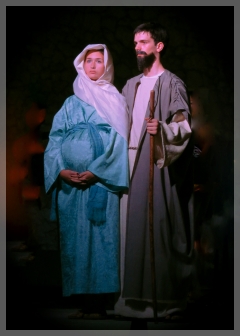
Yes, Jesus was a man of sorrows but not a sorrowful man. Could a sorrowful man cause us to sing “Joy to the World!” or “Good Christian Men Rejoice!”? Could He fulfill the angel’s promise of great joy or cause us to sing of “tidings of comfort and joy?” And yet, comfort and joy are what this man of sorrows brought and continues to bring to all who believe.

Thank you, Heavenly Father, for the gift of your precious son—not only a man of sorrows but also a savior who brought us the joy of forgiveness, redemption, salvation, and knowing you.

God Rest Ye Merry, Gentlemen, Let nothing you dismay;
Remember Christ, our Saviour, Was born on Christmas day,
To save us all from Satan’s power When we were gone astray.
O tidings of comfort and joy, Comfort and joy, O tidings of comfort and joy.
“Fear not,” then said the Angel, “let nothing you affright,
This day is born a Saviour Of pure Virgin bright,
To free all those who trust in Him From Satan’s power and might.”
O tidings of comfort and joy, Comfort and joy, O tidings of comfort and joy.
[God Rest Ye Merry, Gentlemen (author unknown)]

But the angel reassured them. “Don’t be afraid!” he said. “I bring you good news that will bring great joy to all people. [Luke 2:10 (NLT)]

I have told you these things so that you will be filled with my joy. Yes, your joy will overflow! (John 15:11 (NLT)]

Copyright ©2021 jsjdevotions. All rights reserved.

LAS POSADAS – NINE MONTHS (2)

And because Joseph was a descendant of King David, he had to go to Bethlehem in Judea, David’s ancient home. He traveled there from the village of Nazareth in Galilee. He took with him Mary, to whom he was engaged, who was now expecting a child. [Luke 2:4-5 (NLT)

Until learning about Las Posadas, I hadn’t given much thought to the difficulty of Joseph and Mary’s journey to Bethlehem or to how frightened and desperate the couple must have been that night so long ago. As the crow flies, it’s only a 70-mile trip from Nazareth to Bethlehem but Joseph and Mary weren’t crows and the route was not a straight one. Because of the hilly terrain, the most direct route south was the most physically challenging and, because it led right through Samaria, it also was the most dangerous. Wanting nothing to do with Samaritans, Jews typically detoured to the east before going south along the flatlands of the Jordan River, turning west at Jericho, going over the hills surrounding Jerusalem, and on south into Bethlehem—a trip of 90 to 100 miles. The trek from Jericho to Bethlehem would have been the hardest since it was an uphill hike with an elevation change of 3,500 feet! In good circumstances, people could walk about 20 miles a day so Mary and Joseph feasibly could have made Bethlehem in five 8-hour days. Mary, however, was about ready to give birth so a trip of seven to ten days is more likely.
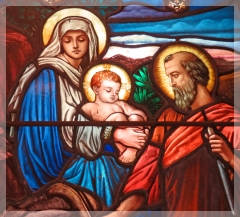
Since the Bible quickly moves from the miraculous conception of Jesus to Mary’s visit to Elizabeth and then to Jesus’ birth, we probably don’t give much thought to what those nine months of pregnancy were like for Mary. Each day of the nine days of Las Posadas, however, represents a month of Mary’s pregnancy. When Scripture says Mary “hurried to the hill country of Judea” to see Elizabeth, we assume she lived nearby. Rather than right around the corner, Elizabeth lived about five miles southwest of Jerusalem in Ein Karem, meaning the newly pregnant girl (who may have suffered from morning sickness) took a similar walk to the one she’d make nine months later! Three months later, she made the same 90 to 100-mile journey north back to Nazareth. Even if Mary traveled in a caravan, it was a dangerous journey for a young woman alone! Ancient travel was no walk in the park.

Pregnancy is a blessed thing but it is a life-changing event full of physical and emotional challenges. Along with the normal mood swings accompanying changes in estrogen and progesterone, Mary had the shock of an unexpected pregnancy, saw her wedding plans turned upside down, lost her reputation, and endured the whispers of the town folk about how she betrayed her fiancé. We know how Joseph reacted to her pregnancy but we don’t know about Mary’s parents or the rest of their family and friends. Were the couple shunned or snubbed? Pregnancy is a blessing but there’s a downside to growing another being in one’s uterus: fatigue, shortness of breath, discomfort as the growing child pushes against internal organs, trying to find a comfortable position in which to sleep, back aches, bloating, frequent urination, and swollen feet (to name just a few). Pregnancy isn’t easy—even when you’re carrying the Messiah!

Once Mary and Joseph found lodging, what of the baby’s birth? Because our nativity scenes focus on the lovely scene of the Holy Family after Jesus’ arrival, we tend to forget the hours of labor leading up to that scene. The conditions weren’t sterile, there were no epidurals, and Scripture makes no mention of a midwife’s presence. Without question, there was discomfort, pain, sweat, aching muscles, tears, fear, mess, and blood. Surely, giving birth away from family, in a cave, in a strange town, and placing her newborn in a feed trough wasn’t what Mary envisioned for the child who would be called “Son of the Most High.”

Mary and Joseph were ordinary people, people like you and me, people who hurt, worry, bruise, get tired, bleed, complain, cry, throw-up, get blisters, and suffer—people who can get upset, frustrated, troubled, doubtful, surprised, disappointed, and sad. Today, consider what those nine months were like for Mary, a girl barely into her teens who became the mother of God, and Joseph, the man who would act as the earthly and legal father to God’s son. They were two ordinary people who did an extraordinary thing! Thank you, God!

And while they were there, the time came for her baby to be born. She gave birth to her firstborn son. She wrapped him snugly in strips of cloth and laid him in a manger, because there was no lodging available for them. [Luke 2:6-7 (NLT)]

Copyright ©2021 jsjdevotions. All rights reserved.

LAS POSADAS – LODGING (1)

And while they were there, the time came for her to give birth. And she gave birth to her firstborn son and wrapped him in swaddling cloths and laid him in a manger, because there was no place for them in the inn [Luke 2:6-7 (ESV)]

Holy FamilyTomorrow (December 16) is the first day of Las Posadas. Originally a solemn Christmas novena, it was brought to Mexico in 1587 by Spanish priests. Perhaps, because it occurred during the Aztec celebration of the birthday of their pagan god Huitzilopochtli, what began as formal nine-day prayer vigil eventually moved out of the church and into the community where it became a nine-day religious pageant.

Posadas is Spanish for “lodgings” or “accommodations” and the ritual commemorated Mary and Joseph’s trip from Nazareth to Bethlehem. At dusk December 16, people dressed up as Mary and Joseph, angels, and shepherds reenacted the couple’s journey and their unsuccessful search for lodging. Going to several houses each night, the pilgrims (called Peregrinos) were sent away until the ninth night (Christmas Eve) when they finally were given shelter. People along the route decorated their homes’ entrances with luminaria to light the way. This tradition spread into our nation’s southwest when Catholic settlers migrating from Spain and Mexico came northward.

When reenacting Mary and Joseph’s quest for housing, the participants sang a carol called “Pidiendo Posada” and the verses alternated between those outside seeking lodging and those responding from behind their doors. “In the name of the heavens I request lodging from you…,” sang the pilgrims while, from inside, they’re told it’s not an inn and the door won’t be opened because they could be scoundrels. The song went back and forth as the pilgrims begged for mercy and promised God’s reward but were answered with denials, excuses, and threatened with a beating. Although the Peregrinos identified Mary as “the Queen of Heaven,” the response was doubt that a queen would travel without an entourage. Not until the last house and entrance was gained was the final verse sung: “Enter holy pilgrims. Receive this haven. That although it’s a poor dwelling I offer it to you from the heart.”

When a homeowner received the Peregrinos, they were welcomed with food and a piñata shaped like a seven-pointed star. Like everything else about Las Posadas, the star had religious significance. Representing the star of Bethlehem, each of its points represented one of the seven deadly sins, and its bright colors denoted the lure of sin. Participants were blindfolded and made to turn around 33 times before trying to hit and break the piñata with a stick. The 33 turns represented the years in Jesus’ life and the resulting dizziness denoted the disorientation caused by temptation. The blindfold signified Christians’ blind faith that good will triumph over evil, the stick represented the virtue needed to overcome sin, the breaking of the piñata symbolized the triumph of good over evil, and the candy and fruit that spilled out once the piñata broke open signified the riches of the kingdom of Heaven. The rituals of Las Posadas served as a perfect way to teach a largely illiterate population the Christmas story and the gospel message.

Through the centuries, piñatas have lost most of their religious connotation and can be found in all sorts of shapes and sizes at all times of the year. While Las Posadas celebrations continue wherever a large Hispanic population is found, its observance has changed, as well. Rather than the original nine days of  processions, it often is observed only one night. Like the piñata and many of our Christmas traditions, it even has become secularized in some places with Santa’s appearance.

Beyond its pageantry and symbolism, what does Las Posadas mean to those of us who are neither Roman Catholic nor of Hispanic origin? Since it’s about welcoming strangers in need, we might recall that this beautiful tradition was brought to our country hundreds of years’ ago by immigrants who, like the Holy Family, were seeking a place of refuge. There are parallels between Joseph and Mary’s pilgrimage to Bethlehem (and their escape from Herod into Egypt) and the challenges today’s migrant families face when they flee their countries. While Las Posadas is about the importance of finding room for Jesus in our hearts so that His Spirit can live in us, it also is about finding room in our hearts for others who, like Joseph and Mary, seek safe shelter. A local Hispanic pastor explained that Las Posadas is about “doing right by Christ.” Let us remember that Jesus made it clear what doing right by Him meant.

There was no room that night so long ago, will we make room for Him today?

Then the King will say to those on his right, “Come, you who are blessed by my Father, inherit the kingdom prepared for you from the foundation of the world. For I was hungry and you gave me food, I was thirsty and you gave me drink, I was a stranger and you welcomed me, I was naked and you clothed me, I was sick and you visited me, I was in prison and you came to me.” Then the righteous will answer him, saying, “Lord, when did we see you hungry and feed you, or thirsty and give you drink? And when did we see you a stranger and welcome you, or naked and clothe you? And when did we see you sick or in prison and visit you?” And the King will answer them, “Truly, I say to you, as you did it to one of the least of these my brothers, you did it to me.” [Matthew 25:34-40 (ESV)]

Copyright ©2021 jsjdevotions. All rights reserved.

THE SECOND MILE

If a soldier demands that you carry his gear for a mile, carry it two miles. If you are kind only to your friends, how can you be different from anyone else? Even pagans do that. [Matthew 5:41-42 (NLT)]

great egretIn Jesus’ day, Roman law allowed a soldier to compel any able-bodied man in a conquered province to carry the soldier’s gear one mile. A Roman mile was 1,000 paces of five feet each (a little less than our mile) and a soldier’s pack could weigh as much as 100 pounds. In a similar way, Roman soldiers forced Simon of Cyrene to carry the cross of Jesus out of Jerusalem. Such impressment by an occupying army was viewed with outrage by the Jews and yet Jesus told them to willingly carry the load beyond what demanded by the soldier.

We don’t live with an occupying army so what does this command mean to us? Is the second mile simply bringing up a neighbor’s trash cart after we’ve brought up ours or is it more? Most life/career coaches tell their clients that going the extra mile is the secret to business success. The employee who gets promoted usually is the one who went above and beyond what was demanded. Is self-promotion the purpose of taking the second mile?

The second mile Jesus demands is more than another 1,000 paces, bringing in a neighbor’s trash bins, or being an exemplary employee. The first mile is loving, helping and praying for our neighbor; the second mile is loving, helping, and praying for our enemies or those we don’t know. That first mile is the mile we can see; the second mile is the one we can’t—the one that might have rough terrain, steep hills and slippery slopes, and without the promise of positional or financial gain. Jesus lived in the second mile. He touched the untouchable, loved the unlovable, and bore the unbearable. As Christians, how willing are we to take that extra mile?

Let us remember that, when Simon of Cyrene carried the cross to Golgotha, he didn’t carry it for the soldiers; he carried it for Jesus. When we go the extra mile, we’re not doing it for our neighbor, boss, or even our enemy; like Simon, we’re doing it for the Lord!  A Christian’s second mile is carried willingly and doesn’t stop at 5,280 feet; there is no end to our second mile because there is no limit to our love. Rather than first mile believers, we must be second mile disciples!

When we love the Lord, obedience ceases to be a burden. Obedience becomes a delight. [Joseph B. Wirthlin]

You have heard the law that says, “Love your neighbor and hate your enemy.” But I say, love your enemies! Pray for those who persecute you! In that way, you will be acting as true children of your Father in heaven. [Matthew 6:43-45a (NLT)]

Copyright ©2021 jsjdevotions. All rights reserved.