NEVER TOO BUSY

After sending them home, he went up into the hills by himself to pray. [Matthew 14:23a (NLT)]

It was a busy day for Jesus and the disciples. Having learned that John the Baptist had been beheaded, he went off to be alone but a large crowd followed him. Pitying them, he preached and healed the sick and then managed to feed 5,000. Sad and tired as he probably was, however, Jesus still managed to find time to pray.

We’ve all had those days when we hit the floor running and don’t stop until night. Everywhere we turn there is another task to be done, someone to call, someplace to go, some new crisis, or a deadline lurks. Even though Jesus told us that, apart from Him, we can do nothing, we allow life to interfere. “God knows how busy I am,” we say, “Surely He’ll understand if I skip prayers.” We fully intend to catch Him later, but later turns into tomorrow or the next day or never. God knows how busy we are but I’m not so sure he approves of our priorities.

If we needed dialysis to survive, we’d never be too busy for our treatment. If we needed an oxygen tank to breathe, we’d take the time to make sure we had a fresh supply. If we were diabetic, we’d surely find the time for our daily medication. If we’re not too busy to save our physical lives, how can we be too busy to save our souls? God’s got a busy day ahead, but He’s never too busy to hear our prayers. How can we be too busy for Him?
For apart from me you can do nothing. [John 15:5b (NLT)]

Never stop praying. [1 Thessalonians 5:17 (NLT)]

SEND IT INTO THE WILDERNESS (Day of Atonement)

10-4-14 wildernessWEBHappy is the person whose sins are forgiven, whose wrongs are pardoned. [Psalm 32:1 (NCV)]

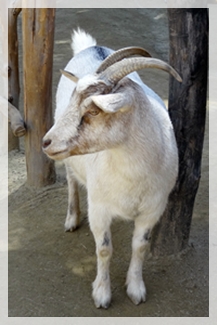
Today is the Day of Atonement, a Jewish holy day. The book of Leviticus describes the rituals the Israelites were to perform on this most sacred day of the year. In one ceremony, two goats were taken from the people. One goat would be given to the Lord and the other would be the “scapegoat.” The goat given to God was sacrificed as a sin offering to make atonement for the sins of the people; its purpose was forgiveness. The second goat was then brought before the altar. The priest laid his hands on the goat and confessed the sins and transgressions of the people. He then sent it away into the wilderness; its purpose was to remove the people’s guilt.

The Christian, however, doesn’t need this kind of yearly ritual. Our sacrifice has already been made: Jesus was our sacrificial lamb. It was his blood that was shed for our sins. Because of him, once we repent and confess our sins, they are forgiven and forgotten. God forgives us and lets us start anew, free from guilt.

Sometimes, however, we don’t accept His forgiveness. We hang on to our guilt by replaying our actions, blaming ourselves and others, and regretting our failures. We carry embarrassment, humiliation, and shame around even after God has forgotten all about it. Perhaps we need to take a lesson from the ancient Israelites. Knowing that a sacrifice has been made to atone for our sins, we need to send our guilt out into the wilderness, never again to be seen!

He has removed our sins as far from us as the east is from the west. [Psalm 103:12 (NLT)]

WHAT WILL IT TAKE?

Jesus responded, “Why are you afraid? You have so little faith!” Then he got up and rebuked the wind and waves, and suddenly there was a great calm. The disciples were amazed. “Who is this man?” they asked. “Even the winds and waves obey him!” [Matthew 8:26-27 (NLT)]

“Are you the Messiah we’ve been expecting, or should we keep looking for someone else?” Jesus told them, “Go back to John and tell him what you have heard and seen—the blind see, the lame walk, the lepers are cured, the deaf hear, the dead are raised to life, and the Good News is being preached to the poor.” [Matthew 11:3-5 (NLT)]

Jesus had cast out evil spirits, made lepers clean and healed the centurion’s servant from afar. Even Peter’s mother-in-law had received healing from him. Blind people had been given their sight, the paralyzed had walked and a girl had been brought back to life. He’d calmed the storm and still the disciples wondered, “Who is this man?” They’d heard his words and radical gospel: love God, love your enemies and turn the other cheek. They’d left their homes and families to follow Him. Certainly they thought they knew who He was: the promised Messiah. It was not until he’d walked on water, however, that they truly knew what he was: the Son of God – God in flesh – God incarnate! Then, the disciples worshipped him.

What will it take to convince us?

When they climbed back into the boat, the wind stopped. Then the disciples worshiped him. “You really are the Son of God!” they exclaimed. [Matthew 14:32-33 (NLT)]

DO WE NEED TO BE RESCUED?

Rescue me from my enemies, O God. Protect me from those who have come to destroy me. Rescue me from these criminals; save me from these murderers. They have set an ambush for me. Fierce enemies are out there waiting, Lord, though I have not sinned or offended them. [Psalm 59:1-3 (NLT)]         

The ropes of death entangled me; floods of destruction swept over me. The grave wrapped its ropes around me; death laid a trap in my path. But in my distress I cried out to the Lord; yes, I prayed to my God for help. [Psalm 18:4-6a (NLT)]        

Many of David’s psalms are about battles, protection from his enemies, or being rescued from an attack. For example, Psalm 59 was written about the time soldiers were sent to watch David’s house in order to kill him and Psalm 18 was sung on the day David was delivered from the hand of his enemies and King Saul.

Granted, there may be people who don’t particularly like us, but they’re not our enemies and, while we may have a few disputes, we aren’t preparing for combat. Since we’re probably not on anyone’s “hit list” and we don’t have an angry king or opposing armies waiting to ambush us, how do David’s psalms relate to us? Who are our enemies and what are our battles?

Our enemy, of course, is Satan, and we enter into a spiritual battle with him every day. It’s good to remember that no matter how safe we may feel in our comfortable homes and lives, we are never safe from him. He is always looking for ways to ambush or trap us because he wants our souls. God, however, wants our salvation. With the power of the Holy Spirit we have all of fire power we need for today’s encounter with the enemy.

When the devil comes knocking upon the door of my heart and asks, “Who lives here?” the dear Lord Jesus goes to the door and says, “Martin Luther used to live here, but he has moved out; now I live here.” The devil, upon seeing the pierced hands takes flight immediately. [Martin Luther]

I called on the Lord, who is worthy of praise, and he saved me from my enemies. [Psalm 18:3 (NLT)]

TAKE THE PLUNGE!

Then the Lord said to Moses, “Why are you crying out to me? Tell the people to get moving! Pick up your staff and raise your hand over the sea. Divide the water so the Israelites can walk through the middle of the sea on dry ground. [Exodus 14:15-16 (NLT)]

With Pharaoh’s army fast approaching, the Israelites were trapped between the mountains and the sea. They immediately panicked and blamed Moses for their predicament. He was no longer regarded as the man who freed them from years of suffering slavery; he was now the fool who’d led them to certain death in the wilderness. Looking back at the soldiers, the Israelites refused to go forward. Moses assured them that the Lord would fight for them. “Stand still,” he said, “The Lord will rescue you.” The Lord, however, had other plans. He told Moses to stop praying and to get moving; they could walk through the sea on dry land!

Have you ever felt like the Israelites, like you’re between a “rock and a hard place” with no place to go? When that happens, we usually do the same thing the Israelites did; panic, find someone to blame, lose heart and want to quit. Eventually, we may pray but then we hesitate to take action. It’s easier to do nothing than to take a plunge into the unknown. Sometimes, God will fight our battles for us but, other times, he wants us to get moving and to trust that He will make a path for us.

Never give up; if God parted the waters for the Israelites, he can part them for us. We, however, will still have to do the walking!

Then Moses raised his hand over the sea, and the Lord opened up a path through the water with a strong east wind. The wind blew all that night, turning the seabed into dry land. So the people of Israel walked through the middle of the sea on dry ground, with walls of water on each side! [Exodus 14:21-22 (NLT)]

A FATHER’S SACRIFICE

For God loved the world so much that he gave his one and only Son, so that everyone who believes in him will not perish but have eternal life.[John 3:16 (NLT)]

Although God couldn’t and wouldn’t allow Abraham to sacrifice his son, another father did make such a sacrifice: God himself. He sacrificed his only son! It’s doubtful that Abraham told Sarah of the planned sacrifice; God didn’t tell Mary that her son would be sacrificed either. Isaac carried the wood for the fire that would burn him and Jesus carried the wooden cross, the instrument of his death. There is no mention of Isaac fighting Abraham as his father bound the boy’s hands and placed him on the sacrificial altar; he was an obedient son. Jesus, too, was an obedient son, as he walked the road to Golgotha and allowed the nails to be driven into his hands. Isaac asked the whereabouts of the sacrificial lamb and Abraham responded that God would provide. Jesus knew that God had provided and that he was the sacrificial lamb.

God couldn’t allow Abraham to sacrifice his son, but He so loved us that he sacrificed his son for our salvation. Thank you, God; thank you.

God sent his son into the world not to judge the world, but to save the world through him. [John 3:7 (NLT)]