CONTENTMENT OR NOT: THE CHOICE IS OURS

bindweed (hedge)-ACL04WEBI don’t say this out of need, for I have learned to be content in whatever circumstances I am. I know both how to have a little, and I know how to have a lot. In any and all circumstances I have learned the secret of being content—whether well fed or hungry, whether in abundance or in need. I am able to do all things through Him who strengthens me. [Philippians 4:11-13 (HCSB)]

How often do we sigh, “If only …” (fill in the blank) followed by the phrase, “then I’d be happy”? That attitude only fosters a spirit of discontent. If we’re busy waiting for something special in the future, we miss out on the joys of today. We have 86,400 seconds to spend today; we won’t have them tomorrow and any we squandered yesterday in regret or dissatisfaction can’t be salvaged. Let’s not waste a single moment today!

Heavenly Father, while we’re looking forward to tomorrow‘s blessings, help us find happiness and contentment in our present circumstances. Instead of lamenting the past or dreaming about something different in the future, show us how to joyfully accept our lives as they are now.

Single days experienced fully add up to a lifetime lived deeply and well. Today is your life – not yesterday and not tomorrow. If we have tomorrow, it will be a gift, but what we have today, right now, will have an accumulated effect on all our tomorrows. [From “Living a Beautiful Life” by Alexandra Stoddard]

This is the day the Lord has made; let us rejoice and be glad in it. Psalm 118:24 (HCSB)]

HE CAME FOR EVERYONE

For God loved the world so much that he gave his one and only Son, so that everyone who believes in him will not perish but have eternal life. [John 3:16 NLT)]

That’s you, my friend, and me. It’s everyone else, too. Salvation isn’t just for the rich or pretty, the respected and comfortable, the intelligent and wealthy. It’s for all of us, no matter our color or nationality, our education or profession, our hygiene or attire. Let’s always remember that God has an “open door” policy; he loves us all and all are welcome in His house.

Jesus surrounded himself with an assorted group of people: tax collectors, fishermen, the mentally ill and handicapped, laborers, children, and even women of questionable reputations. He came for them all and loved them all. Every church has an interesting mix of people and we might find some of them a bit annoying at times. Perhaps it’s the special needs man who talks too loudly, the oddly dressed woman who seems to come only for the cookies and coffee, the smoker who brings the aroma of stale cigarettes with him to the sanctuary, the woman who falls asleep during the sermon and snores, the cougher who sits behind you and the lady next to him who loudly sings off key, the babies who cry, the kids who fidget, the person with body odor who sits beside you, or the ladies who whisper to one another during service. If we don’t like the person we’re sitting next to at church, it’s time to do a little soul searching. Remember, since God loved him enough to die for him, we ought to be able to muster up a little love, patience and tolerance for our neighbor. After all, he may have some misgivings about us, as well!

Because of the privilege and authority God has given me, I give each of you this warning: Don’t think you are better than you really are. Be honest in your evaluation of yourselves, measuring yourselves by the faith God has given us. Just as our bodies have many parts and each part has a special function, so it is with Christ’s body. We are many parts of one body, and we all belong to each other. [Romans 12:3-5 (NLT)]

Respect everyone, and love the family of believers. [1 Peter 2:17a (NLT)]

WAITING FOR THE OTHER SHOE

Praise the Lord! Happy is the person who honors the Lord, who takes pleasure in obeying his commands. … He is not afraid of receiving bad news; his faith is strong, and he trusts in the Lord. He is not worried or afraid. [Psalm 112:1,7-8a (GNT)]

“Waiting for the other shoe to drop” is an idiom that comes from when people lived in city apartments in the late 19th and early 20th centuries. They were built so that bedrooms were placed one under another. Without much insulation, it was common to hear one’s upstairs neighbor remove his shoes. As one shoe dropped to the floor, the person below waited expectantly to hear the other thump. Thus, we use that phrase to mean we’re waiting for a seemingly inevitable, and usually undesirable, event.

As I read through yesterday’s devotion, I thought again of my granddaughter’s heart condition. Although she was treated for one disorder several years ago, the fix was temporary. Her cardiologists expect the problem to reappear sometime soon as adolescence approaches. Her other two cardiac defects will continue to worsen as she ages; eventually open heart surgery will be necessary. There are a variety of shoes just waiting to drop in her life: an enlarged heart, blood clots, stroke, cardiac arrest, and arrhythmias to name a few.

If we lived our days thinking of all of the horrible things that could possibly go wrong, none of us would ever leave bed in the morning. There’s plenty in life that can assault us: cancer, tornadoes, terrorist attacks, stroke, Alzheimer’s, car accidents, hurricanes, identity theft, flu, divorce, the loss of a job, poisonous spiders, venomous snakes, rejection, the sudden death of a spouse, Ebola, and lightning to name a few. While some are far more likely than others, we can’t allow fear to paralyze us or keep us from living our lives today. We can’t go through life anxiously waiting for misfortunes to materialize or disaster to strike.

Does our family worry and sit around anticipating the moment when that other shoe drops on our grand? Of course not! We joyfully celebrate each day we share with her and live that day to its fullest. We trust her future to God and her physicians. We’re not naive; we know there are no medical guarantees and that her future is uncertain. Our faith, however, is not. We know that God will provide us with everything we need to face whatever the future holds. We’ll follow the examples of Abraham, Moses, the disciples and Paul; we’ll step out in faith, one day at a time, one step at a time, and trust our unpredictable tomorrows to our trusted God and His divine plan.

Never be afraid to trust an unknown future to a known God. [Corrie Ten Boom]

It is not the cares of today, but the cares of tomorrow, that weigh a man down. For the needs of today we have corresponding strength given. For the morrow we are told to trust. It is not ours yet. It is when tomorrow’s burden is added to the burden of today that the weight is more than a man can bear. [George Macdonald]

Let us have confidence, then, and approach God’s throne, where there is grace. There we will receive mercy and find grace to help us just when we need it. [Hebrews 4:16 (GNT)]

TENDING HIS TEMPLE

Oh yes, you shaped me first inside, then out; you formed me in my mother’s womb. I thank you, High God—you’re breathtaking! Body and soul, I am marvelously made! [Psalm 139:13-14 (MSG)]

DSC00960WEB
When one gets to a certain age, a frequent sentiment heard at birthday celebrations (especially those landmark ones) is, “It’s all downhill from here.” Age, however, is certainly no excuse to stop caring for our bodies. We may not be getting any younger, but we can get better or, at least, no worse. That is, most, but not all of us, can. A woman suffering from Parkinson’s pointed out that, “It’s not easy waking every day and knowing this is the very best I’ll ever be!” Her words resonated in my heart. I thought of my friends and family who’ve had progressive diseases like Parkinson’s, MS, Alzheimer’s, and ALS. Sure, there are things that can be done to slow down the progression of their diseases but nothing, short of a miracle, is ever going to return them to health.

The woman’s words came to mind recently while taking photos before church. One overweight man said, “Wait” and hid the doughnut behind his back before turning to the camera and smiling. “I’m supposed to be on a diet,” he added as explanation. He wanted no record of his misstep, ignoring the fact his arteries and blood sugar would know, whether or not his wife ever did. What’s so bad about a doughnut? For many, they can be an occasional treat but for others, like this man, a diabetic who’s had several heart attacks and is a regular guest in the cardiac care unit, that doughnut is a major offense against his already badly damaged body. Unlike this man, I suspect that woman with Parkinson’s wouldn’t ignore any medical advice that could improve her life. She knows how precious it is.

We are amazingly and wonderfully made and, for most of us, it doesn’t have to be all downhill from here. Paul tells us our bodies are a sacred place: the temple of the Holy Spirit. It’s not just our souls that belong to God; our bodies do, too; He paid a high price for us, body and soul. While we wouldn’t damage or vandalize our churches, we tend to be much more cavalier and negligent with our bodies. We must care for God’s dwelling place as much as we would His church!

Or didn’t you realize that your body is a sacred place, the place of the Holy Spirit? Don’t you see that you can’t live however you please, squandering what God paid such a high price for? The physical part of you is not some piece of property belonging to the spiritual part of you. God owns the whole works. So let people see God in and through your body. [1 Corinthians 6:19-20 (MSG)]

HEAR THEIR CRIES

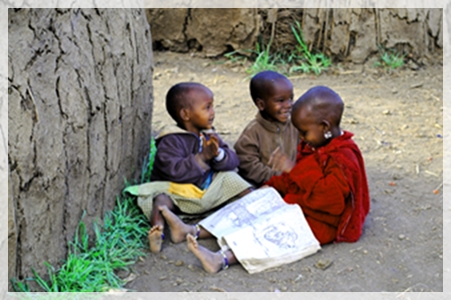
Masai 17WEB
Give freely and spontaneously. Don’t have a stingy heart. The way you handle matters like this triggers God, your God’s, blessing in everything you do, all your work and ventures. There are always going to be poor and needy people among you. So I command you: Always be generous, open purse and hands, give to your neighbors in trouble, your poor and hurting neighbors. [Deuteronomy 15:10-11 (MSG)]

We recently celebrated my mother-in-law’s 98th birthday; how blessed we are that she is still spry and alert. Since my husband’s father lived until the age of ninety-six and many of his other relatives lived well into their nineties, we were curious about his life expectancy. According to an on-line calculation, it’s likely my seventy-one year old spouse will live until he’s at least ninety; he has a 25% chance of living beyond ninety-five. That’s not as old as Methuselah, Abraham, or Jacob, but he probably has several good years ahead. Clearly, he comes from good genes. Those long and healthy life spans, however, are probably due more to an accident of birth: he and his family were born in the right place. Living in one of the wealthiest nations in the world, even during difficult times, they were never without shelter, safe water, enough food, or good medical care. Unfortunately, that’s not true for many children today, even children in our own country.

Granted, if we lived in Monaco, Switzerland or even Canada, my husband’s life expectancy would be even higher. If, however, he was born today in sub-Sahara Africa, he could expect to live only forty-seven years. If, by good fortune, he’d made it into his sixties, he certainly wouldn’t have gotten that heart stent a few years back, so I would probably be widowed by now. If we lived in a third world country, other members of my family would also be missing. Grandma most certainly would never have lived this long. If she’d survived giving birth, surely her asthma, heart attack, stroke, broken bones, and abscessed teeth would have caused her demise. A granddaughter would be absent as well. She’s alive today only because of the surgical intervention of pediatric cardiologists; she wouldn’t have had that kind of care in a developing country. Then again, she might never have been born if her mother hadn’t survived a bout of pneumonia as a girl, something made possible with a simple regimen of antibiotics, so plentiful here and so rare elsewhere. Another grandchild and her mother probably wouldn’t have survived childbirth without the emergency Caesarian section that made a safe birth possible. Of course, that’s assuming my son lived long enough to become a father, something that wouldn’t have happened without the lifesaving surgery for a ruptured spleen he had several years earlier. In many parts of the world, he would have died from internal bleeding. The bout of diarrhea that landed one of my babies in the hospital and on IVs would have been fatal in places like Sierra Leone or Chad. Of course, all this assumes that my husband and I could have lived long enough to have children. Because of readily available medical care and good nutrition, we easily survived bouts of the flu, measles, mumps, chicken pox, strep and other assorted infections and diseases. In a developing country, that wouldn’t have been the case. Because of immunizations, my children and grands, unlike so many children in the third world, will never even have most of those illnesses.

I apologize for moving from the joyful celebration of a birthday to such depressing thoughts. As Christians, however, we can’t turn away from the facts simply because they are unpleasant. It is horrifying that more than 20,000 children die each and every day from the silent killers of poverty, hunger, easily preventable diseases and illnesses, and related causes. One child dies every four seconds; that’s over 7 million deaths a year, with the vast majority occurring in sub-Sahara Africa and South Asia. More than a quarter of all children in developing countries are underdeveloped or stunted; they simply don’t have enough to eat. Add malnutrition to the lack of shelter, medical care and safe water, and you have the recipe for disaster. As Christians, we must take notice. As Christians, we must do something.

Father, forgive us when we turn away from unpleasant truths. Don’t let us take the blessings of shelter, food, clean water, and health care for granted. Guide us as we prayerfully consider what it is we can do to improve the lives of our brothers and sisters both here and abroad. Don’t let us stop at prayer, Lord; empower us to act on your behalf.

If you stop your ears to the cries of the poor, your cries will go unheard, unanswered. [Proverbs 21:13 (MSG)]

Learn to do good. Work for justice. Help the down-and-out. Stand up for the homeless. Go to bat for the defenseless. [Isaiah 1:17 (MSG)]

HIS MEGAPHONE

Now I’m glad—not that you were upset, but that you were jarred into turning things around. You let the distress bring you to God, not drive you from him. The result was all gain, no loss. Distress that drives us to God does that. It turns us around. It gets us back in the way of salvation. We never regret that kind of pain. [2 Corinthians 7:9-10a (MSG)]

I admit it; sometimes I’m really foolish! About three weeks ago, I felt pain in my ankle. Hoping it would simply go away, I continued to work out and power walk. When it continued to ache, I tried the old standards of rest, ice, compression, elevation and ibuprofen but there was no improvement. Each morning, I expected a miracle cure and every day I was disappointed. Did I do the obvious thing and call a physician? Of course not! It took nearly three weeks for me to accept that since it wasn’t getting any better, it was only getting worse. I finally went to a doctor and a stress fracture was quickly diagnosed. Now, I get to wear denim leggings and a knee-high inflatable boot cast to holiday parties instead of my new high heels and red party dress!

Back to the “foolish” part: of course, it was unwise of me to delay seeing a physician. I’d even gotten the name of a foot and ankle specialist a week earlier! Moreover, the day I hurt myself, my morning’s reading had referred to pain as God’s megaphone. Apparently, those words did not register! Pain may be His way of getting our attention but God had to shout at me long and hard before I finally listened

There are many who are in excruciating pain and are doing all that is possible to alleviate it; I am not minimizing their suffering. There are, however, many more of us who remain unnecessarily in pain, simply because we aren’t listening to what the pain is telling us and are unwilling to do what we should to relieve it.

We all tend to ignore pain. For me it was a sore ankle, but for others it can be much worse. It may be the pain of a crumbling marriage or death of a loved one, a child’s addiction, severe depression, a lump in one’s breast or tightness in one’s chest, an abusive or co-dependent relationship. Others may ignore the pain of unemployment, an alcoholic spouse, precarious finances, unpaid bills, failing grades or legal difficulties. We foolishly think the pain of these problems will magically disappear if we just ignore them. They won’t! We won’t wake tomorrow suddenly untroubled and unbruised, in a good mood, free of debt or cancer, with a healthy heart, passing grades, or a new job.

Pain is, indeed, God’s megaphone. It is His way of telling us to admit we’re hurting and need help. As we seek God, we need to ask Him what our pain means and what things He expects us to do to improve our condition. God may be telling us to change bad habits, leave abusive or unhealthy relationships, or to stop spending or enabling. We may have to seek medical help or spiritual guidance, start studying or search for ways to get better. Professional help, support groups, counselling or major changes in our behavior and attitudes may be necessary to relieve our pain.

Are you in pain? If so, what might He be saying to you? Is there something He wants you to learn? Is there something He wants you to do? Have you committed the situation to Him? Listen and let Him lead.

Pain insists on being attended to. God whispers to us in our pleasures, speaks in our conscience, but shouts in our pain; it is His megaphone to rouse a deaf world. [From “The Problem of Pain” by C.S. Lewis]

Mental pain is less dramatic than physical pain, but it is more common and also more hard to bear. The frequent attempt to conceal mental pain increases the burden: it is easier to say “My tooth is aching” than to say “My heart is broken.” [From “The Problem of Pain” by C.S. Lewis]

Show me how you work, God; School me in your ways.  Take me by the hand; Lead me down the path of truth. You are my Savior, aren’t you? [Psalm 25:4-5 (MSG)]