FENCES

Stay away from every kind of evil. [1 Thessalonians 5:22 (NLT)]

Moses received the Torah from Sinai and committed it to Joshua, and Joshua to the elders, and the elders to the Prophets, and the Prophets to the Men of the Great Assembly. They said three things: Be deliberate in judgment, raise up many disciples, and make a fence around the Torah. [Misnha (Pirke Avot)]

tigerLast December, after breaching the barrier surrounding the tiger enclosure at our local zoo, a man stuck his hand into the tiger’s cage. A similar incident occurred a few months later at a nearby airboat attraction when a man improperly went through the first enclosure and put his arms into the tiger’s cage. Although both men survived, they suffered serious injuries to their hands and arms. Fences are placed to protect us and keep us from getting too close to danger but you can’t protect people from their own stupidity.

Just as those fences around the tigers’ cages were meant to protect people from the tigers (and the tigers from people), many of the Rabbinic innovations were designed to protect the commandments of the Torah. It is in the Mishnah (the oldest collection of post-biblical Jewish laws) that we find the phrase “make a fence around the Torah.” It is this fence, not the Bible, that explains the hundreds of prohibitions we find in Judaism.

Those Rabbinic rules were supposed to prevent people from being tempted to break the law or unintentionally doing so. For example, items like hammers and scissors that were associated with prohibited work like building or cutting, were not even to be picked up lest handling them led to their use. Although the Sabbath officially begins at sunset Friday, a few minutes were added before its beginning and after its end to make sure no one accidentally worked too late or resumed work too early. Even today, for my Jewish friend, the Shabbat candles are lit and all work has stopped no later than 18 minutes before the sun officially sets. His Sabbath ends when three stars are visible, which can be about 30 minutes after sunset. Rather than additions to the Mosaic law, these fences were seen as a way of helping people remain obedient to the law; they were erected to keep people from giving into temptation or just cutting it too close! Sadly, through the years, the rules became increasingly complicated and, by Jesus’ time, they were the heavy yoke about which He spoke.

Nevertheless, Jesus gave us a New Testament version of building a fence when He equated the emotion of anger with the act of murder and the attitude of lust with adultery. Anger and lust are like stepping too close to the tiger’s cage—they’re dangerous territory! Just as picking up his cell phone on Saturday might lead my Jewish friend to break the Sabbath by using it, lust and anger can lead to something far worse! Sticking your arm in a tiger’s cage or stepping into sin never ends well and, rather than gouging out our eyes or cutting off our hands, we can erect spiritual boundaries to keep us and our loved ones safe. We may restrict our youngsters to G or PG movies or set specific rules about dating for our teens. We might use internet filters to screen out inappropriate content on our computers, abstain from alcohol, or avoid the appearance of inappropriate behavior by following the “Billy Graham rule” of never being alone with a person of the opposite sex except for one’s spouse. We each have our own spiritual fences.

Unless they’re found in Scripture, however, those fences are not doctrine. They are our personal rules and, as such, other people may have different ones, some of which may be closer or further from the tiger’s cage than ours. We are not in a position to judge other people’s spiritual barriers any more than they are to judge ours. Unfortunately, for the Pharisees of Jesus’ day, the fence around the Torah became more important than the law itself. We must never do that. Every fence we erect must comply with God’s simple law that we love Him with our entire being and love our neighbors as we love ourselves.

…he asked, “Of all the commandments, which is the most important?” Jesus replied, “The most important commandment is this: ‘Listen, O Israel! The Lord our God is the one and only Lord. And you must love the Lord your God with all your heart, all your soul, all your mind, and all your strength.’ The second is equally important: ‘Love your neighbor as yourself.’ No other commandment is greater than these.” [Mark 12:28-31 (NLT)]

Copyright ©2022 jsjdevotions. All rights reserved.

KEEP HOLY THE SABBATH DAY

Remember to observe the Sabbath day by keeping it holy. You have six days each week for your ordinary work, but the seventh day is a Sabbath day of rest dedicated to the Lord your God. … For in six days the Lord made the heavens, the earth, the sea, and everything in them; but on the seventh day he rested. That is why the Lord blessed the Sabbath day and set it apart as holy. [Exodus 20:8-10a,11 (NLT)]

orchidIt’s hard to think of our omnipotent, invincible, and unstoppable God getting tired after a mere six days of work but Scripture tells us He “rested” on the seventh day. The Hebrew word translated as rested, however, is shabath, meaning to stop, cease, or desist. Rather than God resting because He was exhausted; God simply stopped! I suspect it’s because He wanted to enjoy His finished creation. Picture Him sitting in the Almighty’s version of a La-Z-Boy chair, looking out at the magnificence of the universe—breathing in its aromas, tasting its sweetness, hearing its song, and delighting in its beauty.

In Exodus, when God gave the Israelites the Sabbath Day, He was telling His people to do the same thing—to stop and appreciate His blessings. Imagine how strange the fourth commandment seemed to a people who’d been enslaved by the Egyptians and cruelly oppressed by Pharaoh. They hadn’t enjoyed a day free of work in their entire lives and now they were commanded by God to do just that.

While the Bible doesn’t specifically list the kinds of prohibited labor, it alludes to several areas of work and, in the writings of the Talmud (the oral law), we find 39 kinds of work specifically forbidden on the Sabbath. Through the years, however, the rabbis further defined those 39 prohibitions with hundreds of subcategories. For example, no sewing includes no gluing, welding, or stapling; the ban on lighting a fire means that no fuel can be added to an existing fire; and no building includes not pitching a tent. The Sabbath, however, was meant to be a gift rather than a burden. Along with its prohibitions, the Talmud also encourages Sabbath activities such as temple attendance, singing Sabbath songs, reading the Torah, sleeping, hospitality, spending time with family and friends, and even marital relations!

I have a Jewish friend, the head of a large law firm, who works long hours six days a week. Friday afternoons, however, he turn off both phone and computer, stops billing over $600 an hour, and strictly observes the Sabbath. The Talmud’s many restrictions mean he and his family must plan ahead and prepare for their holy day. He has to leave work early enough Friday to be home well before sunset, the Sabbath food is cooked on Friday, the table is pre-set, lights are turned on or set on timers, the refrigerator light bulb is unscrewed, and even toilet paper and paper towels are pre-torn (since tearing is prohibited).

As they follow their Sabbath rules, my friend and his family are reminded of the holiness of the day. For them, the Sabbath isn’t a day of unreasonable restrictions because it’s about more than ceasing from work. It is a special day of rest, relaxation, peace, family, food, fellowship, worship, Scripture, and even a few board games. On a day wholly dedicated to God and peace, anything that could possibly interfere with the restful spirit of the day is avoided. For 24-hours there’s no television, radio, computers, phones, video games, or social media. Moreover, as a day designed to soothe the frayed nerves and exhaustion that come from a week’s work, there’s no talk of things like business, money, COVID, politics, the war in Ukraine, children’s grades, family conflicts, or the high price of gas!

My Jewish friend’s Sabbath is beginning to sound quite pleasant. Rather than a day of prohibitions, he sees it as a day of respite from the world and a way to reconnect with the Lord. Perhaps our Sabbath should be more like his— a day filled with worship, gratitude, retreat, prayer, and rest—a day to mindfully spend time with family, friends, God, and His word.

O what a blessing is Sunday, interposed between the waves of worldly business like the divine path of the Israelites through the sea! There is nothing in which I would advise you to be more strictly conscientious than in keeping the Sabbath day holy. I can truly declare that to me the Sabbath has been invaluable. [William Wilberforce]

Keep the Sabbath day holy. Don’t pursue your own interests on that day, but enjoy the Sabbath and speak of it with delight as the Lord’s holy day. [Isaiah 58:13a (NLT)]

Copyright ©2022 jsjdevotions. All rights reserved.\

PROFILING

But the Lord said to Samuel, “Don’t judge by his appearance or height, for I have rejected him. The Lord doesn’t see things the way you see them. People judge by outward appearance, but the Lord looks at the heart.” [1 Samuel 16:7 (NLT)]

We know that four of the disciples were fisherman and one was a despised tax collector but have no idea what careers the others left behind to follow Jesus. If Jesus wasn’t carpentering, the fishermen weren’t fishing, the tax collector wasn’t collecting, and others weren’t doing whatever it was they did, how did these men support themselves? For the most part, they probably depended on the hospitality of strangers or friends like Martha, Mary, and Lazarus but we also know that the disciples were in Sychar purchasing food when Jesus had a conversation with the Samaritan woman at the well. Like any ministry, the group needed money for everyday expenses and Scripture tells us that people like Joanna, Susanna, and Mary Magdalene provided for them out of their resources.

Accepting money, pooling resources, paying expenses, and giving to the poor necessitated the need for a common purse and someone to act as the group’s treasurer. At first, it would seem that the former publican, Matthew, with his bookkeeping experience, would have been the logical choice to carry the group’s moneybag, but it was Judas who carried the purse. It also was Judas who stole from it and betrayed Jesus for thirty pieces of silver!

We don’t know if it was Jesus or the disciples who gave Judas the position as the group’s banker. I suspect Jesus let the disciples work it out among themselves—it seems the sort of thing He would do. That Jesus allowed a thief like Judas to handle the money appears to be a poor example of stewardship but Jesus’ relationship with Judas may have been an example of another kind. Judas certainly proves Jesus’ point that one can’t serve both God and money. Moreover, in His relationship with Judas, Jesus lived out His words that we are to love our enemies and pray for those who persecute us!

Jesus could look into Judas’ heart and see the deceit but the disciples looked at appearances and Judas didn’t come to them with a tarnished reputation as did Matthew. The disciples probably were cautious about a tax collector in their midst and unwilling to give their money to Matthew—a man once considered an unscrupulous thief. They may have been afraid that their supporters would hesitate to place their money in the hands of a man who once collected their taxes. People may not have trusted Matthew but they never suspected Judas. That last night, when Jesus said someone sitting at the table would betray Him, they asked one another who it possibly could be. They never even questioned Judas’ abrupt departure from the upper room because they thought he was leaving to pay for their food or give money to the poor.

The people of Nazareth weren’t much better at assessing people than were the disciples. In spite of Jesus’ wisdom and miracles, His fellow Nazarenes disparaged the man who was just the son of a carpenter and whose family still lived in their obscure little village. Before meeting the Lord, even Nathanael scoffed at Jesus’ hometown and asked Andrew if anything good could come from Nazareth.

One of my Lenten fasts was profiling—the underestimating of people, especially when I might be dismissing people who would be welcomed by Jesus. I can’t help but wonder if I’m as guilty as were Nathanael and the people of Nazareth of dismissing people because of their background, upbringing, or family. Am I as guilty as I suspect the disciples were of holding people’s past mistakes against them? Jesus loved and welcomed flawed people like Matthew, Zacchaeus, the woman at the well, and even Judas. Do I? Will you?

Yes indeed, it is good when you obey the royal law as found in the Scriptures: “Love your neighbor as yourself.” But if you favor some people over others, you are committing a sin. You are guilty of breaking the law. … So whatever you say or whatever you do, remember that you will be judged by the law that sets you free. There will be no mercy for those who have not shown mercy to others. But if you have been merciful, God will be merciful when he judges you. [James 2:8-9, 12-13 (NLT)]

Copyright ©2022 jsjdevotions. All rights reserved.

MATTHEW – Part 2

Later, Matthew invited Jesus and his disciples to his home as dinner guests, along with many tax collectors and other disreputable sinners. But when the Pharisees saw this, they asked his disciples, “Why does your teacher eat with such scum?” [Matthew 9:10-11 (NLT)]

great blue heronWhen Jesus brought Matthew into the inner circles of disciples, it was as shocking as if someone like Billy Graham brought a loan shark, heroin trafficker, money launderer, or embezzler onto his worship team. But, along with his questionable reputation and his devotion to Jesus, Matthew brought a unique set of skills to the Lord and to countless generations of Christ’s followers.
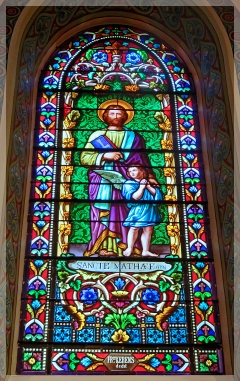
Without benefit of calculator or computers, as a tax collector, Matthew was good with numbers and a meticulous record keeper. To do his job, a publican had to have been reasonably fluent and literate in Greek, Aramaic, and Hebrew and, to a lesser extent, Latin. It’s likely that he knew a form of shorthand commonly used in the ancient world since the 4th century BC. A man like Matthew was uniquely qualified to record the events surrounding Jesus’ ministry. Along with his skills and reputation, perhaps the only other thing Matthew brought with him when he followed Jesus was his pen.

The book of Matthew, like the other gospels, never explicitly names its author but ancient church tradition is unanimous in attributing it to Matthew the Apostle. Perhaps the best argument for Matthew’s authorship is the unlikelihood that a man with his skills, who responded to Jesus’ call the way he did, and became one of the disciples, would not have kept a careful record of the Lord’s words and ministry! Matthew had the skills, opportunity, means, and motivation. This is a man who showed such early concern for evangelism that one of the first things he did after leaving his tax booth was to invite his former friends and colleagues to dinner to meet and hear Jesus. When Matthew was honing his record keeping and language skills as a publican, little did he know that God had a far higher and better use for him than collecting money for Rome. Let his story be a reminder that no experience is wasted and God has a unique plan for each and every one of us.

After witnessing Jesus’ ascension, Matthew and the apostles returned to their room in Jerusalem and prayed. Scripture is silent about Matthew after that and, other than writing the gospel that bears his name, we don’t know what became of him. The earliest church records say he carried out his ministry in Persia, Macedonia, Syria, and/or the region south of Egypt known as Ethiopia. Those records also claim Matthew was martyred but they don’t agree on how or where it happened. All we know for sure is that Matthew didn’t just reform; he transformed! When he accepted Jesus’ call to follow Him, the despised and dishonest tax collector named Levi transformed into the beloved apostle and gospel writer named Matthew—a saved sinner who accepted the Great Commission and served as Christ’s witness “in Jerusalem, throughout Judea, in Samaria, and to the ends of the earth.”

The same Jesus who turned water into wine can transform your home, your life, your family, and your future. He is still in the miracle-working business, and His business is the business of transformation. [Adrian Rogers]

And you will be my witnesses, telling people about me everywhere—in Jerusalem, throughout Judea, in Samaria, and to the ends of the earth. [Acts 1:8 (NLT)]

Copyright ©2022 jsjdevotions. All rights reserved.

FROM TAX MAN TO SAINT – Part 1

As Jesus was walking along, he saw a man named Matthew sitting at his tax collector’s booth. “Follow me and be my disciple,” Jesus said to him. So Matthew got up and followed him. [Matthew 9:9 (NLT)]

St. MatthewAlthough Mark and Luke call him Levi, there is no doubt that Levi and Matthew are the same man. He may have had two names, as did John Mark or was known by two different names as were Peter (Simon), Thomas (Didymus), Jude (Thaddeus), and Nathanael (Bartholomew). It simply may be that, like the Apostle Paul (Saul), he was known both by his Greek name of Matthew as well as his Hebrew one of Levi.

When considering how Jesus can change a life, I think of Matthew as the poster boy for rebirth and change! It’s in Capernaum that we first meet the man who would become the writer of the gospel bearing his name. Sitting in his tax booth, he is known as Levi the tax collector. In 1st century Judah, tax collectors (called publicans) were the lowest of the low and fiercely hated by their countrymen. Acting as revenue agents for Rome, Jewish tax collectors were considered collaborators. Since they could demand more than what was required, they also were thought of as thieves! Some even accepted bribes from rich businessmen to overtax their competitors and drive them out of business. Their decisions were backed up by Roman soldiers and the people were at their mercy.

Jewish philosopher Philo of Alexandria (c. 15 BC-50 AD) vividly described why Jews hated their countrymen who became publicans. Philo explained that the Romans “deliberately choose as tax collectors men who are absolutely ruthless and savage, and give them the means of satisfying their greed. These people…leave undone no cruelty of any kind and recognize no equity or gentleness…as they collect the taxes they spread confusion and chaos everywhere. They exact money not only from people’s property but also from their bodies by means of personal injuries, assault and completely unheard of forms of torture.”

Even though the Torah prohibited borrowing, lending, or being a party to a transaction that involved charging another Jew interest, a favorite device of the tax-collectors was to advance money to people unable to pay their tax and charge exorbitant interest. The publican became a loan shark and the tax became a private debt to him, which may explain Philo’s mention of the injuries they inflicted.

While none of us like the internal revenue, put in the context of 1st century Judah, we can understand why publicans were despised in Jesus’ day. The Babylonian Talmud ranked them alongside “murderers and robbers.” Tax collectors weren’t allowed to exchange their money at the Temple treasury and were excommunicated from the synagogues. The rabbis taught that tax collectors were disqualified witnesses in court, society outcasts, and disgraces to their own family. They even considered it lawful for a Jew to lie in almost any conceivable way to avoid paying the tax collector! It’s no wonder that the religious leaders were outraged by Jesus’ association with publicans.

Nevertheless, in spite of (or because of) Matthew’s unsavory reputation and unpopularity, Jesus called the publican to follow Him and that’s exactly what the tax man did! This was such a scandal that the 2nd-century anti-Christian philosopher Celsus actually used the fact that Jesus had “scum” like Matthew among his disciples as evidence against His divinity.

We don’t know if Matthew was as evil as some tax collectors; at the same time, we can’t reconcile his choice of career with being upstanding and righteous before meeting Jesus! While we’d love to know why he so readily deserted his tax booth, we don’t. We do know that by abandoning his business to follow Jesus, Matthew gave up wealth, job security, and his few friends and co-workers. The disciples who’d been fishermen could always return to fishing if following Jesus didn’t work out for them but Matthew had no Plan B. If he returned to Capernaum, he would be jobless and penniless. Already a pariah in the community, the publican couldn’t expect a warm welcome home from the people he once exploited! When Matthew recorded Jesus’ words about releasing our grasp on earthly things, losing our old lives, and picking up the cross, he knew exactly what our Lord meant by those words.

Jesus says, “Follow me!” to everyone. Are we as willing as Matthew to do just that?

Then Jesus said to his disciples, “If any of you wants to be my follower, you must give up your own way, take up your cross, and follow me. If you try to hang on to your life, you will lose it. But if you give up your life for my sake, you will save it.” [Matthew 16:24-25 (NLT)]

Copyright ©2022 jsjdevotions. All rights reserved.

LOOKING FOR “LOVE”

All Scripture is inspired by God and is useful to teach us what is true and to make us realize what is wrong in our lives. It corrects us when we are wrong and teaches us to do what is right. God uses it to prepare and equip his people to do every good work. [2 Timothy 3:16-17 (NLT)]

cardinalNormally, the Internet would be one of the worst places to search for love but, according to my favorite online Bible resource site, some people went looking for love on line and were successful. Of course, they were looking for it in one of the right places—the Bible. With nearly 3 million searches a day (which, in case you wondered, is more than 2,000 per minute 24/7), “love” was the keyword most commonly searched for by the 160 million visitors to their site in 2021. Appearing 759 times in the NLT Bible, “love” was easily found (even in the King James that only uses it 442 times)!

“Love” tops the keyword search every year and “peace” (appearing 362 times in the NLT) retained its second-place position. As expected, hope, joy, and faith rounded out 2021’s top five most popular word searches. With “hope“ used 190 times, 333 appearances for “joy,” and “faith” mentioned 507 times in the NLT, the Bible was the right place to find them all. Although the number of occurrences depend on the version searched, these favorite words are found in every translation.

The Bible certainly is the place to look for love, peace, hope, joy, and faith but, with nearly 7,000 mentions of “Lord,” almost 5,000 of “God,” and nearly 1,500 of “Jesus” in the NLT, the Bible is a good place to go looking for them, as well! Those names, however, were missing from the most popular searches, as were words like prayer, humility, righteousness, repentance, servanthood, surrender, worship, sanctification, sacrifice, justification, judgment, sin, obedience, and atonement.

2021’s most searched for Bible verse remained John 3:16: “For this is how God loved the world: He gave his one and only Son, so that everyone who believes in him will not perish but have eternal life.” The perennial runner-up continued to be Jeremiah 29:11: “‘For I know the plans I have for you,’ says the Lord. ‘They are plans for good and not for disaster, to give you a future and a hope.’” As two of the most encouraging and heartening verses in the Bible, it’s easy to see why they are favorites.

Indeed, God’s Word is filled with words of comfort and reassurance, but limiting our Bible knowledge to only positive and uplifting words and verses is a bit like eating the croutons but not the salad beneath them, tasting only the crispy fried onions on top of the green bean casserole, or having dessert while skipping the main course! Some of those unsearched for words may be less tasty, but they are just as important as love, peace, hope, joy, and faith. It seems that many of us come to the Bible more interested in comfort than truth, affirmation than obedience, reassurance rather than correction, and inspiration rather than salvation. When we come to Scripture looking only for words of encouragement, we might miss the bigger message of salvation, redemption, and rebirth found in Jesus Christ. Let’s never settle for Scripture “Lite.”

If you believe what you like in the gospels, and reject what you don’t like, it is not the gospel you believe, but yourself. [Augustine]

For the word of God is alive and powerful. It is sharper than the sharpest two-edged sword, cutting between soul and spirit, between joint and marrow. It exposes our innermost thoughts and desires. [Hebrews 4:12 (NLT)]

Study this Book of Instruction continually. Meditate on it day and night so you will be sure to obey everything written in it. Only then will you prosper and succeed in all you do. [Joshua 1:8 (NLT)]

Copyright ©2022 jsjdevotions. All rights reserved.