MISSING EASTER

Then when Judas, his betrayer, saw that Jesus was condemned, he changed his mind and brought back the thirty pieces of silver to the chief priests and the elders, saying, “I have sinned by betraying innocent blood.” They said, “What is that to us? See to it yourself.” And throwing down the pieces of silver into the temple, he departed, and he went and hanged himself. [Matthew 27:3-5 (ESV)]

Do not abandon yourselves to despair. We are the Easter people and hallelujah is our song. [Pope John Paul II]

rabbitJudas wasn’t the only one who betrayed Jesus that Thursday night. With his three denials, Peter also betrayed our Lord. Both men were filled with remorse but neither man could undo what had been done. One never lost faith and hung in there; the other lost faith and hung himself. One stayed around for the resurrection to see the living Christ and to experience Jesus’ forgiveness; the other missed his opportunity for redemption when he gave up all hope. One became the humble willing servant of the Lord and the rock of the church; the other one’s name lives on in ignominy and is synonymous with betrayal and treason.

Judas betrayed the Lord for thirty pieces of silver (the same amount paid to compensate the master of a slave who was gored to death by an ox). Did Judas think that by returning the money he could undo what was done? By no longer profiting from his treachery, did Judas think he’d be free from guilt? I often wonder what would have happened had Judas waited a few more days. Jesus forgave Peter. If Judas had waited and truly repented, would Jesus have forgiven him as He did Peter? While Judas’ sin was great, it was not unforgivable! But Judas missed Easter by killing himself in despair and disgrace.

As for the leading priests and elders—they didn’t care about Jesus’ innocence. Giving no thought to the wrong they committed, they debated what to do with this blood money. By Jesus’ day, Deuteronomy’s law that a temple offering earned from prostitution was detestable to the Lord was applied to any money gained illicitly. Although these “holy” men had no problem orchestrating an innocent man’s murder with money from the Temple treasury, as sticklers for the law, they wouldn’t return the now tainted money to the treasury. Did they think using the silver to purchase a defiled piece of property in the Hinnom Valley would diminish their guilt? Referred to as a garbage dump in Jeremiah 19, this land had been desecrated by idol worship. The field became known as Aceldama (meaning “field of blood”) and was used to bury strangers who died while visiting Jerusalem.

Like Judas, the leading priests and elders missed Easter. Although they were the ones most qualified to recognize Jesus’ fulfillment of the Messianic prophecies, they refused to see what was right before them—both before and after Golgotha. When the tomb was found empty, rather than consider the meaning of such a miracle, they denied its truth and bribed the guards to say the disciples stole Jesus’ body.

Did you miss Easter yesterday? I don’t mean the Easter Bunny or the brightly decorated baskets, colored eggs, chocolate rabbits, elaborate brunch, jelly beans, lilies, ham dinner, or Peeps. Did you miss the significance of Easter—the message of love, forgiveness, hope, and salvation? Judas and Jerusalem’s religious leaders certainly did. They missed the first Easter and all of the possibilities it brought.

If you missed the resurrection message of Easter, there’s still hope. While it’s too late for Judas and Jerusalem’s leaders, it’s not too late for you. There’s no need to wallow in guilt or remorse. Today can be your Easter! Today, the Holy Spirit can bring about your very own resurrection. The redemption of Easter can be experienced any day of the year!

Our old history ends with the cross; our new history begins with the resurrection. [Watchman Nee]

Jesus said to her, “I am the resurrection and the life. Whoever believes in me, though he die, yet shall he live, and everyone who lives and believes in me shall never die. [John 11:25-26 (ESV)]

Copyright ©2023 jsjdevotions. All rights reserved.

TWO IN ONE

Don’t you realize that I could ask my Father for thousands of angels to protect us, and he would send them instantly? But if I did, how would the Scriptures be fulfilled that describe what must happen now? [Matthew 26:52-54 (NLT)]

stations of the cross - loretto - santa feThere is a fancy term for how God the Son, Jesus, took on human form and yet remained God: hypostatic union. Sounding like why my socks cling to my t-shirts in the dryer, knowing the term doesn’t help us understand it. I’m not sure anyone can wholly comprehend how Jesus always existed and yet was conceived by the Holy Spirit, born of Mary, and became man. When pondering Christ’s incarnation, I can’t help but think of an old ad for Certs Mints. Since they were both a breath mint and a candy mint, their commercials ended with the catch phrase: “Certs is two, two, two mints in one!”  Fully man and fully God at the same time, Jesus, like Certs, had two distinct natures in one.

When Jesus walked the earth, He was not a human who once had been God; He was God in a human body. When He put on skin and became a living breathing man, Jesus didn’t cease being God or lose His godly attributes. For the most part, however, He voluntarily limited himself to the restrictions of humanity. As God, He could be everywhere at once but, as a man, Jesus only could be one place at a time. God is eternal and transcends time but the man Jesus had both a beginning and an end and was confined to a twenty-four-hour day. Nevertheless, there were moments when Jesus exercised His omniscience, omnipotence, and authority. For example, He knew the scandalous history of the woman at the well, the thoughts of the Pharisees, and who would betray Him. He used His divine power and authority to cast out demons, walk on water, give sight to the blind, and forgive sins.

Jesus, however, never resorted to His godly attributes to make life easier for Himself. As God, He never experienced weariness, hunger, or thirst but, when living in a man’s body, He grew tired, hungry, and thirsty. When fasting in the wilderness, the man who fed thousands with a few fish easily could have turned stones into loaves of bread, but He deliberately chose not to do so. God doesn’t feel pain, bruise, bleed, or die but, as a man, Jesus chose to do just that. The man who could still storms, change water into wine, and cast demons into swine could have stopped the flogging, mockery, and beating he endured that dark Friday. The man who cured lepers, healed a bleeding woman, and raised the dead certainly had the power to endure crucifixion without agony or to survive it unscathed. But, He didn’t!

After tempting Jesus in the wilderness, Luke tells us Satan left Him “until the next opportunity came.” Without a doubt, an opportunity came at Golgotha when the enemy made a last-ditch effort to stop God’s plan of redemption. He may have tempted Jesus with words like these: “Smite them; they dared to spit on you!” or “They’re beating you cruelly—show no mercy, strike the mortals down!” As Jesus suffered on that cross, Satan may have whispered, “You’re God, you don’t have to suffer like this. Break free and step down!” Being divine, Jesus easily could have come down from the cross unmarked by His ordeal. Instead, our all-powerful God deliberately chose to limit Himself to the indignities, pain, and weaknesses of a mortal human body. Submitting Himself to God the Father, He chose to endure torture, suffer, and die a miserable death as a man. Why? Because He loved us.

Though he was God, he did not think of equality with God as something to cling to. Instead, he gave up his divine privileges; he took the humble position of a slave and was born as a human being. When he appeared in human form, he humbled himself in obedience to God and died a criminal’s death on a cross. [Philippians 2:6-8 (NLT)]

For God loved the world so much that he gave his one and only Son, so that everyone who believes in him will not perish but have eternal life. [John 3:16 (NLT)]

Copyright ©2023 jsjdevotions. All rights reserved.

HIDDEN CRUMBS

For seven days the bread you eat must be made without yeast, as when you escaped from Egypt in such a hurry. Eat this bread—the bread of suffering—so that as long as you live you will remember the day you departed from Egypt. Let no yeast be found in any house throughout your land for those seven days. Deuteronomy 16: 3-4 (NLT)]

spiderwort

In Exodus 12 and Deuteronomy 16, God ordained a seven-day festival commemorating both the day death’s angel passed over Jewish homes when striking down Egypt’s firstborn sons and Israel’s emancipation from slavery. Prior to the innovation of a fixed mathematical calendar determining the full moon’s date, Jews living outside of Israel celebrated for eight days. Today, in spite of knowing the exact date of the full moon, Orthodox and Conservative Jews outside of Israel continue to celebrate eight days while Jews living in Israel and Reform Jews (no matter where they live) celebrate seven. Whether observed for seven or eight days, Passover and the Feast of Unleavened Bread begin at sunset this Wednesday when our Jewish sisters and brothers will celebrate with a Seder supper.

A Seder plate holds at least six ritual items to help retell the story of Israel’s exodus from Egypt. Along with a lamb shank representing the paschal (lamb) sacrifice, bitter herbs representing the bitterness of slavery, and saltwater representing the peoples’ tears and sweat will be an unleavened bread called matzah. Called the bread of affliction or suffering, the unleavened bread was to remind Israel of the day they left Egypt.

Although there is written evidence that Egyptians used yeast to bake bread some five thousand years ago, archeologists suspect it was used long before that and leavened bread was a regular part of ancient Israel’s diet when the people fled Egypt. But, because they left in haste, there was no time for dough to rise so the bread they brought with them was unleavened. When God ordained this commemoration, He prohibited eating anything with leavening the entire seven days. Along with refraining from leavened food, He instructed Israel to rid their homes from all leavening agents or products containing leaven.

More than 3,400 years later, preparing for this holiday involves more than eliminating bread, cookies, pastries, yeast, and cake mixes from the pantry. In preparation for Passover, any traces of those items are completely eradicated. The house is meticulously cleaned so that no crumbs remain in the toaster, oven, refrigerator, under cushions, or in pockets. The night preceding Passover, families do one last search for chametz (anything with leavening) and any found is removed from the house and burned outside. In actuality, cleaning one’s house of all yeast is just about impossible because yeast is a fungus. Existing in the air, soil, and on plants, it will find a way to enter even the cleanest house.

While yeast and leavening are what makes baked goods rise, when yeast or leavening are mentioned in the Bible, they sometimes represent sin. Jesus used yeast to describe corruption, false teaching and hypocrisy. Sin, like yeast, is all around us and can enter our lives through the tiniest cracks. Like yeast, sin can grow, multiply, and take on a life of its own. Just as a little yeast can go a long way and spread through dough, a little sin can spread right through a person and spread into those around him.

For Christians, thinking of yeast as symbolic of sin gives additional meaning to the Passover celebration. Because Jesus freed us from the laws and rituals of the Old Testament, we don’t need to search for cookie and bagel crumbs in our pantry nor do we have to forego French toast and toasted cheese sandwiches for the next week. Nevertheless, just as there are crumbs hiding in the bottom of the toaster and under the sofa’s cushions, there is sin hidden in our lives. Rather than hunt through the house for crumbs with leavening, let us search through our hearts for concealed and unacknowledged sin. In preparation for Resurrection Sunday this week, we should look deep into the nooks and crannies of our thoughts and actions and remove all that doesn’t belong.

For Jews, this week celebrates their deliverance from Egypt. As Christians, may this Holy Week prepare us for the celebration of our deliverance from sin!

Don’t you realize that this sin is like a little yeast that spreads through the whole batch of dough? Get rid of the old “yeast” by removing this wicked person from among you. Then you will be like a fresh batch of dough made without yeast, which is what you really are. Christ, our Passover Lamb, has been sacrificed for us. So let us celebrate the festival, not with the old bread of wickedness and evil, but with the new bread of sincerity and truth. [1 Corinthians 5:6-8 (NLT)]

Copyright ©2023 jsjdevotions. All rights reserved.

LAMB SELECTION DAY – Palm Sunday

Rejoice, O people of Zion! Shout in triumph, O people of Jerusalem! Look, your king is coming to you. He is righteous and victorious, yet he is humble, riding on a donkey—riding on a donkey’s colt. I will remove the battle chariots from Israel and the warhorses from Jerusalem. I will destroy all the weapons used in battle, and your king will bring peace to the nations. His realm will stretch from sea to sea and from the Euphrates River to the ends of the earth. [Zechariah 9:9-10 (NLT)]

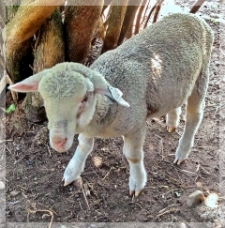
lambAs one of three pilgrimage feasts requiring every Jewish man’s attendance in Jerusalem, Jesus and the disciples joined other pilgrims on their journey toward the city for the Passover celebration. By the time they passed through Jericho (where He healed the blind Bartimaeus and ate dinner with Zacchaeus), a large crowd was following Jesus. It was on a Sunday that He and His disciples left Bethany for the two-mile walk into Jerusalem. The roads would have been crowded as pilgrims streamed into the city in preparation for the festival. Having heard of Jesus’ miracles and the way He brought Lazarus out of the grave, many of those in the streets were anxious to see Him. ”Could this be the long-awaited Messiah?” they wondered.

Although Jesus seemed to have walked everywhere, when He was less than a mile from the city, He sent two disciples to fetch a donkey’s colt that would be waiting for them. When Jesus deliberately rode that colt into Jerusalem, He was presenting Himself as Israel’s promised king. The animal’s significance was not lost on the people and their questions about His identity were answered. Solomon rode a donkey when he was presented to Israel as David’s rightful heir and successor and Zechariah prophesied that the promised Davidic king—the Messiah—would come on a donkey, as well! Thinking this king would save them from Rome, rather than Satan, people called out “Hosanna,” a combination of two Hebrew words, yasha (meaning save) and na (meaning now). Although Jesus brought salvation, it wasn’t from Rome!

Believing Jesus was the promised heir to David’s throne, the people recited from Psalm 118: “Blessings on the one who comes in the name of the Lord! Hail to the King of Israel.” Traditionally, people honored a new king by throwing their coats where he would sit or walk and palm branches were considered symbols of joy, victory, and triumph. The crowd’s reaction to seeing Jesus on the colt was to cut palm branches from the trees and to lay both palms and their coats across the road in Jesus’ path. Others, thinking they were celebrating victory over Rome, waved branches of palms as He passed. They didn’t know the victory they were celebrating was Christ’s victory over sin and death!

While Jesus was entering Jerusalem from the east, it’s likely that Pontius Pilate (governor of Judea) was entering the city from the west and King Herod from the north. In contrast to Jesus’ humble but joyous procession, their entrances would have been solemn and regal. Jesus rode a donkey and was accompanied by twelve disciples. Pilate and Herod would have ridden in chariots and been accompanied by legions of soldiers and warhorses. Jesus and his followers were weaponless but the soldiers wore armor and carried swords. While the procession from the east was led by the Prince of Peace, the processions of Herod and Pilate, men known for their violence and cruelty, would have been a show of force to quell any thoughts of a rebellion during the Passover.

Of course, only Jesus knew that the crowd exclaiming, “Hail to the king!” would soon turn on Him—that the cries of blessings upon Him would become shouts to crucify Him! Only He knew that His royal welcome would end with His dying a criminal’s death on a cross. It wouldn’t be until after His resurrection that His Jewish followers would understand the full significance of His entry into Jerusalem on that Sunday, the 10th day of Nisan.

According to Exodus 12, the 10th of Nisan was the specific day on which people were to select their Passover lamb (a male without any defect or blemish). The family was to keep the lamb until twilight on the 14th day when it would be killed and eaten. Jesus, the Lamb of God, entered Jerusalem on Lamb Selection Day. When He and His disciples ate their Passover meal that Thursday evening, Jesus broke the bread and gave it to His disciples saying, “This is my body.” He then passed the cup saying, “This is my blood.” It wasn’t until later that the disciples understood the full meaning of Christ’s words. While they may have consumed leg of lamb that night as they commemorated Israel’s deliverance from bondage to Egypt, the bread and wine made it clear that the sinless Jesus was the true Passover lamb. He was the perfect sacrifice who would deliver all who believed in Him from their bondage to sin!

On the night when he was betrayed, the Lord Jesus took some bread and gave thanks to God for it. Then he broke it in pieces and said, “This is my body, which is given for you. Do this in remembrance of me.” In the same way, he took the cup of wine after supper, saying, “This cup is the new covenant between God and his people—an agreement confirmed with my blood. Do this in remembrance of me as often as you drink it.” For every time you eat this bread and drink this cup, you are announcing the Lord’s death until he comes again. [1 Corinthians 11:23-26 (NLT)]

Copyright ©2023 jsjdevotions. All rights reserved.

SANCTIFIED

May God himself, the God of peace, sanctify you through and through. May your whole spirit, soul and body be kept blameless at the coming of our Lord Jesus Christ. [1 Thessalonians 5:23 (NIV)]

This life, therefore is not righteousness but growth in righteousness, not health but healing, not being but becoming, not rest but exercise. We are not now what we shall be, but we are on our way. The process is not yet finished, but it is actively going on. This is not the end but it is the right road. At present, everything is being cleaned. [Martin Luther]

white oibos - juvenile - adultOur sons recently visited to celebrate their father’s birthday. As I watched them work their culinary magic in the kitchen, I marveled at how the boys who once thought Kraft mac n’ cheese to be haute cuisine became gourmet cooks. For that matter, when did they get so tall or those wrinkles appear around their eyes? At what point did the tow-headed boy’s hair darken and start receding or his brother’s turn grey? The changes I observed weren’t just physical. As we talked, I wondered when my once irresponsible boys became so sensible and wise. None of it happened overnight and yet each little change was so subtle it barely was noticed. But, when I thought back to the children and young adults they once were, the change was enormous.

When we accept Jesus, we are justified: set free by the blood of Christ, our sins are forgiven and we are spiritually reborn. But, because we still sin, our work has just begun. No parent wants their children to remain helpless infants, unthinking youngsters, or reckless teens and God is the same way with His children. Just as babies must learn to walk, new believers must learn how to walk in the steps of Jesus. We gradually transform from newborn Christians into mature ones through the power of the Holy Spirit in a process called sanctification. While justification is once and done, sanctification is a lifelong journey. Growing in grace, we become obedient to God’s Word, understand His ways and, little by little, become more like Christ.

Although challenges are often accompanied by spiritual growth spurts, for the most part, we transform gradually in barely noticeable ways (as did my boys). If we look back, however, we’ll see the difference our sanctification/spiritual growth has made in the way we conduct our lives. Because of our faith in Jesus, somewhere along the line, we probably developed enough patience to deal with our tiresome neighbor, enough wisdom to counsel a troubled friend, or enough restraint to step away from an argument. At some point, we found the ability to have peace in the midst of turmoil and self-discipline in the face of temptation. We began to love the unlovable, forgive the unforgiveable, and give generously without expecting something in return. When looking back, we’ll realize how the Holy Spirit slowly but steadily matured us from baby Christians into adolescents and beyond.

No matter how far we’ve come in our journey, a little self-examination tells us how far we still need to go. Like the wrinkles that come with age, sanctification it is a gradual, daily, and life-long process. But, unlike those inescapable wrinkles, sanctification isn’t inevitable—it takes effort. To become sanctified, we must actively pursue a holy life. By yielding to God, we become empowered by the Spirit to live a life that honors Him (without becoming self-righteous, legalistic, or proud about doing so). Like a child learning to ride a bike, however, there will be times we fall but, by the grace of God, we keep trying!

Even though I’d prefer the face and body I had twenty years ago to the one I have now, it’s because of Jesus that I much prefer the woman I am today to the woman of decades past. While I don’t look forward to seeing more wrinkles in the mirror, I do look forward to the changes the Holy Spirit continues to make in me. While I’m not who I once was, I’m still nowhere close to the woman God wants me to be.

Yet, though I am not what I ought to be, nor what I wish to be, nor what I hope to be, I can truly say, I am not what I once was; a slave to sin and Satan; and I can heartily join with the apostle, and acknowledge, “By the grace of God I am what I am.” [John Newton]

 But by the grace of God I am what I am, and his grace to me was not without effect. [1 Corinthians 15:10 (NIV)]

Not that I have already obtained all this, or have already arrived at my goal, but I press on to take hold of that for which Christ Jesus took hold of me. [Philippians 3:12 (NIV)]

Copyright ©2023 jsjdevotions. All rights reserved.

DAILY BREAD (WHAT IS IT?)

Give us this day our daily bread. [Matthew 6:11 (RSV)]

Therefore do not be anxious, saying, “What shall we eat?” or “What shall we drink?” or “What shall we wear?” For the Gentiles seek all these things; and your heavenly Father knows that you need them all. But seek first his kingdom and his righteousness, and all these things shall be yours as well. [Matthew 6:31-32 (RSV]

If “daily bread” refers to our necessities and nothing more, then what are the necessities of life? The most obvious answer is food enough to maintain us, water enough to sustain us, along with clothing and shelter enough to protect us. Chances are you are among the fortunate who have all that’s needed to support life (plus a great deal more.) I know I am. Should we then cease asking the Lord for our daily bread? Martin Luther would say, “No.”

When Luther explained the fourth petition of the Lord’s Prayer in his Small Catechism, he said “daily bread” comprised “Everything included in the necessities and nourishment for our bodies, such as food, drink, clothing, shoes, house, farm, fields, livestock, money, property, and upright spouse, upright children, upright members of the household, upright and faithful rulers, good government, good weather, peace, health, decency, honor, good friends, faithful neighbors, and the like.”

For Luther, the words “daily bread” encompassed far more than whatever was necessary to sustain life. He expanded it to mean whatever is necessary for a good life. In the mostly agrarian society of his time, it’s easy to see why farm, fields, livestock, and good weather were a necessity to Luther’s congregations. Nevertheless, they’re still necessary in our increasingly urban society—without those, our grocery stores would be empty. When we continue to think in broader terms, Luther’s list makes as much sense today as it did in 1529. While we probably don’t have servants as members of our household, we may have employees or co-workers in business and we all depend upon other people’s employees when we dine out, bank, shop, visit the doctor, or take medicine. We may not have (or want) a spouse and children, but today’s children are tomorrow’s employers, judges, mechanics, police, and office holders and we need strong and upright family units to raise them to be good ones. Indeed, our daily bread includes far more than food, water, clothing, and shelter enough for survival. We all need families, friends, and neighbors along with good government, peace, health, decency, and honor and yet I’d never thought of these necessities as daily bread until I read Luther’s words.

Let us never forget that along with both our physical requirements and the less observable needs of life like friendship, there is yet another kind of bread for which we ask. When we ask for our daily bread, we also ask for the true bread of life—Jesus Christ—the bread that satisfies our spiritual hunger. He is, indeed, a necessity for life both in this world and the next.

Rather than asking God for my daily bread, Jesus’ beautiful model prayer asks God to give us our daily bread. Regardless of how much we may have, as long as long as there are people in our world who lack the true necessities of life, we must pray for their provision—their daily bread and the bread of life.

Our Father in heaven, give us this day our daily bread!

“For the bread of God is that which comes down from heaven, and gives life to the world.” They said to him, “Lord, give us this bread always.” Jesus said to them, “I am the bread of life; he who comes to me shall not hunger, and he who believes in me shall never thirst.” [John 6:33-35 (RSV)]

Copyright ©2023 jsjdevotions. All rights reserved.