
Peter said to him, “You shall never wash my feet.” Jesus answered him, “If I do not wash you, you have no share with me.” Simon Peter said to him, “Lord, not my feet only but also my hands and my head!” Jesus said to him, “The one who has bathed does not need to wash, except for his feet, but is completely clean. And you are clean, but not every one of you.” [John 13:8-10 (ESV)]
 Apparently speechless when Jesus washed their feet, John records no one objecting to His doing so until Jesus came to Peter. After protesting that Jesus never would never wash his feet, the Lord warned the disciple that unless he allowed Jesus to wash him, Peter wouldn’t belong to Him. Eager to show his devotion to Jesus, Peter then enthusiastically offered the rest of his body for cleansing. Jesus explained that, because Peter already bathed, only his feet needed washing, while adding that not all of those present were clean. Since we know the rest of the story, we know He was referring to Judas. The reference to Judas not being clean, however, tells us that this exchange is about more than washing the filth of Judah’s roads off the disciple’s feet. Since Jesus wasn’t giving a hygiene lesson, what did He mean?
When Jesus said he must wash Peter’s feet, the Greek word used was niptó, a word used for washing or wetting only a part of the body, as we would with our hands before dinner or as Jesus did with the men’s feet. But, when Jesus said the men already were clean because they had bathed, the Greek word used was louó which meant bathing the entire body as we would in a long hot shower. Using both words in John 13:10, Jesus said that the one who bathed (louó) was completely clean and didn’t need to wash (niptó) except for his feet. What do bathing and washing have to do with mankind’s relationship with Jesus?
The total bath—the louó—occurs when we come to Jesus. It is when our sins are forgiven “as far as the east is from the west” [Psalm 103:12] and our scarlet sins are made “as white as snow.” [Isaiah 1:18] Once-and-done, the bath of salvation does not need to be done over and over again. With the exception of the unclean Judas, all of the disciples had bathed by trusting and believing in Jesus. When Jesus died on the cross, He paid the price for our sins (past, present, and future) once and for all time.
Having once been bathed and made new in Christ, we don’t need another bath. That our eternal salvation is secure in Christ, however, doesn’t negate the need to repent of our daily sins and ask for His forgiveness. No matter how clean they were every morning, the disciples’ feet got soiled while walking through Judah’s dirt so they needed to be washed daily. As clean as we are because of bathing in the righteous of Christ and try as hard as we might, we’re bound to step in some mud puddles and become soiled by the world’s sins as we walk through life in our fallen world. If we want to walk in daily fellowship with our Lord, we must confess and repent of the sins that soil us and allow Jesus to wash (nipto) away the filth of our fallen world every day. Salvation (the bathing) is a one-time act but sanctification (the washing) is a lifelong process; it is what allows His forgiveness to change our lives.
 While researching 1st century dining habits, I learned how guests traditionally were seated. Although da Vinci’s famous mural places Jesus in the middle of the group at a long rectangular table, the position of Jesus (as the host) would have been second from the left on the left side of a U-shaped table. Customarily, a trusted friend was seated to the host’s immediate right and the guest of honor to the host’s immediate left. The rest of the diners were seated to the left starting with the highest-ranking person and proceeding on down to the least important. If a servant were present during the meal, the last seat was his since it was closest to the door. With no servant, it was given to the youngest or lowest ranking guest.
 When picturing the Last Supper, we probably visualize it much like Leonardo da Vinci’s famous mural with the men seated on chairs at one long table. While visually appealing, the picture is inaccurate. Instead of sitting on chairs with their feet concealed under the dinner table, Jews and Romans in Jesus’ day lounged on low sofas or cushions surrounding a low three-sided table called a triclinium. The cushions or couches were placed on the outside of the three sides which left the inside open for serving and entertainment. Diners would recline on their left sides, lean into the bosom of the person on their left, support their heads with their left arms, eat and drink with their right hands, and stretch their legs out to the right.
 While we’re busy decorating our homes, planning holiday menus, finding the perfect gift for everyone on our list, and stressed about supply chain issues and shipping delays affecting the receipt of those gifts, let’s not forget that we’re in the season of Advent. This is a time for us to prepare for the second coming of Christ and to ponder the gifts of hope, love, peace, and joy we received with His first coming.
 In the early church, it was common for believers to gather together for prayer and, when Peter was imprisoned, they gathered to pray for his release at the home of Mary, the mother of John Mark. For a people who believed in prayer, it’s ironic that Peter thought the angel that freed him to be a mere vision until he found himself free on the city streets and that the church was astonished when he showed up at Mary’s house! Amazing things can happen when the church prays for its leaders. Prayers broke Peter’s chains, imagine what they can do for our pastors!
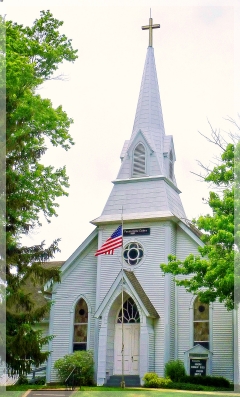 The story is told about a pastor who was shaking hands with his congregation after church one Sunday morning when a little boy handed him a dollar. After thanking him, the pastor asked what it was for. The youngster replied, “It’s for you, because I heard my daddy say that you were the poorest preacher that we ever had.” How easy it is to criticize our pastors when, instead, we should be praying for them.
 Devotions of the Heart