
Jesus replied, “Your mistake is that you don’t know the Scriptures, and you don’t know the power of God. [Mark 12:24 (NLT)]
 I’ve heard it said that no one is truly educated without a passing knowledge of Greek mythology, the works of William Shakespeare, and the Bible. The people who compete on the game show Jeopardy, however, are supposed to have more than a passing knowledge of those subjects and many more. Last month, however, all three Jeopardy contestants were baffled when the $200 clue wanted to know what came between “Our Father which art in Heaven” and “be thy name” in Matthew 6:9. None of the contestants even ventured a guess and, after an embarrassing silence, host Mayim Bialik supplied the answer: “What is ‘hallowed’?”
Following the show’s airing, Twitter was abuzz with comments. Defending the contestants’ silence, some argued that not everyone is Christian. Others pointed out they knew it even though they weren’t Christians. One believer (who called herself “religious”) admitted not knowing it because it wasn’t recited in her denomination. Be that as it may, it is in two of the four Gospels! Franklin Graham joined in the discussion with this tweet: “We have lost so much Biblical literacy & basic awareness of the things of God’s Word. This moving away from Biblical values will equal double jeopardy for our nation.”
That wasn’t the first Bible question to stump all the contestants. In 2014, the final clue was, “The first birthday celebration mentioned in the Bible takes place in Genesis 40 and is in honor of this ruler.” The answer was Pharaoh (who summoned his cup-bearer and chief baker out of prison in preparation for his birthday party in 40:20). In 2019, the final Jeopardy clue was, “This denomination takes its name from the day, as told in the New Testament, when the Holy Spirit descended on the Apostles.” All three answered the 7th Day Adventists when the correct response was Pentecostalism/Pentecostals. Considered the “birthday” of the church, it was on this Jewish holy day of Pentecost that the Holy Spirit filled all the believers (not just the Apostles), Peter preached to the assembled crowd, and 3,000 believed and were baptized. [Acts 2]
Sometimes, Jeopardy’s writers show their lack of Biblical knowledge. One clue asked which of Paul’s epistles had the most Old Testament quotes. If the question had been about all the epistles, the accepted answer of Hebrews would have been correct, but the clue was about Paul’s epistles, so it wasn’t. Only God knows who wrote Hebrews and, since the time of the Reformation, it has been recognized that Paul couldn’t have been its author. Paul, however, was the author of Romans which was the correct answer.
It’s not just Jeopardy contestants who don’t know the Bible. Pew Research Center found that less than half of all adults can name the four Gospels and fewer than 40% know who Job was. According to the Barna Research Group, 60% of Americans can’t list even five of the Ten Commandments, 12% believe Joan of Arc was Noah’s wife, and many professing Christians can’t identify more than three of the disciples. A significant number of people thought Billy Graham preached Sermon on the Mount and over half of high school seniors believed Sodom and Gomorrah were husband and wife!
Reading the Bible, however, isn’t about knowing who Shiphrah and Puah are, Daniel’s Babylonian name, or the identity of Jacob’s sons and Job’s four friends. [Exodus 1:15-21; Daniel 1:7; Genesis 49:23-28; Job 2:11,32:2] Scripture reading isn’t about winning the daily double on Jeopardy. It’s not about knowing information; it’s about knowing God! It’s about learning how to live, pray, forgive, witness, and trust God. It reveals God’s promises, His will, His plan for us, and how very much He loves us! Reading the Bible grows our faith, sets our values, arms us against sin, and guides our world view. We risk more than a Jeopardy loss by not knowing God’s word—we put our very souls in jeopardy.
Americans revere the Bible—but, by and large, they don’t read it. And because they don’t read it, they have become a nation of biblical illiterates. [George Gallup and Jim Castelli]
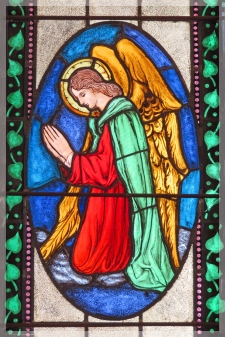 As we settled into our pews in the sanctuary, people talked loudly, called out to one another, laughed raucously, visited other pews, and checked their phones even after the organist started his beautiful prelude. It wasn’t until the pastor stood at the pulpit and started speaking that they eventually quieted down and put away their phones. As I wondered what became of the awe and reverence that should accompany us into God’s house, I again thought of the time Israel brought the sacred Ark of the Covenant into battle with them. Putting aside their idolatry, consider the lack of respect given to this religious chest designed by God and representing His presence among His people.
 During the time of the judges, the Israelites were at war with the Philistines. Following their loss of 4,000 men, they questioned why God had allowed their defeat but never bothered asking Him. Instead, they decided that carrying the Ark of the Covenant into battle would guarantee a future victory. Perhaps they remembered the story of Israel entering the Promised Land—how the Jordan River stopped flowing when the feet of the priests carrying the Ark touched the water and the entire nation crossed the dry riverbed into Canaan. They may have recalled Jericho’s defeat when Israel’s priests carried the Ark around the walled city for seven days and the city’s seemingly invincible walls collapsed. Maybe they thought it was the Arks’ presence that caused those miracles; in any case, they brought the Ark to their camp in Ebenezer.
 The Israelites had just crossed the Jordan River and were preparing to conquer Canaan when Joshua came upon an armed man. Joshua was a stranger in a foreign land and, as Israel’s general, he may have been scrutinizing Jericho’s defenses to determine his plan of attack. I wonder if Joshua brandished his sword (while shaking in his sandals) as he queried, “Friend or foe?” The man, however, was neither ally nor adversary. Identifying himself as the commander-in-chief of the Lord’s army, his loyalty was to neither side. His allegiance was to God and the only side he was on was God’s! God wasn’t on Israel’s side any more than He was on Canaan’s. Israel, however, was on God’s side because their conquest of Jericho was part of His master plan of redemption. It was because they were on God’s side that the fortified city’s walls collapsed.
 In Acts 16, we meet Timothy, the son of a Greek Gentile and a devout Jewish woman. Paul probably met him several years earlier when he preached in Lystra or Derbe. Both Timothy and his mother were Christ followers and it was from his mother that Timothy became knowledgeable in the Hebrew Scriptures. By the time Paul returned to Lystra, Timothy was a young man who was well-regarded by the churches in Lystra and neighboring Iconium. Seeing his potential, Paul asked the young man to join him on his second missionary journey. Before departing, however, Paul asked Timothy to be circumcised.
 Devotions of the Heart