
But you have raised a banner for those who fear you—a rallying point in the face of attack. Now rescue your beloved people. Answer and save us by your power. [Psalm 60:4-5 (NLT)]
May he grant your heart’s desires and make all your plans succeed. May we shout for joy when we hear of your victory and raise a victory banner in the name of our God. [Psalm 20:4-5 (NLT)]
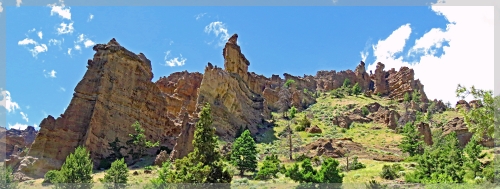 The Amalekites were a warlike nomadic tribe who frequently raided settlements to carry off plundered goods. About six weeks into the Israelites’ exodus from Egypt, these marauders made an unprovoked attack on the weary refugees while they camped at Rephidim. Moses commissioned Joshua to lead an army against their enemies the following morning. Joshua’s army, however, wasn’t made up of soldiers! Facing the veteran warriors of Amalek were men who less than two months earlier had been enslaved brick makers and field laborers! Worse, this unseasoned army was led by a general as inexperienced as were they. Nevertheless, Israel’s men set out to battle while Moses, his brother Aaron, and a man named Hur (who Jewish tradition believes was married to Miriam and brother-in-law to Moses) climbed to the top of a nearby hill to watch. As Israel fought their powerful foes, Moses extended his arms and held out his staff for all to see.
When going into battle, opposing armies would carry banners or standards that served as rallying points before battle, encouraged the warriors as they fought, and announced when the battle was won. Representing their tribe or leader, the banners usually depicted animals, birds, or pagan gods. Made of fabric, wood, or metal, they were fastened onto a long pole or staff so they could be seen from a distance. Marauders like the Amalekites probably had such a banner. The Israelites, however, weren’t an experienced army and had no flag or standard under which to rally.
Moses’ staff was the closest thing Israel had to a banner. Although it looked like an ordinary shepherd’s tool, to the Israelites it symbolized God’s intervention. Through God’s power, it had transformed into a snake, turned water into blood, produced hail, and infested Egypt with frogs, gnats, flies, and locusts. When Moses raised it over the Red Sea, the waters parted and, when Moses struck a rock with it, water gushed out. That staff, associated with God’s miracles, became Israel’s banner. As long it remained in sight, Israel’s novice army believed God was with them and victory was possible. That symbol of God’s faithfulness, presence, and power remained in the men’s sight on the hilltop until Israel was victorious over the army of Amalek.
After their victory, Moses built a memorial altar and called it Yahweh-Nissi (Jehovah-Nissi), which meant “The Lord is Our Banner.” By not calling it “The Staff is Our Banner” or “Our Banner Brought Us Victory,” it was clear that Moses knew it wasn’t the staff, Joshua’s battle strategy, or Israel’s military might that defeated the Amalekites. The name Yahweh-Nissi acknowledged that it was God’s presence and power that gave them their triumph. God, and God alone, was the author of their victory.
Indeed, the Lord is our banner. Unlike the Israelites, we’re not being attacked by an army of marauding warriors but, like them, the enemy attacks us every day with desire, discontent, despair, anger, and guilt. We face our battles under God’s banner—one of encouragement, courage, hope, love, faith, power, and might. If we keep our eyes focused on the Lord, victory is ours. Because of Yahweh-Nissi, we don’t have to fight our battles on our own strength – we have His!
 Last week, after singing we’d come in the opening hymn, we promised to go in the closing one: I the Lord of Sea and Sky. Originally written for a Roman Catholic ordination mass in 1981, it has found its way into many Protestant hymnals. As I sang the refrain, “Here I am, Lord. Is it I, Lord?” I thought of Samuel and Isaiah, both of whom were called by God and both of whom responded by saying, “Here I am.” I wonder if I would have responded as positively as did they. Like Moses, would I have protested or, like Jeremiah, say my age disqualified me? Would I simply have run away as did Jonah? Although Moses, Jeremiah, and even Jonah eventually answered God’s call, I’m not so sure I would have (although three days in the belly of a fish might have convinced me)!
 As we came together in worship, each of us bringing the Lord our own private sins, sorrows, doubts, and fears, the hymn’s words, “Just as I am… I come, I come,” seemed a fitting way to start the service. Because its heartfelt words are so relatable, Just as I Am is one of my favorite hymns. Curious about its origin, I learned that its words were written by a Victorian hymn writer named Charlotte Elliott. The daughter of an evangelist, she suffered a serious illness at the age of 32 that left her an invalid for the rest of her life. Angry about what she perceived as uselessness because of her disability, Elliott became severely depressed and spiritually lost. After a visiting minister counseled her to come to Jesus, she asked how she could come to Him when all she had was her anger, sadness, questions, and broken body. The clergyman’s response was simple: “Come to Him just as you are.” Although she gave her life to Christ at that time, she continued to be plagued by depression.
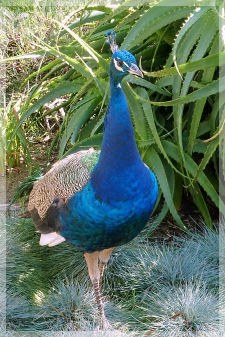 When writing about pride earlier this week, I remembered the Bible’s stories of proud men who got their comeuppance. 2 Chronicles 26 tells of Uzziah who, as long as he “sought guidance from the Lord, God gave him success.” His mighty army defeated the Philistines, Arabians, and Meunites (who then paid him an annual tribute) and, under his rule, Jerusalem’s walls were fortified, wilderness forts were established, water cisterns were dug, and something like catapults were erected on the walls to defend the city. With Uzziah as king, Judah prospered and the powerful king’s fame spread “far and wide.” Sadly, along with prosperity, power, and fame came pride. Believing he was above the law, the proud king entered the sanctuary and usurped the high priest’s role by offering incense. When priests warned him about his sacrilege, the proud king raged at them and immediately was stricken with leprosy—a disease that meant the “unclean” man lived the rest of his life in isolation and never again could enter the Temple. All the blessings, accomplishments, and prosperity of his reign were overshadowed by Uzziah’s one act of pride, insolence, and arrogance.
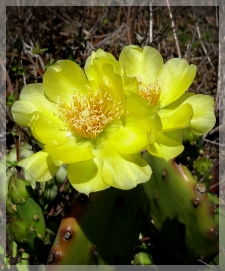 I enjoy stopping for a short stroll on the boardwalk of a local nature preserve that is home to well over 100 gopher tortoises (a protected species) and a wide assortment of native plants. The boardwalk is low to the ground and has no railing because it’s not there to protect people from the alligators and snakes of the swamp; it’s there to protect the animals and their dry scrub habitat from people! Several signs are posted about not stepping off it onto the fragile landscape. When I spotted an absolutely beautiful prickly pear cactus in full bloom, I was disappointed it was out of decent photo range. Since mine had been the only car in the parking lot, I was tempted to disobey the posted signs. “I really want that photo! Who’d know? What harm could I do?” I asked myself. If I’d seen someone else stepping off the boardwalk, however, I would have admonished them for their lack of environmental concern! Recognizing sin’s whisper in my ear, I stayed put. Nevertheless, I realized how tempting it is to think my desires are more important than anything or anyone else.
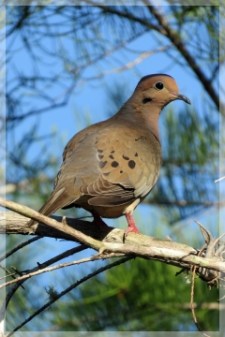 It is in the Talmud (a compilation of ancient Jewish teachings and history) that we find the legend of Honi ha-Ma’agel (the Circle Maker). After three years of drought in the land, the man prayed for rain. When none came, Honi drew a circle in the dirt and vowed not to leave it until God had pity on his people and sent rain. When God sent a light rain, the circle maker informed God that wasn’t the kind of rain for which he prayed and stated his desire for rain enough to fill the cisterns. When God answered with torrents of rain, Honi again complained that, “Not for such a rain I prayed.” After the circle maker informed God he wanted a “rain of goodwill, blessing, and graciousness,” God provided a rain that satisfied Honi. In fact, it rained so much that the people finally asked Honi to pray the rain away! While Honi’s behavior is a great example of chutzpah (audacity and impudence), I’m not sure it’s a good example of proper prayer.
 Devotions of the Heart