LOOKING BACK WITH GRATITUDE

Enter his gates with thanksgiving, and his courts with praise! Give thanks to him; bless his name! For the Lord is good; his steadfast love endures forever, and his faithfulness to all generations. [Psalm 100:4-5 (ESV)]

“A Bayberry Candle burned to the socket brings Luck to the household, Food to the larder and Gold to the pocket.”

Every year a friend sends me a bayberry candle to burn on New Year’s Eve. Legend has it that lighting a bayberry candle when the first star appears, burning it past midnight into the new year, and letting it burn all the way down will bring good luck, wealth, and prosperity to a home. We can’t stay awake past midnight and allowing an unattended candle to burn down to its socket seems more a guarantee of fire and disaster than good luck. Nevertheless, in honor of our friend, we light our candle every New Year’s Eve and extinguish it shortly after the new year begins in Greenland (three time zones east).

There are a host of new year’s traditions ranging from jumping seven waves or eating a grape at each stroke of midnight to smashing plates, hanging onions on your door, or eating Hoppin’ John. Like the bayberry candle, these traditions are supposed to ensure good fortune for the coming year. Rather than trusting in luck, however, we trust in God.

Starting the new year by taking inventory of the past year’s God-given blessings seems a better tradition than trusting the new year to candles, grapes, or a mixture of black-eyed peas, rice, and pork. While I keep a gratitude journal, some families have a “gratitude jar” into which little notes of thanks are dropped throughout the year. With the new year’s advent, the jar is emptied, the notes are read, memories are enjoyed, and a new year of gratitude begins with an empty jar.

If you had a gratitude journal or jar, what things would be mentioned from the past year? Would there be thanks for finding things—the car keys, the money to pay the mortgage, or the perfect gift for that hard to please relative? What about unexpected blessings—technical assistance that spoke English, the surprise visit from your children, or a year-end bonus? There could be thanks for the ability to give—Christmas boxes to Samaritan’s Purse, blood to the Red Cross, clothes to the charity resale shop, or an opportunity to a deserving person. Gratitude would probably be expressed for the various people in your life—be they exterminators, trash collectors, skilled surgeons, first responders, your spouse, grief counselors, helpful sales associates, or physical therapists.

In all likelihood, there’d be gratitude for your accomplishments and those of others—not burning the holiday pies, getting sober, or finally finishing the 1,000-piece puzzle. Would you mention the moments that took your breath away, whether a roseate spoonbill in the swamp, a double rainbow, or seeing the elusive green flash at sunset? Would you write of thing that were found—perhaps the solution to a problem, the right words, a lost locket, or a new friend? Surely, there would be thanks for things received, be it a good mammogram report or words of encouragement, forgiveness, and love.

Of course, there would be thanks given for arrivals—the prodigal who returned home, spring daffodils, or a new baby. What about things that happened—trips, weddings, baptisms, and anniversaries—as well as things that didn’t—hurricanes, leaky roofs, or getting downsized? Perhaps there would be thanks for getting through a challenging time—anything from the terrible twos or chemo to the loss of a spouse—as well as thanks for things as simple as the cat, Amazon Prime, a child’s giggle, or deep-dish pizza.

There is so much for which to be grateful—from big things like Jesus, salvation, forgiveness, and eternal life to little ones like warm chocolate chip cookies, FaceTime with the kids, or a lazy afternoon with a good book. If you don’t have a gratitude journal or jar, what about looking through the hundreds of photos you probably have on your phone? You’ll probably be reminded of all sorts of ways in which you were blessed this past year. Remembering them all is a great way for one year to end and the new year to begin because it reassures us that God has our lives firmly in His hands.

I don’t know how this year will play out for any of us—but I know it will not be without its challenges. Nevertheless, remembering the good things of 2025 reminds us that God protected, defended, supported, loved, and blessed us in the past and reassures us that He will do the same in the coming year!

New Year’s resolutions are made and broken every year. Perhaps the best way to begin this year is to start with the determination to look for our blessings and offer thanks for them daily.

Happy New Year, dear friends. May 2026 be filled with a multitude of blessings and gratitude.

Give us, O Lord, thankful hearts which never forget your goodness to us. Give us, O Lord, grateful hearts, which do not waste time complaining. [St. Thomas Aquinas]

Fear not, for I am with you; be not dismayed, for I am your God; I will strengthen you, I will help you, I will uphold you with my righteous right hand. [Isaiah 41:10 (ESV)]

Copyright ©2026 jsjdevotions. All rights reserved.

HOLY INNOCENTS

Then Herod, when he saw that he had been tricked by the wise men, became furious, and he sent and killed all the male children in Bethlehem and in all that region who were two years old or under, according to the time that he had ascertained from the wise men. [Matthew 2:16 (ESV)]

Ruthless and paranoid about possible usurpers to his throne, King Herod the Great killed three of his sons, several uncles and cousins, and one each of his wives, mothers-in-law, and brothers-in-law to protect his regime and keep his crown. Having been crowned “King of the Jews” in 40 BC by the Roman Senate, it’s not likely a man like that would be willing to share his title with an infant the Magi described as “the king of the Jews!” When Herod realized he was duped by the Magi and had no way to identify the infant king, the merciless man safeguarded his reign by ordering the wholesale slaughter of all Bethlehem’s boys two and under.

While there is no historical evidence of this slaughter, the story is plausible. It’s easy to believe that Herod, the Kim Jung-un/Joseph Stalin/Mao Zedong of the ancient world, would order the death of innocent children. When he was dying, the heartless king hatched a diabolical plan to gather all of the Jewish leaders and execute them upon his death. By doing this, he guaranteed that, instead of people rejoicing at his death, the entire nation would mourn. Massacring innocent children was right up his alley!

Perhaps, because the early church grossly inflated the number killed by Herod’s men to between 14,000 and 144,000, historians question its historicity. Bethlehem’s population at the time was somewhere between 300 and 1,500 so there probably would have been no more than two dozen children under the age of two (about half being girls). While the death of even one child is a tragedy, the deaths of 12 to 15 baby boys in a time of high infant mortality probably wasn’t newsworthy. Those innocent children may have gone unnoticed by ancient historians but they had names and mothers and their loss was noticed by all who knew them.

The first Christian martyr wasn’t Jesus on Calvary or even the sainted Stephen; it was a nameless baby boy in Bethlehem. St. Augustine called these murdered children the “flowers of the martyrs” and “the first buds of the Church killed by the frost of persecution,” while pointing out that “they died not only for Christ but in His stead.” They died for the one who would die for all!

Around 485 AD, Herod’s massacre of these innocent children was commemorated in a feast day called Holy Innocents or Childermas. For the Western church, yesterday was this often-overlooked feast day. Just three days after singing “All is calm, all is bright,” we’re singing of Herod slaying children. Instead of picturing Mary peacefully holding Jesus in her arms, we picture Herod’s soldiers tearing babies out of their mother’s arms. This day is the dark side of Christmas. It serves as a poignant reminder of the vulnerability of the innocent and the depths of human cruelty; it is a day to reflect on the sanctity of all human life.

As we recall Herod’s victims, we thank God for the children with which we have been blessed. May we also remember the holy innocents of the twenty-first century. Not just children, but all who are trafficked or abused, refugees or homeless, hungry or disenfranchised. Today’s holy innocents are all who are victimized, poverty-stricken, vulnerable, or casualties of war. Both young and old, all are God’s precious children. How can we protect them from the Herods of today?

We remember today, O God, the slaughter of the holy innocents of Bethlehem by King Herod. Receive, we pray, into the arms of your mercy all innocent victims; and by your great might frustrate the designs of evil tyrants and establish your rule of justice, love, and peace; through Jesus Christ our Lord, who lives and reigns with you, in the unity of the Holy spirit, one God, for ever and ever. Amen [Collect for Holy Innocents from the Book of Common Prayer]

Then was fulfilled what was spoken by the prophet Jeremiah: “A voice was heard in Ramah, weeping and loud lamentation, Rachel weeping for her children; she refused to be comforted, because they are no more.” [Matthew 2:17-18 (ESV)]

Copyright ©2025 jsjdevotions. All rights reserved.


CELEBRATE CHRISTMAS ALL YEAR LONG

But the angel reassured them. “Don’t be afraid!” he said. “I bring you good news that will bring great joy to all people. The Savior—yes, the Messiah, the Lord—has been born today in Bethlehem, the city of David! [Luke 2:10-11 (NLT)]

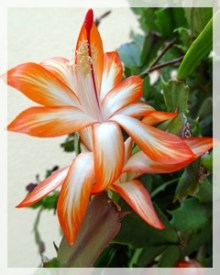
christmas cactus

Several years ago, I was given a Christmas cactus in early December. It had just started to blossom and, by Christmas, it was in full bloom and beautiful. A Christmas cactus typically goes dormant by Easter but mine bloomed until mid-May. The next year, it blossomed again at Christmas but the flowers weren’t as spectacular. It was dormant by February and didn’t survive the summer. Admittedly, I’m a neglectful gardener and my record with plants is dismal. That cactus actually lasted longer than any of my holiday poinsettias.

The spirit of Christmas shouldn’t end when the flowers drop from the Christmas cactus or poinsettia. Christmas shouldn’t be forgotten when the lights are packed away, the tree comes down, the ornaments and creche are stowed away for another year, or the peppermint bark is gone. We can’t leave the baby Jesus in the manger and forget that He grew, taught, led, healed, loved, forgave, suffered, died, rose, ascended into heaven, and will come again! We need to keep the spirit of Christmas alive in our hearts well beyond the time the toys break, the Christmas cookies are eaten, the holiday sweaters are back in the drawer, the poinsettia dies, and the Christmas cactus goes dormant. The spirit of Christmas—its joy and anticipation—the good news of the gospel message—shouldn’t be dependent upon the calendar. It should flower all year long! Of course, we must remember to fertilize and water it with God’s word and prayer.

A pastor friend keeps a small nativity out in her office all year long. It’s to remind her (and her visitors) that the manger is as important a symbol to Christianity as is the cross. If we have Jesus in our hearts, we can be Christmas people regardless of the season. May the spirit of hope, love, joy, and peace that is so present during Christmastime continue in our hearts all year long!

The immense step from the Babe at Bethlehem to the living, reigning triumphant Lord Jesus, returning to earth for His own people – that is the glorious truth proclaimed throughout Scripture. As the bells ring out the joys of Christmas, may we also be alert for the final trumpet that will announce His return, when we shall always be with Him. [Alan Redpath]

So the Word became human and made his home among us. He was full of unfailing love and faithfulness. And we have seen his glory, the glory of the Father’s one and only Son. [John 1:14 (NLT)]

Copyright ©2025 jsjdevotions. All rights reserved.

HE CAME FOR US ALL

Put on your new nature, and be renewed as you learn to know your Creator and become like him. In this new life, it doesn’t matter if you are a Jew or a Gentile, circumcised or uncircumcised, barbaric, uncivilized, slave, or free. Christ is all that matters, and he lives in all of us. [Colossians 3:10-11 (NLT)]

It’s tempting to speed-read through the long genealogies found in the Hebrew Scriptures, especially the nine chapters of names in 1 Chronicles. Just when we thought we were done with them, we get to the New Testament and Matthew begins with a lengthy genealogy. His abbreviated genealogy, however, is more than a list of often unpronounceable names. Because it was prophesized that the Messiah would be a descendant of Abraham and from the line of David, Matthew takes us through Jesus’ family tree to firmly establish His royal lineage and legal right to be the king of the Jews. There are three notable omissions in the line of ancestors—the vile kings Ahaziah, Joash, and Amaziah, all of whom Scripture says “did evil in the eyes of the Lord”—but there are five remarkable additions. While highly unusual to mention women in a genealogy, Matthew mentions five women, all of whom had what we might call “colorful” pasts.
We start with Tamar who was married to Judah’s son Er. When Er died, Judah had his second son, Onan, marry Tamar to provide offspring so Er’s line would continue. Onan prevented that from happening, died, and Tamar remained childless. Although Judah promised his next son to the widow, that never happened. Taking matters into her hands, Tamar pretended to be a prostitute and duped Judah into having sex with her. Twin boys, Perez and Zerah, were the result of that union. Her unconventional behavior is a blemish on the family tree, but it’s nothing when compared to the next woman mentioned: Rahab.

When Rahab first appears in Scripture, she’s a Canaanite prostitute in Jericho. Even though she helped Israel’s spies, joined the Israelites after Jericho’s fall, and gave birth to Boaz, this Canaanite woman of ill repute is another blot on the pedigree of the Prince of Peace. The next unlikely name in this Jewish genealogy is Ruth, the Gentile widow who accompanied her widowed mother-in-law Naomi back to Bethlehem. Ruth may have been a devoted daughter-in-law but she was from Moab. Because Moab had opposed the Israelites and tried to curse them, her people were cursed and could not enter into the assembly. Nevertheless, she ended up marrying Boaz and was the grandmother to King David. A hated foreigner is hardly the ancestor you’d expect of the man who came to save the Jews.

Then we come to Bathsheba who was married to Uriah the Hittite. One of David’s mighty men, He was off fighting battles when she was impregnated with David’s child. Whether she was the innocent victim of rape or a seductive adulteress, her husband was murdered by King David and the child conceived in adultery died. While we know little more of Bathsheba, we’ve got the plot line of a soap opera now! The genealogy finishes with Mary, the mother of Jesus: a peasant girl from Nazareth who became pregnant before marriage!

These are hardly the kind of women about whom a good Jew would boast: a woman who used sex to trick a man, a prostitute from Canaan, a cursed Moabite, an adulteress, and an unwed mother! After neglecting to mention three kings, why did Matthew include these women? If women were to be mentioned at all, there must have been a few upstanding ones whose reputations were without blemish. Yet, in Tamar, we have a woman who sought justice on her own terms; in Rahab, a courageous woman with enough faith in the Israelites’ God to commit treason; in Ruth, a woman who abandoned her pagan gods for Yahweh and became a sacrificial servant to Naomi; in Bathsheba, a woman resilient in the face of the loss of both husband and child; and in Mary, a girl with a servant’s heart whose decision meant she faced scorn and shame because of other peoples’ assumptions. Despite the difficult circumstances each woman faced, God brought about much good. Damaged and vulnerable, these are the kind of people to whom we all can relate.

Matthew’s list is as much a theological statement as it is a genealogical record. It makes clear that both Jews and Gentiles had a role in the Messiah’s ancestry and that both should benefit from His sacrificial death. Jesus came for all people: men and women, rich and poor, native and foreigner, accepted and unwelcome, king and laborer, famous and infamous, strong and weak, honored and scorned, Jews and Gentiles—sinners all. He came to save each and every one of us and to make us members of the same family! Thank you, God, for the Christmas gift of salvation for all who believe.

For you are all children of God through faith in Christ Jesus. And all who have been united with Christ in baptism have put on Christ, like putting on new clothes. There is no longer Jew or Gentile, slave or free, male and female. For you are all one in Christ Jesus. And now that you belong to Christ, you are the true children of Abraham. You are his heirs, and God’s promise to Abraham belongs to you. [Galatians 3:26-29 (NLT)]


Copyright ©2025 jsjdevotions. All rights reserved.


A HOLY HOLIDAY

He continued, “Go home and prepare a feast, holiday food and drink; and share it with those who don’t have anything: This day is holy to God. Don’t feel bad. The joy of God is your strength!” [Nehemiah 8:10 (NLT)]

An old abbot was fond of saying, “The devil is always the most active on the highest feast days.” The supreme trick of Old Scratch is to have us so busy decorating, preparing food, practicing music and cleaning in preparation for the feast of Christmas that we actually miss the coming of Christ. Hurt feelings, anger, impatience, injured egos—the list of clouds that busyness creates to blind us to the birth can be long, but it is familiar to us all. [Edward Hays]

The GrinchWith just one week until Christmas, we may find ourselves sorely tempted to repeat Scrooge’s “Bah, humbug!” We’ve been busy with planning, cooking, baking, cleaning, decorating, shopping, wrapping, packing, and shipping; chances are that our expectations have become unrealistic and impossible to achieve. It’s easy to get so wrapped up in doing and getting that we forget the purpose of this wonderful holiday.
The word “holiday,” however, doesn’t come from “holler-day” as in holler at your family because you’re over-booked or over-drawn, nor does it come from “hollow-day” as in feeling drained and exhausted. A holiday is not supposed to be a “horrible-day” either! The word “holiday” comes from the Old English hāligdæg from hālig, meaning holy, and dæg, meaning day and originally referred only to special religious or holy days. But, because Christians didn’t normally work on holy days, hāligdæg/holiday became associated with time off from work and took on the new meaning of “a day when commoners were exempt from labor.” Nowadays, along with its original meaning, we think of a holiday as time off from work, a vacation, or a simply a day of rest and relaxation.

As we prepare for the upcoming holiday, we want to remember to keep the day “holy,” which means keeping Christ in our Christmas festivities. But what about that other meaning of the word holiday— a day of festivity or recreation when no work is done! As we busy ourselves preparing for the holy day, could it be time to take a brief holiday…to pause and do some refreshing and recreating while we reorder our priorities? Let us take time in the midst of our busy preparations to ponder the meaning of that baby’s arrival in Bethlehem so long ago.

What if we took a break from all the season’s busyness and truly listened to the beautiful music of the Christmas season? We could reflect on the joy that came into the world, think about those “tidings of comfort and joy,” and let them fill our hearts. Singing along with the carols, we could “pa rum pum pum pum” with the little drummer boy, sing long glorias with the angels, and let the hallelujahs and fa-la-la-la-las echo throughout the house. God doesn’t care if we can’t carry a tune; our praise will be music to His ears!

Chances are, hours have been spent hanging lights or decorating the house; have you paused to enjoy the decorations or think about what they represent? Notice the star on the top of your tree and imagine the magnificence of the star of Bethlehem. Take the time to look at your nativity scene and think about the people depicted in it.

Why not pause long enough to put your feet up and read some Christmas stories or poems? The first Christmas story is found in Luke but there are other mood lifters like The Gift of the Magi, The Littlest Angel, The Christmas Candle, and even Dr. Seuss’ wonderful tale about the Grinch! Take a break and watch a holiday movie, drink a cup of cocoa with marshmallows, sit quietly by the fire, or make a list of things for which you’re thankful instead of things you need to do.

Let us heed Nehemiah’s words in today’s verse and allow the joy of the Lord to be our strength as we pause to remember the purpose of all this holiday hubbub—the celebration of Christ’s birth. Both Isaiah and John told us to clear the way for the Lord. As we clear the way for our holiday guests, have we cleared the way for Christ’s presence in our hearts? May we never forget the reason for the season!

Father, as we busy ourselves with preparations to celebrate Christmas, keep our hearts and minds focused on the real meaning of this holiday—the loving gifts of salvation, forgiveness, and restoration brought to us by the Christ child.

And the Grinch, with his Grinch-feet ice cold in the snow, stood puzzling and puzzling, how could it be so? It came without ribbons. It came without tags. It came without packages, boxes or bags. And he puzzled and puzzled ’till his puzzler was sore. Then the Grinch thought of something he hadn’t before. What if Christmas, he thought, doesn’t come from a store. What if Christmas, perhaps, means a little bit more. [Dr. Seuss]

Listen! It’s the voice of someone shouting, Clear the way through the wilderness for the Lord! Make a straight highway through the wasteland for our God! Fill in the valleys, and level the mountains and hills. Straighten the curves, and smooth out the rough places. Then the glory of the Lord will be revealed, and all people will see it together. The Lord has spoken! [Isaiah 40:3-5 (NLT)]

Copyright ©2025 jsjdevotions. All rights reserved

ON A SLIDING SCALE 

Each one must give as he has decided in his heart, not reluctantly or under compulsion, for God loves a cheerful giver. [2 Corinthians 9:7 (ESV)]

In the midst of all the tedious and repetitive regulations regarding sacrificial offerings in Leviticus, we find evidence of God’s love and mercy. For several sacrifices, a distinction was made between offering requirements for the wealthy and the poor. Called korban oleh v’yored, there was a sliding scale for sacrifice based on a person’s economic position. In Luke’s gospel, for example, we learn that Mary and Joseph brought two birds as their sacrifice after Jesus’ birth. Had the family been wealthier, they would have brought a one-year-old lamb and a pigeon or dove and, had they been poorer, they would have brought only two quarts of choice flour.

We see Jesus applying the same principle in the gospels of Mark and Luke. While in the Temple, He watched people put their offerings in the offering box. The wealthy put in large sums but then a poor widow put in two copper lepta. The smallest of Roman coins, those two lepta were worth about 1/64th of a denarius (which was a day’s wage for a laborer). Put another way, those two coins were worth less than 10-minutes of work! Rather than commending the wealthy for their large donations, Jesus called over His disciples and told them, “Truly, I say to you, this poor widow has put in more than all those who are contributing to the offering box. For they all contributed out of their abundance, but she out of her poverty has put in everything she had, all she had to live on.” [Mark 12:43-44]

While others certainly had given more than the widow, her gift was far more valuable than the gifts of the wealthy. The woman’s offering was greater than all the others both in proportion and in the spirit in which she gave. The wealthy gave from their abundance but they didn’t sacrifice any of their abundance, while the poor woman sacrificed all she had.

The purpose of the many tithes, offerings, and sacrifices in Leviticus was to strengthen man’s relationship with God, not to impoverish him. Our sacrifices are to be offered lovingly, humbly, obediently, joyfully, and willingly; that can’t be done if we can’t afford what we’re offering. Rather than suggesting we sell our homes, clean out our savings, 401(k)s, and investment accounts and give it all to the church, I’m saying our giving should be proportional to our gifts. Do we really give according to our income? What if God made our income proportional to our giving?

When a nearby church embarked on a massive building program several years ago, Pastor Ted asked the members to prayerfully reach deep into their pockets to pay for the new sanctuary. Each was asked to give only as he or she was able and the pastor reminded them that the amount given would vary considerably among his parishioners. For an elderly widow, an extra twenty-five cents a week might constitute a greater sacrifice than a $25,000 check from a retired CEO.

The Magi arrived in regal robes and offered expensive gifts of gold, frankincense, and myrrh to Jesus. Neither the little drummer boy nor the littlest angel from Charles Tazwell’s story were at the nativity. Nevertheless, had they been there, the drummer boy’s best “Pa rum pum pum pum” and the littlest angel’s  “treasure” box with its robin egg,  butterfly, two white stones, and half-chewed dog collar would have been as valuable as those lavish gifts from the Magi. God in His grace does not discriminate against the poor or the rich. The ancient sliding scale of sacrifice God gave Israel tells us that the pleasing aroma of sacrifice has nothing to do with the size of the sacrifice but rather with the heart that accompanies it.

Not, how much of my money will I give to God, but how much of God’s money will I keep for myself? [John Wesley]

Every man shall give as he is able, according to the blessing of the Lord your God that he has given you. [Deuteronomy 16:17 (ESV)]

Copyright ©2025 jsjdevotions. All rights reserved.