
The sinful nature wants to do evil, which is just the opposite of what the Spirit wants. And the Spirit gives us desires that are the opposite of what the sinful nature desires. These two forces are constantly fighting each other, so you are not free to carry out your good intentions. But when you are directed by the Spirit, you are not under obligation to the law of Moses. [Galatians 5:17-18 (NLT)]
 As Christ’s followers, we are saved through our faith and God’s grace. God takes us soiled sinners just as we are because there is no way we could be good enough to earn salvation. Nevertheless, just because God welcomes His immoral, angry, impatient, bad-tempered, anxious, sinful, and selfish children doesn’t mean He wants us to stay that way. When Jesus saved the woman caught in adultery, He told her to, “Go and sin no more” and, when we are saved, He tells us the same thing!
Unfortunately, to “sin no more” is easier said than done and the new saved us still looks and acts a lot like the old sinful one. Accepting Christ doesn’t instantly make us into loving, joyful, serene, patient, compassionate, virtuous, faithful, humble, and self-disciplined individuals. Satan doesn’t disappear when we’re saved and our old sinful self is still there, relentlessly trying to assert itself. There’s a war going on and the enemy whispers into our ears with words of envy, anger, spite, fear, jealousy, lust, dissension, despair, pride, irritation, worry, and self-centeredness. The good news is that God has not left us defenseless—which is where the Holy Spirit and His fruit enter in!
When the Holy Spirit enters our lives, He not only presents us with a Gift of the Spirit but He also plants the Fruit of the Spirit in our hearts. While His gifts are uniquely designed for each one of us, every believer receives the same Fruit—the fruit of love, joy, peace, patience, kindness, goodness, faithfulness, gentleness, and self-control.
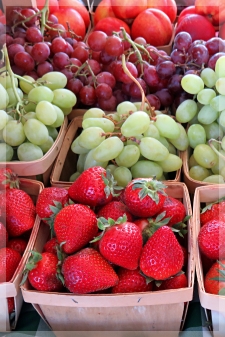
When Paul spoke of this fruit, we know it’s not going to be found in any farmer’s market. Fruit can be seen, touched, and tasted; it contains vitamins, minerals, and fiber beneficial to our well-being. Rather than nutrients essential to our health, the Fruit of the Spirit contains virtues essential for our spiritual health. Although it can’t be touched, tasted, or seen, the positive effects of the Spirit’s fruit are visible to the world around us.
The Holy Spirit plants this one beautiful fruit in our hearts. We could call it the “love-joy-peace-patience-kindness-goodness-faithfulness-gentleness-self-control fruit,” but that seems rather cumbersome. Because the characteristics of this fruit describe our Savior, perhaps a better name would be the “Christlikeness fruit.” These nine virtues could be said to summarize the attributes of a person living in accord with the Holy Spirit. Rather than following guidelines or obeying laws, it is the presence of the Fruit of the Spirit in our hearts that enables us to become like more and more like Jesus in our daily walk.
 Spiritual gifts build God’s Kingdom in a variety of ways including teaching, outreach, speaking, counseling, discipleship, serving, practical assistance, visitation, and prayer. Our gifts were given for the common good of Christ’s church and we need one another’s gifts for the body of Christ to function. Within the church, some gifts, like shepherding, evangelism, or leadership, are easily noticed while others, such as mercy, giving, intercession, and faith may be less obvious. While those gifted in service (the ability to see undone tasks in God’s work and get them done) often work behind the scene, the people gifted in hospitality (the ability to warmly welcome all people into home or church) are front and center Sunday mornings as they greet people by name and extend the hand of friendship to visitors.
 Jesus promised the disciples, “And I will ask the Father, and he will give you another Advocate, who will never leave you. He is the Holy Spirit, who leads into all truth.” [John 14:16-17] In fulfillment of that promise, the moment we accept Christ as our Savior, the Holy Spirit moves into our hearts. When He arrives, He helps us but, rather than making the bed or washing dishes, the Spirit comforts, counsels, and convicts us. He gives us the power to share His word, the strength to do His work, and confidence in the fullness of God’s promises.
 Jesus told several parables regarding the day of His return. The Parable of the Ten Bridesmaids stresses being ready before that day occurs and the Parable of the Sheep and Goats describes the separation of obedient followers from unbelievers and pretenders in the final judgment. It is between those two that we find the Parable of the Talents about serving our Master until the day of His return.
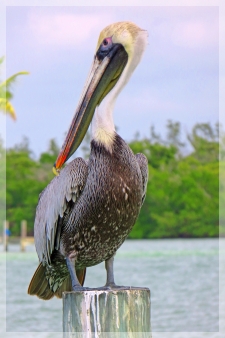 The patient Cormorant had been diving and resurfacing empty-beaked for several minutes before finally emerging victorious with a large fish crosswise in its beak. The fish thrashed in the cormorant’s beak while the bird tried to re-position its meal so it could be swallowed head first. A Brown Pelican suddenly crashed into the water and, after a great deal of wing flapping and water splashing, it was clear the Cormorant was no match for the larger bird. While the Pelican threw back its head and swallowed the unlucky fish, the unfortunate cormorant swam away still hungry.
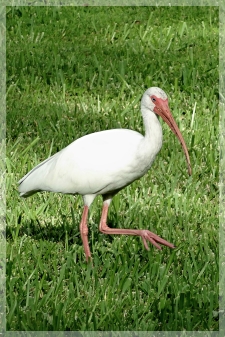 A century of dike-building, agricultural development, and population growth has destroyed much of Florida’s wetlands and threatened the survival of dozens of animals like Florida panthers, Snail Kites, and Wood Storks. The White Ibis, however, is an exception. Having adapted to the new urban landscape, large groups of ibis happily graze the lawns of subdivisions, parks, and golf courses. They’ve found it easier to poke at the soil for a predictable buffet of grubs, earthworms, and insects than to forage in the remaining wetlands for aquatic prey like small fish, frogs, and crayfish. Once wary of humans, these urbanized ibis pay little or no attention to people as they follow one another across our lawns.
 Devotions of the Heart