
But if you refuse to listen to the Lord your God and do not obey all the commands and decrees I am giving you today, all these curses will come and overwhelm you… The Lord himself will send on you curses, confusion, and frustration in everything you do, until at last you are completely destroyed for doing evil and abandoning me. [Deuteronomy 28:15,20 (NLT)]
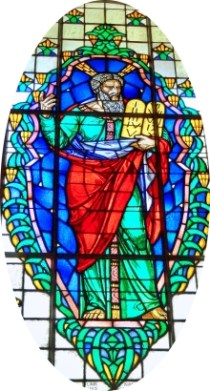 There are 613 commandments in the Torah/Pentateuch (the first five books of the Bible). But, as seen in Jesus’ interaction with the lawyer who wanted “neighbor” defined, there was room for interpretation. For example, what exactly does it mean to “honor” one’s parents? When Deuteronomy 11:18-20 says to bind “these words” to one’s hands and forehead and place them on doorposts and gates, exactly what words and how was it to be done? Work on the Sabbath is prohibited in twelve places but is the command limited to the few types of work mentioned? For that matter, what defines work?
Jesus criticized the Pharisees over their pettiness regarding the law but it’s easy to see how the system of laws governing Jewish life became so complex. After listing the blessings for obedience to God in Deuteronomy, Moses laid out the many curses for disobedience. Those curses include everything from wasting diseases, plagues, drought, boils, military defeat, and scorching heat to becoming food for scavenging birds, madness, swarms of insects, starvation, oppression, and exile. Moses painted a graphic and gruesome picture when warning the people to obey all the words of the law.
Since people will use any possible excuse to break a rule, it’s easy to see how fear of punishment led to Jewish legalism—especially in the Second Temple period when the Jews returned to Judah from Babylon. Having seen Jerusalem’s rubble and the Temple’s ruins, religious leaders knew firsthand the steep price Israel paid for their disobedience. Fearful of punishment and striving for absolute obedience, they wanted to cover every eventuality by putting a “fence around the Torah” with the Oral Law.
To clarify honoring and reverencing one’s parents, the oral law obligated children to care for their parents’ needs and prohibited things like sitting or standing in their place, contradicting them, or calling them by their first names. As for the binding and posting of words, the oral law specified tefillin (phylacteries), mezuzahs, and the verses that were to be placed in them. Rather than simplifying obedience, however, they complicated it with several thousand laws governing everything from the text, writer, pen, and ink to letter shape, parchment, and placement.
Based on the work required in building the tabernacle, 39 classes of prohibited work were specified in the Oral Law. Then, lest someone unintentionally work on the Sabbath, more rules were added. Tools used in prohibited work couldn’t be handled on the Sabbath which meant that touching things like scissors or needles was forbidden. Any action resembling prohibited work also was prohibited on the Sabbath so things like braiding hair (weaving) or separating good fruit from spoiled (winnowing/sifting) were banned. When the disciples were criticized for breaking the Sabbath by plucking off and eating some heads of grain, it was because the Pharisees considered their action the work of harvesting.
Jesus’ grievance wasn’t with the Law; it was with the Pharisees who had allowed the minutiae of the law to become more important than a relationship with the One who gave them the Law. Although the law pointed out sin, they didn’t understand that no matter how intricately it was interpreted or followed, the law never could keep people from sin. People are sinful and, try as they may, they always will fall short of perfect obedience.
As Christians, we must never make the mistake of thinking we can reach a level of perfection good enough for God; in spite of all their laws, the people of Judah couldn’t and neither can we. Jesus didn’t abolish the law—He fulfilled it! Our righteousness is attained only through faith in Him. We can’t obey God’s law on our own but, by the grace of God and the power of the Holy Spirit, we can begin to be the people He created us to be. Christians don’t obey God’s law to work our way into His good graces, to earn our way into heaven, or to avoid captivity or pestilence. We obey God out of love! If we genuinely love Him with all our being, obedience isn’t a burden because we want to do only what pleases Him.
The law tells me how crooked I am. Grace comes along and straightens me out. [D.L. Moody]
 When a nomikós (Scripture lawyer, an expert in religious law) tested Jesus by asking what he must do to inherit eternal life, the Lord countered with his own question, “What does the law say?” When the man responds with the words of Deuteronomy 6:5 and Leviticus 19:18, Jesus says he’s answered correctly. Wanting clarification, he then asks, “Who is my neighbor?” His query tells us the nomikós is more interested in the letter of the law than its spirit. Apparently, he wouldn’t want to waste any love on someone who wasn’t his neighbor or miss loving someone who was! Jesus answers the man’s question with one of his best-known stories—the Parable of the Good Samaritan.
 “Happy Easter,” said the Pastor as she welcomed us to worship. She was neither a week late nor four weeks early for Greek Orthodox Easter. While it’s no longer Easter Sunday and all the jelly beans, chocolate bunnies, and hard-boiled eggs have been eaten, it is Eastertide (“tide” just being an old-fashioned word for “season” or “time”). The Christian or liturgical calendar designates Eastertide as the fifty days from Easter/Resurrection Sunday to Pentecost (when we celebrate the outpouring of the Holy Spirit and the birth of the church).
 During Lent, I journeyed toward Jesus’ death and resurrection with a Lenten devotional. For each of the season’s forty days, there was a Scripture reading from John, a short devotional, an inspiring quote, interesting facts about Lent’s history, and a unique fast for the day. Each day’s reading also provided journaling space for the reader. For the fortieth day’s journal entry, readers were asked to write a brief letter of thanks to Jesus for all He endured to lead them into eternal life.
 Every morning, I receive an email from a Christian site to which I subscribe. Having no interest in Temu, make-up, or a “game-changer” pen for seniors, I ignore the ads as nothing more than “click bait.” Today’s ad from a jewelry company, however, caught my eye with its words, “Just in: Angel Numbers.” Having missed all the articles about them in Allure, Reader’s Digest, USA Today, Cosmopolitan, Women’s Day, Instyle, and Vogue, I didn’t know what an “angel number” was, so I Googled it. Apparently, when you see repeated digits (such as 11:11 on your clock, $9.99 on a price tag, 30303 on a license plate, or a date like 2/22/22), the universe is sending you a message! Rather than a coincidence, these repetitive numbers are a “sign from your guardian angel” (or a dead loved one). Supposedly, the “language of angels,” such numbers are meant to point you in a certain direction or confirm the direction in which you’re going! Of course, a host of psychics, spiritual mediums, and numerologists are more than willing to tell you the meaning of your “angel numbers.” And, as I discovered from the ad, once you find your number, you can purchase it in jewelry!
 Most of us probably spent Saturday preparing for Easter. We may have done last minute grocery shopping, prepped for Easter dinner, purchased an Easter lily, decorated eggs, assembled Easter baskets, snacked on jelly beans, or hidden plastic eggs around the yard. The previous day’s service on Good Friday had been a somber one but we knew the following day’s worship would be one of joy and celebration. While we may have sung “Were you There When They Crucified My Lord?” on Friday, we knew that we’d be singing “Christ the Lord is Risen Today” on Sunday.
 Devotions of the Heart