
For everything there is a season, a time for every activity under heaven. A time to be born and a time to die. A time to plant and a time to harvest. A time to kill and a time to heal. A time to tear down and a time to build up. A time to cry and a time to laugh. A time to grieve and a time to dance. [Ecclesiastes 3:1-4 (NLT)]
 We enjoy walking in the local Botanical Garden as well as the nearby Corkscrew Swamp. Although both offer plenty of photo ops and pleasant strolls in God’s creation, the Garden offers more color and variety than a swamp any day. Nevertheless, as much as I enjoy the Garden’s beauty and serenity, I feel more at home in the swamp.
While the Botanical Garden always has an abundance of showy colorful orchids, the swamp’s “super ghost orchid” has blossoms for only a few weeks each year. Even then, you need binoculars or a spotting scope to view its delicate (and not very impressive) flowers. At various times of the year, the swamp has wildflowers like blue flag iris, morning glories, and string lilies but they pale in comparison to the variety of exotic flora found in the Garden all year long. If the swamp’s flowers were in a beauty contest with the Garden’s flamboyant blooms like the passion flower or flaming glory bower, they’d easily lose.
Carefully designed by world-famous landscape architects and impeccably maintained by staff and volunteers, the Botanical Garden speaks of order, design, and perfection; nothing ever seems amiss. The Garden’s plants are beautifully pruned, fertilized, and fussed over. Weeds are quickly pulled and, should a plant wither or die, a lovely new one quickly replaces it.
In contrast, the swamp, with no apparent plan to its layout or plants, is a hodgepodge of flora, fauna, and water that changes almost daily. Completely dependent on rain for its existence, its animals and plants are left to the whims of the weather and Mother Nature. No one pulls the weeds, deadheads the flowers, shapes the trees, or brushes away dead leaves. Lightening and hurricanes take a heavy toll on the swamp’s plant life and, when conditions aren’t favorable, plants wither and die while animals move elsewhere. Dead trees eventually fall and, unless they’re blocking the trail, wherever they land is where they remain.
Try as I might, my life will never have the exquisite perfection of a Botanical Garden. In truth, it resembles the unpredictable and disordered swamp more than any garden. Perhaps, that’s why I enjoy it so much. The swamp is imperfect, changeable, and full of surprises. I never know what flowers will be in bloom, what birds will appear, or if I’ll see alligators, snakes, raccoons, or deer. The only thing I know for sure is that the swamp never disappoints; it always is wonderful and wild in its own unique way!
Life, like the swamp, is chaotic, disorganized, and a little dangerous; nevertheless, it is magnificent! As much as we might prefer it to be as ordered, serene, and pristine as a botanical garden, it isn’t! We’re sure to encounter life’s versions of thistles, mosquitoes, fungus, poison ivy, and animal scat. Nevertheless, along the way, there will be blessings like the swamp’s Roseate Spoonbills, sunflowers, deer, Scarlet Hibiscus, butterflies, and tiny green tree frogs! Like the swamp, we’ll have seasons of abundance and scarcity, downpours and drought, growth and dormancy, health and affliction, blessings and misfortune, beginnings and endings, and even occasional hurricanes. Life comes with its share of muck, weeds, pests, predators, storms, and vulnerability to circumstances beyond our control. The only sure thing is that God is with us during it all!
It’s ironic that our local Botanical Garden is in what used to be a swamp. The 250,000 yards of fill created after two lakes were dug in 2008 sculpted the property into the splendid showplace it is today. Someday, we will trade in our earthly swamp for God’s heavenly garden—a garden far more magnificent than any earthly garden—one with no disease, death, sorrow, pain, or weeds. Until then, we must be satisfied living in the crazy and wonderful swamp we call life. As we walk through it, we brush off the spider webs, avoid the scat on the trail, stay clear of the alligators, and look for the swamp’s gifts. Confident in the swamp’s creator, we find joy and contentment in the unique beauty of our somewhat confusing and chaotic journey. Thank you, God, for this amazing holy mess we call life!
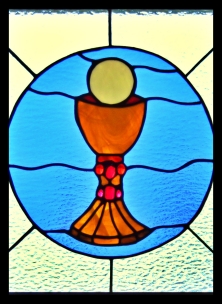 The celebration of the Lord’s Supper/Holy Communion/the Eucharist has been central to Christian worship since the early church. While Protestants think of the Eucharist as the sacrament commemorating the Last Supper with bread and wine, for Roman Catholics and some Orthodox, “Eucharist” specifically refers to the consecrated elements, especially the bread. How ever you define it, the word “eucharist” originally had nothing to do with this beautiful sacrament.
 What would you do if you were six and your father said that your mom is in the hospital because she finds it hard to be happy and “did something stupid”? That question is answered in Duncan Macmillan and Jonny Donahoe’s one-act play, Every Brilliant Thing. In their play, that boy, now a grown man, tells the audience that he made of list of everything that was “brilliant” about the world—everything worth living for—and left it on his mother’s pillow. Reflecting a six-year old’s priorities, the list included ice cream, Kung-Fu movies, laughing so hard you shoot milk out your nose, burning things, construction cranes, and “me.” Although she returns the list with its spelling corrected, the boy’s mother never comments on it. Nevertheless, he keeps adding to his list. Although his mother eventually takes her life, the narrator tells how his list took on a life of its own and eventually saved him from his own depression and suicidal thoughts.
 During that dark time about which I recently wrote, I was in intense pain and it seemed like God had turned His back on me. When I confided to a friend that God seemed deaf to my pleas, she asked the simple question, “Have you turned it over to the Lord?” I assured her I had but, as the day wore on, I wondered if that were true.
 When I first started reading the psalms, I suspected David might have been bi-polar—his highs seemed so high and his lows so very low; now I understand that he was just being truthful. In his psalms, David unabashedly expressed his deepest feelings to God. Pouring out his soul, he openly shared his emotions—whether anger, disappointment, sorrow, regret, shame, joy, love, fear, doubt, or even his desire for vengeance upon his enemies. No matter how troubled he was, David never was afraid to speak from his heart. I’m not sure we are willing to be as vulnerable and straightforward in our prayers as was David.
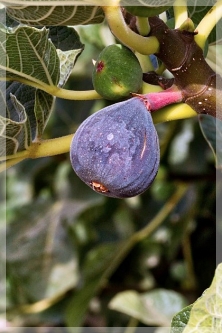 The next morning, while Jesus and the disciples walked from Bethany to Jerusalem for yet another confrontation with Judea’s religious leaders, the disciples saw the tree Jesus cursed the previous day. The disciples had witnessed Jesus cast out demons and still a storm with a just a word but, when they saw the withered and dead fig tree, they were amazed. Normally, trees die slowly from the top down but this tree instantly withered from the roots up. With dead roots, no amount of water or fertilizer would revive it. Having witnessed the tree go from abundance to ruin with just a word from the Lord, rather than asking Jesus to explain cursing the tree, the disciples focused on the speed with which the fig died.
 Devotions of the Heart