
And behold, a woman of the city, who was a sinner, when she learned that he was reclining at table in the Pharisee’s house, brought an alabaster flask of ointment, and standing behind him at his feet, weeping, she began to wet his feet with her tears and wiped them with the hair of her head and kissed his feet and anointed them with the ointment. [Luke 7:37-38 (ESV)]
 When entering someone’s home, while we might be offered some hand sanitizer or asked to remove our shoes, none of us expect the host to provide us with water to wash our feet. Back in Biblical times, however, hospitality was quite different. No one wore socks and the shoes and sandals bore little resemblance to the Nikes, Tevas, and Keens of today. Between the dusty roads and the oxen, horse, donkey and camel droppings on them, people’s feet were filthy. Foot washing was an expected sign of hospitality and a good host always offered water so a guest could wash his own feet. If the host were rich enough, his servant did the washing and, if the guests were honored enough, the host might do the washing. For example, both Abraham and Lot offered foot washing to their heavenly visitors and, before feeding them, Laban provided Abraham’s servant and men water for foot washing. On the last night of His life, Jesus took on the role of a servant and washed the feet of His disciples.
More than just a common courtesy, foot washing showed acceptance of the guest and the absence of any hostility on the part of the host. Anointing one’s guests with oil was another act of hospitality, honor, and respect. The most intimate form of greeting was an embrace and a kiss—the way way Laban greeted Jacob and Jonathon and David greeted one another. Simon the Pharisee, however, was not a gracious host and violated the customs of hospitality. Although he invited Jesus to dinner, he offered no foot washing, oil or embrace. I suspect his motive for the dinner invitation wasn’t to learn more about Jesus but rather to demean the itinerant rabbi. Even if Jesus had been a mere man, Simon’s behavior was inexcusable. Jesus, however, was the Son of God. The Messiah had come for dinner and Simon had insulted him in the most disrespectful and offensive way possible.
The Pharisee’s dinner party was disrupted by an uninvited guest—an unnamed woman who was “a sinner.” Hers must have been a notorious life since Simon knew her reputation. It was this woman, a woman with a sinful past, who washed Jesus’ feet, not with water, but with her tears. Then, in a remarkable act of both humility and intimacy, she wiped his feet with her hair, kissed them, and anointed them with her perfume.
The woman who knew she was a sinner demonstrated her love and faith in Jesus when the Pharisee, who was unwilling to recognize and admit his sinfulness, couldn’t recognize the Messiah sitting at his table. What an extraordinary contrast—the sinner who honored Jesus who was forgiven and the self-righteous Pharisee, blind to his own sins and disrespectful of Jesus, who was not.
The unnamed sinful woman performed an unselfish act of worship by pouring out her most precious possession and offering both her tears and love. Perhaps it is no mistake that her name is not recorded. Without an identity, she represents each and every one of us. When we come to Jesus as humble and repentant sinners, He will welcome us as graciously as He welcomed her and He will forgive us as generously as He forgave her.
If you could see what I once was, If you could go with me
Back to where I started from Then I know you would see.
A miracle of love that took me In its sweet embrace
And made me what I am today, Just an old sinner… saved by grace.
[Mitch Humphries, William and Gloria Gaither]
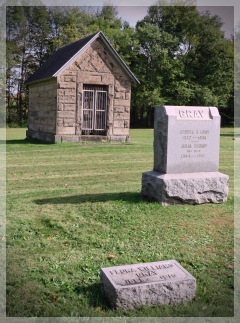 My father had what’s often described as a Type-A personality. An impatient workaholic, he always took on more than he could handle. Life, for him, was one crucial task after another, none of which anyone else could do, at least not correctly. Always in a hurry, he never wanted to stop for anything, even when his gas gauge read precariously close to empty. Something more pressing always took precedence over a brief stop for gas. As a result, his car was often left on the roadside while he trudged off with a gas can to find the nearest service station. Instead of saving time, his refusal to stop cost him time. Living that way actually cost him his life; he died of a massive coronary at the age of fifty-six. It’s often been said that your in-box still will be full when you die and, indeed, his was. None of us can accomplish everything on our to-do list and we may well destroy both our relationships and ourselves while trying.
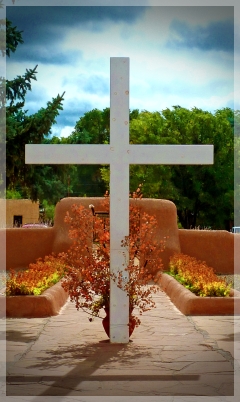 Yesterday, I wrote about Job’s lamentation. 19th century bible scholar George Granville Bradley said this about Job 3: “Where in the world will you find a sadder strain of more hopeless, uncontrolled, and unbroken lamentation and mourning? … Filled to the brim, they run over with pain.” I have to agree.
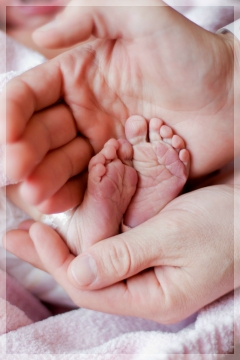 After Satan took Job’s loved ones and wealth, the grieving man remained a pillar of patience and faith. Rather than blaming God, the stoic man acknowledged God’s sovereign authority saying, “The Lord gave me what I had, and the Lord has taken it away. Praise the name of the Lord!” [1:21]
 My grandmother lived in a beautiful large house. To the left of the foyer, behind closed French doors, was an elegant room she called the “drawing room,” but it wasn’t an artist’s studio where people drew. With its grand piano, silk draperies, formal furniture, and crystal chandelier, it was a room saved for entertaining special guests. Strategically placed near the front door, guests could go directly into it without passing through the rest of the house. As splendid as the room was, I never saw anyone in it; family and close friends always gathered in the “library.”
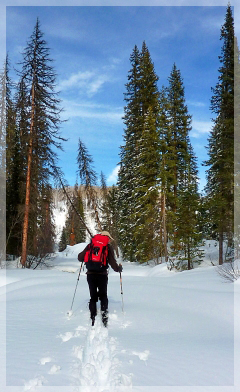 Our pastor recently did a sermon series called “Following Jesus” which reminded me of our first time backcountry skiing in Colorado more than forty years ago. As novices, we knew enough not to venture into the wilderness by ourselves so we hired Wyatt to be our guide. Insisting we delay our trek several days until we’d acclimated to the high altitude and were ready for such a trip, he gave us a long list of items we had to carry in our packs. When I asked why we needed all the survival gear along with additional food, water, and clothing, he said we had to be prepared to spend the night. Protesting that I didn’t want to spend the night out in the cold and snow, he explained, “Neither do I, but we better be prepared to do it.”
 Devotions of the Heart