
Now John wore a garment of camel’s hair, and a leather girdle around his waist; and his food was locusts and wild honey. [Matthew 3:4 (RSV)]
 Aside from Adam and Eve’s fig leaves, Scripture doesn’t tell us much about people’s attire. Both Matthew and Mark, however, specifically mention the unconventional attire of John the Baptizer—a camel’s hair garment and a leather belt around his waist. Rather than the luxurious fabric of woven camel’s hair we know today, it probably was a dressed camel’s hide. Moreover, since Scripture rarely refers to people’s diets, the mention of John eating locusts and honey is equally unusual. When the Bible’s writers veer from the norm, we should take notice and ask ourselves, “Why?”
The reason may be tied to the last words in the Hebrew Scripture, found in Malachi 4. Written more than 400 years earlier, they promised a prophet like Elijah who would proclaim the coming of the Messiah. While all four gospels tie John to Isaiah’s prophecy of a voice in the wilderness who will prepare a way for the Lord [40:3], it’s the description of John’s attire that unmistakably connects him to Malachi’s prophecy and Elijah. Like John, Elijah wore a garment of animal skin with a leather belt around his waist. Anyone familiar with the Hebrew Scriptures should have recognized that the Elijah-like prophet who would announce the coming Messiah had arrived!
It was not unusual for the prophets of old to act bizarrely and use symbolism to help convey their message. For example, at God’s command, Jeremiah wore a yoke and Isaiah walked naked and barefoot for three years. Since a diet of locusts and honey was strange, perhaps there was something symbolic about John’s food choice. From the 8th plague visited on Egypt and Moses’ warning in Deuteronomy that disobedience to the Law meant God’s discipline with locusts eating “all your trees and the fruit of your ground” [28:42] to Nahum’s warning that Nineveh’s punishment would devour them “like a locust” [3:15] and Joel’s warning that “the day of the Lord” was near and would be like an invasion of locusts,[1:4] Scripture has associated locusts with the need for repentance and God’s judgment. On the other hand, throughout Scripture we find the Promised Land frequently described as a bountiful land flowing with “milk and honey”! John’s diet reflects his combined message of judgment and blessing.
The gospels’ description of John the Baptizer are more than colorful details about an eccentric prophet. His unconventional attire and diet were as much a part of his message as were his words. Nevertheless, despite the obvious signs, when John proclaimed that Jesus was “the Chosen One of God,” [John 1:34] many turned a deaf ear and a blind eye to him. Two thousand years later, let us not make the same mistake!
Wild and lone the prophet’s voice echoes through the desert still,
calling us to make a choice, bidding us to do God’s will:
“Turn from sin and be baptized; cleanse your heart and mind and soul.
Quitting all the sins you prized, yield your life to God’s control.”
[Carl P. Daw]
 Occasionally, I’ll spot a partially open moonflower (Ipomoea alba) during an early morning walk at the park. While the Moonflower’s cousin the Morning Glory opens wide to welcome the sunlight, the Moonflower prefers darkness. It’s only when the sun sets that it opens to a large trumpet-shaped bloom. Rather than competing during the day with brightly colored flowers for pollinators like bees and butterflies, Moonflowers enjoy pollinators like bats and moths at night. As the morning sun rises, the Moonflower again rejects the light and rolls up into itself.
 When his life turned from riches to rags and all he loved and possessed (along with his health) was taken from him, Job’s friends came and silently sat with him on the ground for seven days. While this seems odd to us, it was perfectly normal in Job’s day. Seven days was the traditional mourning period and tradition held that those visiting a mourner weren’t to speak until the mourner spoke first. As it turned out, his friends’ compassionate silence was the kindest thing they did for Job. Things rapidly went downhill as soon as the three men opened their mouths!
 After Israel accepted the Lord’s Covenant, Moses returned to the base of Mt. Sinai with Aaron, Nadab, Abihu, and seventy of Israel’s elders. It was then that every one of those men gazed upon the God of Israel from afar and ate a covenant meal in His presence. Before Moses departed to climb up the mountain to receive the stone tablets, he entrusted the Israelites to Aaron and the elders who then went back to their camp. Moses, accompanied by his servant/apprentice Joshua, climbed a short way up the mountain and a cloud covered it. The two men made camp and stayed there for the next six days. On the seventh day, God called to Moses from within the cloud and the Israelites’ leader disappeared into the mist.
 Tithe means ten percent and the concept of the making a tithe is first found in Genesis. After being blessed by Melchizedek, the king of Salem and a “priest of God Most High,” Abram/Abraham gave him a tenth of all the goods he recovered from Kedorlaomer’s army after rescuing Lot. [14:20] After Jacob asked for God’s protection and provision, he pledged a tenth of his future blessings to Him. [28:22]
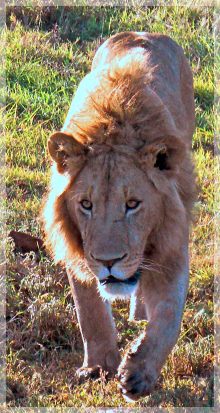 Some of the lesser-known heroes of the Bible are found in the lists of David’s mightiest men. Among his warriors, David’s mighty Three had the most authority, influence, and leadership. Their leader was Jashobeam, a man who once used his spear to kill 800 warriors in a single battle. Next in rank was Eleazar who remained with David in battle when the rest of the troops fled. He killed Philistines until he no longer could lift his sword. The third of the Three was Shammah. After being attacked in a field by the Philistines, the troops fled. Shammah alone remained to defend it and bring victory to Israel. These three were so devoted to David that, when he expressed a desire for fresh water from Bethlehem, they risked their lives to break through enemy lines to get some for him. David’s Three were among the best of the best when it came to valor, courage, and allegiance.
 Devotions of the Heart