
And don’t be concerned about what to eat and what to drink. Don’t worry about such things. These things dominate the thoughts of unbelievers all over the world, but your Father already knows your needs. Seek the Kingdom of God above all else, and he will give you everything you need. [Luke 12:29-31 (NLT)]
 In writing about keeping the main thing the main thing, I mentioned the sisters Martha and Mary. Hospitality was highly valued in Jewish life and, as the host, Martha’s character and reputation depended on how well she managed her household and served her guests. Offering hospitality to a famous teacher was a great honor and, to show her devotion to Jesus, Martha seemed determined to make the most of it by preparing a lavish feast for Him. Unlike her sister, the contemplative Mary defied the customs of her day; rather than helping in the kitchen, she took the place of a disciple and sat at Jesus’ feet
Instead of keeping her eye on the main thing—which was Jesus—Martha was distracted by all that she was doing. The word usually translated as distracted is periespato. Meaning to be drawn away, troubled, or over-burdened, this is the only time it was used in the New Testament. The King James translation of this word as “cumbered” probably is a better picture of her state of mind. It wasn’t that a distracted Martha forgot to put out cups for the wine. She was weighed down and encumbered because she’d saddled herself with things of secondary importance and lost sight of the main thing.
Not needing an elaborate banquet or a perfectly set table, Jesus told Martha not to be concerned over the details. Explaining that there only was one thing about which to be concerned, He said Mary had found it. The exact identity of that one thing, however, is unstated. We understand Jesus’ words to mean that the Kingdom of God takes precedence over anything in the house, that sitting at the master’s feet and listening to Him is more important than chores, and that the Lord has first claim on our time.
Martha often is criticized for her concern with earthly matters while Mary is praised for her concern with spiritual ones. Let’s remember, however, that Jesus never said Martha had chosen something bad—just that Mary had chosen something better. In a way, these two sisters illustrate the two approaches to the Christian life mentioned by the Apostle James: faith and works. Rather than being mutually exclusive, they are complementary. Worship should lead to service, not replace it, just as service should lead to worship. Just as Martha lost sight of being with Jesus while serving Him, we must never allow our work for Him to eclipse our relationship with Him.
Our love for and service to the Lord must be intertwined and we shouldn’t neglect the one for the other. Nevertheless, when our work for Him takes away from spending time with Him, we must choose the better thing—being with Him is more important than serving Him. Let’s keep the main thing—our relationship with Jesus—the main thing.
Everything begins with the right priorities, and right priorities begin with God. [Woodrow Kroll]
 The guest pastor shared an experience when he was an intern at a large church. Posted on the door leading into the senior pastor’s office was this quote by Stephen Covey: “The main thing is to keep the main thing the main thing.” At eye level and in large letters, anyone entering the pastor’s office was sure to see it. He’d given the sign little thought until one day, hot under the collar and ready to voice a complaint, he started to knock on his boss’s door. Seeing the sign, he paused, quietly returned to his desk, gave his complaint more thought, and asked himself if he was keeping the main thing main with his grievance.
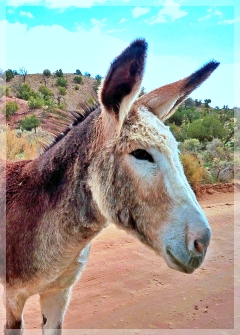 The story is told of a donkey who fell into a deep pit. Unable to get out, the animal brayed loudly until the farmer came to investigate. Seeing no way to get his donkey out of the pit, the farmer decided the only thing he could do was to put the poor animal out of its misery. Since the pit needed to be filled anyway, he got a spade and started to shovel dirt into it. When the donkey felt those first clods of dirt on his back, he lost all hope of rescue and brayed even louder. As he shook the dirt off his back, however, he discovered a growing mound of dirt beneath his feet. Seeing a possible solution, the donkey grew silent as he continued to shake dirt off his back and started tamping it down with his hooves. As the dirt piled up beneath his feet, the donkey got higher and higher in the pit. Paying no attention to the now silent animal, the farmer kept shoveling until he finally stopped for a rest. When he turned around, the man was shocked to see the donkey step out of the pit and trot away. The animal could have chosen to wallow in his misery—simply hung his head and let that dirt cover him up—but he didn’t. Instead, he took steps to change his situation.
 Days bled into weeks, weeks into months, and every day seemed the same for much of the last eighteen months. Life became a series of postponements, rebookings, cancelations, setbacks, inconveniences, letdowns, and disappointments. Visiting Grandma meant waving at her through a window, final farewells were FaceTime calls on a nurse’s cell phone, and we mourned from a distance while attending celebrations of life virtually. Weddings were postponed, family reunions put on hold, shut-downs and travel restrictions kept loved ones apart, theaters and concert halls went dark, vacations were delayed, businesses closed, jobs were lost, and junior year abroad became junior year on Zoom.
 When all the people in the synagogue heard these things, they became very angry. They got up, forced Jesus out of town, and took him to the edge of the cliff on which the town was built. They planned to throw him off the edge, but Jesus walked through the crowd and went on his way. [Luke 4:28-30 (NCV)]
 Devotions of the Heart