
Don’t be misled—you cannot mock the justice of God. You will always harvest what you plant. Those who live only to satisfy their own sinful nature will harvest decay and death from that sinful nature. But those who live to please the Spirit will harvest everlasting life from the Spirit. So let’s not get tired of doing what is good. At just the right time we will reap a harvest of blessing if we don’t give up. [Galatians 6:7-9 (NLT)]
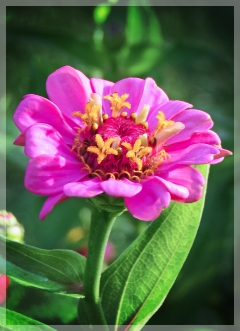 Found in Buddhism and Hinduism, the concept of karma is the idea that how you live your life now determines the quality of life you’ll have after reincarnation. Christians, however, believe that “each person is destined to die once and after that comes judgment,” [Hebrews 9:27] which means that karma, with its continual opportunities to get it right, is not compatible with Christianity. Nevertheless, the karmic idea of good and bad actions yielding similar consequences—that “what goes around comes around”—is present throughout the Bible. Because many of the Bible’s metaphors about cause and effect have to do with agriculture and farming, a pastor friend likes to call this concept “farma.”
When a seed is planted, it will produce a harvest only of that particular plant. Apple seeds only produce apples just as just as corn seeds only yield a harvest of corn. It’s much the same with people—we usually get whatever we plant in our relationships. More often than not, the seeds of kindness produce more kindness and thoughtfulness, the seeds of patience yield a harvest of patience and perseverance and, when truth is planted, the planter typically reaps truth and trust.
If, however, we plant weeds, that’s exactly what we’ll get. Just as thistle seeds won’t yield roses, seeds of rage won’t produce peace, those of confrontation won’t yield harmony, and seeds of selfishness won’t produce generosity. The harvest from seeds of deceit will probably be more lies while disloyalty reaps betrayal. We can’t sow hate and expect affection and compassion won’t bloom where callousness has been planted. When we sow discord, we should expect a harvest of conflict in return.
Good farmers and gardeners think seriously about the kind of seeds they’ll plant. They not only look for seeds that will yield a bountiful crop but also for ones that are resistant to weeds, disease and pests. Perhaps we need to spend some time every morning determining the sort of seeds we will plant in our lives and the lives of those we encounter during the day. What kind of crop do we want? What can we plant in the garden of our lives that will blossom into a bountiful harvest of good?
We plant seeds that will flower as results in our lives, so best to remove the weeds of anger, avarice, envy and doubt, that peace and abundance may manifest for all. [Dorothy Day]
My experience shows that those who plant trouble and cultivate evil will harvest the same. [Job 4:8 (NLT)]
Plant the good seeds of righteousness, and you will harvest a crop of love. [Hosea 10:12 (NLT)]
Copyright ©2021 jsjdevotions. All rights reserved.

 Back in the ‘70s, comedian Flip Wilson coined the phrase, “The devil made me do it!” Actually, Wilson really can’t be credited with its origin. Eve used pretty much the same excuse when she blamed the serpent back in Eden and Adam kept the ball rolling when he blamed Eve! Instead of the devil, Aaron blamed the people for the golden calf, Moses blamed the Israelites for his failure to enter Canaan, and Saul blamed his soldiers for his refusal to follow God’s command. Of course, they all were wrong. The responsibility for all of our actions falls solely on us and yet, like them, we’d prefer blaming our missteps on someone or something else.
 When friends moved into an apartment in a brand-new senior living community, I asked the wife how she liked it. While she liked their new home, she admitted being tired of meeting new people—and everybody there was new to the community! She then confided that it wasn’t the new people that exhausted her; it was having to listen to her husband tell their latest acquaintances the same old stories she’s heard him recite for the last thirty plus years! As nice as he is, I’m not sure I could have lasted three years, let alone three decades, with her loquacious husband. We’ve vacationed with this couple and her husband is best taken in small doses!
 In a sermon, J.C. Ryle (1816-1900) called Matthew 5:38-48 “our Lord Jesus Christ’s rules for our conduct towards one another.” The Anglican bishop added, “They deserve to be written in letters of gold: they have extorted praise even from the enemies of Christianity. Let us mark well what they contain. The Lord Jesus forbids everything like an unforgiving and revengeful spirit.” Indeed, these ten verses describe a Christian as he or she is meant to be (which explains why I’ve spent the last three days writing about them).
 When Paul addressed a Christian’s relationship with his enemies, he said never to return evil for evil and to act honorably so we don’t reflect badly on the Gospel. Paul qualified his direction to live in peace with all by adding, “if possible, so far as it depends on you.” While some people don’t want to live in peace, as Christians, we must refuse to instigate, escalate, or participate in conflict. Since peace-loving people who won’t return evil with more of the same tend to be the sort of people who are taken advantage of, Paul then addresses the issue of revenge. Quoting Deuteronomy 32:25, he makes it clear that we are not to retaliate; vengeance is solely God’s department, not ours.
 Devotions of the Heart