
Give your burdens to the Lord, and he will take care of you. He will not permit the godly to slip and fall. [Psalm 55:22 (NLT)]
 The Valley of Vision is a collection of Puritan prayers spanning from the sixteenth through the late nineteenth centuries. Having grown up with the King James Bible, its antiquated thees and thous along with verbs forms like wilt, didst, and makest don’t bother me. Their formality actually adds to the beauty and charm of the prayers. Although context usually explained outdated words like nethermost, subserve, and extenuations, I had to look up a few new words like peradventure.
Although I’d never seen the word carking, I immediately knew what the author meant when writing, “Deliver me from carking care…” Sounding like a crow’s unpleasant cry, the phrase “carking care” sounds as disagreeable as what it describes: oppressive worry!
The word cark comes from the Old North French carkier (to load, burden) from the Late Latin carcare (to load a wagon or cart). Carcare is also the source of the word cargo. In English, carking literally means putting on a load or burden and carking cares are concerns that have become burdensome. It’s as if we’ve loaded all of our worries into a wagon and are carting around that troubling cargo. Although we grow weary of the heavy burden, we continue carrying it in our hearts and souls.
Right now, I imagine we all have some major concerns. We fret about children who have missed out on school and family members who must fly, care for the sick, or meet the public in their jobs. We’re in another unpleasant season of politics and the media is filled with incidents of mask rage, protests, civil unrest, and financial woes. If we’re not out of work, we have friends or family who are. Loved ones remain isolated in retirement and nursing homes, bills are piling up, supply chains are broken, businesses are closing, and some people still haven’t gotten their unemployment checks. Vacations, weddings, reunions and even memorial services have been put on indefinite hold, no one knows how schools will function safely, and the COVID dashboards seem to have nothing but bad news. Here in Florida, with hurricane season upon us, we also have the dubious honor of being called the “epicenter” of the latest coronavirus surge. We find ourselves weighing the risks before having a repair man in the house, getting carry-out, or venturing out to the beach or grocery. We’re moving into our fifth month of this pandemic and, with no end in sight, people everywhere are feeling assaulted on all sides. Regardless of their faith, I doubt that anyone feels completely free of cares.
Living in a fallen world, we always will have troubles and concerns. The good news is that they don’t have to be carking ones—we don’t have to carry that cart of cares because God will carry them for us. For that to happen, however, we have to unload our wagon of cares and give them to God through prayer. John Calvin wrote of believers relieving “themselves of their anxieties by pouring them into his bosom…that they may declare that from him alone they hope and expect, both for themselves and for others, all good things.” As we pour our concerns into God’s bosom, let us join with the anonymous writer in his prayer: “Deliver me from carking care, and make me a happy holy person….Teach me to laud, adore, and magnify thee, with the music of heaven, And make me a perfume of praiseful gratitude to thee.”
Perhaps what our Father would have us learn is that worry is not for Him to take away, but for us to give up. [Kathy Herman]

 It’s been five years since I’ve skied but I still remember that the three scariest words I ever heard when on the slopes were, “Follow me, Nonnie!” My grands loved to venture off the groomed runs into the bumps and through the woods. On my own, I never would have chosen to leave the main trail but, because I loved those little guys, I faithfully followed behind as they maneuvered between the trees and over the moguls.
 I know I’m not invulnerable but I never thought of myself as particularly vulnerable until now. Since I am well over 65, I am officially vulnerable to COVID-19, as is my husband; that knowledge, along with the terrible toll being taken by this pandemic, has put me on edge. Knowing that it is just a matter of time before someone I love is taken down by this virus has unnerved me. That my prayer list is lengthening by the day doesn’t make it any easier. Before this, I rarely had been apprehensive about my health or that of my family, uneasy about our finances, or concerned about the family business. I’ve endured my share of trials, sorrow, illness, and uncertainty but this combination of circumstances is the “perfect storm” that has shaken me to my core.
 Jairus, the leader of the local synagogue, fell at Jesus’ feet. Telling Jesus his daughter was dying, Jairus begged Him to lay hands on her so she could be healed. Jesus went with him but, when He stopped to heal the woman with a blood disorder, news arrived that the girl was dead. Telling the distraught father not to be afraid and to keep believing, Jesus and Jairus continued on their way. Jairus had believed Jesus could heal his daughter; did he also believe Jesus could do something about her death?
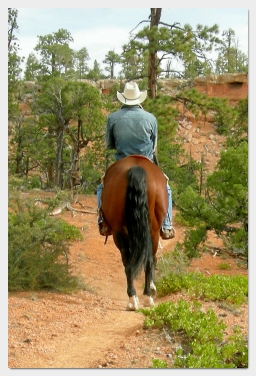 In A Gentle Thunder, author Max Lucado compares the hero of the Bible, the shepherd, with the hero of the American west, the cowboy. They both herd livestock, their home is the range, and they sleep under the stars. The difference, says Lucado, is that the shepherd knows and loves his sheep because he leads them to be shorn. The cowboy, however, doesn’t get attached to his cattle because he’s leading them to slaughter! While several cowboys drive a herd of cattle and know one another’s names, just one shepherd leads a flock of sheep and it is their names that he knows!
 Devotions of the Heart