
The Lord will give [unyielding and impenetrable] strength to His people; The Lord will bless His people with peace. [Psalm 29:11 (AMP)]
 I have a small wooden box on my desk—my “God box.” It’s where I literally give my concerns to God; right now there are three items in it. The first is a photograph of a little girl. It is my grand, a sweet child with three congenital heart defects—none of which is going to disappear and all of which promise more trouble in the future. She also has learning issues—none of which will dissipate and all of which will cause more difficulty as she progresses into higher grades. The second item is a medallion from a sobriety program. It represents several people I love who have battled alcoholism or addiction—a battle they will continue to fight daily for the rest of their lives. The third item is a laminated card on which is written Reinhold Niebuhr’s Serenity Prayer. That one is for me.
I tend to be a fixer and once believed that, if I prayed hard enough and searched long enough, there was a solution for every problem. Surely, if something was wrong, it could be corrected. I’ve now accepted that not everything is fixable. There is no way anyone can fix my grand. Granted, she regularly works with a tutor, has an excellent cardiologist, and will be having more surgery. Her problems can be helped but they won’t disappear. My prayer for her is no longer one of miraculous healing; it is one of thanks and praise for a one-of-a-kind child. It’s not a prayer for change but rather a prayer for a joy-filled life and success within her limitations. As to the sobriety of those I love, their problem has never been mine to fix—their sobriety is their task, not mine. My prayers for them are for success in their challenging daily journey. As to the Serenity Prayer, that’s my challenge—to have strength enough to repair that which can be corrected, peace enough to accept that which can’t be altered, and wisdom enough to know and accept the difference. God never promised life would be easy; He did, however, promise His peace.
Thinking that every difficulty has a solution, we give God our problems (and the problems of others) and ask Him to solve them. Not everything that is broken will be repaired, not every disease will be cured, not every puzzle will be solved and not every problem can be resolved, nor are they even meant to be. Not everyone in Israel was healed as Jesus walked the streets and the “thorn” in Paul’s flesh never left him. Some situations are unfixable and must be accepted. As Niebuhr did in his prayer, we must pray for the wisdom to know the difference between what can be changed and what can’t. Then, of course, we need to pray for peace, acceptance and coping skills. Instead of fixing the problem, we need God to fix us.
God grant me the serenity to accept the things I cannot change; courage to change the things I can; and wisdom to know the difference. Living one day at a time; enjoying one moment at a time; accepting hardships as the pathway to peace; taking, as He did, this sinful world as it is, not as I would have it; trusting that He will make all things right if I surrender to His Will; that I may be reasonably happy in this life and supremely happy with Him forever in the next. Amen.
 Last Friday, a crazed young man attacked a Munich shopping mall and ten were left dead. A few days earlier, an ax-wielding teen on a rampage hacked at passengers on a German train and, less than two weeks ago, 84 people died in Nice, France, after a terrorist plowed a truck into a crowd of Bastille Day celebrants. My 16-year old granddaughter has been living in Germany the last three weeks and my first reaction to these horrendous incidents was to get her home so she could be safe here with us. Unfortunately, she would be no safer here than there. I’m sure families thought their loved ones were safe last month in that Orlando nightclub where 50 were killed and another 53 injured or when they walked into their classroom at Umpqua Community College last October and nine were carried out on stretchers while another nine were carried out in body bags. Parishioners had no reason to fear when attending a prayer meeting in Charleston last year until a man opened fire and killed nine of them. While writing this devotion, news just broke of bombings in Kabul, Afghanistan, that left 80 dead and 231 wounded. Mass acts of hate and terror are becoming ever more frequent and it both alarms and sickens me that these horrific events are beginning to seem commonplace to us.
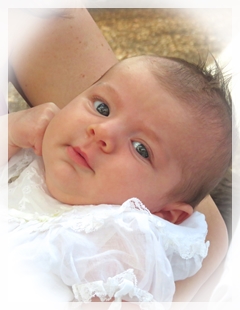 Like all children, my grands are growing up and new challenges face them every day. The eldest is now driving and old enough to date. Come fall, she’ll be looking at colleges, two others will start junior high school, one enters kindergarten and the youngest is off to nursery school. Where did the time go?
 Yesterday, I wrote about unfounded fears. Although I’m a bit of a nervous flyer, I’d rather travel than stay home, so I pray and fly. While I’m a little nervous about heights, I’d rather ride than hike up the mountain, so I pray and ride the lifts. Since my little Ziggy-like guy can easily capture my irrational fears, they rarely plague me. It’s not fear of external things like plane crashes or gondola accidents, however, that disturb me. Instead, it’s the fear that happens when I focus on me instead of God. Will I be wounded, bothered, abandoned or tested? What if I don’t succeed, reach my goal, or make a good impression? Will I be welcome? What if I make a mistake?
 Bad things happen, unforeseen events occur, and every one of us will eventually become a fatality statistic of some kind. A certain amount of fear or caution is wise in our unpredictable world. Most of us, however, are rather selective in our fears. We obsess over things about which we have little or no control and ignore those things over which we do. We don’t want to give up control to the pilot when the odds of dying in a plane crash are 1 in 11 million but trust our driving when the odds of a fatal car crash are 1 in 5 thousand! While we are far more likely to die of heart disease (1 in 6), we tend to obsess about things like dying in a terrorist attack (1 in 20 million). In actuality, we are fourteen times more likely to die in our bathtubs and twenty-five times more likely to die by choking on our food than in a terrorist attack, but we prefer not to think about that while bathing or eating.
 Devotions of the Heart