

Stay in control of yourselves; stay awake. Your enemy, the devil, is stalking around like a roaring lion, looking for someone to devour. [1 Peter 5:8 (NTE)]
When we took a photo safari in Tanzania several years ago, bathrooms were in short supply and the gentlemen occasionally would step out of the Land Rovers to “check the tires.” The guides, however, always cautiously chose the “tire-checking” locations and only stopped in the middle of the road in open areas. While there was little privacy, predators had no place in which to hide and any that approached could be seen from a distance. After all, no one wanted to be surprised by a lion while answering nature’s call. Since Satan sometimes skulks around like a hungry lion, it is wise to remember the guides’ advice: never linger where lions (or other predators) may be lurking.
Satan, however, isn’t always as obvious as a prowling lion. Sometimes, he’s more like a snake hidden in the grass waiting for us to approach. Since deceit is the most powerful weapon in his arsenal, we can be sure he won’t be wearing a sign that says, “Danger – Don’t touch!” In fact, unlike a lion or snake, he may look innocent and rather appealing, like the harmless looking caterpillar I saw while walking in the swamp. Bearing a slight resemblance to a piece of novelty or “eyelash” yarn, it was a pretty little creepy-crawly with delicate tufts of hair. Looking so soft, I was tempted to lightly bush my finger over it. Fortunately, I’d just seen a sign warning of poisonous caterpillars and, suspecting that little guy was not as innocent as it seemed, I kept my hands to myself. The cute critter tuned out to be a tussock moth caterpillar and even a light touch of its soft looking bristles will feel like being pricked by fiberglass! In fact, some species can leave a persistent and painful rash.
We must never forget that Satan is cunning, powerful, resourceful and persistent. Sometimes, like a hungry lion, he actively hunts and we can see him coming from a distance. On the other hand, like a poison caterpillar that looks inviting and innocent, he sometimes lays in wait for us where we’d least expect to find trouble. Either way, we need to be constantly alert. While it may announce itself with a roar, more often than not, temptation looks as harmless as a fuzzy caterpillar. Don’t venture too close!
There is a precipice near every man’s foot, and a snare in every man’s path. … There is a lure for every bird, a bait for every fish. … Watch constantly against those things which are thought to be no temptations. The most poisonous serpents are found where the sweetest flowers grow. [Charles Spurgeon]
 With the back-to-back hurricanes that tore through Louisiana, two others that devastated Nicaragua and Honduras, and the consecutive typhoons that flooded the Philippines, a great many people must be asking, “Why us, Lord?” In spite of the meteorological explanations for the paths taken by those storms, there is something discomforting about the seeming randomness of such destruction. I can’t help but wonder, “Why them and not us?” In a universe of retribution and reward, we’d have a sense of being able to control our destiny; only bad things would happen to bad people and only good things to the good ones. If we did all the right things, life would go smoothly and, if we didn’t, we’d just be getting what we deserved! That, however, is not the way of the world and back-to-back hurricanes along with cancer, ALS, hit-and-run-drivers, stray bullets, and tornadoes hit both the deserving and undeserving.
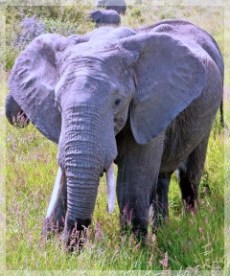 The story is told of four blind men who, while walking together, collided with an elephant. The one who bumped into the elephant’s trunk concluded they’d run into a giant hose. The second man, feeling the elephant’s huge ear, disagreed and said it was an enormous fan. As he pulled on the tail, the third man assumed that it was a heavy rope. The fourth blind man, feeling the thick leg, pronounced them all to be wrong and declared they’d encountered a tree. Because none of them felt the entire animal, all of them were incorrect.
 Do you think you can explain the mystery of God? Do you think you can diagram God Almighty? God is far higher than you can imagine, far deeper than you can comprehend, Stretching farther than earth’s horizons, far wider than the endless ocean. [Job 11:7-9 (MSG)]
 Proverbs 31 is said to have been written by King Lemuel. We only know that Lemuel was “the king of Massa,” possibly an Arab king, his name means “devoted to God,” and his words were written somewhere between the tenth and sixth centuries BC. Attributing his words to counsel from his mother, the first nine verses sound like the sort of thing a queen-mother would tell son about government and the dangers of wine and bad women. Verses 10 through 31, however, are an acrostic poem outlining the qualities of the ideal wife.
 Devotions of the Heart