
I love you, Lord; you are my strength. The Lord is my rock, my fortress, and my savior; my God is my rock, in whom I find protection. He is my shield, the power that saves me, and my place of safety. I called on the Lord, who is worthy of praise, and he saved me from my enemies. [Psalm 18:1-3 (NLT)]
Back when parks were open and the world seemed a safer place, we witnessed a parent’s nightmare. While the father was changing his toddler’s diaper, his four-year old daughter wandered away and disappeared in the zoo! We saw him frantically asking people, “Did you see a little girl in a pink bike helmet?” As he went racing down the path toward the alligators and lions, we went toward the lemurs and play area. Fortunately that pink helmet made her easy to spot as she stood watching the black bears lumber through their enclosure. While walking her back to her father, I said a prayer of thanksgiving that she would return safely home that day.
I thought of that anxious father the following day when reading Pearls Before Swine, a comic drawn by Stephan Pastis. Goat was extending sympathy to Pig for his grandma’s death when Pig carried him off. In the next few frames, Pig carted off his friends Duck and Cat. All of Pig’s friends were stuffed in a box labeled “Bad things stay away!” A sign above them read, “SAFE PLACE WHERE I CAN KEEP AN EYE ON EVERYONE I LOVE SO NOTHING BAD CAN HAPPEN TO THEM.” In the last frame, Goat tried to explain that life doesn’t work that way but Pig said, “Don’t distract me. I’m standing guard.”
Like Pig, I wish I could keep bad things from happening to those I love. Of course, if parents and grandparents could, we’d erect a wall of protection around our loved ones to shield them, not just from death, but also from pandemics, heartache, injury, disappointment, and pain.
It would be a miracle if the worst that happens to that little girl is getting lost at the zoo. While her pink bike helmet may protect her when she falls off her trike, it’s of little use elsewhere! We live in a fallen world: a world with disease, defiance, pain, sorrow, falseness, mistakes, greed, betrayal, loss, violence, malice, and death. Chances are that our children and grands will wander further astray than to the bears’ enclosure at the local zoo.
We protect our gates, are cautious of what we allow into our homes, wear masks, sanitize, wash our hands, and stay alert to the dangers around us but what about when our loved ones leave home to lead their own lives? Unlike Pig, we can’t stuff those we love in a box and stand guard over them night and day. Instead, we teach, encourage, warn, guide, lead, love, discipline, forgive, pray, equip them, and then let them go. Although we provide them with God’s armor, we can’t make them accept or wear it. Sadly, there is no fool-proof way to protect our loved ones from Columbines or Sandy Hooks any more than we can from pandemics, disappointment, grief, cancer, mental illness, rejection, failure, or death.
I used to ask God to be with my children and grands until I realized how silly my request was; He’s with them always! I now ask God to guard them from evil by making His presence known to them and His voice heard by them. As I pray God’s blessing of protection over my loved ones, I give them to Him, trusting that He will bring them safely home, if not in this world, then in the next!
 Death is the consequence of sin—of living in a fallen world—but Jesus promised that all believers have eternal life. In the Apostles’ Creed, we affirm our belief in this “life everlasting.” Eternal life, life in perpetuity, life forever and ever: how can that be? For centuries thousands of inventors have attempted to make a perpetual motion machine that will run indefinitely with no input of energy and have failed every time. Apparently perpetual motion violates the first and second laws of thermodynamics. If perpetual motion is an impossibility, perpetual life seems improbable, as well. It seems to violate all sorts of natural laws let alone human logic. God, however, isn’t limited by thermodynamics, any other law of nature, or human understanding; after all, He’s the author of them all!
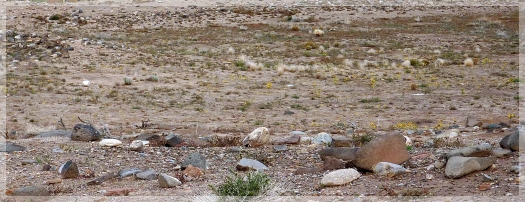 Other seed fell among rocks. It began to grow, but the plant soon wilted and died for lack of moisture. [Luke 8:6 (NLT)]
 Yesterday, I wrote about the sin of sloth, a sort of spiritual weariness; fortitude is considered its contrasting virtue. Taken captive in 605 BC and forced to trudge the 500 miles from Jerusalem to Babylon, Daniel is an example of fortitude. He lost his home, family, name, language, culture, nation, and possibly his manhood but the one thing he never lost was his faith in God. From the moment he arrived in Babylon, Daniel refused to compromise his principles by refusing to defile himself with prohibited food. Sixty-six years later, he was still determined to stay true to God. In spite of knowing he would be thrown to the lions for his actions, he ignored the law prohibiting praying to anyone but King Darius. Instead, Daniel opened his windows and, as he’d “always done,” prayed to the one true God while offering thanks and asking for God’s help. [Daniel 6:10-11]
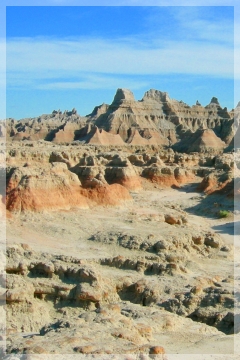 While some of us may have become couch-potatoes during his time of sheltering in place, that’s not truly the sin of sloth. Thought of as one of the seven “deadly sins,” sloth originally was two sins: acedia (meaning absence of care) and trisitia (meaning sorrow). A 4th century monk, Evagrius of Ponticus, listed them (along with gluttony, lust, greed, anger, vainglory, and pride) as the “terrible temptations” of life. Acedia and sadness were seen as particularly dangerous threats to the ascetic life of a monk living in the Egyptian desert, as was Evagrius. The monks easily could grow despondent, lonely, weary or discontented as they prayed, fasted, and labored in their harsh and isolated setting.
 Devotions of the Heart