
But Abraham said to him, “Son, remember that during your lifetime you had everything you wanted, and Lazarus had nothing. So now he is here being comforted, and you are in anguish. And besides, there is a great chasm separating us. No one can cross over to you from here, and no one can cross over to us from there.” [Luke 16:25-26 (NLT)]
 Shortly after accusing the Pharisees of being more concerned with appearing righteous than being righteous and warning them that God knew what was in their hearts, Jesus told them a story about a rich man (who probably appeared quite righteous) and a beggar named Lazarus. The leprous and destitute Lazarus sat by the rich man’s gate and begged for scraps from the man’s table while mangy dogs licked at his wounds. The rich man ignored the beggar; to him, Lazarus probably was a little more than a piece of trash to step over before entering his home. When Lazarus died, he was carried by angels to a heavenly banquet and seated in a place of honor beside Abraham. When the rich man died, however, he ended up in Hades or Sheol, the realm of the dead. The mention of “torment” and “flames” there indicates that the rich man was in what Jewish tradition called Gehinnom (a place of fire and anguish).
Upon seeing Lazarus in the distance, the rich man asked Abraham to send the beggar over with some water to ease his agony. After Abraham explained that the chasm between them couldn’t be crossed, the rich man asked him to send Lazarus back to warn the wealthy man’s brothers about his fate in the place of torment. Abraham reminded him that the warning already was in Scripture and, since his brothers had ignored Moses and the prophets, they wouldn’t be persuaded by someone who returned from the dead.
Although Jesus spoke of sons, fathers, laborers, and land owners in his other parables, this is the only parable in which He used a proper name. Because Jesus seemed to use his words purposefully, I don’t think the beggar was named Lazarus by accident. It is only later, when Jesus raises Martha and Mary’s brother Lazarus from the dead, that we understand why this is the only parable in which a character is given a name and why that specific name was chosen. Just as Jesus predicted, even when a man named Lazarus did return from the dead, the Pharisees weren’t persuaded by him. Instead, they decided to kill him!
Remembering that this is a parable rather than a literal description of the next life, there is no reason to think that those in heaven or hell can see or converse with one another. Nevertheless, there are some clear theological implications to the story. The word translated as chasm was chasma. Used just this one time in the New Testament, it means gaping hole, vacancy, or impassable interval. The next word is stérizó, meaning firmly established or solidly planted. Without a doubt, that gaping hole is an unbridgeable space and, as Abraham explained, there can be no passage between them. This parable illustrates a clear and serious reality: the coming judgment depends on the choices made in this life and it is permanent and irreversible. While we have countless opportunities to get it right while we’re on this side of the grass, let us remember that there are no second chances after death!
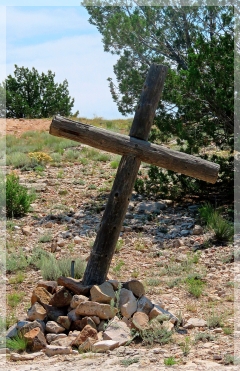 While Scripture tells us about Martha and Mary, the first mention of their brother is when his sisters sent a message to Jesus that Lazarus had taken sick. By the time Jesus returned to Bethany, Lazarus had been dead four days and placed in a tomb. After Jesus called for him to come out, the once dead man, still wrapped in his graveclothes, emerged. The next we know of Lazarus is that he was present when Martha served a dinner in Jesus’ honor. Because the testimony of those who’d witnessed his miraculous resurrection had spread like wildfire, people gathered there to see the living Lazarus and Jesus, the man who brought a dead man back to life with just a few words.
 Here I am again, with a broken ankle and wearing a knee-high air-boot for the next eight to ten weeks! We have guests visiting next Friday and, since they’re avid gardeners, we’d initially planned on taking them to the Botanic Gardens. Yesterday, I suggested a change in plans since a stroll through the gardens is beyond my walking ability. When my husband suggested pushing me in one of the garden’s wheelchairs, I began protesting until I recalled a similar situation over six years ago when my foolish pride almost prevented me from accepting the help I needed.
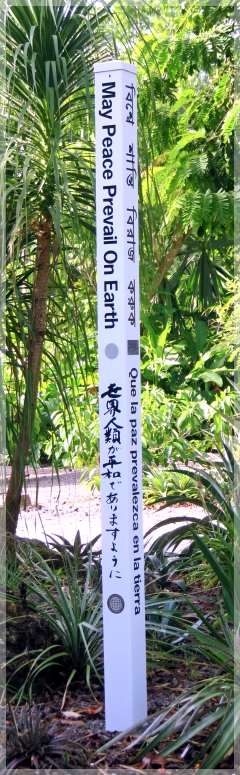 COVID kept us from the Botanic Gardens for well over a year. When we finally returned to one of our favorite places, we came upon a peace pole planted among the palms, bamboo and bromeliads. Although a similar pole is in the city park downtown, I don’t remember seeing one here when last we visited. These poles are just two of the more than 250,000 that have been erected in over 180 nations. Symbolizing the oneness of humanity, the words “May Peace Prevail on Earth” are written in eight different languages. The languages chosen for this pole were English, Arabic, Bengali, Chinese, Hawaiian, Hindi, Japanese, and Spanish—the languages of people who, like us, live at the 26th parallel north. Peace poles stand as a visual reminder to pray for peace on earth and to think, speak and act in the spirit of harmony and peace.
 While we often reap what we’ve sown, farmers don’t plant on one day and expect to harvest the next and neither should we. No matter how good the soil, it usually takes about two weeks for a corn shoot to appear and two to three months before it’s ready for harvest. Spiritual farming is even less predictable than growing corn and we shouldn’t expect immediate results after sowing seeds of God’s love and Word. Rarely does an apology yield instant reconciliation, words of correction yield an immediate change, or our first witness produce an instantaneous conversion. It often takes considerable plowing and sowing to soften a hardened heart.
 Found in Buddhism and Hinduism, the concept of karma is the idea that how you live your life now determines the quality of life you’ll have after reincarnation. Christians, however, believe that “each person is destined to die once and after that comes judgment,” [Hebrews 9:27] which means that karma, with its continual opportunities to get it right, is not compatible with Christianity. Nevertheless, the karmic idea of good and bad actions yielding similar consequences—that “what goes around comes around”—is present throughout the Bible. Because many of the Bible’s metaphors about cause and effect have to do with agriculture and farming, a pastor friend likes to call this concept “farma.”
 Devotions of the Heart