
For all have sinned and fall short of the glory of God, and are justified by his grace as a gift, through the redemption that is in Christ Jesus, whom God put forward as a propitiation by his blood, to be received by faith. This was to show God’s righteousness, because in his divine forbearance he had passed over former sins. [Romans 3:23-25 (ESV)]
 “Chocolate comes from cacao beans. Beans are vegetables. Salads are made of vegetables. Therefore, chocolate is a salad!” said the sign in the bakery. “I like their logic!” I thought. If you’ve ever tried to lose weight you probably know the loopholes used by dieters. Broken cookies have no calories because they fell out when the cookies broke, anything eaten with a diet soda is calorie-free, and food eaten off someone else’s plate doesn’t count because the original calories belong to them! Technically, anything licked off a spoon while preparing food isn’t eating; it’s cooking! Furthermore, if you’re eating with someone else, you’ve kept to your diet if the other person consumes more than you! As a once struggling dieter, I know all the excuses to justify over indulging. The worst lies are the ones we tell ourselves and, unfortunately, most of them aren’t as silly as these.
When I first learned that Christians were justified, I thought about the kinds of excuses we make to justify, validate, or defend our less than stellar behavior. Like Adam (who justified his sin by blaming Eve), we continue to justify or excuse our sins. We rationalize that it wasn’t our fault, it was harmless flirtation, we were only joking, everybody else did it, nobody was hurt by it, it really wasn’t gossip because it was true, no one warned us, or my children’s all-time favorite—the other guy started it! Since we often justify our bad behavior to avoid condemning it, the Christian term justification can be puzzling. Today, outside of the Christian church, the words “justify” and “justification” are used to excuse, defend, support, prove correct, or to vindicate one’s actions in the eyes of man or the law. While a legally justified man would be an innocent man in a court of law, justification means something else theologically.
Simply put, Christian justification is the removal and forgiveness of our sins and requires nothing more than faith in Jesus Christ. When the Apostle Paul said Christ-followers are justified, he was saying that we have been made righteous by the Lord; we’ve been cleared of all charges and any punishment related to our sins. Jesus’ cleansing us of our sins, however, is a whole lot different than our excusing or rationalizing them. When we justify, defend, rationalize, or excuse our sinful behavior, we claim to be innocent and continue to sin. On the other hand, when we are justified by Christ, there is no question of our guilt. We are acquitted, not because we are innocent, but because Jesus paid our penalty and took our punishment!
Justification, however, is not a “get out of jail free” card in the here and now. Sin’s consequences don’t disappear with God’s forgiveness and our salvation. Our justification before God does not mean that we won’t have to deal with the aftermath of our foolishness and disobedience. While we won’t face eternal consequences, we should expect to face temporal ones!
Jesus did the work regarding our justification but the rest is up to us. Justification means that we have the responsibility to live as God wants us to live. When we received forgiveness through faith, we also were sanctified and received Jesus’ righteousness. With the power of His Holy Spirit, we are to grow more and more like Christ which, among other things, means that we can no longer justify or defend our sins. We can never separate the faith needed for justification from obedience; true faith entails obedience and true obedience needs faith. We may be able to lie to ourselves (especially when in a bakery) but we better remember that we never can lie to God!
Through the death of Christ on the cross making atonement for sin, we get a perfect standing before God. That is justification, and it puts us, in God’s sight, back in Eden before sin entered. God looks upon us and treats us as if we had never sinned. [A.C. Dixon]
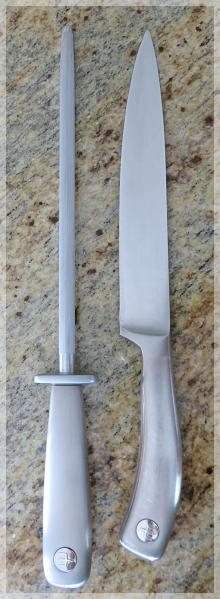 This proverb about iron sharpening iron reminds me of Sunday dinners when I was a girl. After the roast beef was placed in front of my father, he picked up the carving knife and a steel rod. With dramatic flair, he would run the knife back and forth against the steel before carving the meat. For the perfect slice of beef, he used iron to “sharpen” iron.
 Along with sins of the heart like greed, pride, coveting, anger, and envy, we have jealousy. It’s hard to make a clear distinction between jealousy and envy and, in most cases, the words can be used interchangeably. The difference seems to be that the discontent and resentment of envy is focused outward toward something we desire and the person who has it while the discontent and resentment of jealousy is focused inward toward something we have and want to keep for ourselves. For example, Rachel was envious of Leah because she had given birth to Jacob’s children but both sisters were jealous of one another whenever Jacob slept with the other one. Most often used in the context of romantic relationships and often coming from insecurity, jealousy is a mix of overwhelming possessiveness with a little paranoia on the side.
 While the Hebrew word translated as covet, chamad, can mean “take pleasure in,” it also means “ungoverned selfish desire.” Chamad ranges from wholesome delight to illicit craving. It’s not a stretch to see how taking pleasure in something that isn’t yours can lead to desiring it and wanting to acquire it. When David saw Bathsheba on the rooftop, he delighted in her beauty but that delight grew into such desire that he took what belonged to his neighbor. When Achan saw the riches that were to be set aside for God, he coveted the wealth for himself and stole it. When Elisha’s servant Gehazi saw the wealth Namaan brought to his master, he was filled with desire for what wasn’t his to take. Coveting the wealth that Elisha refused to accept, Gehazi chased after Namaan, concocted a lie, and took some of that wealth for himself.
 Just as we must not become stumbling blocks to others on their faith journey, we must be cautious of the stumbling blocks we encounter on ours. The Greek word usually translated as “stumbling block” was skandalon. It originally referred to the stick that served as the trigger for a snare trap but, eventually, scandalon developed two meanings. It was both a snare or trap that catches unsuspecting prey as well as something that trips a person and causes them to stumble and fall—in other words, a stumbling block. In both cases, the purpose of the scandalon is to catch its victim unaware!
 Having witnessed Jesus’ God-like power over nature when He walked on water, the disciples recognized Him as “the Son of God!” [Mat 14:32] Recognizing Jesus’ divinity, however, did not mean they understood He was the Messiah. While Jesus’ power to heal, multiply food, still storms, and walk on water implied a godlike nature, most 1st century Jews didn’t expect the Messiah to be divine. Expecting a righteous judge and a great political and military leader coming from the lineage of David, they assumed he would be a human being. So, when Jesus asked His disciples who people thought He was, they said John the Baptist, Elijah, Jeremiah, or another one of the prophets—godly men who performed miracles, spoke of judgment, and called the people to return to covenant faithfulness.
 Devotions of the Heart