JUST SORRY OR REPENTANT?

You do not desire a sacrifice, or I would offer one. You do not want a burnt offering. The sacrifice you desire is a broken spirit. You will not reject a broken and repentant heart, O God. [Psalm 51:16-17 (NLT)]

The fellow looked at me and apologized: “I’m sorry; I know I can be a real #@!%* at times!” I debated as to my response. While the polite thing would have been, “It’s OK, I understand,” that wouldn’t have been honest. His behavior wasn’t OK. We’re told in Proverbs 27:6 that wounds from a friend are better than an enemy’s kisses and, since he’d left the door wide open, I agreed with him. “I know you are. But you don’t have to be,” I gently added. “It’s your choice!” Apparently preferring an enemy’s kisses to my honest assessment, he shrugged his shoulders and left the room.

Although “sorry” and “repentant” often are used synonymously, they are not the same thing. My friend’s regret may have been heartfelt but repentance requires a change of heart. While sorry, he wasn’t ready to change his heart or his petulant behavior.

In John 8, we read about a woman caught in adultery. Facing a crowd ready to stone her to death, she surely regretted her behavior. After Jesus’s words caused the crowd to disperse, our Lord didn’t condemn her but He didn’t send her back to her paramour either. Clearly expecting repentance, He told her, “Go and sin no more.” [8:11] Whether or not she repented, we don’t know, but Jesus’s actions and words that day make two things clear. First, rather than wanting sinners to die, God wants them to repent and live! Second, forgiveness doesn’t mean tolerance.

Repentance has two requirements: turning from evil and turning to good. When we repent, we turn from sin to obedience, evil to good, selfishness to selflessness, deception to truth, vulgarity to civility, meanness to kindness, animosity to goodwill, dysfunction to function, and childishness to maturity. As Christians, we don’t repent because we’re afraid of fire and brimstone or that God will strike us dead. Out of our love for God, we consciously decide to become better by moving away from anything that offends Him toward something that pleases Him. The power to do that comes from the Holy Spirit.

Let us never confuse an apology, regret or even confession with repentance. It’s not enough to say, “I have sinned;” we must commit to making a change and not sinning again!

To do so no more is the truest repentance. [Martin Luther]

For the kind of sorrow God wants us to experience leads us away from sin and results in salvation. There’s no regret for that kind of sorrow. But worldly sorrow, which lacks repentance, results in spiritual death. [2 Corinthians 7: 10 (NLT)]

Prove by the way you live that you have repented of your sins and turned to God. [Matthew 3:8 (NLT)]

Copyright ©2019 jsjdevotions. All rights reserved.

BITING OFF MORE THAN WE CAN CHEW

AlligatorPride goes before destruction, and haughtiness before a fall. [Proverbs 16:18 (NLT)]
I will not endure conceit and pride. [Psalm 101:5b (NLT)]

With her uncanny sense of what it means to be part of a family, Lynn Johnston’s comic strip For Better or for Worse often hits home. In one, Elly, the weary mother, is pecking away at her typewriter. When her husband John asks why, with all of the people in her department, she seems to get everything dumped on her, El admits that it wasn’t “dumped;” she volunteered! Her thoughts in the final frame read: “Trouble with having a big mouth is…You usually bite off more than you can chew!” Truer words were never said!

Many years ago, I certainly bit off more than I could chew. School, church, community, and charity obligations began to interfere with my mothering. I was in a push to complete a major publicity campaign for a charity event when, like Elly, I sat working at the typewriter. My three small children took one look at me, intently typing, and started to cry in chorus. Shushing them, I sat them in front of the TV, and returned to my work. Those tears, however, preyed on my mind. They told me, in no uncertain terms, that I’d clearly taken on way too much. While my family’s basic needs had been met, I’d neither been truly present nor very pleasant. Following that day, I finished the obligations I already had, lessened my participation in several activities, and didn’t take on any new responsibilities until my children were older.

What is it that gives us such big mouths when it comes to taking on more than we can chew? In my case, it was an inflated ego. Sure no one could do as good a job as I would, I tried to do it all! No one else could do the publicity right, so I did it; no one else could write a good newsletter, so I did it; no one else could be as good a Brownie leader, so I did it. I foolishly thought I could do it all! It took three tearful children to remind me that only God can do it all and He’s the only one who can do it perfectly. The rest of us need to realize our limitations.

Having greatly overestimated my abilities and underestimated those of others, I was filled with pride and conceit. While the obligations I had were all good causes and worthy of my efforts, I had to understand that I wasn’t the only person who could complete God’s tasks. Pride had kept me from trusting that God would provide the qualified people necessary to do His work if He wanted it done.

The following year, I handed my publicity notebook over to someone else. Did she do it the way I would have? No. Did she miss some deadlines? Yes. Without my publicity, was the event successful? Yes; in fact, even more so! Did my various causes survive without my over-involvement? They did and it was humbling to realize that the world does quite well without me trying to run it.

Make no mistake, I’m not advocating an attitude of “Let the other guy do it.” I am, however, warning us to beware of the pride and arrogance that refuses to allow him or her to do it. Inflated egos can turn us into little gods who think we are the only ones who can write, play an instrument, lead a choir, take photographs, chair a meeting, bake, entertain, organize, teach, lead, encourage, or create. All of us have God-given talents and spiritual gifts and God rightly expects us to use them to his glory. We need to remember, however, that others also have been blessed. If you’ve bitten off more than you can chew, perhaps it’s time to let someone else use their talents and gifts.

Father, we want to serve you. Give us the wisdom to know both when and how to use our gifts in the best way possible. Guide us when we make obligations so that we never let pride or vanity make us say, “Yes,” when we should be saying, “Thank you, but no!”

Trust in the Lord with all your heart; do not depend on your own understanding. Seek his will in all you do, and he will show you which path to take. Don’t be impressed with your own wisdom. [Proverbs 3:5-7a (NLT)]

Copyright ©2019 jsjdevotions. All rights reserved.

SOMEONE’S LOOKING

The Lord is in his holy temple; the Lord sits on his throne in heaven. He sees what people do; he keeps his eye on them. [Psalm 11:4 (NCV)]

beach weddingWhen I was a little girl and got sick, my mother would dress me in a fresh pair of pajamas, tuck me into her bed, get out her hairbrush, and do my hair. “Why bother?” I’d ask, “No one is going to see me.” She’d always reply, “God sees you and you want to look your best.” I found it comforting, as I lay in bed, to know that both God and my mother were watching me.

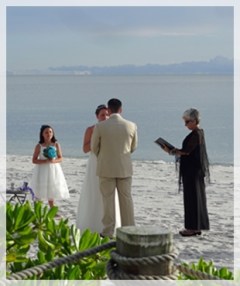
It’s not just God, however, who watches—people do, too. While enjoying dinner on the patio of a local restaurant, we observed a couple exchange wedding vows on the beach. Although here were only five people present for the ceremony, when the groom kissed the bride, the entire patio applauded in joy. The couple beamed with delight and enthusiastically waved at the sixty uninvited guests who had witnessed their nuptials.

Their joy as being observed was a contrast to another al fresco dinner many years earlier. We were seated on a porch overlooking a well-lit boat launch. Two couples were trying unsuccessfully to get their boat back onto its trailer. With one attempt, the trailer wouldn’t be back far enough but, with the next, it would be too far back. The boat would drift, the trailer tires spin, or the boat motor would quit. As the evening wore on and the boat remained in the water, the boaters’ tempers flared. That they may have enjoyed too much liquid refreshment during the day didn’t help and there were angry words, cussing and name calling. We were finishing our key lime pie when their truck successfully pulled the trailered boat out of the water. In relief, the entire dining room broke out in applause. The four looked up at us, somewhat mortified that their poor behavior had been witnessed by so many.

Unlike the wedding couple, we’re not always in our best attire and on our best behavior. Our conduct, like that of the boaters, frequently leaves much to be desired. We’re told to let our lights shine so that people will see Christ in us but we’ve been known to let our lamps get so dim that Christ is nowhere to be seen in us. Whether we’re shining or not, however, a bright light may be shining on us (as it was on the boaters)! It’s not just the eyes of God that are upon us; people observe us, as well. Are we the shining light we’re called to be?

We are indeed the light of the world—but only if our switch is turned on. [John Hagee]

In the same way, you should be a light for other people. Live so that they will see the good things you do and will praise your Father in heaven. [Matthew 5:16 (NCV)]

You are God’s children whom he loves, so try to be like him. … In the past you were full of darkness, but now you are full of light in the Lord. So live like children who belong to the light. [Ephesians 5:1,8 (NCV)]

Copyright ©2019 jsjdevotions. All rights reserved.

WHEN PUSH COMES TO SHOVE

Here’s another old saying that deserves a second look: ‘Eye for eye, tooth for tooth.’ Is that going to get us anywhere? Here’s what I propose: ‘Don’t hit back at all.’ If someone strikes you, stand there and take it. If someone drags you into court and sues for the shirt off your back, giftwrap your best coat and make a present of it. And if someone takes unfair advantage of you, use the occasion to practice the servant life. No more tit-for-tat stuff. Live generously. [Matthew 5:38-42 (MSG)]

water lilyThe billboard’s message read, “When push comes to shove, don’t!” It was sponsored by a nonprofit foundation that uses a variety of media sources to encourage positive values, good role models, and a better life. “Hard to argue with a goal like that,” I thought before discovering that some people took exception to their peaceful message. Re-tweeting it, one rock musician told his fans just to “shove harder.”
Recently, the management of our home association sent an email regarding the previous night’s annual meeting. Being out of town, we’d missed it but, apparently, pushes had come dangerously close to shoves. Because it had deteriorated into arguments, shouting and name calling, the management company found it necessary to inform the home owners that such future behavior would not be tolerated. They warned that, if it recurred, the meeting immediately would be adjourned. I was shocked that such an email was found necessary. These weren’t enemy nations or small children on a playground; neighbors and adults, they all knew better.

When we think we’re not being heard, we tend to get louder and, instead of communicating, we end up with a shouting match. Feeling a bit “holier than thou” while reading about the contentious meeting, the Spirit’s convicting voice reminded me I’m not much different. Last month, my husband took a quick trip. When dropping him off at the airport, I’d asked where he wanted to be picked up and we agreed on the lower/arrivals level. Upon his return, he called to say he was waiting at the far end of the terminal by the Jet Blue door. I parked there and waited and waited. I finally gave him a call and we both heatedly asked where the other was. Back and forth it went—him saying he was right there and me insisting he wasn’t, our voices getting just a little louder with each exchange. My husband eventually paused and asked whether I was at arrivals or departures. “Exactly where you told me: on the lower level at arrivals!” I replied. “Oh,” he quietly said, “I’ll be right there!” You guessed it; he’d been waiting upstairs. If, instead of accusing one another of being wrong, one of us had simply asked where the other was, we could have avoided a rather tense homecoming! Granted, we didn’t call one another names but, on a smaller scale, we were no different than our irate neighbors.

In today’s angry world, rather than have a civil discussion, people frequently intimidate, attack, and demonize anyone who thinks differently. What happened to being able to disagree without being disagreeable? For a civilized people, we seem to have lost all civility. Epictetus said, “We have two ears and one mouth so that we can listen twice as much as we speak.” He also said, “It is impossible for a man to learn what he thinks he already knows.” Of course, in some cases, that man (or woman) doesn’t want to learn anything that goes contrary to what he desires.

We are called to be peace makers and we do that by being humble, patient, and using our ears twice as much as we do our mouths. Not pushing back when push comes to shove doesn’t mean we lie down and allow someone to walk all over us. Not pushing back means we continue to stand, but we stand with civility, kindness, patience, and love. Another billboard sponsored by the same group says, “Always be a little kinder than necessary.” If we were, there might not be so many pushes, shoves, and angry tweets!

Post this at all the intersections, dear friends: Lead with your ears, follow up with your tongue, and let anger straggle along in the rear. God’s righteousness doesn’t grow from human anger. So throw all spoiled virtue and cancerous evil in the garbage. In simple humility, let our gardener, God, landscape you with the Word, making a salvation-garden of your life. [James 1:20-21 (MSG)]

Copyright ©2019 jsjdevotions. All rights reserved.

HATTIE’S ADVICE

Instead, be kind to each other, tenderhearted, forgiving one another, just as God through Christ has forgiven you. [Ephesians 4:32 (NLT)]

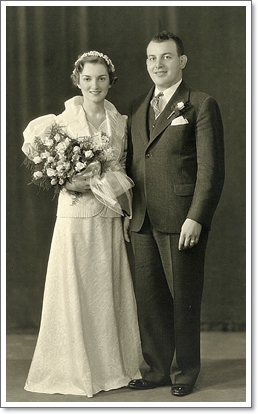
As I sorted through the papers that my mother-in-law had saved through the years, I came to a letter written to her in 1936 by her soon to be mother-in-law, Hattie. Hoping the young couple liked the mixer she’d given them, Hattie sent best wishes for a “long happy wedded life.” Wondering why such a mundane letter had been saved for 83 years, I read on. “May there be lots of love, joy and contentment in your home,” she continued, “forgiving each other as God forgives you.” Praying that my in-laws would have a long and “sweet contented life,” Hattie signed the letter “One who wishes you well in everything, Mother.”

Hattie’s prayers were answered; my in-laws were together for 68 years and, at least from my view-point, they did, indeed, live a “sweet contented” life. Could the secret to their marriage be hidden in Hattie’s advice to be forgiving? Is that why my mother-in-law had saved the letter?

I think of the story of a man who, when told by the doctor that he had an incurable case of rabies and but a few days to live, immediately got out paper and pen and started writing. When asked if he was composing his last will and testament, the man said he was making a list of everyone he wanted to bite! With an attitude like that, if the rabid man were married, I doubt that his was a happy marriage or that he lived a “sweet contented life.”

As I pondered my ability to forgive, I began to wonder how willing I was, not just to offer forgiveness, but also to ask for it. I’m not one to serve “cold shoulder and hot tongue” for dinner, give the “silent treatment,” or bring up past offenses but (and that’s a really big “but”), I also am not one who readily admits her failings. When I’ve committed the relationship sins of sharpness, impatience, pettiness, or indifference, I tend to assume forgiveness rather than apologize. Although my husband and I readily forgive one another, I think our relationship suffers if one or the other of us falls short and doesn’t admit it and apologize.

When we accept Jesus, all of our sins (past, present and future) are forgiven on a judicial or “positional” basis which means we will not suffer eternal damnation. Nevertheless, we should never take God’s forgiveness for granted or treat it as something we deserve. We must confess our sins for what could be called “relational” forgiveness in order to restore our relationship with Him.

Author and theologian Frederick Buechner calls unconfessed sins an abyss between us and God, adding that, once confessed, they become the bridge. I think Buechner’s abyss/bridge metaphor applies to our earthly relationships, as well. The prodigal’s father had already forgiven his son before the boy’s return but it was not until his son admitted the error of his ways that their relationship was restored. A certain amount of forgiveness is assumed in a family—husbands and wives forgive one another as do parents and children simply because love forgives. But, we must never take either the grace of God or the gift of forgiveness lightly.

Lord, give us forgiving and humble hearts. May we always be as willing to apologize and admit our errors as we are to accept both your forgiveness and that of others.

Few things accelerate the peace process as much as humbly admitting our own wrongdoing and asking forgiveness. [Lee Strobel]

If we claim we have no sin, we are only fooling ourselves and not living in the truth. But if we confess our sins to him, he is faithful and just to forgive us our sins and to cleanse us from all wickedness. If we claim we have not sinned, we are calling God a liar and showing that his word has no place in our hearts. [1 John 1:8-10 (NLT)]

Copyright ©2019 jsjdevotions. All rights reserved.

FREE WON’T

Live like free people, but don’t use your freedom as an excuse to do evil. Live as those who are serving God. [1 Peter 2:16 (ERV)]

red-bellied woodpecker“Get Fuzzy,” a comic strip drawn by Darby Conley, chronicles the life of Rob and his somewhat eccentric pets: Bucky Katt, a temperamental feline with “cat-attitude,” and the gentle Satchel Pooch who frequently is the butt of Bucky’s jokes and the target of his bullying. In one comic, Satchel pondered the concept of free will. “Having free will means you also have the freedom to not,” says the dog, who then resolves, “I choose to exercise free won’t and not get mad.”

In studying the human brain, neuroscientists have discovered that there is a brief instant between when the brain tells the body to get ready to act and the action itself. That nanosecond is when our mind can implement its veto power—when it truly can exercise “free won‘t”!

We are usually so busy touting all of the things we’re free to do, that it is refreshing to consider the things we’re free not to do. Unfortunately, we don’t exercise that freedom nearly enough. Eve and Adam tasted the forbidden fruit, the Israelites worshipped a golden calf, David pursued Bathsheba, Jacob stole his inheritance, Judas betrayed Jesus, and Lot’s wife took a last look. Sadly, they didn’t exercise their freedom to say “No!” Admittedly, I frequently fail at implementing my “free won’t.”

The ability to not choose a thought or action is as important as the ability to choose them. We don’t have to indulge our every notion or whim. Remembering that we can veto as easily as we can approve, all of our choices should be conscious ones—ones where we deliberately choose between will or won’t.

Unfortunately, by the end of the comic strip, Satchel, who had been sorely vexed by Bucky, exclaims that, “I’m starting to get a little free maybe-the-*@#!-I-will after all!” His frustration sounds a bit like us when we try to exercise self-control solely on our own. Fortunately, unlike Satchel, we have a secret weapon: the Holy Spirit. Through God’s power, when tempted, we can exercise the freedom to not respond and make our free will become free won’t!

So, my brothers and sisters, we must not be ruled by our sinful selves. We must not live the way our sinful selves want. If you use your lives to do what your sinful selves want, you will die spiritually. But if you use the Spirit’s help to stop doing the wrong things you do with your body, you will have true life. The true children of God are those who let God’s Spirit lead them. [Romans 8:12-14 (ERV)]

Copyright ©2018 jsjdevotions. All rights reserved.