
The thought of my suffering and homelessness is bitter beyond words. I will never forget this awful time, as I grieve over my loss. Yet I still dare to hope when I remember this: The faithful love of the Lord never ends! His mercies never cease. Great is his faithfulness; his mercies begin afresh each morning. I say to myself, “The Lord is my inheritance; therefore, I will hope in him!” [Lamentation 3:19-24 (NLT)]
 “Once, when my feet were bare, and I had not the means of obtaining shoes, I came to the chief of Kufah in a state of much dejection, and saw there a man who had no feet. I returned thanks to God and acknowledged his mercies, and endured my want of shoes with patience.” The Persian poet Sadi wrote those words in 1258 AD and his words are the source of the adage, “I was unhappy about having no shoes until I met a man who had no feet.” When unsympathetic to what I considered my children’s trivial grievances, I often uttered those words or something similar.
While praying for a husband and wife who’d lost their son to COVID-19 and couldn’t even attend his funeral because they were hospitalized with the same virus, I remembered that old maxim. Thinking of all they’d suffered, I rebuked myself for the tears I’d shed over the small things I’ve lost to this pandemic. Then I remembered a book I read about loss that spoke of the importance of not comparing grief. We are one of a kind and the way we experience emotions, whether grief, love, or joy, differs from person to person. Our unique pasts, along with our hopes, dreams and expectations for tomorrow, profoundly affect how we experience today; what distresses one person may seem but a drop in the bucket to another.
What I’d missed when unsympathetic to my children’s complaints was that their grievances were real to them at the time. While missing senior skip, picnic and award days along with cancelled prom, parties and graduation seems heartbreaking for today’s high school seniors, it’s not the end of the world; but try telling that to an eighteen-year old whose prom dress remains unworn in her closet because of COVID-19. While some people grieve not being able to attend ball games or see their new grandbaby, others grieve not being able to visit their parent in a nursing home or attend a friend’s funeral. Some couples grieve the loss of their wedding and honeymoon, others grieve the loss of their jobs or homes, and still others grieve the loss of a loved one. We may grieve things like spontaneity, travel, feeling safe in stores, family gatherings, working as a team, worshiping together, or not seeing smiles because they’re concealed by masks. As we adjust to our incredibly abnormal “new normal,” we all grieve in one way or another and the things we grieve are as different as the ways we do it. While some grieve with tears, others are stoic; some grieve with busyness, others with lethargy; and some grieve with anger while others with dark humor.
Saying, “I was unhappy about having no shoes until I met a man who had no feet!” helps remind us to appreciate the value of what we have but it fails to acknowledge our feelings. We must never compare the things we grieve or the way we do it with other people’s grief because grief is experienced at 100%, whether it’s over missing one’s senior year of high school, losing a breast to cancer, not being able to visit one’s family, or losing a child to COVID. Our feelings are ours alone and the way we handle them is as unique as our fingerprints.
Because grief of any kind is a personal journey, we should respect our grief as well as that of others, even if ours seems trivial by comparison. If you are grieving right now, your sorrow is real. Rather than berating yourself for it, accept it. It is only by experiencing our grief that we can come to terms with whatever we’ve lost and move on to our new normal, whatever that may be. We have a God who understands sorrow; after all, even though He knew He’d raise Lazarus from the dead, Jesus wept at the man’s grave. We are told that there is, “A time to cry and a time to laugh. A time to grieve and a time to dance.” [Ecclesiastes 3:4] Let us not be hesitant to do both!
You have turned my mourning into joyful dancing. You have taken away my clothes of mourning and clothed me with joy, that I might sing praises to you and not be silent. O Lord my God, I will give you thanks forever! [Psalm 30:11-12 (NLT)]
God blesses those who are poor and realize their need for him, for the Kingdom of Heaven is theirs. God blesses those who mourn, for they will be comforted. [Matthew 5:3-4 (NLT)]
Copyright ©2020 jsjdevotions. All rights reserved.
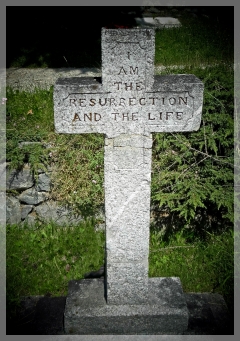
 Last fall, when New York City was a bustling and untroubled city, our family gathered there to celebrate my son’s birthday. Only staying for a few days, we rushed to do the things tourists are expected to do in the “Big Apple.” When we walked onto the grounds of the 9/11 Memorial, however, the hubbub of the city disappeared and a hush descended. People’s silent tears fell on the bronze parapets inscribed with the names of the dead that edge the memorial as they reverently looked down at the twin waterfall pools disappearing into nothingness. According to their architect, Michael Arad, the pools represent “absence made visible.” Although the water flows continually into the voids, they never can be filled. Indeed, the loss of a loved one leaves a void that cannot be filled this side of eternity.
 Today is Ash Wednesday and the beginning of the Lenten season. Marking the forty days Jesus spent fasting in the wilderness before beginning His ministry, Lent is a time many believers intentionally reflect on the life of Jesus: his ministry, sacrifice, death, and resurrection. For some Christians, today also starts a season of repentance, fasting, and self-examination.
 I’ve undertaken a series of “Abundance” exercises, the purpose of which is to take Jesus up on His promise of an abundant life. While my first assignment was to notice God’s abundance in His creation, the second was to let go of any guilt that I might be holding by asking God to forgive me (and believing that He truly has).
 While “Don’t cry over spilled milk,” isn’t one of Solomon’s proverbs, that wise advice is several centuries old. “No weeping for shed milk,” appeared in a book of English proverbs back in 1659 and some historians believe the saying dates back to medieval days. Superstitious, people left spilled food for the fairies or elves to eat and drink. If someone cried over spilled milk, it was feared that the fairies might think the offering was begrudged and bad luck would visit the house.
 Around this time of year, I frequently return to Bedford Falls and get reacquainted with the conflicted George Bailey, the money-grubbing Mr. Potter, and Angel 2nd Class, Clarence Odbody. This year’s version of It’s a Wonderful Life was somewhat different. Rather than seeing the movie, I attended a theatrical production set in a New York City radio station in the 1940s. The well-known story unfolded as if it were a live radio broadcast. Just five actors took on all of the roles (along with producing the various sound effects required for a radio show). In spite of the unusual adaptation, the production remained true to the original movie’s message.
 Devotions of the Heart