
I urge you, first of all, to pray for all people. Ask God to help them; intercede on their behalf, and give thanks for them. [1 Timothy 2:1 (NLT)]
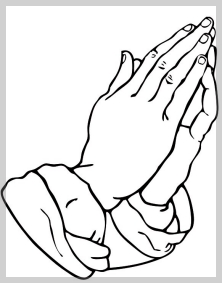 While there are no hard and fast rules about prayer except to believe in it and do it, some people use acronyms to help organize their prayers. The PRAY method stands for Praise, Repent, Ask, and Yield while the ACTS method formats prayer into Admiration (praise), Confession, Thanksgiving, and Supplication (asking God for what is needed). A TACOS prayer structure is Thanks, Adoration (or Applause), Confession, Others, and Self. Rather than an acronym, I was taught “The Hand of Prayer” as a girl. Beginning with the thumb, the order was Praise, Thanksgiving, Confession, Intercession (prayer for others), and Petition (prayer for oneself).
Regardless of how we do it, we should remember that only after we’ve put God first in our prayers, are we to pray for others and ourselves. I, for one, admit that I often speed through praise and thanks along with confession and repentance to get right to the asking. Worse, I find that my personal petitions frequently preempt and outweigh my intercessory prayers.
There is nothing wrong with praying for ourselves. In the Lord’s Prayer, we were taught to ask for our daily needs, forgiveness of sins, and deliverance from temptation. The Psalms are filled with pleas for God to intervene in the psalmists’ lives. Hannah, Jabez, David, Paul and even Jesus prayed for themselves. Praying for ourselves brings us into an intimate relationship with God and invites His blessings into our lives. The problem arises when we come to God just for those blessings without acknowledging Him or praying for others. Remembering our “God blesses” for others didn’t end with adulthood!
Before he became Pope Francis, Cardinal Bergoglio is said to have created the “Five Finger” prayer approach to help little ones remember their many “God blesses.” His method helps us remember to offer our prayers for others, as well. Because it’s nearest to the body when hands are folded in prayer, the thumb reminds us to pray for the people who are nearest and dearest—our family and friends. The index or pointing finger is a reminder to pray for those people (e.g. teachers, counselors, doctors, and pastors) who point us in the right direction. As the strongest and tallest, the middle finger is a prompt to pray for those in power and authority (even the ones with whom we disagree). Because it is the weakest digit with the least amount of dexterity, the fourth (or ring) finger reminds us to pray for the weak and powerless (e.g. the homeless, vulnerable, impoverished, and suffering). It is only when we get to the pinky that we pray for ourselves and our own needs. That little finger is a vivid reminder of how small we are in relation to God and how small our needs are in relation to the needs of others.
It is both a responsibility and a privilege to lift others’ needs to God in prayer. Abraham interceded for the people of Sodom, Job for his friends, Moses for the Israelites, the early church for the imprisoned Peter, Daniel for his captive nation, Paul for the readers of his letters, and Jesus for His disciples. John Calvin said, “To make intercession for men is the most powerful and practical way in which we can express our love for them.” When we pray with our five fingers, we have four fingers reminding us to do just that!
We are never more like Christ than in prayers of intercession. [Austin Phelps]
 While touring an historic house, the elaborately set dinner table reminded me of the large formal dinner parties we had in our younger (and more energetic) days. I’d start preparing the table in advance by adding extra leaves to the table, gathering the extra chairs, and ironing out the creases in the damask tablecloth. From the cupboard in the basement, I’d haul up the crystal salad plates, my mother’s Lenox china, and the hand-painted Bavarian service plates and Czechoslovakian dessert plates that were my grandmother’s. I’d spend hours polishing the silverware and serving pieces. The service plates were set out, the silverware laid, the crystal wine and water goblets carefully placed at each setting, and the napkins artfully folded. I’d set out the silver candlesticks, put in fresh candles, get flowers from the florist, and create what I hoped would be the perfect Martha Stewart-worthy table setting. There was plenty more work to do in the kitchen. I’d spend days perusing recipes, planning the menu, making lists, purchasing food, and preparing it all. I loved doing it because I loved the people for whom I did it. Nevertheless, as nice as my guests were and as much as they enjoyed themselves, I’m not sure they truly appreciated how much effort went into everything that on that table.
 Every evening, a man went to the local pub and ordered three beers. When asked why three, he explained that he ordered the two extra beers in honor of his two dear brothers who lived far away. One evening, when the man ordered only two beers, the bartender assumed the worst and extended sympathy for the loss of a brother. Correcting the bartender, the man said his brothers were both fit as fiddles and the beers were for them. “It’s me that’s not drinking tonight,” he explained. “You see, I’ve given up beer for Lent!”
 Whenever I asked about her boys, my sister would give a vague answer like, “They’re fine…just doing their own thing” It was several years before I learned “their own thing” meant they were breaking her mama’s heart with their mental illness, addictions, and run-ins with the law. Because she kept her pain concealed, she carried the weight of that burden alone for many years.
 During that dark time about which I recently wrote, I was in intense pain and it seemed like God had turned His back on me. When I confided to a friend that God seemed deaf to my pleas, she asked the simple question, “Have you turned it over to the Lord?” I assured her I had but, as the day wore on, I wondered if that were true.
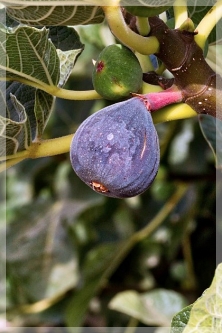 The next morning, while Jesus and the disciples walked from Bethany to Jerusalem for yet another confrontation with Judea’s religious leaders, the disciples saw the tree Jesus cursed the previous day. The disciples had witnessed Jesus cast out demons and still a storm with a just a word but, when they saw the withered and dead fig tree, they were amazed. Normally, trees die slowly from the top down but this tree instantly withered from the roots up. With dead roots, no amount of water or fertilizer would revive it. Having witnessed the tree go from abundance to ruin with just a word from the Lord, rather than asking Jesus to explain cursing the tree, the disciples focused on the speed with which the fig died.
 Devotions of the Heart