RED LIGHTS

Rejoice in our confident hope. Be patient in trouble, and keep on praying. [Romans 12:12 (NLT)]

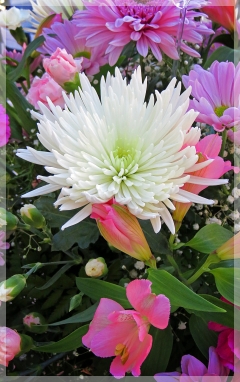
tasslefloiwerBack in his college days, my husband and several friends were on a lonely stretch of road in what seemed the middle of nowhere when they stopped for a red light. Although the average red light lasts from 90 to 120 seconds, that seemed like an eternity to the impatient driver. After looking around and seeing no other cars, he proceeded through the intersection. There was, however, one other vehicle nearby—and it was a police car! Although that driver’s impatience cost him time and money, other drivers’ impatience can take lives! A typical commuter train, for example, usually passes through an intersection in two to three minutes. But, when we lived in Illinois, at least one or two impatient drivers tried (and failed) to beat the local commuter train across the tracks every year.

Patience has been described as the quality we admire in the driver behind us but can’t stand in the driver ahead! As impatient as we are while waiting for a red light to turn green or a train to get through the crossing, I wonder at our patience when waiting for God. When we bring our concerns to Him, do we expect His answer in a New York minute (said to be the interval between a Manhattan traffic light turning green and the guy behind you honking his horn)? Encountering God’s version of red lights and crossing gates doesn’t mean we can’t make progress; they simply mean that it’s time to wait.

Rather than trusting God enough to wait for His timing, we frequently barge ahead only to face the consequences. Sarah’s impatience while waiting for Abraham’s promised heir led to an enduring hostility between the descendants of Ishmael and Isaac. Esau was so impatient for dinner that he traded his birthright for a bowl of stew. The Israelites’ impatience when waiting for Moses to return from Mt. Sinai led to the golden calf and a plague while their impatience with the long journey around Moab resulted in an infestation of poisonous snakes. Moses’ impatience with them at Meribah Kadesh barred him from entering the Promised Land and Saul’s impatience while waiting for Samuel’s arrival caused him to lose his kingdom. The prodigal son was so impatient that he asked for his inheritance early and he ended up squandering it all. Impatience is costly in more ways than one and the consequences can be long lasting. Let us remember that it is God’s timetable we are to fulfill, not ours!

Waiting on the Lord is the opposite of running ahead of the Lord, and it’s the opposite of bailing out on the Lord. It’s staying at your appointed place while he says stay, or it’s going at his appointed pace while he says go. It’s not impetuous, and it’s not despairing. [John Piper]
Wait patiently for the Lord. Be brave and courageous. Yes, wait patiently for the Lord. [Psalm 27:14 (NLT)]

I waited patiently for the Lord to help me, and he turned to me and heard my cry. [Psalm 40:1 (NLT)]

Copyright ©2021 jsjdevotions. All rights reserved.

WITHIN OUR LIMITS

The apostles returned to Jesus from their ministry tour and told him all they had done and taught. Then Jesus said, “Let’s go off by ourselves to a quiet place and rest awhile.” [Mark 6:30-31a (NLT)]

Whenever we were with my mother-in-law, she would say, “Come, sit down, and rest for a bit.” Since I usually was busy preparing a meal or doing some task for her, I’d say, “Not now, Grandma, maybe later!” Now that she’s gone, I wish I’d spent a few more minutes sitting and resting with her. I thought of her this morning when reading Jesus’ words urging the disciples to find a quiet place to rest awhile.
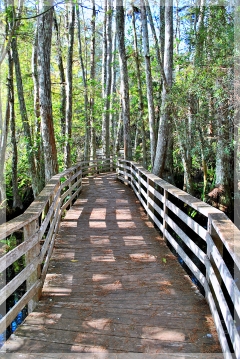
Having just returned from their first mission trip of preaching, healing the sick, and casting out demons, the disciples were tired and hungry. In an attempt to get away from the crowd gathered around them, Jesus and the men left by boat to find an out-of-the-way place where they could rest and talk. We know the rest of the story—the people followed on foot and were waiting for Jesus when He came ashore. Seeing the throng as “sheep without a shepherd,” Jesus had compassion and taught them throughout the day. When evening came, He ended up feeding over 5,000 with five loaves and two fish. The miraculous feeding of this multitude overshadows the way the story began—with Jesus’ suggestion that they find “a quiet place and rest awhile.” Nevertheless, it’s as important as the rest of the story.

My physical issues the last several months made it clear that not taking regular breaks from the computer and failing to get a decent night’s sleep take a toll on our bodies. I’ve also come to understand that it’s not just our bodies that suffer when life gets out of balance. Retreat and rest are as important spiritually as they are physically; that’s why, as busy as Jesus was, He often withdrew to the wilderness for prayer.

According to the Talmud, Jews are supposed to pray three times a day and Scripture tells us that both David and Daniel did so. Muslims also take daily spiritual retreats in their obligatory five-times-a-day prayer ritual called salah. The Arabic word salah literally means “connection” and this practice is intended to link the one who prays with the creator. Other than Paul telling us to never cease praying, we Christians don’t have a similar “requirement.” If we did, I suspect some of us would try to lump together the five prayers into one or two so we wouldn’t have to interrupt our day (which would defeat its purpose). Muslims, however, have specific times (dawn, noon, afternoon, sunset, and evening) specified so that believers continue to maintain their connection with God throughout the day. Perhaps we should consider adopting their practice in some way.

In her book about discerning God’s will, author Ruth Haley Barton said, “Disciplines of rest and retreat teach us to live within our limits.” She pointed out that when we fail to do so, we compromise the quality of our relationships both with God and the people around us. My mother-in-law knew how to live within her limits. Granted, as a centenarian, she had fairly narrow limits and did a lot of resting, but she had a point! We need to find a balance between work and retreat, activity and rest, doing and being, in all areas of life.

Even though we know better, when it comes to spiritual matters, many of us emulate Martha by being busy doing for the Lord rather than model her sister Mary, who retreated from her activities to be with the Lord! When God instituted the work-free Sabbath, the Israelites had to trust God’s provision enough for tomorrow to retreat and rest on the Sabbath. Observing the Sabbath kept them from idolizing work. When we won’t stop working to be with the Lord, we’ve created a false idol. When we pause for Him, as did the Israelites on the Sabbath, we begin living within our limits by conceding that God is God and we are not! Only He can do it all.

Living within our limits doesn’t mean we have to go off on vacation or spend a week in a monastery and it shouldn’t be confined to just one day a week. Living within our limits could begin with our own Christian version of selah by taking regular mini-retreats from our daily activities to connect with God through prayer. Scripture tells us that Jesus frequently withdrew from the world to pray; let us not be afraid to do the same.

But Jesus often withdrew to the wilderness for prayer. [Luke 5:16 (NLT)]

Copyright ©2021 jsjdevotions. All rights reserved.

ADMITTING WEAKNESS, ACCEPTING GRACE

Though the Lord is great, he cares for the humble, but he keeps his distance from the proud. [Psalm 138:6 (NLT)]

No one enjoys feeling weak, whether it is emotionally, spiritually or physically. There is something within the human spirit that wants to resist the thought of weakness. Many times this is nothing more than our human pride at work. Just as weakness carries a great potential for strength, pride carries an equally great potential for defeat. [Charles Stanley]

corkscrew swamp sanctuaryHere I am again, with a broken ankle and wearing a knee-high air-boot for the next eight to ten weeks! We have guests visiting next Friday and, since they’re avid gardeners, we’d initially planned on taking them to the Botanic Gardens. Yesterday, I suggested a change in plans since a stroll through the gardens is beyond my walking ability. When my husband suggested pushing me in one of the garden’s wheelchairs, I began protesting until I recalled a similar situation over six years ago when my foolish pride almost prevented me from accepting the help I needed.
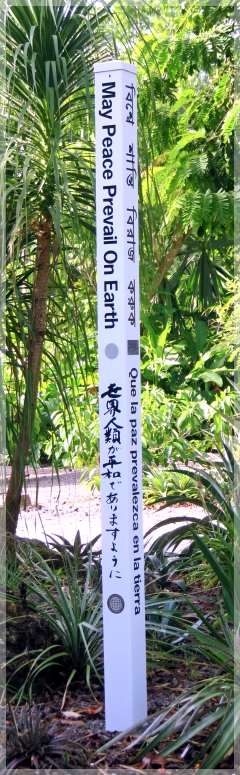
That time, another fractured ankle kept us from taking our regular walk through the swamp/bird sanctuary and we were going a bit stir-crazy. When my husband suggested pushing me along the boardwalk in one of their wheelchairs, I recoiled. Unwilling to acknowledge my weakness and need, I protested that only old people and invalids needed wheelchairs (even though I qualified on both counts). My vanity and foolish pride were keeping me from accepting my husband’s offer. After hearing an inner voice whisper, “Silly woman, think again!” I realized how foolish and self-centered I’d been. Eating my pride, I allowed my husband to do for me that which I couldn’t do for myself.

After joking with a little boy in a stroller that my stroller was bigger than his, we stopped to chat with Jack and Mary, an elderly couple we frequently saw there. Every morning (and some afternoons), Jack pushed his frail and ailing wife along the boardwalk. Unlike me, Mary accepted her diagnosis and dependence without complaint. In fact, she radiated peace and joy and her beautiful smile reminded me that I needed an attitude adjustment. I realized how incredibly fortunate we both were to have husbands who loved us enough to push us around the swamp. Both Mary and I were experiencing our husbands’ grace—which simply is love in action! And to think I almost missed that wonderful day (and many more like it) simply because of pride!

Just as I’d resisted my husband’s offer because I pridefully didn’t want to admit my need, we often find ourselves missing out on God’s grace – what Matthew Henry calls “the free, undeserved goodness and favor of God” – for the same reason. With His endless supply of mercy, love, healing, goodness, joy, peace, and forgiveness, there is no limit to God’s grace; it is sufficient for our every need. The only catch is that we must come to Him with a humble and contrite heart willing to admit our need and powerlessness. Pride, however, can keep us from acknowledging our vulnerability or deficiency. Just as I couldn’t make that swamp walk until I admitted I couldn’t do it on my own, none of us can successfully walk through life without accepting and depending on God’s beautiful grace and amazing power. It is only when we admit our weakness that we become strong!

A man does not get grace till he comes down to the ground, till he sees he needs grace. When a man stoops to the dust and acknowledges that he needs mercy, then it is that the Lord will give him grace. [D.L. Moody]

Three different times I begged the Lord to take it away. Each time he said, “My grace is all you need. My power works best in weakness.” So now I am glad to boast about my weaknesses, so that the power of Christ can work through me. That’s why I take pleasure in my weaknesses, and in the insults, hardships, persecutions, and troubles that I suffer for Christ. For when I am weak, then I am strong. [2 Corinthians 12:8-10 (NLT)]

Copyright ©2021 jsjdevotions. All rights reserved.

THE PEACE POLE – WORLD PEACE DAY

God blesses those who work for peace, for they will be called the children of God. [Matthew 5:9 (NLT)]

Do all that you can to live in peace with everyone. … Don’t let evil conquer you, but conquer evil by doing good. [Romans 12:18,21 (NLT)]

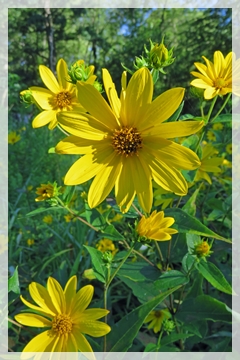
peace poleCOVID kept us from the Botanic Gardens for well over a year. When we finally returned to one of our favorite places, we came upon a peace pole planted among the palms, bamboo and bromeliads. Although a similar pole is in the city park downtown, I don’t remember seeing one here when last we visited. These poles are just two of the more than 250,000 that have been erected in over 180 nations.  Symbolizing the oneness of humanity, the words “May Peace Prevail on Earth” are written in eight different languages. The languages chosen for this pole were English, Arabic, Bengali, Chinese, Hawaiian, Hindi, Japanese, and Spanish—the languages of people who, like us, live at the 26th parallel north. Peace poles stand as a visual reminder to pray for peace on earth and to think, speak and act in the spirit of harmony and peace.
Forty years ago, the United Nations designated today as the annual International Day of Peace (commonly called World Peace Day). In 2011, the General Assembly unanimously voted to designate it as a day of cease-fire and non-violence. They ask every person and nation to halt hostilities and fighting for this one twenty-four-hour period. Unfortunately, I doubt the world can make one hour, let alone twenty-four, without aggression, hostility and bloodshed. Hopefully, you and I can go longer than twenty-four hours without conflict or violent behavior!

The causes of world conflict are many and, according to the UN, include poverty, social inequality, hunger, dwindling natural resources, water scarcity, environmental decline, disease, corruption, racism, and xenophobia (an intense fear of foreigners). This year’s theme, “Recovering Better for an Equitable and Sustainable World,” continues the UN’s focus on finding ways to overcome those causes. Indeed, as our world struggles to recover from what seems to be a never-ending pandemic, we can see how the underprivileged and marginalized have been hit the hardest. In the last eighteen months, we have seen both the best and the worst of our fellow travelers on this planet. This day is a reminder that instead of fighting with one another, we should join in fighting mankind’s common enemies!

As Christians, we have the peace of God—the peace that passes understanding—but we must be more than possessors of peace. Jesus calls us to be makers of peace but erecting a peace pole is not enough! We can start by bringing peace to our little corner of the world, beginning at home and then moving on to work, school, church and community. Our peacemaking efforts, however, can’t stop at the borders of our neighborhood or even our nation. We must take Christ’s message of peace out into the world by thinking, speaking, and acting in the cause of peace. While we each have an obligation to improve the various conditions that promote conflict, changing people’s circumstances is just a beginning. For true peace, the peace that is found in a relationship with God, we must change people’s hearts.

World peace, while a lofty goal, is not something I expect to see in my lifetime. Nevertheless, we each must do our part.

We hear much of love to God; Christ spoke much of love to man. We make a great deal of peace with heaven; Christ spoke much of peace on earth. [Henry Drummond]

I urge you, first of all, to pray for all people. Ask God to help them; intercede on their behalf, and give thanks for them. Pray this way for kings and all who are in authority so that we can live peaceful and quiet lives marked by godliness and dignity. [1 Timothy 2:1-2 (NLT)]

But the wisdom from above is first of all pure. It is also peace loving, gentle at all times, and willing to yield to others. It is full of mercy and the fruit of good deeds. It shows no favoritism and is always sincere. And those who are peacemakers will plant seeds of peace and reap a harvest of righteousness. [James 3:17-18 (NLT)]

Copyright ©2021 jsjdevotions. All rights reserved.

FARMA – Part 3

The kingdom of heaven may be compared to a man who sowed good seed in his field, but while his men were sleeping, his enemy came and sowed weeds among the wheat and went away. So when the plants came up and bore grain, then the weeds appeared also. And the servants of the master of the house came and said to him, “Master, did you not sow good seed in your field? How then does it have weeds?” He said to them, “An enemy has done this.” [Matthew 13:24-28 (ESV)]

sunflowerWhile we usually reap what we sow, we also can receive unexpected and undeserved harvests! When we lived in the north, courtesy of God and nature, wildflower seeds took root in the field next to our house and Spiderwort, Sunflowers, Dame’s Rocket, and Wild Bergamot grew there without any effort on my part. Although I hadn’t sowed them, I never protested those beautiful wildflowers; I just thanked God for them. None of us are likely to complain to God about the many undeserved blessings He regularly bestows on us!

While we certainly don’t object when we get a harvest of blossoms, we’re sure to protest when we receive an unexpected (and seemingly undeserved) harvest of life’s thistles. Like the farmer who sowed high-quality seeds only to discover weeds growing in his field, we were distressed the year we discovered our beautiful field of wildflowers had been invaded by thistles. Although we hadn’t planted the invasive weeds, the unwelcome thistles were there!

Shortly before his eviction from Eden, Adam was told that the ground would yield thistles and thorns along with grain. That warning was both literal and figurative. Satan will spread his seeds wherever and whenever the opportunity arises and the enemy’s seeds of evil can invade people’s lives no matter how many good seeds they’ve sown. We can sow the seeds of love and fidelity but still be betrayed by an unfaithful spouse, we can work carefully and industriously but get downsized, we can drive cautiously and courteously but get hit by a drunk driver, and, even though we pray for and love our enemy, he may continue to hate us!

While we should expect more of the same when we sow thistle seeds, we’re perplexed when we’ve sown seeds of righteousness and get things like misfortune, difficulty, suffering, or loss. That’s the enemy assaulting us and we can’t allow his seeds of hatred, anger, resentment, doubt, or violence to take root in our hearts. Rather than wonder why, our job is simply to faithfully tend our fields and keep sowing seeds of righteousness. When the time is right, God will take care of the weeds and we’ll be part of a wonderful harvest.

If I ask, “Why me?” about my troubles, I would have to ask, “Why me?” about my blessings. … I take the good with the bad, and I try to face them both with as much calm and dignity as I can muster. [Arthur Ashe]

Therefore, my beloved brothers, be steadfast, immovable, always abounding in the work of the Lord, knowing that in the Lord your labor is not in vain. [1 Corinthians 15:58 (ESV)]

Copyright ©2021 jsjdevotions. All rights reserved.

THE RAINBOW’S END

And I am convinced that nothing can ever separate us from God’s love. Neither death nor life, neither angels nor demons, neither our fears for today nor our worries about tomorrow—not even the powers of hell can separate us from God’s love. No power in the sky above or in the earth below—indeed, nothing in all creation will ever be able to separate us from the love of God that is revealed in Christ Jesus our Lord. [Romans 8:38-39 (NLT)]

rainbowDays bled into weeks, weeks into months, and every day seemed the same for much of the last eighteen months. Life became a series of postponements, rebookings, cancelations, setbacks, inconveniences, letdowns, and disappointments. Visiting Grandma meant waving at her through a window, final farewells were FaceTime calls on a nurse’s cell phone, and we mourned from a distance while attending celebrations of life virtually. Weddings were postponed, family reunions put on hold, shut-downs and travel restrictions kept loved ones apart, theaters and concert halls went dark, vacations were delayed, businesses closed, jobs were lost, and junior year abroad became junior year on Zoom.

Many of us had something specific to which we looked forward in the COVID-free future. It was anticipation of that reward that helped sustain us through the dreary months. When vaccines rolled out and numbers dropped, we began to think the end was in sight and we finally saw the end of the rainbow! Plans resumed for family reunions, the delayed semester abroad, or the cruise of a lifetime. Vacations were scheduled, wedding venues rebooked, businesses set dates for returning to the office, and nursing homes and hospitals again allowed visitors. With the surge in cases and the return of restrictions, however, many of those plans have been pushed back yet again or cancelled altogether. We’re frustrated and disappointed because the future we hoped for isn’t the one we got!

In C.S. Lewis’ The Screwtape Letters, the demon Screwtape strategizes with his nephew Wormwood on methods of capturing a young man’s soul. The senior demon suggests using time as a weapon. Screwtape explains that the “enemy” (God) wants man to focus on only two times: eternity (which means attending to God) or the present in meditation, obedience, service, receiving grace, or giving thanks. Having found tempting someone to live in the past to be of “limited value,” Screwtape advises a far better approach is to tempt the man to attend to the future. God, he says, “does not want men to give the future their hearts, to place their treasure in it,” but the demons definitely do! He adds that, “We want a whole race perpetually in pursuit of the rainbow’s end.” Rather than being faithful, kind, happy, or thankful in the present, the demons want people to miss the gifts of the present day while looking for them in the future. “Gratitude,” says Screwtape, “looks to the past and love to the present,” but, the demon adds, it is things like fear, desire, greed, materialism, and ambition that look to the future.

As Christians, we can’t let our disappointment in the future we’d anticipated dominate our life or cause us to lose hope. Keeping our eyes on the real hope found in eternity with God, let’s not allow our disappointment in tomorrow steal today’s joy. As followers of Jesus, we live with a hope that isn’t dependent on pandemics, positivity rates, restrictions, weather, or finances because we know how the story ends. Yes, we’re disappointed now but, ultimately, we won’t be disappointed by what God has waiting for us.

Yesterday is gone. Tomorrow has not yet come. We have only today. Let us begin.  [Mother Teresa]

That is why we never give up. Though our bodies are dying, our spirits are being renewed every day. For our present troubles are small and won’t last very long. Yet they produce for us a glory that vastly outweighs them and will last forever! So we don’t look at the troubles we can see now; rather, we fix our gaze on things that cannot be seen. For the things we see now will soon be gone, but the things we cannot see will last forever. [2 Corinthians 4:16-18 (NLT)]

Copyright ©2020 jsjdevotions. All rights reserved.