OH COME, IMMANUEL (1) – PROMISES MADE

Rejoice, O people of Zion! Shout in triumph, O people of Jerusalem! Look, your king is coming to you. … I will destroy all the weapons used in battle, and your king will bring peace to the nations. His realm will stretch from sea to sea and from the Euphrates River to the ends of the earth. [Zechariah 9:9,10 (NLT)]

O come, O come, Immanuel, and ransom captive Israel
that mourns in lonely exile here until the Son of God appear.
Rejoice! Rejoice! Immanuel shall come to you, O Israel.
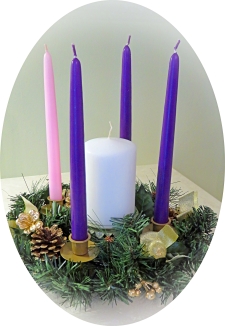
Advent wreathYesterday was the first Sunday in Advent—a season when Christians throughout the world prepare for the coming of Christ. For most of my life, I attended liturgical churches where, on each of the four Sundays in this season, we’d sing “Oh, Come, Oh Come, Immanuel” as the Advent candles were lit. Although this song is sung by 21st century Christians, its words easily could have been sung by 1st century Jews. Immanuel means “God with us” and, after centuries of being subject to pagan nations, they yearned for God to come and ransom their captive land.

They certainly wondered when God would fulfill the promise made to David 1,000 years earlier. Found in 2 Samuel 7, God promised David a secure homeland for the people of Israel; assured him of a never-ending dynasty; that one of his descendants would build God a house and sit on the royal throne; and that the descendant would have a Father/son relationship with God. God’s promise ended with these words: “Your house and your kingdom will continue before me for all time, and your throne will be secure forever.”

“Forever” meant the promise was eternal and absolute. With no restrictions placed upon the promise’s fulfillment, it didn’t depend on the obedience of David or Israel. This promise rested solely on God’s faithfulness and it was this promise that became the basis for Israel’s hope of a Messiah—the anointed one who would deliver Israel from God’s enemies.

No timeline for the fulfillment of God’s promise was given and, in the thousand years that followed, Israel was anything but free of enemies and opposition. The nation divided, its two kingdoms fought one another, the northern kingdom was exiled to Assyria, the southern to Babylon, and David’s earthly dynasty ended.

When the exiles returned after Persia defeated Babylon, no heir of David sat on the throne and Judah was just a tiny part of Persia’s vast empire. The Old Testament leaves Jewish history around 432 BC in the books of Ezra and Nehemiah with the Temple rebuilt and Jerusalem’s walls reconstructed and closes with the prophetic voices of Zechariah and Malachi.

Prophesying about Israel’s future, Zechariah spoke of a coming king and the restoration of God’s people. God promised, “I will strengthen Judah and save Israel; I will restore them because of my compassion. It will be as though I had never rejected them, for I am the Lord their God, who will hear their cries.” [10:6] The prophet Malachi relayed God’s promise of two messengers. The first would prepare the way for the Lord and the second, the one for whom the people longed, would be the messenger of the covenant—the Lord Himself.

Because only one page in our Bibles separates the book of Malachi from that of Matthew, we may not realize that about 500 years pass in the turn of that page. There were nearly five centuries of silence from God and His prophets until we hear a voice like that of Elijah, in the Judean wilderness, preparing the way of the Lord.

Look! I am sending my messenger, and he will prepare the way before me. Then the Lord you are seeking will suddenly come to his Temple. The messenger of the covenant, whom you look for so eagerly, is surely coming. [Malachi 3:1 (NLT)]

Listen! It’s the voice of someone shouting, “Clear the way through the wilderness for the Lord! Make a straight highway through the wasteland for our God!” [Isaiah 40:3 (NLT)]

Copyright ©2023 jsjdevotions. All rights reserved.
 

REACH FOR THE CROWN

Do you not know that in a race all the runners run, but only one receives the prize? So run that you may obtain it. Every athlete exercises self-control in all things. They do it to receive a perishable wreath, but we an imperishable. So I do not run aimlessly; I do not box as one beating the air. But I discipline my body and keep it under control, lest after preaching to others I myself should be disqualified. [1 Corinthians 9:24-26 (ESV)]

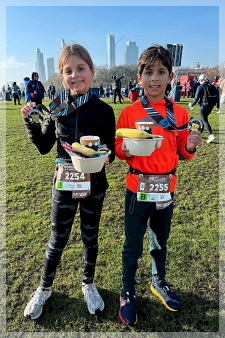
Like their parents, my youngest grands like to race and recently did this year’s 5K “Hot Chocolate” run. When Paul referred to running, he wasn’t referring to fun runs like theirs or a marathon like the one their parents ran nor were his boxing and wrestling references to the sports we know today. His allusions were to the Panhellenic games and Olympics which were well known throughout the Roman Empire in his day.

The modern Olympics are a secular event but the ancient Olympics were as much a religious festival as a sporting one. Held to honor Zeus, cheating was an offense to the gods and breaking any rule was a sacrilege. The athletes (along with their brothers, fathers, trainers, and judges) vowed before an enormous statue of Zeus that they’d observed all the rules of training for at least ten straight months and would use no unfair means to win. Just as those athletes did not want to dishonor Zeus, Paul did not want to dishonor Jesus with his “race” and he wrote of conducting himself honorably so he wasn’t disqualified.

Paul’s mention of self-control takes on deeper meaning when we consider the athletes’ rigorous training and the discipline and self-denial required to maintain their strict diet and demanding physical regimen for ten straight months. Some athletes even remained celibate during training. If they are going to finish their race, Christ’s followers need that same level of self-discipline, diligence, obedience, effort, focus, and full commitment to God and His kingdom but for a lifetime rather than ten months! Ancient athletes competed in the nude and barefoot on a sand surface. Even though we run our faith race in clothing, let’s remember that we are completely naked before God and nothing is hidden from Him!

The marathon is a modern Olympic event and the ancient foot races were much shorter, ranging from about 210 yards (the length of the stadium) to 2.8 miles (less than a 5K run). Such short races meant there was little chance to catch up if one fell behind. Since any race longer than the length of the stadium meant runners had to make a sharp 180-degree turn around a post, no runner wanted to be caught in the pack when making that turn! Runners had to start strong and push forward with all their might. While our faith race lasts longer, Christians need to strain forward and press on with that same intensity if we hope to reach our goal.

In a special race called the hoplitodromos, men ran from a quarter to a half mile while wearing a soldier’s  helmet, shield, and greaves which meant carrying an additional 17 to 30 pounds. Depending on the race’s length, runners made one to three sharp turns and they often fell when their shields got entangled at the post. Knowing about the hoplitodromos gives deeper meaning to the admonition in Hebrews 12 to “lay aside every weight” slowing us down.

The brutal combat sports had no rest periods, water breaks, or time limits and bouts could last hours. Fighters risked injury, disfigurement, and even death. Other than biting, eye gouging, or attacking the genitals, just about everything else was allowed. With no holds barred and no weight classes, a wrestling match usually ended with broken bones. Boxers wore just a pad of leather over their knuckles and a man could be hit when down. The winner wasn’t determined by points or decision but by the complete submission or incapacitation of his opponent. When Paul referred to boxing, his readers knew that the fighter who shied away from his opponent or punched at air would not survive!

Testing an athlete’s ability to endure pain as much as his fighting skill, the pankration combined wrestling and boxing. In this brutal bloody contest, even groin kicks and hits were allowed. When Paul wrote of wrestling against the forces of evil or fighting the good fight of faith, he wasn’t talking about fighting under the Queensbury rules. He was speaking of a no-holds-barred-knock-down-drag-out brawl in harsh conditions—a battle that ended only when the opponent—Satan—was defeated!

With no teams, weak athletes couldn’t be carried to victory by stronger members of the team. Even though Christians collectively are the Church and the body of Christ, each person is responsible for running their individual race and fighting their individual battles. In the end, like the ancient Olympic athletes, we alone are responsible for how we run the race and fight the fight.

Even though my grands weren’t the first to cross the finish line in their recent 5K, they received medals along with a huge cup of cocoa, a banana, Rice Krispie treats, chocolate dip and a cookie (along with a hoodie)—which is more than the ancient Olympic athletes got! Back then, there was only one winner in each event and all he received at Olympia was a crown of olive leaves. For the chance to get one of those perishable crowns, athletes spent nearly a year training for a race less than the one my grands ran or for a fight that probably left them injured or disfigured. Only victors were honored by their home cities. As for the others—regardless of how honorably they competed, they returned home with their heads hanging in disgrace.

As Christians, no matter how slowly we run or often we stumble and regardless of how battered we get or frequently we’re knocked to the ground, if we are still running the race and fighting the fight until our dying breath, we will have won! Instead of being called up to the judge’s seat to receive a perishable crown of leaves, we will be called up to receive an imperishable crown of righteousness from the Lord Himself! Rather than returning to our hometowns with heads hanging in shame because we weren’t the strongest or fastest, we will go to our heavenly home as victors in Christ!

Brothers, I do not consider that I have made it my own. But one thing I do: forgetting what lies behind and straining forward to what lies ahead, I press on toward the goal for the prize of the upward call of God in Christ Jesus. [Philippians 3:13-14 (ESV)]

I have fought the good fight, I have finished the race, I have kept the faith. Henceforth there is laid up for me the crown of righteousness, which the Lord, the righteous judge, will award to me on that day, and not only to me but also to all who have loved his appearing. [2 Timothy 4:7-8 (ESV)]

Copyright ©2023 jsjdevotions. All rights reserved.

ENDURANCE 

Therefore, since we are surrounded by such a huge crowd of witnesses to the life of faith, let us strip off every weight that slows us down, especially the sin that so easily trips us up. And let us run with endurance the race God has set before us. [Hebrews 12:1 (NLT)]

Last October, we went north to watch our son and daughter-in-law run the Chicago Marathon. This 26.2-mile race passes through 29 Chicago neighborhoods and the city’s streets were lined with spectators ringing bells, beating drums, holding signs, cheering, and applauding as the runners ran past. Like us, some were there to cheer on specific runners but many were there to encourage all who were running. When we saw Sam and Nina, they were nine miles into their run and had stripped off the jackets, gloves, and hats they’d been wearing earlier that morning. The whole scene reminded me of today’s verse from Hebrews in which the author likens Christian living to running a race with endurance.
Of course, when Hebrews’ author refers to witnesses, he’s referring to the heroes of faith mentioned in Hebrews 11 rather than spectators. Nevertheless, like marathon runners who can grow discouraged as the miles take their toll, we all need encouragement as we face trials and troubles in our faith journey. Rather than onlookers cheering from the sidewalk, it’s our brothers and sisters in Christ who encourage and pray for us in our challenges. Instead of discarding extra clothing or water bottles as do runners, we must strip off the hindrances and burdens—things like doubt, resentment, wealth, unbelieving friends, and guilt—that can cause us to stumble in our run.

When telling his readers to run their race with endurance, the writer used hupomoné, a Greek word describing someone who remains loyal to their purpose and refuses to veer off from it even when faced with great trials and suffering. Although running 26.2 miles is no easy task for even elite athletes, we saw runners of all ages, shapes, and sizes. There were blind runners with guides and several runners who were missing limbs. Some people raced in their wheelchairs while others raced while pushing loved ones in wheelchairs. Some runners wore tee shirts celebrating their recovery from cancer and one man, wearing a leg brace, wore a tee saying he’d broken his leg in February! Each runner faced their own unique challenges and, even at the 9-mile point where we stood, some were struggling to continue. Nevertheless, in spite of their individual trials, more than 98% of the day’s 48,944 runners had enough endurance to finish the race.

Little did we know when we saw the first runners speed by that we were witnessing the breaking of a world record. In only his third marathon, Kenyan runner Kelvin Kiptum completed the 26.2 miles in two hours (2:00:35)! His closest competition was nearly 4 minutes behind him and wasn’t even in view when Kiptum crossed the finish line! Kiptum certainly exhibited endurance in his run as did Sam and Nina in their four-hour run. But, when reading about the race later, I discovered the real meaning of hupomoné in a story about a woman named Gabriela who ran her seventh marathon that day.

Kiptum, Sam, and Nina had crossed the finish line by the time this 57-year-old passed the 9-mile mark. By then, the spectators had departed, the streets were being opened for traffic, and she had to continue her run on the sidewalk. Nevertheless, Gabriela persisted as she has for the last seven years. One year, it took her ten hours to complete the race and, by the time she got to the finish line, it wasn’t there and nobody remained to applaud her effort or award her a medal. Nevertheless, finishing dead last didn’t deter Gabriela and she continued to do the marathon. This year, the determined woman finished in time to get a medal and achieved her personal best with a 6:56:19! Her optimistic advice to other marathoners is simple: “Keep going, never quit, and maybe next year will be better!” To Gabriela, it’s not about being the fastest—it’s simply about finishing the race—even if it means finishing in last place! Although Kelvin Kiptum, Sam, and Nina exhibited endurance in their runs, it is Gabriela’s example that defines hupomoné.  She showed that it’s not about how fast we run; it’s about never giving up!

Motivation is enough to start the race but it is endurance that finishes it! Indeed, “let us run with endurance the race God has set before us.”

I have fought the good fight, I have finished the race, and I have remained faithful.  And now the prize awaits me—the crown of righteousness, which the Lord, the righteous Judge, will give me on the day of his return. And the prize is not just for me but for all who eagerly look forward to his appearing. [2 Timothy 4:7 (NLT)]

Copyright ©2023 jsjdevotions. All rights reserved.

WAITING

Wait patiently for the Lord. Be brave and courageous. Yes, wait patiently for the Lord. [Psalm 27:14 (NLT)]

Be still in the presence of the Lord, and wait patiently for him to act. [Psalm 37:7 (NLT)]

tri-colored heron - breedingWhen writing about Nehemiah recently, I thought about waiting. From the time he learned of Jerusalem’s broken-down walls until he spoke to the king, three months passed. Day in and day out, Nehemiah was at the king’s side but remained silent about his concern. Trusting that God would provide the opportune time, Nehemiah patiently waited at the king’s side until God provided the perfect moment when the king inquired about his cupbearer’s sadness. Had I been Nehemiah, would I have trusted God’s timing and kept silent for ninety days? What about you?
Although David was between ten and fifteen when Samuel anointed him Israel’s king, it was not until he was thirty that he became Judah’s king. He waited until he was thirty-seven before he finally reigned over a united Israel. Rather than spending years running from Saul, David had an opportunity to speed up things when he was hiding with his men in the back of a cave and Saul came in to relieve himself. Without Saul knowing, David got close enough to stab him but he didn’t. Instead, he cut off a piece of Saul’s robe. Although he’d been promised the throne, David knew he was not to gain it by assassinating his king. He patiently waited for God’s appointed time. When he penned the words about waiting for the Lord in Psalms 27, 37 and 40, David was speaking from experience. Had I been David, however, I’m not so sure I wouldn’t have taken that early opportunity to claim the crown. What about you?

After Elijah told Ahab that God had determined there would be a drought until the prophet gave the word, he fled. The Lord told his prophet to hide by the Kerith Brook where he could drink from the brook and be fed by ravens. Because of the drought, the brook gradually dwindled into a rill and then a trickle until it was nothing but a dry gully. Nevertheless, as Elijah watched the water disappear, he faithfully remained there until God sent him to Zarephath. Had I been Elijah, would I have waited there patiently as I watched the brook turn to mud? I suspect I would have panicked and gone searching for water. What about you?

Joseph was just 17 when he was given two dreams about his family bowing down in submission to him, but at least twenty years passed before they actually did bow before him. Thirteen of those years, Joseph spent as a slave or a prisoner. Nevertheless, even though it looked like his vision would never materialize, he continued to trust in the Lord and interpret dreams, even while sitting in a prison cell and forgotten by Pharaoh’s cup-bearer. Had I been Joseph, I might have thrown myself a pity party and stopped believing those dreams. What about you?

Through no fault of his own, Joshua had to wait until an entire generation died before entering the Promised Land. Had I been Joshua, would I have trusted God that I would live long enough to see Canaan or gone ahead with Caleb? What about Simeon and Anna who waited decades for the Messiah? After so many years of disappointment, would I have grown weary of the fruitless wait and not gone to the Temple that day? What about you?

Although our timing and God’s timing are rarely the same, He always is right on time! He has complete control over the events in our lives and orders them according to His plan—even if that means we must delay getting a project started, hide in a cave, grow thirsty by a dwindling stream, sit in a prison cell, delay nearly forty years, or wait a lifetime to see the Messiah! Although these Biblical heroes all exhibited patience, they couldn’t have done so without faith! Rather than allowing themselves to be overwhelmed by their disappointment, distress, or challenging circumstances, they had unwavering confidence in God’s promises, love, and divine plan.

Trusting even when it appears you have been forsaken, praying when it seems your words are simply entering a vast expanse where no one hears and no voice answers…waiting patiently while seemingly starving to death, with your only fear being your faith might fail…this is genuine faith indeed. [George MacDonald]

 I waited patiently for the Lord to help me, and he turned to me and heard my cry. He lifted me out of the pit of despair, out of the mud and the mire. He set my feet on solid ground and steadied me as I walked along. He has given me a new song to sing, a hymn of praise to our God. Many will see what he has done and be amazed. They will put their trust in the Lord. [Psalm 40:1-3 (NLT)]

Copyright ©2023 jsjdevotions. All rights reserved.

PLANT GENEROUSLY

Then Jesus said to them, “If you can’t understand the meaning of this parable, how will you understand all the other parables? The farmer plants seed by taking God’s word to others.” [Mark 4:13-14 (NLT)]

The Synoptic gospels (Matthew, Mark, and Luke) all repeat Jesus’ parable of the Sower and the Soils. As the farmer sows his seeds, some lands on the packed soil along the footpath. The birds steal the seeds so nothing takes root. Some seeds land on a thin layer of dirt over underlying rock. Although the seeds quickly sprout, without deep roots, they wither and die. Other seeds land among the thistles and thorns. Although they take root, the fast-growing weeds crowd them out. Only the seeds that fall on fertile soil take firm root, grow into maturity, and bear fruit. Rather than teaching Agriculture 101, by comparing those soils to the various ways God’s message is received, Jesus was teaching about evangelism.
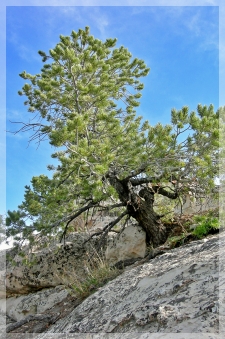
The parable’s farmer scattered his seeds without determining beforehand which soil would be most receptive. In the same way, when we sow the seeds of God’s word, there’s no quick way to determine if or when that seed will take root and grow. Moreover, sometimes those seeds might lie dormant for years until conditions are optimal for them to take hold. For example, lodgepole pine seeds actually need the intense heat of fire to explode their seed cones before they can germinate. In the same way, the seed of God’s word may lie dormant until a person’s life goes up in flames.

As for the seeds on the footpath and the birds and other animals who might eat them—when they deposit their feces, those seeds may end up in a more receptive environment. In fact, passing through the belly of an emu actually helps germinate the seeds of an Australian plant with the wonderful name of Snottygobble. Even if our testimony is rejected, it may inadvertently get passed on to a more receptive person!

As for the shallow rocky soil—leaves could fall on it, decompose, and add nutrients and depth to the soil while rain might keep the plants from withering and dying. Having seen trees growing out of mountain sides and wildflowers peeking up through sidewalk cracks, I know that seeds can take root in the most unlikely places. Just as it’s possible for seeds to grow in adverse conditions, it’s possible that the word of God can soften even the hardest of hearts! As for the thorny weeds—what if someone came along and did some weeding or hungry goats or pigs (who apparently like thorny vines) passed by and ate the weeds? Beautiful flowers can grow in the midst of weeds!

Even in good soil, some seeds might never germinate. While the synagogue in Jesus’ hometown of Nazareth should have been fertile ground for Him, it wasn’t. His message there ended with a furious mob wanting to kill him! Yet, in the unlikely soil of the Samarian city of Sychar, Jesus met a woman of questionable morals who realized He was the Messiah and brought the village’s people to meet Him. The city of Corinth, with its cults of pagan gods, 1,000 prostitutes, temple to Aphrodite, and reputation for drunkenness and debauchery, didn’t seem to be fertile soil and yet the Apostle Paul planted a successful church there. Indeed, God’s word can take root in the most unlikely places.

While Jesus knew how people would respond to Him, we don’t. None of us can accurately predict if, how, or when the seed of God’s word will be received. In 2005, without knowing if the seeds would germinate, scientists planted thirty-five 2000-year-old date palm tree seeds excavated from Israeli archaeological sites. Even though it took those ancient seeds two millennia to sprout, against all odds, seven of them took root and are now producing fruit!

Rather than trying to analyze the soil or waiting for optimal growing conditions, our job as God’s farmers is to continue sowing good seeds whenever and wherever we can. Eventually, some will fall on fertile soil! God will take care of the harvesting and sorting when the right time comes.

The Parable of the Soils tells us that, regardless of hardened hearts, superficiality, competing pressures, and even failure, the promised harvest is “a hundred times as much as had been planted.” Without a doubt, in spite of setbacks and challenges, God’s Kingdom will prevail, but only if we continue to plant those seeds!

It’s what you sow that multiplies, not what you keep in the barn. [Adrian Rogers]

Remember this—a farmer who plants only a few seeds will get a small crop. But the one who plants generously will get a generous crop. [2 Corinthians 9:6 (NLT)]

Copyright ©2023 jsjdevotions. All rights reserved.

PATIENCE

But the Holy Spirit produces this kind of fruit in our lives: love, joy, peace, patience, kindness, goodness, faithfulness, gentleness, and self-control. [Galatians 5:22-23 (NLT)]

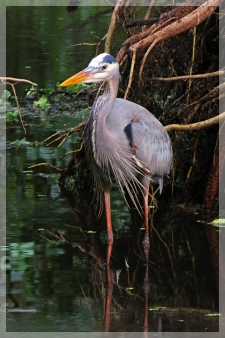
great blue heronAs we continued our brief study on prayer, one person shared that his prayer frequently is for patience. Agreeing, I admitted often praying, “Lord, please give me patience…and give it to me now!” While patience is a fruit of the Spirit, I have a problem getting it to grow in the garden of my life.

Without a doubt, we live in a fast-paced world and perhaps we’ve grown more impatient because of that. For example, a good download speed is 100 Mbps which allows for the receipt of 12.5 MB per second. A byte is the equivalent of one typed character so that’s like 12.5 million letters in one second (or four complete King James Bibles)! Nevertheless, we complain when we see that download circle spin for even a few seconds!

We no longer need to visit the library or bookstore for a book, the encyclopedia for an answer, or Blockbuster for a movie. Our apps mean we skip the checkout lines and our DVRs allow us to skip the commercials! Grocery shopping takes only a few minutes thanks to Instacart and DoorDash allows us to skip the groceries altogether! We pay bills, do our banking, plan travel, and shop with a few clicks of a mouse and what we order today appears on our doorstep tomorrow! We literally live in a world of instant pots, grams, chargers, coffee, rice, carts, and gratification. Patience may be a virtue but it seems as rare as handwritten letters and phone booths. Its rarity, however, doesn’t mean it’s unnecessary!

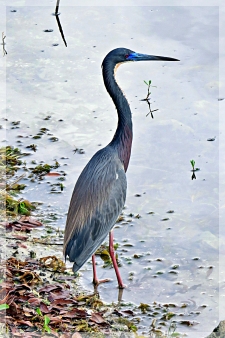
I thought about patience this morning while walking in a nearby park. We were mesmerized while watching a beautiful Great Blue Heron ((Ardea herodias) hunt for breakfast. With a height of four feet and a wingspan of nearly seven feet, the Great Blue is an impressive bird. When foraging, it stands still for long periods of time with only his head moving while patiently scanning the water for prey. When a heron wades through the water, it seems to glide. Its long legs move so deliberately and gracefully there’s not even a ripple in the water. At the Great Blue stalks its food in the wetlands, this statuesque bird is a model of focus, diligence, and purpose. Watching a heron hunt is like seeing something in ultra-slow-motion. But, when its next meal comes swimming past, the heron moves with lightning speed, uncoils its long neck, and plunges its sizable beak and head into the water. On occasion it comes up empty-beaked but, more often than not, its patience pays off and the bird emerges with a fish, frog, snake or other unlucky critter. While I’ve gotten plenty of photos of a heron hunting and several of one enjoying its catch, I’ve never gotten one of the bird actually getting its meal. You see, the heron’s patience exceeds my own. No matter how long I stalk the bird for the perfect shot, I give up before it does! Were I a heron, I surely would go hungry!

Watching the heron today was a beautiful reminder to slow down and exercise patience as we move through life. It’s easy to lose faith when things don’t move along at the pace we want them to go but life isn’t meant to be measured at megabits per second. Unlike Siri, God isn’t at our beck and call with answers to every question. Moreover, unlike UPS, He doesn’t give us a tracking link to check on a prayer’s progress and know its delivery date. God works in His time and way and what seems like a delay on His part is just our unrealistic expectations concerning God’s perfect plan.

God speaks to us through his creation and nature (like God) takes its own sweet time to accomplish its purpose. Indeed, “For everything there is a season.” It takes time for seeds to germinate, seedlings to flower, and flowers to bear fruit. It takes time for nests to be built, eggs to hatch, and eaglets to fly. It takes time for bees to pollinate, seasons to change, caterpillars to become butterflies, saplings to become tall oaks, tadpoles to become frogs, and for the heron to stalk its meal! May God’s beautiful world remind us to slow down and savor the moments and people with whom we are blessed.

Lord, please give us patience—for other people’s sentences to be completed, for projects to be finished, for questions to be answered, and for problems to be solved. Give us patience to let our children mature, for friendships to grow, and for skills to develop. May we have patience for tempers to cool and relationships to mend, patience with our own shortcomings and those of others, patience for healing to occur, and patience for prayers to be answered. Teach us how to wait!

Adopt the pace of nature: her secret is patience. [Ralph Waldo Emerson]

Since God chose you to be the holy people he loves, you must clothe yourselves with tenderhearted mercy, kindness, humility, gentleness, and patience. [Colossians 3:12 (NLT)]

Copyright ©2023 jsjdevotions. All rights reserved.