ATTENTION TO DETAIL – THE BAPTIZER (1)

Now John wore a garment of camel’s hair, and a leather girdle around his waist; and his food was locusts and wild honey. [Matthew 3:4 (RSV)]

Aside from Adam and Eve’s fig leaves, Scripture doesn’t tell us much about people’s attire. Both Matthew and Mark, however, specifically mention the unconventional attire of John the Baptizer—a camel’s hair garment and a leather belt around his waist. Rather than the luxurious fabric of woven camel’s hair we know today, it probably was a dressed camel’s hide. Moreover, since Scripture rarely refers to people’s diets, the mention of John eating locusts and honey is equally unusual. When the Bible’s writers veer from the norm, we should take notice and ask ourselves, “Why?”

The reason may be tied to the last words in the Hebrew Scripture, found in Malachi 4. Written more than 400 years earlier, they promised a prophet like Elijah who would proclaim the coming of the Messiah. While all four gospels tie John to Isaiah’s prophecy of a voice in the wilderness who will prepare a way for the Lord [40:3], it’s the description of John’s attire that unmistakably connects him to Malachi’s prophecy and Elijah. Like John, Elijah wore a garment of animal skin with a leather belt around his waist. Anyone familiar with the Hebrew Scriptures should have recognized that the Elijah-like prophet who would announce the coming Messiah had arrived!

It was not unusual for the prophets of old to act bizarrely and use symbolism to help convey their message. For example, at God’s command, Jeremiah wore a yoke and Isaiah walked naked and barefoot for three years. Since a diet of locusts and honey was strange, perhaps there was something symbolic about John’s food choice. From the 8th plague visited on Egypt and Moses’ warning in Deuteronomy that disobedience to the Law meant God’s discipline with locusts eating “all your trees and the fruit of your ground” [28:42] to Nahum’s warning that Nineveh’s punishment would devour them “like a locust” [3:15] and Joel’s warning that “the day of the Lord” was near and would be like an invasion of locusts,[1:4] Scripture has associated locusts with the need for repentance and God’s judgment. On the other hand, throughout Scripture we find the Promised Land frequently described as a bountiful land flowing with “milk and honey”! John’s diet reflects his combined message of judgment and blessing.

The gospels’ description of John the Baptizer are more than colorful details about an eccentric prophet. His unconventional attire and diet were as much a part of his message as were his words. Nevertheless, despite the obvious signs, when John proclaimed that Jesus was “the Chosen One of God,” [John 1:34] many turned a deaf ear and a blind eye to him. Two thousand years later, let us not make the same mistake!

Wild and lone the prophet’s voice echoes through the desert still,
calling us to make a choice, bidding us to do God’s will:
“Turn from sin and be baptized; cleanse your heart and mind and soul.
Quitting all the sins you prized, yield your life to God’s control.”
[Carl P. Daw]

The Lord of Heaven’s Armies says, “The day of judgment is coming, burning like a furnace. On that day the arrogant and the wicked will be burned up like straw. They will be consumed—roots, branches, and all. But for you who fear my name, the Sun of Righteousness will rise with healing in his wings. And you will go free, leaping with joy like calves let out to pasture. On the day when I act, you will tread upon the wicked as if they were dust under your feet,” says the Lord of Heaven’s Armies. … Look, I am sending you the prophet Elijah before the great and dreadful day of the Lord arrives.” [Malachi 4:1-3,5 (NLT)]

Copyright ©2025 jsjdevotions. All rights reserved.

JUSTICE

He has told you, O man, what is good; and what does the Lord require of you but to do justice, and to love kindness, and to walk humbly with your God? [Micah 6:8 (ESV)]

…learn to do good; seek justice, correct oppression; bring justice to the fatherless, plead the widow’s cause. [Isaiah 1:17 (ESV)]

Open your mouth for the mute, for the rights of all who are destitute. Open your mouth, judge righteously, defend the rights of the poor and needy. [Proverbs 31:8-9 (ESV)]

viceroy butterflyIn 1 Kings 21, we learn of Naboth, the owner of a vineyard adjacent to King Ahab’s palace in Jezreel. A choice piece of real estate, Ahab wanted it for himself and offered to purchase or exchange it for other land. Property, however, wasn’t to be treated as a real estate investment—it was to remain in the family to which it had been allotted. Because Jewish law prohibited Naboth from selling his ancestral land, he rejected the king’s offer. Angry at his neighbor’s refusal’s, Ahab acted like a spoiled child, took to his bed, and refused to eat. Upon learning the reason for her husband’s sulking, Jezebel hatched a devious plan. She arranged for false accusations to be made against Naboth that would result in his immediate death. Jezebel’s evil plot went as planned and, upon news of their neighbor’s death, she told Ahab the land was his and he took it for himself!

Consider David—the king who took his neighbor’s wife, impregnated her, and then murdered her husband. When the Lord sent Nathan to confront David about his sins, he told the adulterous king a story about a rich man with several flocks and herds and a poor man who had but one ewe that had become a member of his family. When a guest visited the rich man, rather than slaughtering one of his lambs for the night’s feast, he took the poor man’s only ewe and served it for dinner. Outraged at the injustice dealt the poor man, David said the rich man deserved to die and must repay the poor man four times the lamb’s original cost. Until Nathan pointed out that David was that very man, the king (who had power, palace, and plenty of wives) hadn’t considered the injustice of his actions.

“Injustice is the second biggest sin the Bible talks about after idolatry,” said Jenn Petersen, Director of Mobilization for the International Justice Mission. Wondering if she were correct, I checked my ESV Bible. While idol, idols, and idolatry are used 157 times, the words justice (112) and injustice (26) ran a close second with 138 uses. Moreover, the word “just” indicating morally right or fair was used more than 40 times! In comparison to these sins, adultery was mentioned only 39 times, murder 59 times, and theft, steal, and stealing a total of 33 times. It seems justice is important to God.

Often defined as a violation of someone’s rights or unfairness to another, injustice is an act that inflicts undeserved hurt. The KJV dictionary defines injustice as (1) “Iniquity; wrong; any violation of another’s rights, as fraud in contracts, or the withholding of what is due. It has a particular reference to an unequal distribution of rights, property or privileges among persons who have equal claims” and (2) “The withholding from another merited praise, or ascribing to him unmerited blame.” In short, injustice is any act that violates God’s moral law.

Because it corrupts His world, God hates injustice; nevertheless, it seems part and parcel of today’s world. As Christ followers, how do we respond to the injustice around us? We err by limiting justice to a set of rules or to causing harm to someone as did Jezebel, Ahab, and David. Injustice can be found in what we fail to do, as well. There is injustice in any lack of charity—in not loving our neighbors as ourselves. Every time we fail to extend a helping hand when it is in our power to do so, we are as guilty of injustice as were the priest and Levite who ignored the injured man in the parable of the Good Samaritan or the rich man who ignored the cries of the beggar Lazarus at his gate in another parable. Let us always remember that, regardless of where they live, every man and woman is our neighbor!

While we easily see the injustice of the evil Jezebel and Ahab and people like Stalin, Lenin, Hitler, Mao Zedong, and Idi Amin. I can’t help but wonder if, like David, we fail to have 20/20 vision when it comes to our own behavior. Let’s not forget that, whenever we minister to those less fortunate, we are ministering to the Lord Himself!

Helping “all people” is not optional, it is a command. [Timothy Keller]

“For I was hungry and you gave me no food, I was thirsty and you gave me no drink, I was a stranger and you did not welcome me, naked and you did not clothe me, sick and in prison and you did not visit me.” Then they also will answer, saying, “Lord, when did we see you hungry or thirsty or a stranger or naked or sick or in prison, and did not minister to you?” Then he will answer them, saying, “Truly, I say to you, as you did not do it to one of the least of these, you did not do it to me.” [Matthew 25:42-45 (ESV)]

Copyright ©2025 jsjdevotions. All rights reserved.


DIFFERING WEIGHTS

Do not have differing weights in your bag, one heavy and one light. Do not have differing dry measures in your house, a larger and a smaller. You must have a full and honest weight, a full and honest dry measure, so that you may live long in the land the Lord your God is giving you. For everyone who does such things and acts unfairly is detestable to the Lord your God. [Deuteronomy 25:13-16 (CSB)]

Differing weights are detestable to the Lord, and dishonest scales are unfair. [Proverbs 20:23 (CSB)]

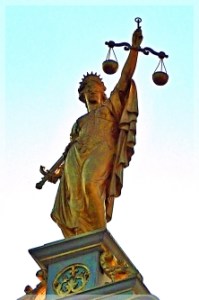
lady justice

In 1971, archeologists near the Temple Mount discovered a 2,700-year-old stone weight bearing two parallel lines. Although those lines indicated a weight of two gerah (a little less than a gram), it weighed 3.61 grams. Researchers believe it was used to defraud customers—something first condemned by God in Deuteronomy. Its discovery tells us that, despite Deuteronomy’s words, cheating weights and fraudulent scales were used in ancient Jerusalem. Nowadays, unless we’re butchers, greengrocers, goldsmiths, or grain merchants, we probably don’t have occasion to cheat anyone by short weighting them. Nevertheless, the Hebrew Scripture’s words about dishonest weights may not be limited to cheating someone out of a few ounces of lamb or grain.

Just because we don’t put our thumb on the scale or cheat on our income taxes doesn’t necessarily mean we’re using honest weights. Consider the scales of justice, one of the oldest and most familiar symbols associated with law. Representing the fairness expected in our courts, they represent the weighing of evidence on its own merit. Lady Justice often is depicted carrying those scales. Her blindfold means that she is blind to a person’s wealth, power, gender, politics, nationality, religion, and race. She doesn’t have double weights and measures or double standards. But, just as justice does not always wear its blindfold in our legal system, it often doesn’t in our personal lives, as well.

How fair and unbiased are we when we deal with people? Do we prejudge them based on their race, accent, clothing, age, or position? Do we favor those who are more attractive, wealthier, more influential, better educated, or look like us? Does it tip the scales when someone can return a favor or do something for us? Do we give the benefit of the doubt to certain people and not to others? Are we as considerate and polite to those who serve us as we are to those we serve?

Do we hold ourselves to a different standard than that we hold for others? Using a different weight, do we readily overlook our poor behavior when we wouldn’t tolerate that same behavior in someone else? Do we love some neighbors more than others or more freely extend mercy and kindness to certain people? When we buy something do we expect full disclosure but say, “buyer beware,” when we sell it? Do we correct the check when it’s in the restaurant’s favor but leave well enough alone when it’s in ours? Do our ethics and morals change with the situation or the people present? If the answer is yes to any of these questions, we’ve been using differing weights and dishonest scales!

The prophets Amos and Micah pronounced judgment on Israel for their lack of social justice, theft, exploitation, corruption, violence, bribery, and unethical business practices. What would the prophets say about us?

You can easily judge the character of a man by how he treats those who can do nothing for him. [James D. Miles Allison]

My brothers and sisters, do not show favoritism as you hold on to the faith in our glorious Lord Jesus Christ. For if someone comes into your meeting wearing a gold ring and dressed in fine clothes, and a poor person dressed in filthy clothes also comes in, if you look with favor on the one wearing the fine clothes and say, “Sit here in a good place,” and yet you say to the poor person, “Stand over there,” or “Sit here on the floor by my footstool,” haven’t you made distinctions among yourselves and become judges with evil thoughts?… If, however, you show favoritism, you commit sin and are convicted by the law as transgressors. [James 2:1-4,9 (CSB)]

God’s verdict is on the lips of a king; his mouth should not give an unfair judgment. Honest balances and scales are the Lord’s; all the weights in the bag are his concern. [Proverbs 16:10-11 (CSB)]

Copyright ©2025 jsjdevotions. All rights reserved.

NOAH AND THE RED TAPE

It was by faith that Noah built a large boat to save his family from the flood. He obeyed God, who warned him about things that had never happened before. By his faith Noah condemned the rest of the world, and he received the righteousness that comes by faith. [Hebrews 11:7 (NLT)]

Thousands of years ago, God told Noah to build a boat the height of a four-story house, the length of one-and-a-half football fields, and with the storage capacity of about 450 semi-trailers. Without benefit of Home Depot or power tools, he managed to do it. What would happen if God gave Noah those same instructions today?

As the rain started to fall, I suspect 21st century Noah would be sitting on his front porch with no ark or animals in sight. He would however, have a litany of excuses for God. First, his neighbors objected to boat building in their neighborhood, so he had to go before the planning commission, zoning board, and city council for rezoning. The ark’s building permit wasn’t issued until its blueprints conformed to code with sprinkler system, emergency lighting, additional bathrooms, fire escape routes, exit signs, handicap accessibility, and commercial kitchen. The Forest Service refused to allow him to log the 3-million board feet of gopherwood he needed and the EPA objected to using tar to waterproof the ark.

FEMA said Noah couldn’t start work until an environmental impact study was done on the proposed flood. Even though the man explained he wasn’t proposing a flood but was preparing for one, Noah still had to wait until the study was finished. His attorney insisted he get easements from his neighbors to cross their property while hauling the ark to the shore, the power company demanded payment to raise several power lines so the ark could pass under them, and the Army Corps of Engineers required a permit to dredge a channel once the ark got to the water. Noah’s explanation that none of those things were necessary since the water would be coming to him fell on deaf ears.

After getting into a dispute with the CDC and USDA about importing and exporting animals, PETA and the ASPCA claimed Noah was collecting wildlife against their will and that placing them in pens on a boat was cruel. Even though Noah was trying to save rather than harm them, an injunction prevented him from gathering or possessing any animals. Following a confrontation with the Coast Guard about the number of life-jackets and life-boats needed for the people and animals coming aboard, Noah was told he needed to obtain a Master Captain’s license to pilot the ark. After sitting through 56 hours of classes, acing four exams, and spending the required 720 days aboard a ship, Noah failed the required physical because of his advanced age! “Lord, I tried,” he explained, “but what you asked was impossible!”

Fortunately, the deluge happened long before man’s invention of red tape and bureaucracy. If the real Noah had allowed circumstances to deter him from God’s task, mankind’s story would have ended in the sixth chapter of Genesis. Then again, it probably wasn’t a whole lot easier for the real Noah than my modern one. Obtaining the wood, building a ship that size, explaining the project to his family, dealing with skeptical neighbors, supplying the ark, assembling and loading the animals—all posed tremendous challenges. Noah, however, was a “righteous” man and, as “the only blameless person living on earth at the time…he walked in close fellowship with God.” Even in the 21st century, a man like that wouldn’t let any amount of red tape keep him from doing God’s will!

What my modern Noah didn’t understand is that we are to fear God above all others—even indignant neighbors, government bureaucracy, and angry protesters. There is an urgency in our obedience to God that has been lost in today’s world of red tape, paper work, and excuses. Even though the concept of a cataclysmic global flood and building a boat on dry land probably made little sense to him, Noah obediently did everything that God commanded him to do when God told him to do it. God expects us to do the same—even when the task seems impossible and the challenges insurmountable.

When God assigns a task, He doesn’t abandon us. He equips, enables, provides, and qualifies us. He can be trusted to give us the resources, skills, and direction necessary to do His work. Let us remember that the Jordan River didn’t stop flowing for the Israelites until the priests’ feet had touched the water and the widow’s flour and oil didn’t multiply until she used the last of hers to feed Elijah! If we are doing God’s will, He will hold back the water when we bravely walk into it, provide the ingredients we need when the cupboard is bare, and give us a giant pair of scissors to cut through red tape when we get tangled in it. Before that happens, however, we must trust Him enough to take the first step.

Each of us may be sure that if God sends us on stony paths, He will provide us with strong shoes, and He will not send us out on any journey for which He does not equip us well. [Alexander MacLaren]

May he equip you with all you need for doing his will. May he produce in you, through the power of Jesus Christ, every good thing that is pleasing to him. All glory to him forever and ever! Amen. [Hebrews 13:21(NLT)]

Copyright ©2025 jsjdevotions. All rights reserved.

SEEK THEIR WELFARE (Jeremiah 29 – Part 2)

And work for the peace and prosperity of the city where I sent you into exile. [Jeremiah 29:7a (NLT)]

rue anenomeJeremiah’s instructions to work and pray for the welfare of Babylon was a unique and completely unprecedented concept in the ancient world. Rather than praying for retaliation and Babylon’s collapse, God commanded them to pray for their Babylonian captors and work for the peace and prosperity of the land! Rather than rebels and a source of trouble and insurrection, the exiles were to become reliable and valuable members of the community. It seems they took God’s command to heart.

Mere youths when they were taken to Babylon, Daniel, Shadrach, Meshach, and Abednego were trained for royal service. Learning the culture, literature, and languages of Babylon (Sumerian, Assyrian, and Babylonian) was no easy task and learning the 600 to 1,000 symbols used in the writing of cuneiform was even harder. Nevertheless, Nebuchadnezzar found no others with the same abilities as the four Judean captives and they rapidly came to positions of power and influence. Calling Daniel chief among his “wise men,” Nebuchadnezzar kept him at court and put the other three in charge of the province of Babylon. Daniel continued to faithfully serve both Babylonian and Persian kings into his eighties.

The book of Esther tells of the Jewish woman who became King Xerxes’ queen. Her uncle Mordecai served as a palace official at the king’s gate. When he overheard a plot to assassinate the king, Mordecai reported it to Esther who reported it to the king and the plot was foiled. Later, Mordecai served as Xerxes’ prime minister.

Consider the men who led the exiles back to Judah. We don’t know what Sheshbazzar and Zerubbabel did in captivity and, since people seemed to have both Babylonian/Persian and Hebrew names, they may have been the same man. In any case, he/they most likely served the king in an official capacity because Cyrus entrusted him/them with all the Temple’s treasures and tasked him/them with rebuilding Jerusalem’s temple and serving as Judah’s provincial governor. 80 years later, after faithfully serving as a scribe in the court of Artaxerxes, Ezra led the second group of exiles back to Judah. Prior to rebuilding Jerusalem’s walls and serving as Judah’s governor, Nehemiah ensured the health and safety of King Artaxerxes by acting as his cup-bearer.

While these people faithfully served their pagan captors, they never forgot their God. Daniel and his friends refused to defile their bodies by eating food prohibited to Jews and they willingly risked their positions and lives to stay true to Jehovah. Daniel continued to openly pray to Jehovah even when it was prohibited and his three friends refused to bow down to an idol. As loyal as Mordecai was to Xerxes, he was more loyal to God’s law and refused to bow down to Haman as if he were a god. Esther displayed her Jewish faith when she told Mordecai and the people to fast and pray before she broke Persian law by approaching the king. Although Sheshbazzar/Zerubbabel, Ezra, and Nehemiah were born in Babylon and never saw the land of their fathers, they knew Judah was their homeland and Jehovah their God.

Obedient to the Lord’s command to seek the welfare of their captors, the exiles accepted their 70 years of captivity and made the best of a bad situation. Having lost their Temple, the ability to make sacrifices, and their freedom, they never lost their God. They developed a system of synagogues, retained their Jewish identity, and continued to live out their faith. Surrounded by unbelievers, Daniel and the others lived, worked, and flourished in an ungodly culture. Nevertheless, they never allowed their pagan surroundings to undermine their relationship with the Lord. Although the Babylonians and Persians were their captors, they always belonged to God!

We may not live as captives in a foreign land but, like these Biblical heroes, we are surrounded by unbelievers in what also could be called an ungodly culture. The Judean exiles met the challenge, will we?

Don’t copy the behavior and customs of this world, but let God transform you into a new person by changing the way you think. Then you will learn to know God’s will for you, which is good and pleasing and perfect. [Romans 12:2 (NLT)]

Do not be overcome by evil, but overcome evil with good. [Romans 12:21 (ESV)]

Copyright ©2025 jsjdevotions. All rights reserved.

A MATTER OF CHOICE (Part 2)

And Mary said, “Behold, I am the servant of the Lord; let it be to me according to your word.” And the angel departed from her. [Luke 1:38 (ESV)]

When writing about the Annunciation of our Lord, I came upon some articles by women who take offense at the story of Jesus’ conception. Interpreting Mary’s response as involuntary, they picture the angel Gabriel’s visit to Mary as some weird sort of supernatural rape. This is inconsistent both with Scripture and God as we know Him. The Archangel didn’t say, “Surprise, you’re pregnant!” and leave nor did he physically impregnate her. Read the words as reported by Luke; Gabriel told Mary what would happen, not what had already occurred. It was only after Mary asked how the angel’s words would be fulfilled and Gabriel explained that the Holy Spirit would make it possible that she accepted God’s invitation to motherhood. It was then that the miraculous power of God—the “Most High”—came upon her.

The God we know from Scripture is one of choice: it was He who gave us free will. Although God pursues, seeks, and invites us, it remains our choice to accept or reject Him. Jesus called the people to follow Him, but not everyone who heard His invitation did. When the people of the Gerasenes asked Jesus to leave, that’s exactly what He did. In Jesus’ parables about banquets to which the invited guests refused to come, the host accepted their refusals and simply invited others to the feast. God gave us free will and He will not violate this gift. No one, not even the virgin Mary, was ever forced to partake of God’s grace.

Although some would have us think that Mary was powerless in Gabriel’s presence, she was the one with the power. It was Mary who decided if she would accept God’s call. Calling God a “sovereign gentleman,” writer Mark Ballenger makes the point that, like a true gentleman, God waited for Mary’s verbal consent before the Holy Spirit came upon her!

When people object to Mary calling herself the “Lord’s servant”, they are confusing being servile (mindlessly doing what is ordered) with consciously choosing to serve. There is nothing demeaning or weak about being a servant. After all, Jesus was God but He “emptied himself, by taking the form of a servant, being born in the likeness of men.” [Philippians 2:7] The One who calls us to be servants, is the same One who served us! He laid aside His majesty to wash His disciple’s filthy feet and He laid aside His divinity to suffer and die for all of mankind. If God can selflessly serve us, there is nothing demeaning about our serving Him!

Mary was far more than an incubator for God. We remember her not because she had the womb in which Jesus grew; we remember her because she freely chose to be a faithful and obedient servant to God. God could not have carried out His plan of salvation without Mary’s consent and cooperation. Let us remember that God cannot continue to carry out the plans for His Kingdom without our consent and cooperation. Like Mary, we are called to be God’s servants. Whether we accept His invitation, however, is entirely up to us.

But whoever would be great among you must be your servant, and whoever would be first among you must be slave of all. For even the Son of Man came not to be served but to serve, and to give his life as a ransom for many. [Mark 10:43-45 (ESV)]

Copyright ©2025 jsjdevotions. All rights reserved.