
Above all, fear the Lord and worship him faithfully with all your heart; consider the great things he has done for you. However, if you continue to do what is evil, both you and your king will be swept away. [1 Samuel 12:24-25 (CSB)]
 When the nation of Israel was established, God said He’d be their king. But the people wanted an earthy king like the nations surrounding them so Saul became king. Samuel told Israel that, as long as they and their king walked with God, all would go well for the nation. Reminding the people to remember all the wonderful things God did for them, Samuel cautioned Israel. If they persisted in rebellion and disobedience, there would be serious trouble: they and their king would be banished (a prophecy of their eventual exile).
When Samuel told the Israelites to “Fear the Lord,” he was giving them a warning about fearing the consequences of sin and God’s wrath. To make his message crystal clear, Samuel prayed for thunder and rain as a way of demonstrating God’s wrath. A rain storm would seem a blessing to people in an arid land but it was harvesting time. Rain during harvest damages the crops and causes them to rot. Not a boon but a disaster, this unseasonal storm was a clear sign of God’s displeasure at Israel’s desire for an earthly king. It demonstrated that the same God who brought blessings to them when He parted the Red Sea, made the walls of Jericho fall, rained hailstones on the Amorites, and scattered the Philistines with a thunderstorm, could rain trouble upon them as well. It showed that God’s people could be punished for disobedience as easily as they’d been blessed for obedience. The Israelites were given good reason to fear the Lord.
Unfortunately, Samuel’s warnings (and those of the many prophets who followed) were not heeded and, as prophesied, the kingdom was swept away less than 500 years later. One of God’s Biblical names is Elohay Mishpat, the God of Justice; the fall of Israel and Judah was His judgment against injustice, evil, disobedience, and sacrilege.
What does “fear the Lord” mean to us today? The Hebrew word for fear is yârêʼ and, when used in Scripture, it refers to an appropriate attitude of reverence and awe before the Holy One. Fully understanding that sin has consequences, rather than regarding God with terror and anxiety, fear of the Lord means our recognition that we are mere mortals before our Creator and Sustainer—we are nothing more than small children before their father or common criminals before their judge. Recognizing that we are recipients of His mercy, grace, and love, “fear of God” means regard for His might, trust in His limitless love, awe of His majesty and power, loving reverence for His being, submission to His commands, repentance for our sins, and an overwhelming mindfulness of His existence in our lives. Fear of the Lord involves our trust and love toward the powerful One who both protects and punishes us.
Franklin D. Roosevelt said, “The only thing we have to fear is fear itself,” and, as followers of Christ, we have no need to fear sharing the gospel, natural disaster, the strange or unfamiliar, tomorrow, enemies, persecution, judgment, or even death. Like the Israelites of old, however, we are to fear the Lord!
 “Chocolate comes from cacao beans. Beans are vegetables. Salads are made of vegetables. Therefore, chocolate is a salad!” said the sign in the bakery. “I like their logic!” I thought. If you’ve ever tried to lose weight you probably know the loopholes used by dieters. Broken cookies have no calories because they fell out when the cookies broke, anything eaten with a diet soda is calorie-free, and food eaten off someone else’s plate doesn’t count because the original calories belong to them! Technically, anything licked off a spoon while preparing food isn’t eating; it’s cooking! Furthermore, if you’re eating with someone else, you’ve kept to your diet if the other person consumes more than you! As a once struggling dieter, I know all the excuses to justify over indulging. The worst lies are the ones we tell ourselves and, unfortunately, most of them aren’t as silly as these.
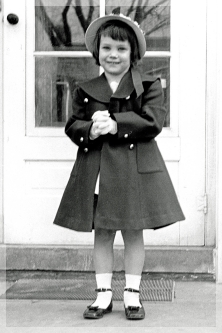 After being asked, “How different would the world look if everyone got what they deserved?” I started wondering. Even as a child, I knew people didn’t get what they deserved. When I was ten, I watched on television as nine black students tried to enroll in an all-white school in Little Rock, Arkansas; they were blocked by the National Guard and an angry mob of 400 angry whites. Two years earlier, on a bus in Montgomery, Alabama, Rosa Parks was arrested for refusing to give up her seat to a white woman. I grew up in Detroit and, while discrimination and segregation were more subtle than in the South, it existed. I lived in a large home with a big yard on a tree-lined street but any bus trip “downtown” told me that the people of color didn’t live in neighborhoods like mine. There may not have been “colored” drinking fountains or “white only” bathrooms but there was a six-foot high, one-foot wide, and half-mile long wall segregating one black community from a neighboring white one. Many other invisible and more impenetrable walls existed within our divided city.
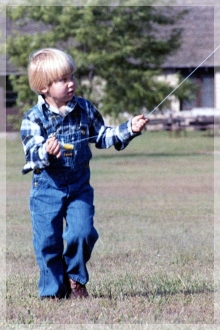 It’s been nearly 50 years, but I’ll never forget that day when, out of anger and fear, I vowed, “I’ll never forgive him!” My husband and I had taken our three children shopping for school clothes. While I was busy with the eldest, my husband said he’d take the other two for a walk through the mall. Unknown to me, the three-year-old had convinced his father that he’d stay at the store, sit quietly in a little crawl-through hole by the store’s entrance, and wait for his dad’s return. Unfortunately, my husband never told me of that decision. Having the attention span of a gnat, the little guy quickly grew bored watching shoppers. After wandering into the store to hide in the clothes racks, he looked for his brother and me. Not seeing us (since we were in a changing room), the independent guy decided we’d left without him and calmly went looking for us in the mall parking lot. While I was paying for our purchases, my husband returned with only one child in tow. Almost simultaneously, with panic in our voices, we asked one another, “Where’s Scooter?” My imagination went wild with all the horrible things that could have happened to the youngster. In an instant, I decided I’d never forgive my husband for his carelessness and that our marriage would be over!
 The hatred between Jews and Samaritans began in 930 BC when Solomon’s son Rehoboam was king and the united kingdom of Israel divided. Ten tribes rebelled and made Jeroboam king of the northern kingdom of Israel whose capital was Samaria. Only the tribes of Judah and Benjamin along with the Levitical priesthood remained in the southern kingdom of Judah. Fearing a change of alliance if people returned to Jerusalem to worship, Jeroboam set up his own worship centers in the north.
 Devotions of the Heart