“HALLELUJAH” RATHER THAN “HUMBUG”

The Spirit of the Sovereign Lord is upon me, for the Lord has anointed me to bring good news to the poor. He has sent me to comfort the brokenhearted and to proclaim that captives will be released and prisoners will be freed. He has sent me to tell those who mourn that the time of the Lord’s favor has come, and with it, the day of God’s anger against their enemies. [Isaiah 61:1-2 (NLT)]


Unfortunately, much of our Advent season is not spent joyfully looking forward to celebrating the birth of the Christ child. In hope of finding the perfect gift for everyone on our list, we pore over catalogues and search for sales and coupons. Either we fight for parking spots at the mall and spend hours standing in line or spend those hours sitting at the computer while shopping on line! We then fret and fuss over wrapping those gifts, mailing packages and Christmas cards, hosting and attending parties, baking cookies, making travel arrangements, decorating the house, preparing holiday dinners, and paying the ever-mounting bills. When we say, “Merry Christmas!” we might find ourselves mumbling a Scrooge-like “Bah! Humbug” under our breath! Instead of looking forward to Christmas with anticipation, there are times we can’t wait until it’s all over and done.

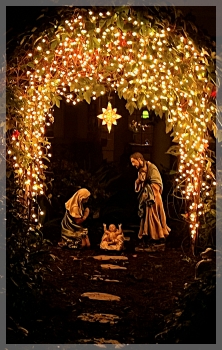
Dr. Seuss’ Grinch eventually realized Christmas really has nothing to do with all those trappings; I wonder why we have so much trouble remembering that same thing. Christmas isn’t about gifts, parties, cards, peppermint bark, decorations, or the “roast beast feast.” Jesus with His message of love, redemption, forgiveness, and salvation is the only reason for the season! Mary didn’t send out 100 birth announcements or bake dozens of cookies and the stable that housed the Holy Family wasn’t decorated with wreaths, ribbons, holly, or tinsel. God took care of the only decoration with a bright star and a heavenly chorus announced the birth. Shepherds were the first holiday guests and they didn’t expect gingerbread cookies or care about the stable’s decor or cleanliness. The Magi’s Christmas presents were odd gifts for an infant and probably arrived two years late.

Today, consider pausing from all your preparations to re-read Zechariah’s prophecy of a Savior who would redeem His people and the beautiful story of His birth in Luke 1 and 2. Tonight, take a drive and look at the Christmas lights festooned around your town; let them remind you of Isaiah’s promise; “The people who walk in darkness will see a great light … For a child is born to us.” Then let us joyfully raise our voices in a “Hallelujah!” instead of “Humbug!”

And the Grinch, with his Grinch-feet ice cold in the snow, stood puzzling and puzzling, how could it be so? It came without ribbons. It came without tags. It came without packages, boxes or bags. And he puzzled and puzzled ’till his puzzler was sore. Then the Grinch thought of something he hadn’t before. What if Christmas, he thought, doesn’t come from a store. What if Christmas, perhaps, means a little bit more. [From “How the Grinch Stole Christmas” by Dr. Seuss]

The people who walk in darkness will see a great light. For those who live in a land of deep darkness, a light will shine … For a child is born to us, a son is given to us. The government will rest on his shoulders. And he will be called: Wonderful Counselor, Mighty God, Everlasting Father, Prince of Peace. [Isaiah 9:2,6 (NLT)]

Copyright ©2024 jsjdevotions. All rights reserved.


GRACE NOTES

Let the heavens be glad, and the earth rejoice! Let the sea and everything in it shout his praise! Let the fields and their crops burst out with joy! Let the trees of the forest sing for joy. [Psalm 96:11-12 (NLT)]

clouded sulphur butterfly - asterIn Letters to Malcom, C. S. Lewis wrote, “We, or at least I, shall not be able to adore God on the highest occasions if we have learned no habit of doing so on the lowest. … Any patch of sunlight in a wood will show you something about the sun which you could never get from reading books on astronomy. These pure and spontaneous pleasures are ‘patches of Godlight’ in the woods of our experience.”
What Lewis called “patches of Godlight,” I think of as God’s grace notes. In music, a grace note is played with a light quick motion that immediately leads to the principle and stressed note. Unnecessary for the melody and so brief they don’t alter the tempo, grace notes merely enrich the music by adding a small embellishment. Like the musical grace note and Lewis’s “patches of Godlight,” God’s grace notes aren’t necessary; nevertheless, they enhance our lives. They’re subtle reminders that God is present and loves us enough to embellish the day with a little something extra.

Unlike Kodak moments, Godlight and grace notes are not meant to be saved. They’re rarely repeated and we can’t predict when a “patch of Godlight” will shine into our lives or a grace note will play. While waiting at a red light, I glanced at the grassy median to my left where small yellow flowers appeared to be dancing in the air. Although hundreds of dainty Sulphur butterflies were flitting to and fro just a few inches above the yellow wireweed in the grass, it looked like the flowers’ petals had escaped from their stems and the field was bursting with joy! Did God arrange that revelry in yellow just for me? Probably not, but it felt like He did and my day changed for the better because of it.

After noticing that others at that light seemed oblivious to the butterfly frolic, I wondered how many of God’s grace notes I’ve missed because I wasn’t looking or listening. As the prophet Elijah learned, God doesn’t necessarily reveal Himself in spectacular displays of things like lightning, wind, thunder, and fire. Our infinitely creative God whispers through the ordinary as well—with things as mundane as yellow butterflies, a child’s laughter, the aroma of jasmine, a finch on the windowsill, a song on the radio, seeing a young couple caress or an old couple walk hand in hand, a shooting star, a stranger’s smile, or a patch of sunlight while walking through the woods. Although God personalizes His grace notes for each one of us, we need to slow down and be mindful enough to recognize and appreciate them.

There is an old Hindi poem, translated by Ravindra Kumar Karnani, in which a child asks God to reveal Himself. God responds with a meadowlark’s song, then the roar of thunder, followed by a star, and the birth of a baby. In her ignorance, however, the child doesn’t recognize any of God’s answers. Finally, in desperation, she cries, “Touch me God, and let me know you are here!” But, when God touches the child, she brushes off the butterfly and walks away disappointed. It occurs to me that we are not much different from her. May we never thoughtlessly brush away one of God’s gentle kisses, fail to notice His grace notes, or miss appreciating a small patch of Godlight!

Are we paying attention to the everyday moments of our lives and seeing God in them, or are we living in such a chaotic frenzy that we hope we’ll have time to look for the presence and mystery of God later, when we have more time – say, when the degree is finished, the kids have moved out, this project is completed, or we retire? [Dean Nelson]

For ever since the world was created, people have seen the earth and sky. Through everything God made, they can clearly see his invisible qualities—his eternal power and divine nature. [Romans 1:20 (NLT)]

Copyright ©2024 jsjdevotions. All rights reserved.

SHED THE SHROUD

Then Jesus shouted, “Lazarus, come out!” And the dead man came out, his hands and feet bound in graveclothes, his face wrapped in a headcloth. Jesus told them, “Unwrap him and let him go!” [John 11:43-44 (NLT)]

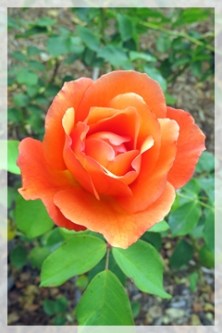
roseUnlike Lazarus, we haven’t had a four-day encounter with death. Our family didn’t wash us with warm water, anoint us with myrrh and aloe, wrap us in a shroud with herbs and spices, lay us in a tomb, and mourn our passing. Most of us haven’t even endured a months-long coma, flatlined, or been brought back to life with an AED. How does such an experience affect someone? Without a doubt, the man who emerged from the tomb differed from the man who died four days earlier. Did Lazarus return to life with the 1st century equivalent of a “bucket list” of things to accomplish, places to go, things to do, and adventures to have?

When Jesus called Lazarus out of the tomb, the once dead man emerged from the tomb with his face wrapped in a head cloth and his body bound in burial garments. Jesus told the people to unbind him and free him from the trappings of the grave. Something tells me that, after four days in a tomb, Lazarus left behind more than some linen cloth soiled with the detritus of the tomb and death. While we don’t know what he experienced during those four days, He must have returned to life with a new perspective. As he walked into the sunlight he never expected seeing again and inhaled the air he never anticipated breathing again, can you imagine how much he appreciated his new lease on life? Given a second chance, Lazarus probably wasn’t about to bring any regrets, resentment, anger, or guilt with him. Raised from the dead, he probably shed much of his past along with that shroud as he stepped from the tomb’s gloom.

Unlike Lazarus, we haven’t physically died. Nevertheless, we were spiritually dead until we responded to Christ’s call. Now, born again into a new spiritual life, our grave clothes are no longer necessary. Lazarus shed his; have we? Even through we’re reborn in Christ, we tend to carry the detritus and debris of our yesterdays into our new life. After putting on the new clothes of salvation and righteousness, rather than leave our graveclothes behind, we drag along the shroud of the past—a shroud stained with betrayals, anger, disappointment, loss, or hurt and embellished with things like remorse and disgrace. Even when we think we’ve donned the fresh clothes of a new life in Christ, we often tuck a pang of guilt or shame into a pocket. We have trouble believing that we’re forgiven, but we are; that change is possible, but it is; that we have a relationship with the Creator of the Universe, but we do; or that He could possibly love us, but He does! Lazarus shed his shroud; so should we.

As for bucket lists—they seem more a way of denying death than living life to the fullest. I don’t think Lazarus emerged from his tomb with a to-do list of things to accomplish before his next trip to that tomb. I suspect he emerged with a new appreciation for the everyday things of life—his family, the sound of laughter, the embrace of a friend, a sip of cool water, morning dew glistening in the sunlight, sunsets and sunrises, the chirp of a sparrow, worship at the Temple, the taste of a rip fig, a beautiful rose, a buzzing bee, the aroma of fresh baked bread, the earthy smell of rain, and a relationship with Jesus. Death taught Lazarus that he didn’t need more; he just needed to fully appreciate what he already had—Jesus and life!

Lazarus heeded Jesus’ call. When he stepped into the light from that dark tomb, he shed his shroud and embraced his new lease on physical life. When we responded to Jesus’s call, we were given a new spiritual life. Let us leave the despair, doubt, shame, sorrow, and sin behind as we clothe ourselves with the joy of life in Jesus Christ.

And all who have been united with Christ in baptism have put on Christ, like putting on new clothes. [Galatians 3:27 (NLT)]

You have turned my mourning into joyful dancing. You have taken away my clothes of mourning and clothed me with joy. [Psalm 30:11 (NLT)]

Copyright ©2024 jsjdevotions. All rights reserved.

THE CATRINAS

For this is how God loved the world: He gave his one and only Son, so that everyone who believes in him will not perish but have eternal life.… There is no judgment against anyone who believes in him. But anyone who does not believe in him has already been judged for not believing in God’s one and only Son.… And anyone who believes in God’s Son has eternal life. [John 3:16,18,36 (NLT)]

La Catrina vestida de mariposasAll Saint’s Day for the Western Christian Church is November 1. While Roman Catholic and Orthodox church observances tend to focus on those who’ve been canonized saints, the Protestant church has a different approach to this holy day. Whether living or dead, it regards all Christian believers as “saints” and part of the Communion of Saints we speak of when reciting the Apostles’ Creed. For Protestants, All Saint’s Day is a time to commemorate Christian family members, church members, and friends who have died. At our liturgical church, there will be a solemn reading of the names of all church members who passed during the year. After each name is read, the bell will toll.

All Saints’ Day is observed in different ways in other cultures. In Mexico, the Dia de los Muertos, (Day of the Dead) is one manifestation of this feast day. I was unfamiliar with this Mexican tradition until our botanical garden featured eight larger-than-life skeleton sculptures of La Catrina. I’d always thought of the skulls and skeletons associated with this day as ghoulish until taking a good look at these Catrinas. One of the most recognizable figures of Day of the Dead, the elegant La Catrina doesn’t approach death through sadness but as a colorful celebration of life.

These skeletal but beautifully dressed 8-foot Catrinas towered over the gardens. Symbolizing the return of the souls of the deceased, one Catrina was adorned in monarch butterflies. One carried marigolds (the scent of which is said to attract the souls of the dead to altar offerings) while another carried a basket of food. Although I didn’t recognize the Catrina of Mexican actress/singer Maria Felix, Mexican artist Frida Kahlo with her “unibrow” was easy to recognize.

With its food, drink, and celebration, the Day of the Dead is like a family reunion—except one’s dead ancestors are the guests of honor. A curious blend of indigenous rituals, European religion, and Spanish cultures, many of its traditions and beliefs are pagan rather than Christian. While sharing stories and remembering our loved ones is a good way to deal with their loss, the Day of the Dead is not based on Biblical truth and many of its observances go beyond honoring the deceased. Those that involve superstition, mythology, empty rituals, the occult, or communing with the dead go into Satan’s territory and pose serious theological problems for a Christian.

Nevertheless, in spite of its pagan origins and rituals, I couldn’t help but contrast the joyful celebrations of the Day of the Dead with the solemn reading of names at our church on All Saint’s Day. Of course, we miss our dead friends and family and mourn their loss, but we also should remember all that we loved about them and celebrate their memory with smiles, joy, and even laughter!

All the Catrinas, including Lady Mictlán (the Aztec queen of the underworld), faced death with a smile—almost a smirk. In fact, the Catrina’s smiles reminded me of the Apostle Paul’s words in 1 Corinthians 15:15: “O death, where is your victory? O death, where is your sting?” As Christians, we can face both our death and the deaths of other believers with a smile. Our Christian hope isn’t that we’ll be welcomed back into the kingdom of living with flowers and food after death. Our Christian hope is that we’ll live forever in the kingdom of God! We’ll be welcomed there not because of works, worth, or rituals; we’ll be welcomed solely because of the work Jesus did on the cross! Because Jesus defeated death, we can face it with a smile even broader than that of La Catrina!

A believer may feel the stroke of death, but he shall never feel the sting of death. [D.L. Moody]

So you see, just as death came into the world through a man, now the resurrection from the dead has begun through another man. Just as everyone dies because we all belong to Adam, everyone who belongs to Christ will be given new life.… Then, when our dying bodies have been transformed into bodies that will never die, this Scripture will be fulfilled: “Death is swallowed up in victory. O death, where is your victory? O death, where is your sting?” For sin is the sting that results in death, and the law gives sin its power. But thank God! He gives us victory over sin and death through our Lord Jesus Christ. [1 Corinthians 15:21-22, 54-57 (NLT)]

Copyright ©2023 jsjdevotions. All rights reserved.

THE NECESSARY THING

How amazing are the deeds of the Lord! All who delight in him should ponder them. Everything he does reveals his glory and majesty. His righteousness never fails. [Psalm 111:2-3 (NLT)]

plumeriaWhile walking in the Botanical Gardens, I left my husband on a bench by the lake while I went back to get a few more photos of the plumeria. After getting my last shot, I returned to find him gazing out at the water. When I disturbed his reverie with a touch on the shoulder, he looked up and said, “I was just enjoying Him!” I knew exactly who he meant.

There are plenty of things Scripture tells us to do with God. We are to love, hear, follow, worship, praise, and obey Him. We’re also told to put our hope in Him, rest in Him, have faith in Him, glorify Him, and honor Him with our lives. We are to cast our cares on Him and seek, work for, and fear the Lord. But, we also should delight in Him—not just delight in his word, works, love, and gifts—but delight in His very presence!

That morning, my husband was delighting in God and relishing quiet time in His company. He was enjoying God’s presence the way two old friends might—by sitting together silently and savoring their companionship. My husband had focused on God while I was focusing so intently on the flowers that I missed a moment to delight in the One who made those blossoms. Even though I got some photos for this blog, my husband’s time was better spent than mine and I was reminded of Martha and Mary.

When Jesus visited, Martha was anxious about having such an honored guest and His disciples in her home. Busy with the meal preparation and responsibilities of serving so many people, she expected her sister Mary to help. Mary, however, was sitting at the Lord’s feet and listening to Him teach. When Martha complained to Jesus, He told her that only one thing was necessary and that Mary had chosen it.

The Greek word translated as “chosen” was eklégomai, meaning to make a deliberate choice with a planned outcome. Mary didn’t end up at Jesus’ feet on a whim or because she was lazy; she purposefully chose to break social norms so she could do the “one necessary thing.” The Greek word translated as “necessary” was chreia, meaning the things that are required for sustenance on a journey or absolutely necessary for life. Mary made a deliberate choice to sit at the Lord’s feet so that she would have the one thing required on life’s journey. Jesus, however, never identified that one necessary thing. Is it hearing His word, listening to His voice, and learning at His feet? Is it seeking the Kingdom of God? Is it being occupied with Jesus rather than being occupied  for Him? Is it as simple as delighting in His presence?

God generously gave us the capacity to enjoy and delight in Him as well as the life He’s given us. Let’s not get so caught up in the business of the day that we miss doing just that. When Mary sat at the Lord’s feet, she deliberately chose the better over the good and the essential over what seemed important at the time. This week, let’s choose to do the same thing. Let us be still, know that He is God, and delight in His presence!

Being wrapped up in God’s work can easily become a shabby substitute for being wrapped up in His presence. [Mary Southerland]

The one thing I ask of the Lord—the thing I seek most—is to live in the house of the Lord all the days of my life, delighting in the Lord’s perfections and meditating in his Temple. [Psalm 27:4 (NLT)]

Copyright ©2023 jsjdevotions. All rights reserved.

WORSHIP AND FUN

Do you see what we’ve got? An unshakable kingdom! And do you see how thankful we must be? Not only thankful, but brimming with worship, deeply reverent before God.  [Hebrews 12:28 (MSG)]

big cypress fox squirrelCan worship be fun? In various translations, Hebrews 12:28 tells us to worship God with reverence and awe, honor and respect, or deep reverence. No where is there any mention of fun. In fact, except for the somewhat cynical and world-weary words directing us to eat, drink, and be merry in Ecclesiastes 8:15 Scripture uses the word “fun” in a negative way—that of “making fun” of someone. Hagar was sent away after she and Ishmael made fun of Isaac, Delilah accused Sampson of making fun of her with his lies, and the fertile Peninnah made fun of Hannah because of her barrenness. So, if, by “fun,” we mean mere amusement (especially at another’s expense), it doesn’t seem that fun and worship go hand in hand. On the other hand, if by “fun” we mean something deeper than light-hearted entertainment or diversion, perhaps it does.

When using fun in its broader definition of enjoyable, pleasurable, and joyful, it appears that worship can and should be all that and more! After all, there are well over 300 instances of joy, joyful, or joyous in Scripture, many of which are associated with worship. 2 Chronicles 30 tell us that the people of Judah enjoyed the seven-day festival of Passover so much that “they celebrated joyfully for another week” and “there was great joy in the city.” Although having fun should never be our primary purpose for worship, we often find that worship gives rise to enjoyment, pleasure, and joy! Indeed, worship can be fun!

Worship, however, is more than an act; it is an attitude not limited to Sunday mornings and church. Since God’s Holy Spirit lives in us, we should live in a way that corresponds to His nature at all times. Colossians 3:23 tells us to work as though we were working for the Lord, perhaps we should play the same way—as if we were playing with the Lord! Just as we worship in our work by serving, witnessing, honoring and glorifying Him as we labor, we should do the same in our leisure time and fun.

But, does the way we relax, play, and spend our free time honor and glorify the Lord? Do we choose our reading material, movies, or TV shows with Him in mind? When socializing with our friends, do our words and actions give evidence of God’s presence in our lives? Do we honor God and His children with our humor or does it consist of mockery, sarcasm, or ridicule? As for sports—does the way we compete and react to the coach’s decisions, the umpire’s call, another player’s error, or our defeat honor God? Do we bring Him to Bible study and choir practice but leave the Lord behind when going to the gym, pickleball court, golf course, yoga studio, bridge table, or book club? Is Jesus invited when we dish with our friends over coffee, watch our child’s baseball game, or relax at the 19th hole with our golf buddies? Do we pack God in our bag when we go on vacation or is He left home with the work clothes and computer? What happens in Vegas may stay in Vegas but whatever happens in Vegas is how we’ve chosen to worship the Lord!

Worshiping God in spirit and in truth means we worship with our entire lives, at all times, and in all places—whether at church, work, or play. Regardless of what we’re doing or where we’re doing it, our words and actions always should bring glory to God. The question really isn’t whether worship can be fun; the question is whether our fun is worship!

So here’s what I want you to do, God helping you: Take your everyday, ordinary life—your sleeping, eating, going-to-work, and walking-around life—and place it before God as an offering. Embracing what God does for you is the best thing you can do for him. Don’t become so well-adjusted to your culture that you fit into it without even thinking. Instead, fix your attention on God. You’ll be changed from the inside out. Readily recognize what he wants from you, and quickly respond to it. Unlike the culture around you, always dragging you down to its level of immaturity, God brings the best out of you, develops well-formed maturity in you. [Romans 12:1-3 (MSG)]

Copyright ©2023 jsjdevotions. All rights reserved.